Anti-Aging Exercise Tips to Stay Strong and Agile

 0
0
 0
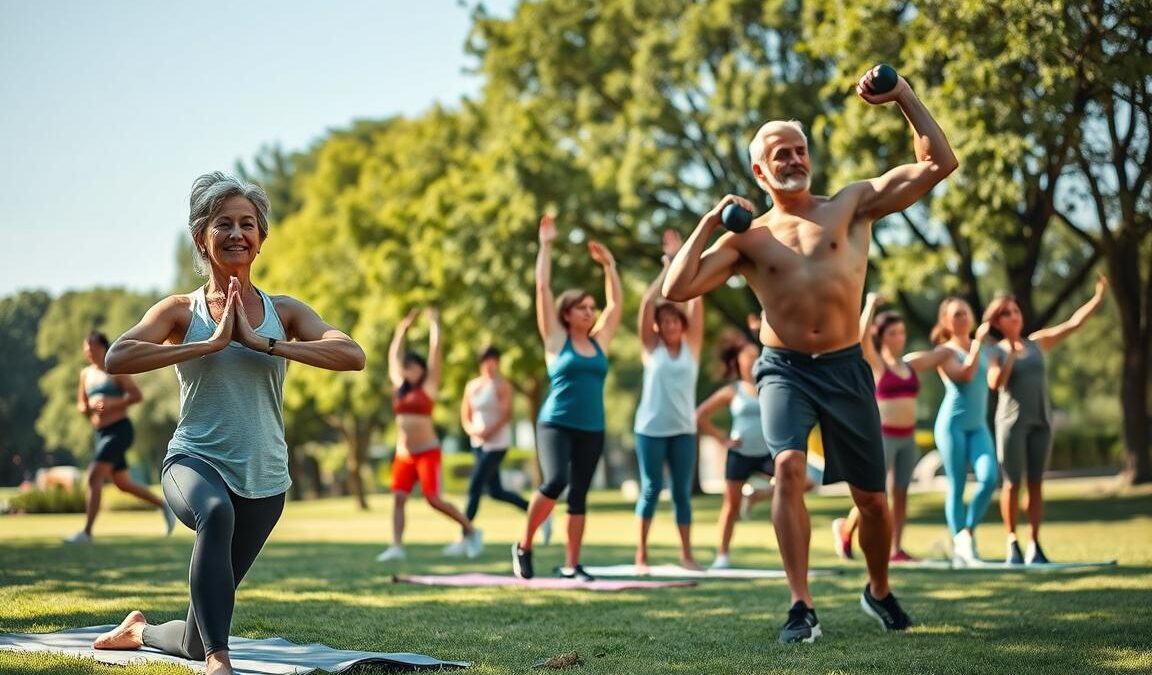
0 The phrase anti-aging exercise tips is more than a line on a checklist — it’s a simple plan to keep your body moving with purpose. You’ll find short standing routines that challenge big muscles, sharpen balance, and protect joints without complicated gear.
Start with focused, seven-minute circuits that alternate lunges, standing twists, and bodyweight good mornings. These movements load large muscle groups, train core stability, and mirror daily patterns like walking and climbing stairs.
Keep cues clear: minimal rest, smooth tempo, upright posture, and steady breathing. The payoff is real — better balance, more strength, and heart-friendly circulation that supports long-term health and longevity.
Key Takeaways
- Short, regular sessions beat occasional long workouts for lasting gains.
- Standing movements build practical strength for daily life.
- Focus on form: tempo, posture, and breathing matter most.
- Consistency improves balance, joint resilience, and heart health.
- Use progressions and simple checks to stay safe and effective.
- Learn practical mobility drills from a trusted source like crossfit mobility exercises to complement your plan.
Why staying active now is the closest thing to anti-aging for your body
Small doses of upright movement shape how you feel tomorrow. Short, standing routines load key muscle groups, help your bone health, and sharpen balance.
When you train large muscles while standing, your nervous system learns to coordinate balance and strength at once. That transfers directly to everyday tasks like carrying groceries, climbing stairs, or bending to tie shoes.
Seven focused minutes can trigger muscle protein synthesis and nudge bone maintenance. Those brief spikes also improve circulation, which supports heart health and lowers inflammation over time.
- Practical payoff: steadier steps, stronger lifts, and easier posture for daily life.
- Short and consistent wins: daily activity compounds into real longevity benefits.
- Joint care: move through full ranges so cartilage stays nourished and motion stays comfortable.
Keep it simple and repeatable. Over time you’ll notice better balance, more capable muscles, and the confidence to meet what life asks of your body.
A 7-minute standing circuit to feel stronger and steadier today
A brief standing circuit trains balance and strength without needing a mat or equipment. Do two rounds for about seven minutes total. Move only as much rest as needed to keep form clean.
Alternating lunges: build leg strength, balance, and bone-friendly load
Do 10 reps per leg. Step forward, lower until the front knee nears 90°, then press through the front heel to return. Alternate sides to load the hips and thighs evenly.
Standing abdominal twists: train rotation and core stability without floor work
Do 20 total reps. Keep hips facing forward and rotate the ribcage right and left with hands at chest height. Move smoothly so the core controls the motion, not momentum.
Bodyweight good mornings: reinforce the hip hinge for posture and back resilience
Do 15 reps. Place hands behind the head or across the chest, push hips back, keep a neutral spine, hinge forward, then drive hips forward to stand tall. This builds hip and posterior chain strength safely.
How to pace and breathe for smooth, controlled reps
Keep a steady tempo—avoid rushing. Breathe in on the way down, exhale as you stand or return to center. That pacing protects joints and lets your heart rate rise gradually.
- Full routine: Alternating Lunges (10 per leg), Standing Twists (20), Good Mornings (15). Repeat once.
- Progress: shorten the lunge step to reduce impact or add a 3-second descent for more challenge.
- Want more core work? Add the abs-and-glutes workout plan into your weekly schedule for balanced development.
Build week-to-week strength with simple resistance training at home
You can build steady strength at home with a few focused moves and a weekly plan. Start each session with a quick fluid warm-up: ankle rolls, hip circles, and shoulder openers for 3–5 minutes.
Squats and one-leg balance: lower-body power and fall prevention
Do squats 3×10–12 with a proud chest and hips pushed back. Pause briefly at the bottom if control allows.
Follow with one-leg balance holds: 30 seconds per side, two rounds, standing next to a chair for support if needed.
Wall pushups and resistance band rows: upper-body strength and posture
Alternate wall pushups (3×10–12) with band rows (3×10–12). Keep elbows ~45° on pushups and a straight back on rows.
Use a light band or a small dumbbell for the rows so the last two reps feel challenging.
Bird dog and glute bridge: core stability and posterior chain support
Do bird dog 3×10–12 per side to train anti-rotation core control. Then, do glute bridges 3×10–12 to strengthen hips and hamstrings.
Your weekly plan: three 20–30 minute sessions that hit the whole body
- Aim: three 20–30 minute sessions per week covering lower body, upper body, and core.
- Progress: choose a resistance that makes the last reps hard with good form.
- Track: note sets, reps, and how it felt so you can add small increases week to week.
Consistency over intensity: how adults make progress year after year
Focus on steady work, not punishing sessions. Small, regular increases in load or reps protect joints and build durable muscles and bone strength over time.
For more band options and how they help, try the hidden benefits of resistance bands.
Mobility and balance that keep joints, hips, and posture moving well
Mixing a loaded squat with a hip hinge trains mobility and strength in one smooth flow. Try the weighted prisoner squat-to-good morning to link deep squat range with a strong hinge. Use a light dumbbell rested across your upper back and hands behind your head to open the chest.

The weighted prisoner squat-to-good morning combo
Stand tall with the dumbbell on your traps (not the neck). Sit your hips back and squat as deep as control allows. Pause, then hinge forward into a good morning with a soft knee bend and return to squat before standing.
Sets & reps: 8–12 reps for 2 sets. Start with bodyweight or a light weight (about 8 kg is a common starter) and scale slowly.
Common fixes: press knees out if they cave, keep heels down if they lift, and pull elbows back so your chest stays upright. Breathe in as you squat, exhale as you hinge and stand.
Essential stretches to improve flexibility and range
Add a short mobility circuit after the set: step hamstring stretch, seated hip stretch, chest opener with fingers interlaced, side-lying thoracic rotations, and gentle side-to-side reaches. Hold each for about 30 seconds; do rotations for 5–10 seconds per rep.
- Why it helps: these movements free tight muscles, support posture, and improve balance for daily tasks.
- Keep it safe: prioritize control over depth and breathe slowly—long exhales help tight spots relax.
Anti-aging exercise tips that stick
Start with what you can do cleanly, then nudge one thing—reps, tempo, or load—each session. That steady approach protects joints and builds real strength without drama.
Progression made simple: reps, tempo, and resistance you can scale
One change at a time: first add reps, then slow the tempo (3 seconds down, 1 second up), then increase resistance. This keeps your form intact as you train.
Use RPE: finish sets with 1–2 good reps left in reserve. You’ll build strength while sparing tissue and reducing inflammation risk.
Form and joint care: knees, hips, spine, and balance cues that prevent aches
Keep knees tracking over the middle toes and press the floor apart in squats and lunges. Brace ribs down so your spine stays neutral.
If something pinches, shorten the range or swap the pattern (reverse lunge instead of forward). Retest at a slow tempo before adding load.
End sessions with a slightly fatigued single-leg hold—30 seconds per side—to train stability when it matters most.
- Warm with lighter, deliberate sets before working loads.
- Track small weekly changes; adults make steady gains by repeating this cycle.
- Choose quality over quantity—great reps let you train again and feel better.
| Variable | Progression | How to check | When to change |
|---|---|---|---|
| Reps | +2–4 reps per week | Form steady for last reps | When RPE ≤7 |
| Tempo | Slow descent (3s) then controlled rise | Movement stays smooth, no sway | After reps feel controlled |
| Resistance | Increase 5–10% once technique solid | Last 1–2 reps challenging but clean | After 2–3 sessions of consistent form |
For a quick read on tempo and how it drives muscle change, see our guide to rep tempo for hypertrophy.
Put it together: a weekly routine for strength, mobility, balance, and walking
Set a simple weekly routine that balances strength, mobility, and walking so the body stays useful and steady.

Use this easy template as a starter. Each week has clear session goals and small progress options you can apply right away.
- Monday: 20–30 minutes full-body strength — squats, wall pushups, band rows, bird dog, glute bridge. Finish with one-leg holds and two stretches you need most.
- Tuesday: 20 minutes brisk walking plus the 7-minute standing circuit. Keep a conversational pace so your heart benefits and form stays clean.
- Wednesday: 10–15 minutes restorative mobility — hamstrings, hips, chest opener, thoracic rotations. Easy effort that leaves you looser.
- Thursday: 20–30 minutes strength again; add a rep per set or slow the descent by two seconds for extra challenge.
- Friday: 20–30 minutes walking plus 1–2 sets of the prisoner squat-to-good morning combo; focus on control and stable heels.
- Saturday: 20–30 minutes full-body strength; swap wall pushups for a deeper incline or choose a thicker band if last week felt easy.
- Sunday: Easy recovery walk or light activity you enjoy — gardening, playing with kids, or a relaxed neighborhood loop.
| Session Type | Goal | Progression |
|---|---|---|
| Strength | Build resistance and function | +reps or slower tempo |
| Mobility | Improve range and posture | hold deeper for control |
| Walking | Support heart and endurance | add 5–10 min or pace |
Keep a short log after each session. Those notes show progress, help you tweak sessions, and support long-term longevity of movement and heart health.
Conclusion
Busy days and long years both respond to consistent, low‑fuss movement you can keep up. Short standing circuits, three 20–30 minute strength sessions per week, and walking on off days give clear benefits you can feel quickly.
These routines stimulate muscle protein synthesis, protect bones, and sharpen balance and mobility with minimal gear. Add resistance training like squats, pushes, pulls, and hinges you can scale over time.
Start light, listen to your joints, and aim for steady changes—a rep, a bit more time under tension, or a small weight. That steady work supports heart health, flexibility, and long-term fitness.
Your next step: pick one session today, set a timer, and do it. Small work now builds momentum and real longevity gains for years to come.
FAQ
How often should I do the 7-minute standing circuit to feel stronger?
Can I build meaningful strength at home with just bodyweight and a band?
What’s the safest way to start resistance training if I have sore knees or hips?
How do I pace breathing and tempo during standing moves like good mornings and twists?
What’s a simple weekly plan that balances strength, mobility, and walking?
How do I scale progression without lifting heavy weights?
Which moves best protect posture and reduce back strain?
How much walking is enough to support longevity and mobility?
What balance drills help prevent falls and improve stability?
How do I protect my joints while progressing reps or resistance?
Can I combine mobility work with strength training in one session?
What are quick cues for better squats and single-leg balance?
How long before I notice improvements in strength and balance?
Do stretches undo strength gains or should I avoid them?
What equipment should I buy first for a home program?