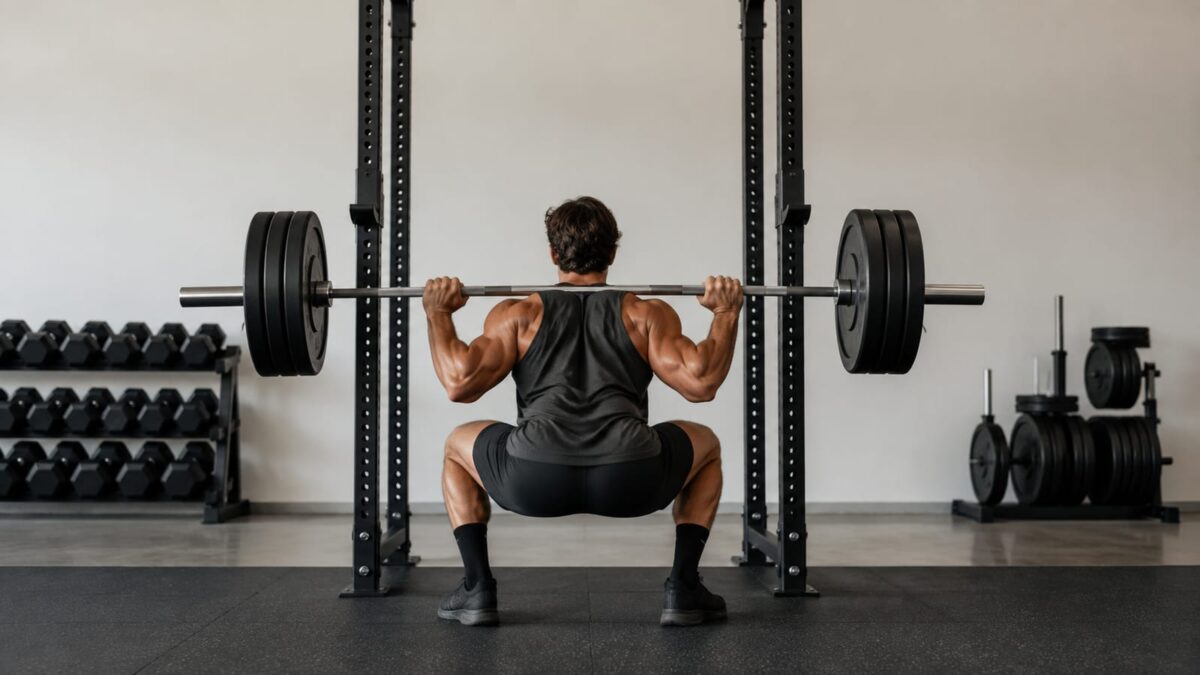

How VBT Helps Advanced Lifters Manage Training

 0
0
 0
0 Velocity-based training is worth using for advanced strength athletes when it makes basic training more repeatable. Bar speed can cap low-quality fatigue, adjust loads to daily readiness, and track progress without constant max testing. It shouldn’t replace hard, technically sound work or turn your program into a gadget demo. Use the data to make better decisions, then earn the next increase in the logbook.
Last updated: 2026-08-10
For an experienced natural lifter, the main value is control. You can keep the intended training effect when sleep, stress, soreness, or accumulated fatigue changes how a load moves. However, the method only helps if your technique, food, programming, and recovery already support progress.
What is high-velocity training, and how does it differ from velocity-based training?
High-velocity training means deliberately moving a light-to-moderate load as fast as possible while keeping the exercise technically sound. The goal is usually power, speed-strength, or explosive intent.
Velocity-based training, or VBT, is broader. It means measuring how fast you lift and using that information to prescribe or regulate training. You can use VBT for heavy strength work, power work, warm-ups, work-set adjustments, or fatigue control.
The terms overlap, but they aren’t interchangeable:
| Method | Main goal | Typical loading approach | Main feedback |
|---|---|---|---|
| High-velocity training | Produce force quickly | Light to moderate loads | How fast the movement is |
| Velocity-based training | Guide training decisions | Any load that can be measured consistently | Rep speed, load, and speed loss |
| Percentage-based training | Follow a planned intensity | A percentage of one-rep maximum | The written load prescription |
High-velocity training asks you to move fast. VBT asks you to measure movement speed and use it to make a decision.
That distinction matters. A lifter can perform speed squats without measuring velocity. Another lifter can use VBT to regulate heavy bench press work without trying to move the bar like a ballistic exercise.
The early research that helped establish movement velocity as a useful indicator of relative load was published by González-Badillo and Sánchez-Medina online on 23 February 2010. The paper appeared in the International Journal of Sports Medicine, volume 31, issue 5, pages 347-352, with the identifier 10.1055/s-0030-1248333. The useful takeaway is simple: how fast a load moves can help show how heavy that load is for you.
What does velocity weight lifting look like for an advanced strength athlete?
Velocity weight lifting is regular strength training with rep speed added to the decision-making process. You still squat, bench, deadlift, press, and pull. The device doesn’t lift the bar for you.
A practical VBT workflow looks like this:
- Pick a repeatable lift.
- Use the same setup and range of motion each session.
- Measure the concentric phase, which is the part where you raise the load.
- Record the load and mean concentric velocity.
- Compare the result with your normal load-velocity profile.
- Adjust the load, reps, or stopping point when the data misses the target.
Mean concentric velocity is the average speed of the lifting phase. It usually gives you a cleaner signal for controlled strength lifts than the fastest instant of the rep.
Start with one primary lift. The squat, bench press, or deadlift is easier to compare than a movement that changes every session.
Your first job is collecting useful baseline data. Don’t change your stance, grip, pause, depth, bar path, or lifting intent just to make the number look better. If the rep changes, the comparison breaks.
For example, you might track your competition-style bench press. You record the speed of your warm-up reps, then use that information to decide whether the planned work sets fit your readiness. If the bar moves slower than normal, you reduce the load or cut a set. If it moves faster, you may add a small amount of weight while keeping the same technique.
This works best alongside a clear progression plan. Your progressive overload strategy still determines what you’re trying to improve. VBT helps you choose the right dose for that day.
What are the benefits of velocity-based training for advanced strength athletes?
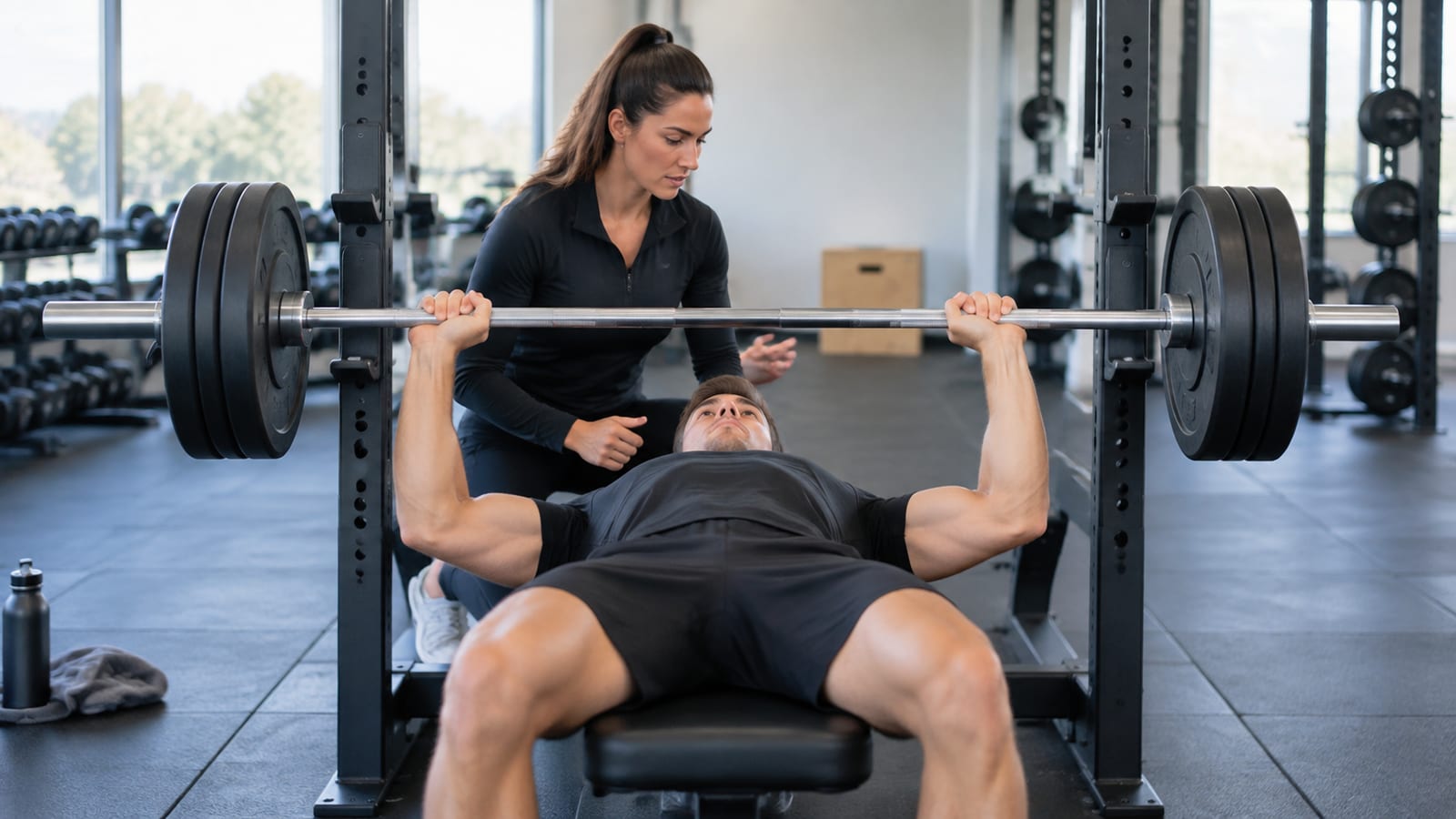
Velocity-Based Training: Benefits for Advanced Strength Athletes are strongest when the athlete already has stable technique and a sensible program. Beginners often need more practice and consistency before a speed reading adds much value.
The main benefits are practical:
- More precise load selection
- Better control of fatigue
- Less need for frequent all-out max testing
- Clearer feedback on readiness
- Better quality during strength and power work
- A more useful record of performance than load alone
Advanced lifters often make progress slowly. A small increase may take several weeks. That makes daily load selection more important, not less.
A fixed load can be too heavy for productive work on a bad day. It can also be too light on a strong day. VBT gives you a second piece of information besides the plates on the bar.
The method can also protect training quality. If the target is strength, you don’t need to turn every set into a slow technical collapse. If the target is power, you need to stop before the movement loses its speed and shape.
Still, VBT isn’t automatically better than percentage-based training. It’s better when daily readiness changes enough to make fixed prescriptions unreliable. If your training is stable and your percentages already produce consistent work, adding a device may only add noise.
Why is VBT better than percentage-based loading on variable training days?
Percentage-based loading starts with a reference number, usually your one-rep maximum. It assumes that a given percentage will produce a similar level of difficulty each session.
That assumption is useful, but it isn’t always true. Your actual performance can shift with sleep, food, work stress, soreness, travel, and fatigue from earlier sessions.
A planned load can therefore miss the intended stimulus:
| Training-day problem | What a fixed percentage may do | What velocity can tell you |
|---|---|---|
| Low readiness | Turns normal work into a grind | The load is moving too slowly today |
| High readiness | Leaves useful strength unused | The planned load is moving faster than expected |
| Accumulated fatigue | Creates more poor reps | The set is losing speed too quickly |
| Technique disruption | Makes the number hard to compare | The movement needs a reset before adjustment |
The answer isn’t to change every exercise every day. That creates a program with no clear progression.
Instead, keep the lift, rep target, and technique standard. Adjust only the load or volume needed to match the planned goal. One variable at a time keeps the logbook useful.
For instance, if your heavy bench work is supposed to be strong and controlled, a slower warm-up can tell you to reduce the load slightly. You still train the bench. You simply avoid forcing a weight that no longer matches the day.
This is autoregulation. In plain terms, you adjust training based on your performance instead of pretending readiness never changes.
How can bar speed manage fatigue without making training too easy?
Use velocity loss to control how much speed drops within a set or session. Velocity loss compares the fastest relevant rep with a later, slower rep.
A large drop usually means fatigue is building. That doesn’t make the set useless, but it can show that the work is moving away from the quality you planned.
Free-weight VBT protocols using a velocity-loss limit around 20-30% have shown a reverse U-shaped relationship with one-rep maximum gain. Training efficiency decreases as velocity loss increases. In practical terms, more fatigue does not keep buying more strength.
For most strength work, use the lowest loss that still gives you hard, productive sets. A limit around 20-30% is a useful starting point for free-weight protocols, but the right point depends on the lift, block, and athlete.
You can manage fatigue in several ways:
- Stop the set when speed reaches the loss limit.
- Reduce the load when the first work set is already too slow.
- Keep the load and cut a later set.
- Extend rest when the next rep is close to the target.
- Move to another exercise when technique no longer repeats.
Don’t use VBT as a way to avoid effort. If every set ends while the bar is still flying and the target muscle or lift receives little challenge, the method has become an excuse.
Strength athletes still need sufficiently hard work. You should finish many working sets with quality reps left, not endless easy reps. The goal is to remove low-value fatigue while keeping the work hard enough to count.
Your joints get a vote, too. Don’t chase a speed number by shortening depth, changing your pause, or turning a controlled press into a bounce.
Can velocity reveal neuromuscular readiness before a hard session?
Velocity can reveal a change in readiness before a planned heavy session becomes a failed heavy session. Compare the speed of a standardized warm-up load with your normal result for that lift.
If the same load moves noticeably slower than usual, you may be carrying fatigue or dealing with poor readiness. If it moves faster, you may be able to handle more work than the written plan suggests.
That signal is useful, but it isn’t a diagnosis. Bar speed can change because of setup, equipment, intent, technique, measurement error, or a different range of motion.
Use three checks together:
- Speed: Is the load moving near your normal result?
- Technique: Does the rep look like the lift you’re trying to train?
- Recovery: Have sleep, food, soreness, and stress changed enough to explain the result?
If all three point in the same direction, adjust with more confidence. If the number says “ready” but your setup feels unstable and your technique is poor, don’t force the planned increase.
A coach can also use the reading to ask a better question. Instead of asking only whether you completed the load, ask whether you completed it at the intended quality.
VBT should inform coaching judgment. It shouldn’t overrule common sense.
Which velocity zones and metrics matter most for strength training?
Velocity zones describe the type of work you’re trying to perform. Exact cutoffs vary by lift, athlete, device, and measurement method, so don’t treat a universal chart as law.
Use these broad categories:
- Strength work: Heavy, controlled reps with lower movement speeds. The priority is force production and repeatable technique.
- Strength-speed work: Moderate-to-heavy loads moved with strong intent. You produce force quickly without turning the lift into a light ballistic exercise.
- Speed-strength work: Lighter loads moved fast. The priority shifts toward moving the load quickly.
- Power work: The load and movement must allow high force and high speed together. Stop when speed or technique drops enough to change the exercise.
The target comes from the lift and the training goal. A fast bench press and a fast jump are not measured the same way. The number only matters if the movement stays standardized.
Mean velocity
Mean velocity is the average speed of the concentric portion of the rep. Use it for squat, bench press, deadlift, and other controlled barbell lifts.
It’s usually the best main metric for comparing similar reps across sets and sessions. If mean velocity drops past your chosen limit, reduce the load, cut reps, or stop the set.
Mean propulsive velocity
Mean propulsive velocity measures the part of the rep where you continue accelerating the load. It can be useful for power-focused work and movements where the end of the concentric phase includes reduced acceleration.
Use it only if your device measures it consistently. A more detailed metric is not automatically a better metric.
Peak velocity
Peak velocity records the fastest instant during a rep. It’s useful for ballistic movements, jumps, Olympic-lift variations, and other explosive work.
Peak velocity can be noisy on heavy strength lifts. A brief spike doesn’t tell you much if the rest of the rep was slow or technically poor.
Velocity loss
Velocity loss shows how much speed has dropped across a set. It helps manage fatigue and decide when more reps stop serving the session goal.
Pick one primary metric for each lift. Record it the same way every time. Consistent boring data beats a dashboard full of numbers you never use.
Can VBT estimate 1RM without frequent max testing?
VBT can produce useful estimated one-rep maximum trends from an individualized load-velocity profile. You record how different loads move, then use your own relationship between load and speed to estimate changes in strength.
That estimate is more useful for tracking direction than proving an exact number. If your estimated maximum rises while technique, range of motion, and measurement conditions stay consistent, your strength is probably moving in the right direction.
The conditions matter:
- Use the same lift variation.
- Keep the range of motion consistent.
- Use the same equipment and setup.
- Lift with the same intent.
- Measure the same part of the rep.
- Don’t compare a paused rep with a touch-and-go rep.
An individualized profile is more useful than copying a speed chart from another lifter. Advanced athletes often have enough training history to make this comparison valuable, but only if their execution is stable.
VBT can reduce the need for frequent max testing. It doesn’t remove the need to practice heavy, competition-specific lifting. You still need occasional exposure to the commands, pauses, setup, and pressure of your actual event.
If you want to test a true maximum, use a planned and safe process. Your one-rep maximum testing guide covers that separate job.
How should an advanced natural lifter implement VBT with limited time?
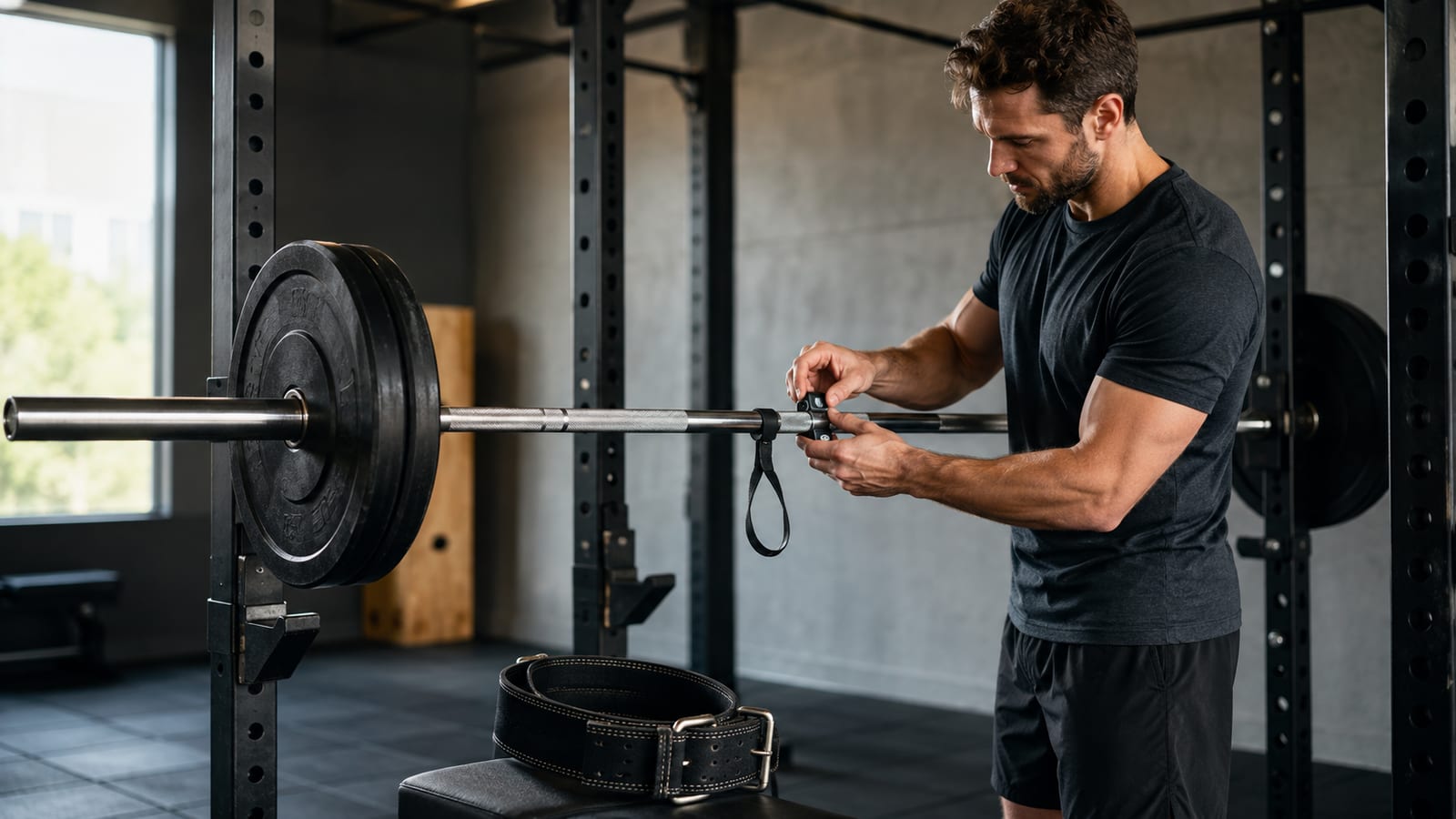
Start with one or two primary barbell lifts. Don’t measure every curl, row, and warm-up exercise just because your device can.
A simple setup works:
- Choose the squat, bench press, deadlift, or another lift you can repeat precisely.
- Collect baseline speed data across normal training sessions.
- Record the load, mean velocity, reps, and technique notes.
- Set a speed target or velocity-loss cap for the block.
- Adjust load only when the data and technique agree.
- Review the trend every few weeks instead of reacting to every single rep.
Use VBT on the lifts where a small adjustment has the biggest effect. For an advanced strength athlete, that usually means the main competition lift or a close variation.
Keep the rest of the training simple. Your assistance work can follow fixed sets and reps if it remains productive. You don’t need a sensor to know that a controlled set of rows became sloppy.
Log these details:
- Load
- Rep speed
- Number of productive sets
- Velocity loss
- Technique quality
- Sleep and soreness
- Food intake
- Any change in exercise setup
Food and recovery still decide whether you can recover and come back stronger. A speed reading cannot compensate for inadequate calories, poor sleep, or a training week that asks for more than your schedule can support.
This is where the method either earns its place or doesn’t. If the data changes a load, protects technique, or prevents wasted fatigue, keep using it. If you only collect numbers and make no better decisions, remove the device and fix the plan.
Do advanced lifters need expensive VBT devices?
No. You need a measurement method that stays consistent enough to guide decisions.
The main technology options have different strengths:
| Device type | Main advantage | Main weakness | Best use |
|---|---|---|---|
| Linear position transducer | Tracks displacement with a tether | Costs more and needs setup | Consistent barbell tracking |
| Camera-based system | No device attached to the bar | Depends on camera position and visibility | Fast gym setup |
| Phone-based tool | Low barrier to entry | Can vary with lighting, angle, and software | Basic trend tracking |
A linear position transducer, or LPT, measures bar displacement through a tether. Research-grade LPTs typically sample at 1000 Hz. For LPTs used in VBT, 200 Hz is the minimum sampling frequency commonly recommended, while 400+ Hz is preferred for peak velocity and acceleration metrics.
Consumer VBT devices range from 50 Hz to 800+ Hz. Those figures describe sampling frequency, not automatic accuracy. A higher number on the box doesn’t fix poor placement or inconsistent lifting.
Camera-based systems can work well if the bar stays visible and the camera angle remains stable. Phone-based tools can be useful for a lifter who needs simple feedback without a larger equipment purchase.
Buy only enough accuracy and convenience to support consistent decisions. If a tethered device takes too long to set up, you may stop using it. If a phone app gives unstable readings, it won’t help just because it was cheap.
Use the same device, setup, and metric for your main comparisons. Trend quality matters more than a single impressive reading.
What are the limits of velocity-based training?
VBT cannot fix poor technique. If your squat depth, bar path, pause, or setup changes from rep to rep, the number has no stable meaning.
It also cannot fix inadequate calories. An athlete who under-eats may see slower bar speeds, but the solution isn’t always a lighter load. Sometimes the solution is enough food and a training plan you can recover from.
VBT won’t rescue weak programming either. You still need appropriate exercise selection, productive volume, planned progression, and enough recovery between demanding sessions. A sensor attached to a bad program only gives you better records of bad programming.
The method is less reliable when execution varies. This includes:
- Different range of motion between reps
- Inconsistent pauses
- Changing grip or stance
- Different equipment
- Poor camera position
- A device that moves during the lift
- Low effort on a speed-focused rep
- Ballistic movement measured with a metric meant for controlled lifting
Daily readings can also tempt you into constant adjustment. That’s another common mistake. If you change the load, reps, exercise, and schedule every time the number moves, you lose the progression you were trying to track.
Set the plan first. Use velocity to make small corrections inside that plan.
The best advanced lifters still train with intent, keep quality reps, and beat the logbook over time. VBT is a useful control system. It isn’t a substitute for doing the work.
Who benefits most from VBT?
VBT suits advanced lifters who already have:
- Repeatable technique
- A stable training schedule
- A clear strength or power goal
- Enough training history to interpret performance changes
- A habit of logging workouts
- The discipline to adjust without chasing every number
Competitive powerlifters can use it to regulate main lifts and manage fatigue during long training blocks. Weightlifters and other power athletes can use it to protect speed and technique during explosive work.
It can also help natural lifters with limited time. If you only have a few serious sessions each week, avoiding one unproductive grind can improve the whole week.
Beginners usually have more important work first. Learn the patterns, repeat the lifts, build tolerance, eat enough, and improve technique. The best VBT device cannot replace those basics.
Is velocity-based training worth using?
Velocity-based training is worth using if it improves a decision you already need to make. Use it to adjust a primary lift, control velocity loss, track readiness, or monitor strength without constant max testing.
Skip it if you’re buying technology to make inconsistent training feel advanced. A well-run percentage plan, good technique, enough food, and steady progression can take you far.
The strongest case for VBT is not that it makes training easier. It makes training more precise when your readiness changes. Keep the hard work, remove the needless fatigue, and let the data support the plan.
FAQ
Can VBT be used for bodybuilding exercises?
Yes, but it’s usually more useful for stable compound lifts. Isolation exercises often involve smaller loads, more variable technique, and less valuable speed data. Use normal effort, controlled reps, and progression for most bodybuilding work.
How often should you review VBT data?
Review trends across several sessions rather than judging one reading. A single slow rep may reflect setup or measurement noise. Repeated changes under the same conditions deserve a training adjustment.
Should you use VBT during deloads?
You can use it during a deload to confirm that the reduced workload remains technically sharp. However, you don’t need to chase high speed or add work just because the lighter training moves quickly. The purpose of a deload is to recover.
Can VBT replace a coach?
No. A device can measure speed, but it cannot reliably judge every technical fault, competition demand, or recovery problem. Use the reading as feedback, then apply coaching judgment to the full session.
Does VBT work for deadlifts?
It can, provided you standardize the setup and measure the same lift variation. Deadlift speed often changes sharply with fatigue, so velocity loss can help you stop before repeated reps turn into different movements.
Related on this blog