

Stretching Before Workouts: Myths and What Science Says

 0
0
 0
0 stretching before workouts myth often sparks quick opinions, but the truth is more useful than loud debate.
Picture your muscles waking up, joints sliding smooth, and a workout that feels sharp from the first rep. That’s the goal—nothing fancy, just practical moves that help your strength and performance without wasting time.
Older research hinted that long static holds might slightly blunt immediate power. Newer studies and coaches favor short dynamic routines to prep joints and circulation, then longer static holds after exercise for flexibility and recovery. Experts like Dr. Gregory Gilot and Runner’s World note the same: timing matters.
We’ll cut through jargon and give you a simple, evidence-aligned approach so you can protect your health, keep gains, and spend less time guessing what you need to stretch and when.
Key Takeaways
- Dynamic warm-ups help joints and muscles perform better at the start of a session.
- Long static holds can reduce immediate power; save 30–60 second holds for after exercise.
- Recent research shows effects are context dependent—adjust by activity and goal.
- Simple routines boost performance and protect health without adding time.
- Small changes in training timing can preserve strength and improve flexibility over time.
Why pre-exercise stretching is confusing — and what you actually need to know today
It’s easy to get confused when experts use the same words but mean different things. People talk about warm-ups, range of motion, and flexibility as if they’re interchangeable. They’re not.
Dynamic stretching and brief static holds both have a place. The Cleveland Clinic and Runner’s World coaches back short, movement-based prep to raise tissue temperature and prime joints for training.
Older research showed larger short-term dips in power after long static holds. Newer research finds those effects are usually small and fade once you start moving. So context matters: the sport, your fitness, and the time you have.
Do this now: use a two- to five-minute movement routine that opens the motion you’ll use in the session. If you sit all day, add a few extra hip and ankle drills. Keep it simple, repeatable, and tuned to your experience so you feel ready, not sluggish.
- Quick wins: move through the ranges you’ll load in that day’s training.
- Keep it short: a focused routine saves time and improves performance.
stretching before workouts myth: what’s true, what’s not
Let’s cut through the noise and separate the claims that help you train from the ones that don’t. Below we break three common beliefs into clear facts and practical corrections you can use right away.
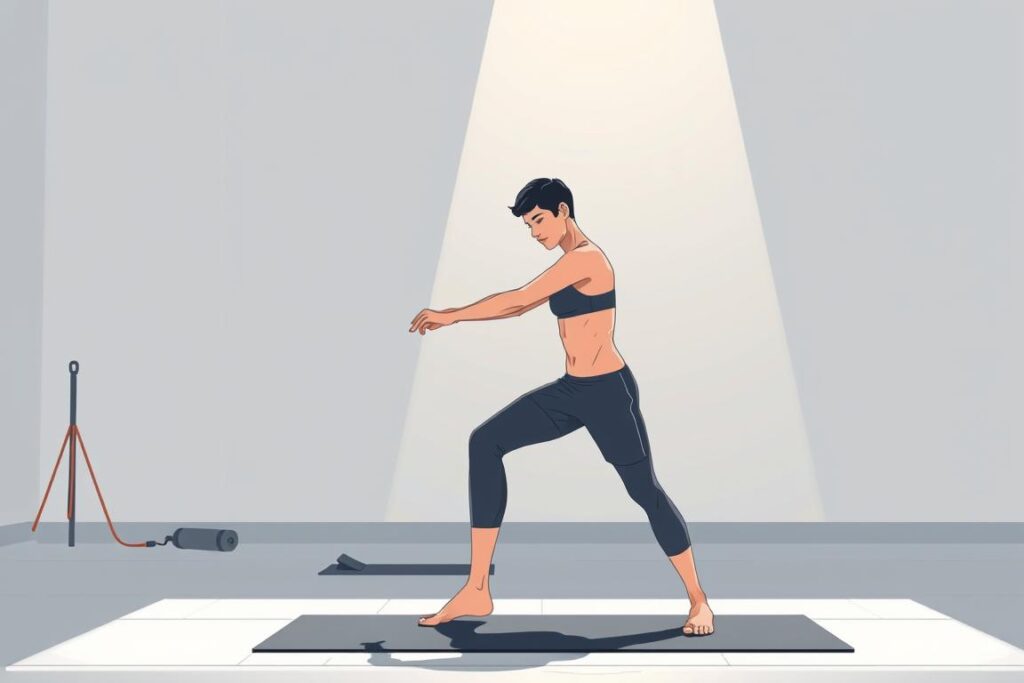
Myth: “Never stretch before you exercise”
That’s too absolute. The Cleveland Clinic and Runner’s World both back short movement-based prep. Prioritize dynamic stretching to raise temperature and prime joints.
If a brief static hold helps a tight area feel ready, keep it short and follow it with movement drills.
Myth: “Static stretching always hurts performance”
Not exactly. Static stretching over a minute can reduce immediate power, says pooled research.
Short holds (under 60 seconds) usually have minor effects. For heavy lifts or sprints, favor dynamic prep; for general sessions, brief static work may be fine.
Myth: “Stretching guarantees injury prevention”
Studies show that stretching alone doesn’t reliably stop injuries. Focus on gradual loading, solid technique, and consistent training instead.
- Practical way: dynamic warm-up for readiness, longer static stretches after training.
- People vary: use what makes you move better—then test it in real sessions.
What current research says about static vs. dynamic stretching
If you want strength and speed, the evidence points to one practical rule: move first, hold later.
Static stretching means holding a pose without motion. A Journal of Physiology study found holds longer than one minute can reduce strength and power. Shorter holds (up to 60 seconds) have smaller effects, but they still deserve caution when you need peak output.
Dynamic stretching uses controlled movement through the range of motion. A Journal of Strength and Conditioning Research study showed one set of 10 dynamic reps across lower-body groups improved running performance. Dynamic prep raises tissue temperature and primes the muscles you’ll use.
What this means for injury, soreness, and training
Reviews show that stretching alone does not reliably prevent injury or reduce DOMS. Smart training—progressive loading, good technique, and sport-specific prep—does.
- Practical take: use minutes of dynamic prep to ready motion, then lift or run.
- If you like long holds: save them for the end of the session when you’re warm.
| Type | Immediate effect | Best use | Key evidence |
|---|---|---|---|
| Static | May lower strength/power if >1 minute | Post-session for flexibility; short holds only pre-session | Journal of Physiology; Exercise Coach (~5% reduction) |
| Dynamic | Improves readiness and motion | Pre-session to prime muscles and joints | JSCR dynamic reps improved endurance performance |
| Combined | Balanced flexibility over time | Dynamic first, static after (30–60 minutes total per muscle across sessions) | Clinical reviews; Cleveland Clinic guidance |
How to warm up before a workout: a simple, science-aligned routine
Start your session with a short, focused routine that warms your body and primes the exact moves you’ll do. The aim is readiness, not fatigue.

Step-by-step: elevate temperature, mobilize joints, then use dynamic stretching
2–3 minutes easy cardio (walk, bike, jump rope) to raise heat without tiring you.
Mobilize ankles, hips, and shoulders with 8–10 controlled circles each. This restores comfortable range and mobility.
Do one set of 8–10 dynamic reps per side: leg swings, walking lunges with reach, and inchworms.
Sample sequences for strength training, running, and court sports
- Strength training: add squat-to-stand, hip airplanes, and plank shoulder taps to groove lifts.
- Running: follow with A-skips, high knees, butt kicks, and calf pumps to prime stride motion.
- Court sports: use lateral shuffles, carioca, and quick pogo hops for agility and reactive footwork.
Timing and intensity
Keep the warm-up about 5–8 minutes. Move smoothly, breathe steady, and stop short of forced end ranges.
If tight, add 20–30 seconds of focused pulses on that spot, then re-test the pattern you’ll train.
| Step | Duration | Purpose |
|---|---|---|
| Easy cardio | 2–3 minutes | Raise body temperature and blood flow |
| Joint mobilization | 1–2 minutes | Restore comfortable range and mobility |
| Dynamic set | 2–3 minutes | Prime muscles and motion for the session |
What to do after you train: static stretches that build flexibility without overdoing it
Post-session care shapes how you recover and how you move tomorrow. Use short, calm holds and light rolling to lock in gains without turning the cooldown into a second workout.
How long to hold
When your muscles are warm, favor static stretches held for 30–60 seconds. That range matches Cleveland Clinic guidance and Runner’s World notes about effective cooldowns.
Breathe slowly and stop if you feel sharp pain. You want tension, not tearing. Do 2–3 sets per area across a few days to truly improve flexibility.
Passive stretching and foam rolling
Passive holds can help you relax tight spots after exercise. Foam rolling eases perceived tightness and often increases short-term range of motion.
- Target hips, quads, hamstrings, calves, chest, and lats while warm.
- Hold each static stretch 30–60 seconds; roll each area 30–60 seconds.
- Keep total post-session time to about 5–10 minutes so it fits your routine.
| Method | Typical amount | Best use |
|---|---|---|
| Static stretches | 30–60 seconds | Improve flexibility after exercise |
| Passive stretching | 30–60 seconds | Relaxation and gentle lengthening |
| Foam rolling | 30–60 seconds | Ease tightness, prep mobility |
If an area stays stubborn, add slow eccentric strength work on training days to support lasting gains in range and strength.
When not to stretch—and smarter ways to reduce injury risk
There are times when pausing to pull isn’t the safest call for your body. If you have an acute injury, a recent sprain, or post-surgery limits, avoid pushing range until a clinician clears you.
Skip stretching with acute injuries or post-surgery; follow medical guidance
Don’t stretch through sharp pain or try to move a healing tendon. The Cleveland Clinic warns that gentle movement may help, but aggressive lengthening can worsen a damaged area.
Follow your provider’s plan and use pain-free ranges if rehab allows.
Strength training improves mobility: why eccentric work can increase flexibility
Want lasting range? Prioritize progressive strength training. Slow eccentric reps build strength through length and help you control new positions.
This approach reduces injuries by adding structural support to tight muscles and joints.
Your weekly plan: dynamic before, static after, brief mobility on rest days
Use dynamic prep at the start of training, then short static holds after. Add 5–10 minutes of easy mobility on rest days to keep the body moving without overload.
Desk-bound people often benefit from extra hip flexor, thoracic, and ankle work to fight daily stiffness and tightness.
- Safety first: if an area flares, swap intense holds for pain-free ranges and stability exercises.
- Lower risk: focus on gradual loading, solid technique, and session-specific warm-ups rather than forcing range.
- Daily health tips: sleep well, hydrate, and manage stress — these reduce tissue sensitivity more than chasing extreme flexibility.
| Situation | What to avoid | Better option |
|---|---|---|
| Acute sprain or post-op | Aggressive holds and deep range | Follow clinician plan; pain-free movement only |
| Chronic tightness | Only long passive holds | Strength work (eccentric), mobility drills, targeted stability |
| Desk-bound stiffness | Sitting longer, forced end-range | Short mobility breaks and hip/thoracic/ankle drills |
For myths and practical guidance that match this advice, see flexibility myths and facts.
Measuring progress: performance, range of motion, and how your body feels
Make tracking simple: note what you do, how long you hold it, and what changes in your session.
Keep a one-line log for each training day. Record the warm-up moves, any static holds, total cooldown minutes, and how your first 10 minutes of the workout felt.
Track what you stretch, for how long, and how it affects your workout
Quick checks: note ankle dorsiflexion, hip half-kneel angle, and shoulder reach each week. Re-test one simple range each 7 days to see real change.
Find your “just right” amount to avoid reduced running economy or unnecessary fatigue
Too much long pre-session static stretching can reduce early power and running economy. Aim to keep longer holds after training and use dynamic moves when you start.
- Log warm-up and cooldown: stretches used, hold times, and early-session feel.
- Watch performance markers: first-set bar speed, depth ease, interval pacing, or stride spring.
- Spread about 10 minutes per week of consistent static work across 3–5 days for steady range gains.
- If one area limits you, pair targeted stretches with slow eccentric strength to lock in range and strength.
- If pain appears or lingers, cut intensity, shorten holds, and favor controlled movement—pain is information.
| Measure | What to record | Why it matters |
|---|---|---|
| Warm-up | Moves, pre-hold times, dynamic drills | Shows readiness and early-session power |
| Range tests | Ankle, hip, shoulder angles weekly | Tracks mobility and true range changes |
| Performance | Bar speed, pacing, stride feel | Reveals if dose helps or hinders training |
| Recovery | Cooldown minutes, next-day feeling | Highlights fatigue or lasting benefit |
Conclusion
Keep it simple: a brief, repeatable routine wins over guesswork. Use movement to raise heat and prime joints, then save longer holds for after the session.
Do a 5–8 minute dynamic warm-up to protect early-session performance and a 5–10 minute cooldown with 30–60 second static stretching holds to build flexibility while muscles are warm.
Research and studies show timing matters. Long static stretching pre-lift or pre-sprint can blunt power, while strength training—especially slow eccentrics—adds usable range and resilience.
Log what you try, note how a workout felt, and tweak by experience. This plan protects health, boosts performance, and fits your time. Move, finish, and keep getting stronger.
FAQ
Is it true you should never stretch before exercise?
Do static stretches ruin strength or speed every time?
Can stretching alone prevent injuries?
What does research say about static vs. dynamic approaches?
How long should I hold a static stretch after training?
What’s a simple, science-aligned warm-up I can use?
How many reps or how much time should I spend on dynamic drills?
Will stretching help with soreness and stiffness after a workout?
When should I avoid stretching?
Can strength training improve my mobility?
How do I measure progress in range of motion and performance?
What’s the best weekly plan for mobility and flexibility?
Can too much stretching hurt my running economy or energy?