Lean Muscle Gain for Women at Home Without Overcomplicating It

 0
0
 0
0 What if a stronger, more defined physique was waiting for you right in your living room? Forget the crowded gyms and complex routines. The journey to building lean muscle starts with a simple decision and a clear path forward.
Not long ago, a persistent myth held many back. The fear that lifting weights would create a bulky look kept participation low. But times have changed. From 2004 to 2020, the number of women meeting strength training guidelines jumped from 17.5% to nearly 27%. The truth is out: resistance training builds strength and confidence, not excessive size.
So, what does “lean muscle” really mean for you? It’s about functional strength that makes daily life easier. It’s improving your body composition for sleek definition. This process boosts your metabolism, protects your joints, and builds unshakable confidence in what your body can achieve.
This guide cuts through the noise. We’re not selling quick fixes or trendy shortcuts. This is your straightforward roadmap to applying proven, science-backed principles. You’ll learn how progressive overload and smart programming deliver real results, no commercial gym required.
Home-based training is not a compromise. With bodyweight exercises and minimal equipment, you can trigger the same powerful adaptations. The benefits extend far beyond the mirror—think better balance, injury prevention, and a sustained energy that fuels everything you do.
This is for the woman who values evidence over hype. You’re ready to commit to a sustainable process, not chase a temporary transformation. Let’s build that strength, together.
Key Takeaways
- You can achieve significant strength and body composition changes without a gym membership.
- The outdated fear that resistance training leads to a bulky physique is fading, with more women than ever embracing strength work.
- Building lean muscle is fundamentally about increasing functional strength and creating definition, not adding mass.
- Real, lasting results come from consistent application of foundational principles like progressive overload, not from quick fixes.
- Training at home is a completely viable and effective path when you follow a structured, evidence-based approach.
- The physical benefits—improved metabolism, joint protection, better balance—translate directly to enhanced daily life and confidence.
Getting Started: Setting Realistic Goals and Expectations
Before you plan your first workout, you need a clear starting point. You can’t track progress if you don’t know where you’re beginning. Guessing won’t cut it.
Identifying Your Fitness Baseline
Start with a simple self-assessment. Can you do a proper push-up? How many bodyweight squats can you complete with good form? These tests reveal your current strength capacity.
Be honest without judgment. Your baseline is just a starting point, not a measure of worth. It reflects your body’s current capabilities.
Clarifying Personal Goals for Strength and Tone
Vague aspirations like “tone up” don’t drive change. Your muscles respond to specific targets. Aim to “add 10 pounds to my goblet squat in 8 weeks.” That’s a concrete goal.
Understand realistic timelines. Noticeable strength gains often appear in 2-4 weeks. Visible definition typically takes 6-12 weeks of consistent training.
Physiologically, “tone” is muscle definition visible when you build tissue and reduce fat. Strength is your capacity to produce force.
Set goals that serve your life. Training three days per week is sustainable and effective for many women. Trying a six-day split with a demanding job may lead to burnout.
Focus on process goals. “Complete all three workouts this week” is within your control. This approach protects you from disappointment.
Understanding the Science Behind Muscle Growth for Women
Hypertrophy isn’t a buzzword; it’s the tangible cellular process that creates definition and strength. This scientific term for muscle growth occurs when you consistently challenge your body with resistance.
The Role of Resistance Training and Recovery
Your muscles grow in response to three primary stimuli from resistance training:
- Mechanical tension from lifting challenging weights.
- Metabolic stress that creates that familiar “burn.”
- Muscle damage that triggers repair and rebuilding.
Hormonally, women build tissue differently. Lower testosterone levels mean you can achieve significant strength and sleek definition without the bulky look many fear.
Rep ranges dictate the result. The 6-12 rep sweet spot optimizes hypertrophy. Heavier loads for 3-6 reps build raw strength. Lighter weights for 12-20 reps boost endurance.
The cornerstone is progressive overload. Your body adapts, so you must gradually increase the stress. Add weight, reps, or sets over time.
Rest periods are strategic. Shorter rests (30-90 seconds) heighten metabolic stress for size. Longer rests (2-5 minutes) support full recovery for strength work.
Remember, growth happens during recovery, not the workout itself. This is when your body repairs tissue, making it stronger.
Adequate sleep (7-9 hours), proper nutrition, and scheduled rest days are non-negotiable. They are the building blocks. This holistic approach to body recomposition supports long-term health.
Understanding these principles lets you train smarter. You’ll build confidence because you know why each rep matters.
Effective Planning: Workout Essentials and Resistance Training
A well-structured workout is built on two pillars: smart exercise selection and precise execution. Your plan is the engine that drives real change.
Choosing the Right Exercises for Major Muscle Groups
Prioritize compound movements. These multi-joint exercises deliver maximum results. Start your session with them.
Foundational moves include squats, push-ups, rows, and Romanian deadlifts. They work several major muscle groups at once. This builds functional strength efficiently.
Isolation work, like biceps curls, comes later. It fine-tunes specific areas. This two-tiered strategy optimizes your energy.
Structuring Sets, Reps, and Rest Periods
For growth, aim for 3 to 6 sets of 6 to 12 reps per exercise. The final few reps should challenge you.
Your rest periods are strategic. Shorter breaks (60-90 seconds) emphasize muscle size. Longer breaks (2-3 minutes) support pure strength gains.
Always track your weights, sets, and reps. Beating last week’s numbers is how you force adaptation. Consistency here is everything.
Achieve Lean Muscle Gain for Women at Home
The key to consistent progress isn’t a fancy gym—it’s a dedicated space you control. Training at home removes the biggest barriers: commute time, crowded facilities, and rigid schedules. This freedom builds the consistency that drives real results.
Setting Up Your Home Workout Space
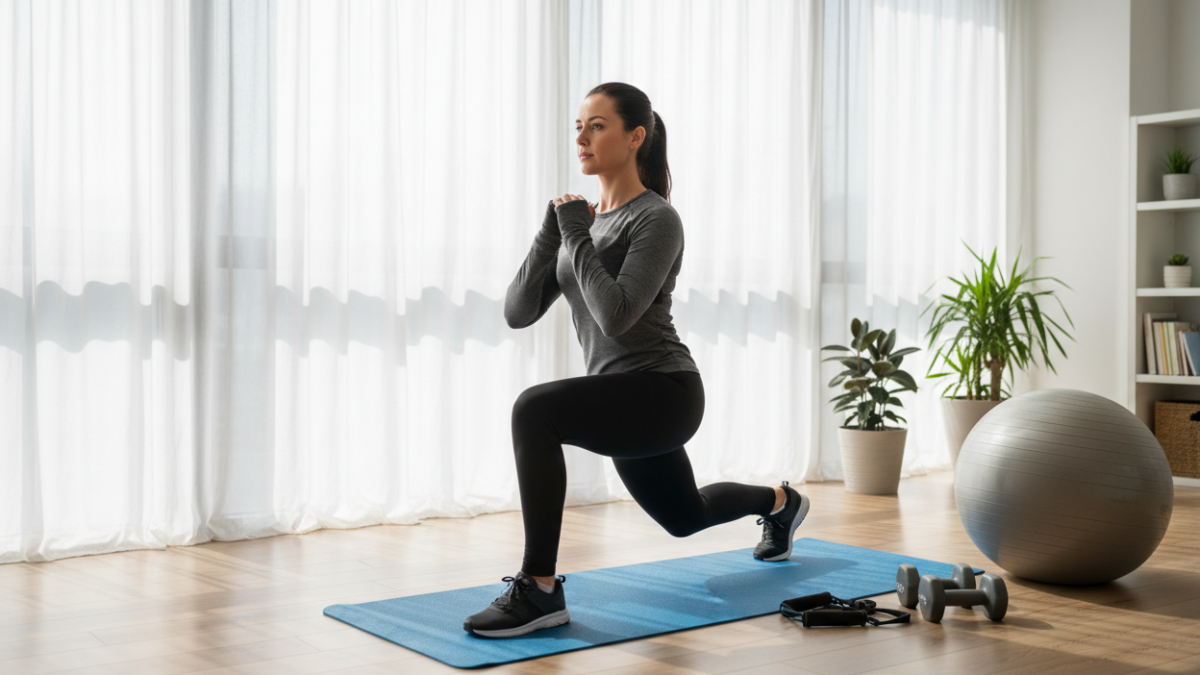
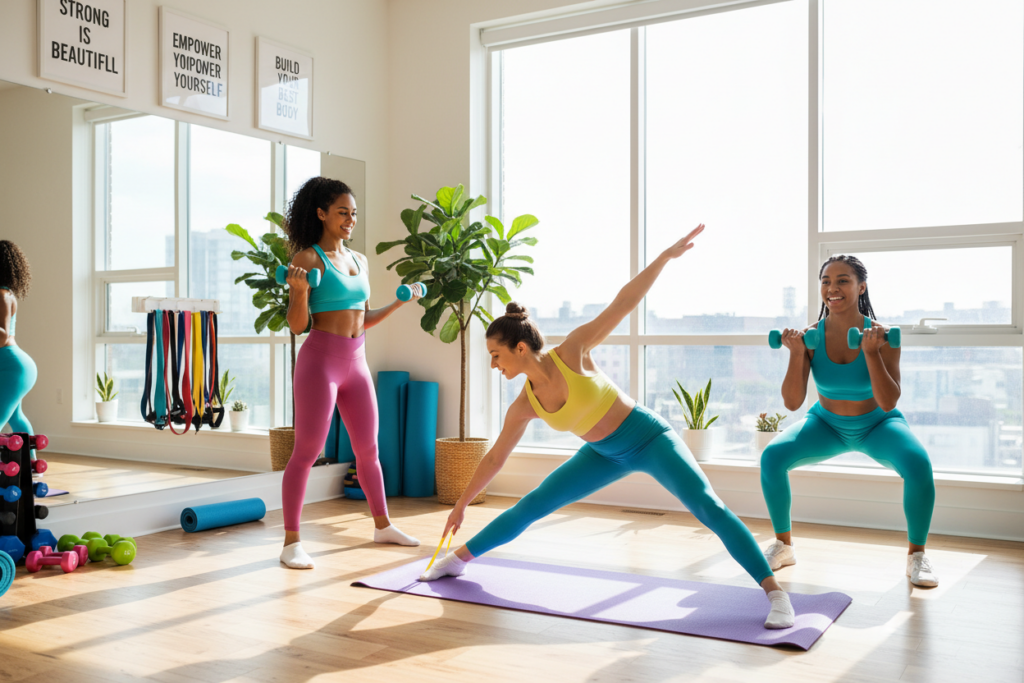
Clear a minimum 6×6 foot area in a room with good lighting. This gives you room to move safely. Keep your gear visible and accessible—if it’s buried in a closet, you’re less likely to use it.
A mirror helps you check your form during movements. Your environment should support your effort, not hinder it. This simple setup makes every session efficient.
Selecting Home-Friendly Equipment
Start with one versatile investment: a pair of adjustable dumbbells. They replace an entire rack, allowing you to add weight progressively as you get stronger. Add a sturdy bench or chair for seated and elevated exercises.
Your foundational workout needs just four moves. Goblet squats and Romanian deadlifts build lower body and posterior chain strength. Push-ups and rows develop your upper muscles.
For targeted glutes development, add hip thrusts using your bench. You can modify any exercise—try raised push-ups on a counter to start. Progress by slowing your tempo or adding reps.
A complete program fits into three 45-minute sessions per day. With the right equipment and plan, your home becomes a powerhouse for strength.
Nutrition for Strength: Fueling Your Body for Muscle Growth
Think of your workouts as the architect and your nutrition as the building materials. You provide the stimulus for growth with resistance, but your diet supplies the raw components. Without proper fuel, progress stalls.
Protein, Carbs, and Fats: Building a Balanced Diet
This is non-negotiable: you cannot build new tissue in a calorie deficit. For building muscle, research supports a modest surplus of 350-500 calories daily.
Protein is your priority. Aim for 1.4-2 grams per kilogram of body weight. A 140-pound woman needs about 85-125 grams daily.
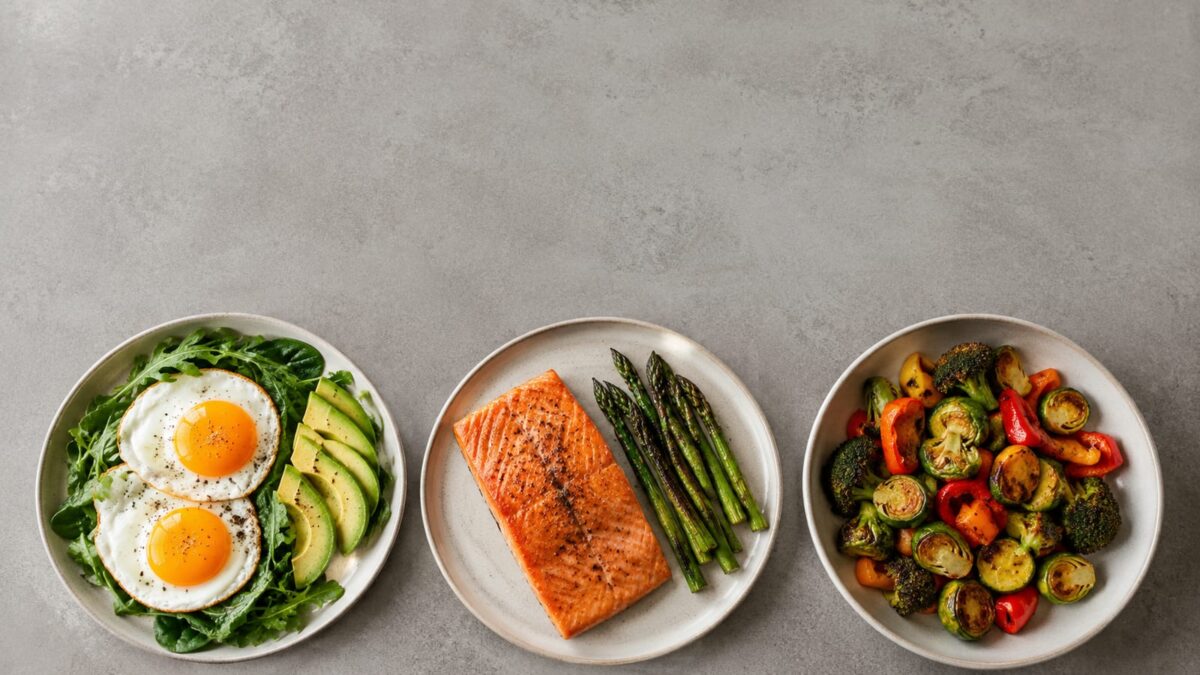
Quality matters. Chicken breast, eggs, and Greek yogurt provide complete amino acids that directly trigger synthesis. Carbs fuel your sessions. Fats support hormone health.
Use a simple plate framework. Fill half with vegetables, one-quarter with protein, one-quarter with complex carbs. Add a thumb-sized portion of healthy fat.
Focus on consistency, not perfection. Hitting your targets 80% of the time drives results. For guidance on managing your calorie surplus, smart strategies exist.
Adapting Workouts: From Beginner to Progressive Overload
The secret to unlocking lasting strength isn’t complexity—it’s consistent, calculated progression. Your body adapts quickly to any routine. To keep seeing results, you must apply the principle of progressive overload.
This practice means gradually increasing the demands on your muscles over time. It’s the most important driver for continued growth. Without it, your workouts hit a plateau.
Gradually Increasing Resistance and Load
Progression isn’t just adding weight. You can increase reps, add sets, or shorten rest periods. Improving your technique to increase time under tension also works.
Aim to increase your load by about 5% each week. If you squat 20 pounds for 10 reps, try 21 pounds next session. See if you can still hit your target rep range.
A common mistake is choosing weights that feel too comfortable. If you finish all reps easily and could do more, the resistance is too light. Your body has no reason to adapt.
Start conservatively. Begin with just two sets per exercise in your first week. This minimizes severe soreness and protects long-term consistency. Add a third set the following week if recovery is good.
Track every session. Write down the exercise, weight, sets, and reps. This data is your roadmap. Beating last week’s numbers is concrete evidence you’re building strength.
When progress stalls, check your recovery first. Are you sleeping and eating enough? Then, consider changing an exercise variation or taking a lighter time week. Consistent progression in your program proves you’re on the right path.
Time Management and Consistency: Fitting Workouts into Your Life
Consistency isn’t about willpower—it’s about smart scheduling you can actually follow. The biggest obstacle to results is fitting training into your real life, not a fantasy schedule.
Creating a Flexible Workout Schedule
Aim for three sessions per week. This frequency hits the sweet spot for progress. Each workout needs just 45 minutes of your time.
Your program can be flexible. Try Monday, Wednesday, Friday. If you miss a day, simply shift your schedule. Two days per week still builds strength, just slower.
It’s fine to train two days in a row if needed. You might feel slightly weaker, but you’ll still stimulate growth. Consistency over many weeks beats sporadic perfection.
Tracking Progress and Embracing Recovery
Record every exercise, weight, and rep. This data proves your progress. Note how you felt and your sleep quality too.
Mild soreness is normal. It should fade during your warm-up. If you’re too sore to match last week‘s performance, take an extra rest day.
Listen to your body. Recovery is part of the process. Schedule your sessions like important appointments and show up.
Overcoming Myths: Empowering Women Through Strength Training
Let’s dismantle the biggest fear holding you back from your strongest self. The idea that lifting weights makes women “bulky” is a myth rooted in misunderstanding, not physiology.
Debunking the “Getting Bulky” Misconception
Your body isn’t wired for that. Women have about 15-20 times less testosterone than men. This hormone is the primary driver for significant muscle size.
Accidentally getting bulky is nearly impossible. That look typically requires years of elite training, a massive calorie surplus, and sometimes other substances.
The data proves the myth is fading. In 2004, only 17.5% of women met strength guidelines. By 2020, that number jumped to 26.9%.
What you actually build is sleek definition, better posture, and a faster metabolism. This is the true path to female muscle growth.
Celebrating Small Wins on Your Muscle-Building Journey
Your first few weeks bring rapid strength gains. This is your nervous system learning to recruit fibers more efficiently.
Visible definition and shape often appear around 6-12 weeks with consistent effort. This is when your dedication becomes visible.
Celebrate every win. Adding five pounds to your squat or completing one more rep than last week is real progress.
Notice non-scale victories. Clothes fitting better, standing taller, and feeling unstoppable energy are powerful signs.
You’re building the strongest, healthiest version of yourself. That looks powerful on every woman.
Conclusion
You now possess the blueprint; the only thing left is to build.
This journey hinges on simple, powerful fundamentals. Apply progressive resistance, fuel your body with adequate protein, and show up consistently. The World Health Organization recommends this exact training for lifelong health.
Your program—built on compound exercises, smart sets and reps, and planned rest—delivers real results. It works just as effectively at home with minimal gear.
Forget outdated myths. Strength training empowers women, creating definition and resilience that enhances every part of life.
Progress isn’t always linear. Some weeks you’ll add weight, others you’ll master form. Trust the process. Consistent action, even three times per week, fuels long-term muscle growth.
Ready to begin? Your perfect starting point is a structured calisthenics workout plan. You have the knowledge. Now, take that first step and build the strongest version of yourself.
FAQ
Can I really build a strong, toned body without a gym membership?
Absolutely. You can achieve impressive results at home with strategic bodyweight movements and minimal equipment like resistance bands or a single set of dumbbells. The key is consistent, progressive training that challenges your major muscle groups—your glutes, back, chest, and shoulders—and supports your recovery.
How much protein do I really need to support muscle growth?
A> Research, including studies in the *Journal of the International Society of Sports Nutrition*, suggests aiming for 1.6 to 2.2 grams of protein per kilogram of body weight daily. This intake supports repair and growth. Distribute it across your meals—think eggs, Greek yogurt, or a quality protein powder—to fuel your body effectively.
Will lifting weights make me look bulky?
This is a common myth. Women typically don’t produce enough testosterone for massive hypertrophy. Strength training builds lean mass, which shapes and tones your physique, boosts metabolism, and enhances bone density. You’ll look stronger and more defined, not bulky.
What’s the most important factor for seeing results: diet or workout?
They’re inseparable partners. Your training provides the stimulus for growth by creating micro-tears in muscle fibers. Your diet—specifically adequate protein and overall calories—provides the building blocks for repair. Neglecting one hinders the other. For the best outcome, prioritize both your program and your nutrition plan.
How do I know if I’m lifting enough weight at home?
Use the “progressive overload” principle. The last few reps of your set should feel challenging. If you can complete all your reps with perfect form and still have more in the tank, it’s time to increase the resistance. This could mean using a heavier band, adding a pause, or performing more repetitions to continue driving adaptation.
How many days a week should I train for the best results?
Aim for 3-4 full-body or upper/lower split sessions per week. This frequency allows for sufficient training stimulus while providing crucial recovery days. Remember, muscles grow during rest, not during the workout itself. Prioritizing sleep and active recovery is just as important as your time under tension.
Related: Why Weight Training Won’t Automatically Make You Bulky