
Build Muscle With a Surplus, Not a Dirty Bulk

Eat in a small, measured calorie surplus, get enough protein and carbohydrates, lift with progressive overload, and adjust from your weight trend. That is how to eat for muscle gain without getting fat. You’ll gain some fat during a muscle-building phase, but a slow rate of gain keeps it controlled. Oversized bulks add body weight quickly and leave you with a longer cut afterward.
Last updated: 2026-10-19
The lean-gain target
You can gain muscle while keeping fat gain low. Victoria’s government health guidance advises that when you gain weight to build muscle, you should be prepared to gain some fat as well, because it isn’t possible to increase muscle mass without also increasing body fat.
That distinction matters because many lifters react to this problem with one of two bad plans. They either eat everything in sight and call it a dirty bulk, or they keep calories so low that training stops progressing. Neither plan gives you a reliable way to build muscle.
The Strength Dietitian recommends slow muscle growth as the best way to add lean mass without excessive fat gain. You need enough food to support training and recovery, but extra calories beyond that requirement do not become extra muscle by default.
Your target is a controlled increase in body weight, stronger performance, and a waist that does not run away from you. That requires a plan you can measure.
How do you eat for muscle gain without getting fat?
Follow this process:
- Estimate your maintenance calories from your current intake and weight trend.
- Increase current calorie intake by 10%.
- Eat 1.6–2.2 grams of protein per kilogram of body weight each day.
- Build most meals around protein, carbohydrates, fruit, vegetables, and useful fats.
- Perform at least three strength-training sessions per week.
- Track daily weigh-ins, weekly averages, waist measurements, gym performance, and photos.
- Keep the plan steady for several weeks before changing calories.
- Reduce or add food in small steps based on the trend.
The goal is not to keep your body weight perfectly stable. The goal is to gain slowly enough that your training improves without adding unnecessary fat.
Start with a small calorie surplus
First, estimate your maintenance calories. Track your normal food intake while weighing yourself consistently. If your average body weight stays close to the same level, that intake is a useful starting estimate.
Then increase your current calorie intake by 10%. This gives you a clear starting point without pretending you know your exact maintenance from a calculator.
Your body does not burn the same amount of energy every day. Training, steps, appetite, sleep, and stress all change the result. That is why the scale trend matters more than a maintenance number on a screen.
A large surplus looks productive because your body weight rises quickly. Much of that increase will be water, stored carbohydrate, food volume, and fat. Muscle growth is slower. Eating more than you can use does not speed it up in the same proportion.
For more detail, use this guide to calorie surplus for muscle growth. Keep the starting intake steady long enough to see what it does before making another change.
Set a slow rate of gain
Aim for a 0.25–0.5% body-weight increase each week while building muscle.
That range gives you room to gain without treating every increase on the scale as a win. A faster climb can mean your surplus is too large, especially if your waist expands quickly and your gym performance does not improve.
Do not judge the plan from one weigh-in. Body weight moves with hydration, sodium, food, bowel movements, and hard training. Those changes can hide the real trend for several days.
Use a weekly average from daily weigh-ins. If that average rises within the target range and your lifts are improving, keep your calories steady. If your weight rises much faster for several weeks, remove a small amount of food. If it does not rise and training has stalled, add a small amount.
Slow progress is still progress. The point is to earn more muscle without creating a fat-loss project you could have avoided.
Build meals around quality calories
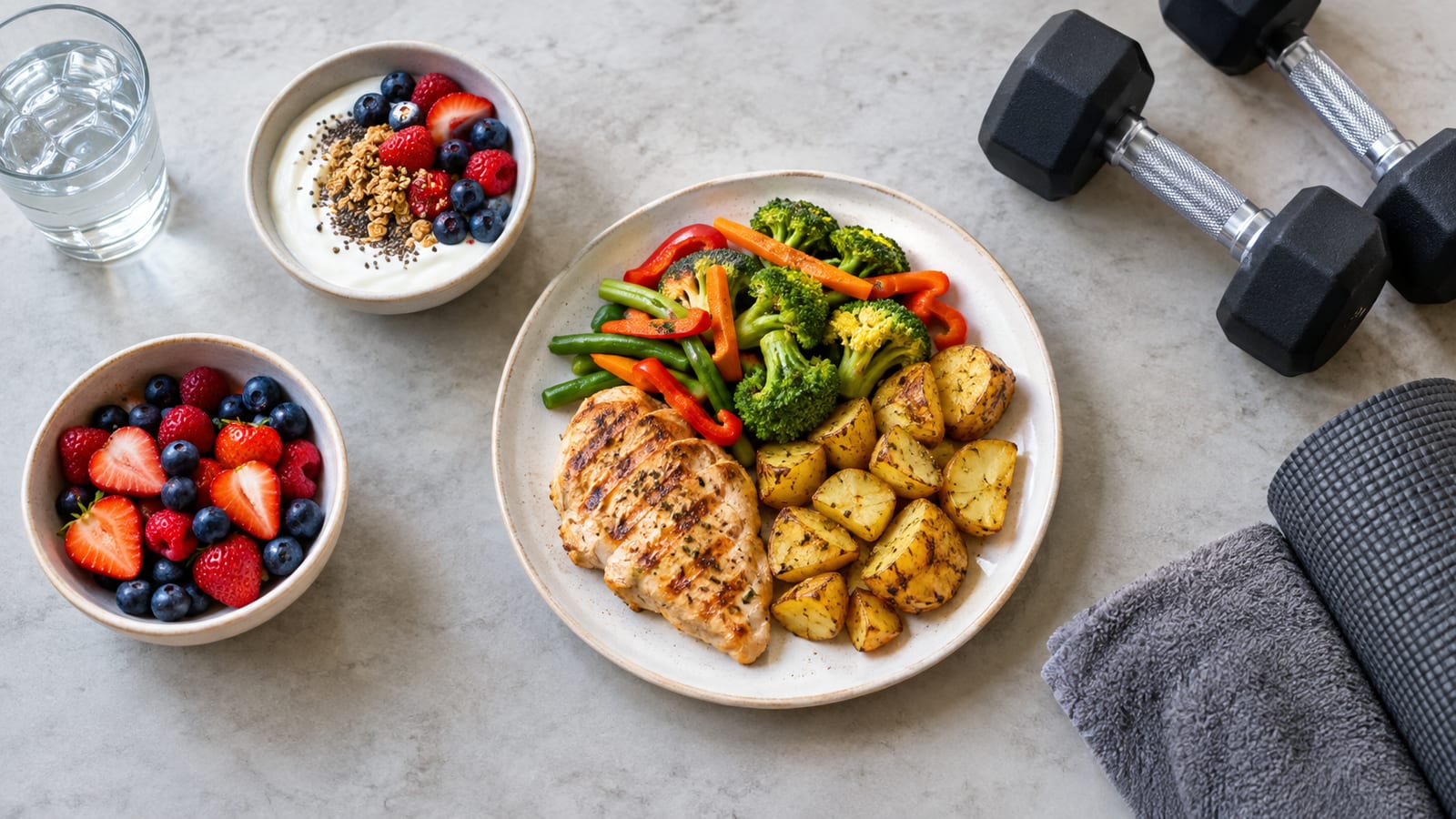
Quality calories make the surplus easier to control. Start with foods that provide protein, carbohydrates, fats, vitamins, minerals, and enough fiber to support digestion.
Use this basic structure:
| Meal part | Practical choices |
|---|---|
| Protein | Lean meat, fish, eggs, dairy, legumes, tofu |
| Carbohydrates | Rice, potatoes, oats, bread, pasta, fruit |
| Vegetables | Fresh, frozen, or canned vegetables |
| Useful fats | Olive oil, nuts, seeds, avocado, fatty fish |
| Portable options | Yogurt, milk, sandwiches, tofu, boiled eggs, protein-rich leftovers |
You do not need to ban processed food. You do need to stop using it as the foundation of the surplus. Cakes, fried foods, and snack foods make it easy to overshoot calories before you feel satisfied.
A few convenient foods can help you hit your intake. The problem starts when convenience replaces structure and every meal becomes a calorie gamble.
Include fruit and vegetables daily. They help you cover basic nutrition while you eat more food, and they make the plan easier to sustain. If a large meal leaves you uncomfortable, use a smaller meal and a portable snack later.
The best diet for muscle gain is the one that lets you hit your targets without turning every day into a food challenge.
Protein supports muscle gain
Consume 1.6–2.2 grams of protein per kilogram of body weight per day from a variety of sources.
Protein supplies the amino acids your body uses to repair and build tissue after training. More protein is not a substitute for enough calories, hard training, or sleep. It is one part of the system.
Spread your daily protein across the meals you already eat. You do not need to force constant eating if that schedule makes you miserable. You need a pattern that helps you reach the daily total consistently.
Good choices include:
- Chicken, turkey, lean beef, and other lean meats
- Fish and seafood
- Eggs and lower-fat dairy
- Greek yogurt, cottage cheese, and milk
- Beans, lentils, and other legumes
- Tofu and other soy foods
Keep saturated fat reasonable by using a mix of leaner proteins, fish, dairy, eggs, legumes, and tofu. You do not need to remove animal foods or fear dietary fat. You do need variety.
A protein shake can fill a gap when cooking is difficult. It should solve a practical problem, not excuse a diet with no real meals.
Carbohydrates make hard training productive
Carbohydrates help you train with enough effort to create a useful muscle-building signal. They also help replace stored muscle carbohydrate after training, which supports the next session.
Use rice, potatoes, oats, fruit, bread, pasta, and other carbohydrate foods that digest well for you. Include more of them around training if that improves your energy and performance.
You do not need to earn carbohydrates through extra exercise. You need to place enough of them in the plan to support repeatable work.
If your weights feel unusually heavy, your reps drop, and recovery worsens, check your carbohydrate intake before adding another supplement. The problem may be simple: you are asking your body to train hard without giving it enough usable fuel.
Choose the sources you can digest and prepare consistently. Fancy grain choices do not build more muscle if you keep missing meals.
Healthy fats keep the plan manageable
Dietary fat provides energy and helps you add calories without making every meal enormous. Use olive oil, nuts, seeds, avocado, and fatty fish as regular options.
These foods also provide nutrients that are harder to cover with a diet built only around lean meat and rice. However, fat is calorie-dense, so portions can grow quickly without much extra food volume.
Add olive oil to a meal, use nuts with yogurt, or include avocado with a sandwich. These are simple ways to raise intake when needed. Do not pour extra oil into every dish just because it is considered healthy.
Your joints, digestion, appetite, and food budget all get a vote. Use fats to make the diet practical, then watch the scale trend to see whether the amount fits your goal.
Resistance training is the muscle-building signal

Food supports growth. Resistance training tells your body where to put the resources.
Perform at least three strength-training sessions per week. Build each session around a squat or leg press, a hip hinge, a press, a row or pulldown, and a targeted movement for smaller muscle groups.
Start with a manageable amount of work. Use controlled technique, keep most sets close enough to hard effort, and leave reps in reserve when fatigue would change your form. Your joints get a vote, especially during a calorie surplus when enthusiasm can outrun recovery.
Progressive overload means improving the work over time. Add weight or reps when you can do so with repeatable technique. An extra rep, better control, or a longer range of motion also counts as progress.
Keep a logbook. Record the exercise, load, reps, and any note that explains a change. If the numbers and technique never improve, the answer is not automatically more food. Check sleep, exercise selection, effort, and recovery first.
For a busy lifter, a three-day muscle-building workout built around basic movements is enough to make progress. The plan is simple on paper and demanding in practice. That is a useful combination.
Simple meals work better on busy weeks
You do not need a complicated meal schedule. You need repeatable combinations that cover the basics.
Try these templates:
- Oats with milk or yogurt, fruit, and nuts
- Eggs with bread, fruit, and vegetables
- Rice with chicken or tofu, vegetables, and olive oil
- Potatoes with fish, beans, or lean meat
- Yogurt with oats, fruit, and seeds
- A sandwich with lean protein, cheese, vegetables, and fruit
- Leftover meat, rice, or potatoes packed for work
Batch-cook protein and carbohydrates so your busy days do not depend on takeaway food. Keep portable protein available in your bag, desk, or refrigerator. A meal you can eat on schedule beats a perfect recipe you never prepare.
Your minimum effective training routine is also straightforward. Train at least three times each week, cover the main movement patterns, record your work, and try to improve gradually.
Do this first: make the plan fit your week. Missed sessions and skipped meals create more trouble than an imperfect food choice.
Monitor the trend, not your mood

Track the measures that answer different questions:
- Daily body weight: shows short-term movement.
- Weekly average: shows the useful trend.
- Waist measurement: shows whether fat gain is accelerating.
- Gym performance: shows whether food supports productive training.
- Progress photos: show changes the scale cannot explain.
- Food intake: shows whether your planned surplus matches reality.
Take measurements under similar conditions. Consistency makes the comparison useful.
If body weight rises, waist size changes slowly, and your lifts improve, the plan is doing its job. If body weight rises quickly but performance stays flat, you are probably eating beyond what your training can use.
If your waist changes while body weight barely moves, check measurement technique and daily consistency before reacting. Water and food volume can distort both the scale and your appearance.
The logbook should guide your next decision. It should not become another source of stress.
Adjust calories slowly
Hold your starting intake steady for several weeks before changing it. You need enough data to separate a real trend from normal daily noise.
Add calories if your average body weight stays flat, your training is consistent, and recovery is poor. Remove calories if weight gain runs above the target for several weeks or your waist expands faster than your strength and measurements justify.
Make one change at a time. If you change calories, training volume, meal timing, and cardio together, you will not know what fixed the problem.
Avoid making adjustments after one heavy weigh-in or one soft-looking morning. Stay with the plan long enough to learn from it.
A controlled mass phase should feel boring at times. That is a feature. Sustainable progress usually comes from small increases that you can repeat.
Recovery determines whether food becomes progress
Muscle growth requires more than protein and calories. Sleep, rest days, hydration, stress, and consistent training determine whether you can use the food productively.
Keep a regular sleep schedule as often as your life allows. Take rest days when your performance and technique show that fatigue is building. Drink enough to train normally and keep meals comfortable.
Stress can reduce appetite, disrupt sleep, and make training feel harder. You do not need a perfect life to gain muscle, but you do need a plan that survives normal work and family demands.
Use the Dietary Guidelines for Americans as a broad reference for building a varied eating pattern. For training, the Physical Activity Guidelines for Americans provide official guidance on regular activity.
If you have a medical condition, a history of disordered eating, or unexplained weight changes, speak with a qualified health professional before deliberately increasing food intake.
The full process in one plan
To gain muscle without getting fat, eat enough but do not chase the largest surplus you can tolerate. Hit your protein target, use carbohydrates to support hard training, include useful fats, and build meals from foods you can repeat.
Train with progressive overload at least three times per week. Track your weight trend, waist, photos, and gym performance. Then make small calorie adjustments only after several weeks of consistent data.
Some fat gain comes with the muscle. You can keep the gain controlled, earn the next increase in the gym, and avoid a needless bulk-and-cut cycle.
FAQ
Can you gain muscle without gaining fat?
Not while you are eating in a surplus to gain weight: Victoria’s Better Health Channel advises being prepared to gain some fat as well, because it isn’t possible to increase muscle mass without also increasing body fat. You can, however, gain muscle while minimizing fat gain through a small surplus, slow weight gain, and consistent resistance training.
How much protein should you eat for muscle gain?
Consume 1.6–2.2 grams of protein per kilogram of body weight per day. Use several protein sources across your normal meals, including meat, fish, eggs, dairy, legumes, and tofu.
What should you do if your waist grows faster than your strength?
Check your weight average and food intake first. If the pattern continues for several weeks, reduce calories modestly and keep training performance as the main test. Do not slash food after one measurement.
Do you need supplements to gain muscle without getting fat?
No. Supplements can make protein or calories more convenient, but they do not replace a measured surplus, good meals, progressive training, or recovery. Use one only when it solves a specific practical problem.
Can you gain muscle while losing fat?
It can happen outside a bulk, through a process called body recomposition. Healthline names higher protein intake and strength training as key parts of losing fat while gaining muscle. That is a different approach from the slow weight-gain phase described above. Use protein, strength training, and consistent tracking, then judge the result from performance, waist measurements, and photos rather than scale weight alone.
Related on this blog