

How to Recover Well Between Strength Workouts

A good rest day looks boring, and that's the point. Here's what to do on rest days: sleep a full night, eat your normal meals with plenty of protein, take an easy walk, and spend a few minutes on mobility. Skip hard cardio, extra lifting, and anything that leaves you flat for your next session. If you walk into that workout and beat the logbook, the rest day did its job.
Rest days are part of the training
Lifting doesn't build muscle during the session. The workout creates the signal and the fatigue. Repair and growth happen afterward, while you recover and come back stronger.
That's why standard strength training guidance says to rest one full day between training each specific muscle group. The same guidance asks you to train all the major muscle groups at least two times a week. It also says not to hit the same group two days in a row. So a rest day for one muscle doesn't always mean a day out of the gym.
On a flexible upper-lower training split, for example, your legs rest while your upper body trains. Full days off still matter, though. Your joints, your sleep, and your motivation need room too.
The plan has to fit your week, and it also has to fit your recovery. A rest day you protect is what lets the next hard session count.
Should you rest completely or move?
Most days, move a little. An easy walk or a short mobility session usually leaves you looser and in a better mood than a day on the couch.
The WHO guidelines on physical activity and sedentary behaviour support this. They state that replacing sitting time with activity of any intensity, including light activity, brings health benefits. A slow walk counts.
Some days call for real rest instead. Take the day fully off when:
- You're sick, especially with a fever or chest symptoms.
- You've slept badly for several nights and feel flat.
- Soreness is deep enough that walking or stairs feel awkward.
- A joint hurts in a sharp, specific spot rather than a general muscle ache.
- Your last few sessions went backward despite honest effort.
On those days, full rest is the productive choice. Your joints get a vote, and so does your immune system. If pain lingers or gets worse, see a medical professional instead of training around it.
Keep active recovery easy enough to recover from
Active recovery means light movement that helps you feel better without adding fatigue. The word "active" causes trouble, because many lifters hear it as permission to train. Hold yourself to these limits:
- Conversational pace. You can speak in full sentences without gasping.
- Low resistance. Use light gears on a bike, easy strokes on a rower, or bodyweight only.
- Short duration. Stop while you still feel like doing more.
- No sets to failure. That also rules out timed rounds and personal records.
One test settles it. You should finish feeling better than when you started. If you're tired, sweaty, and starving like you would be after a workout, then it was a workout.
Low-impact recovery options that work
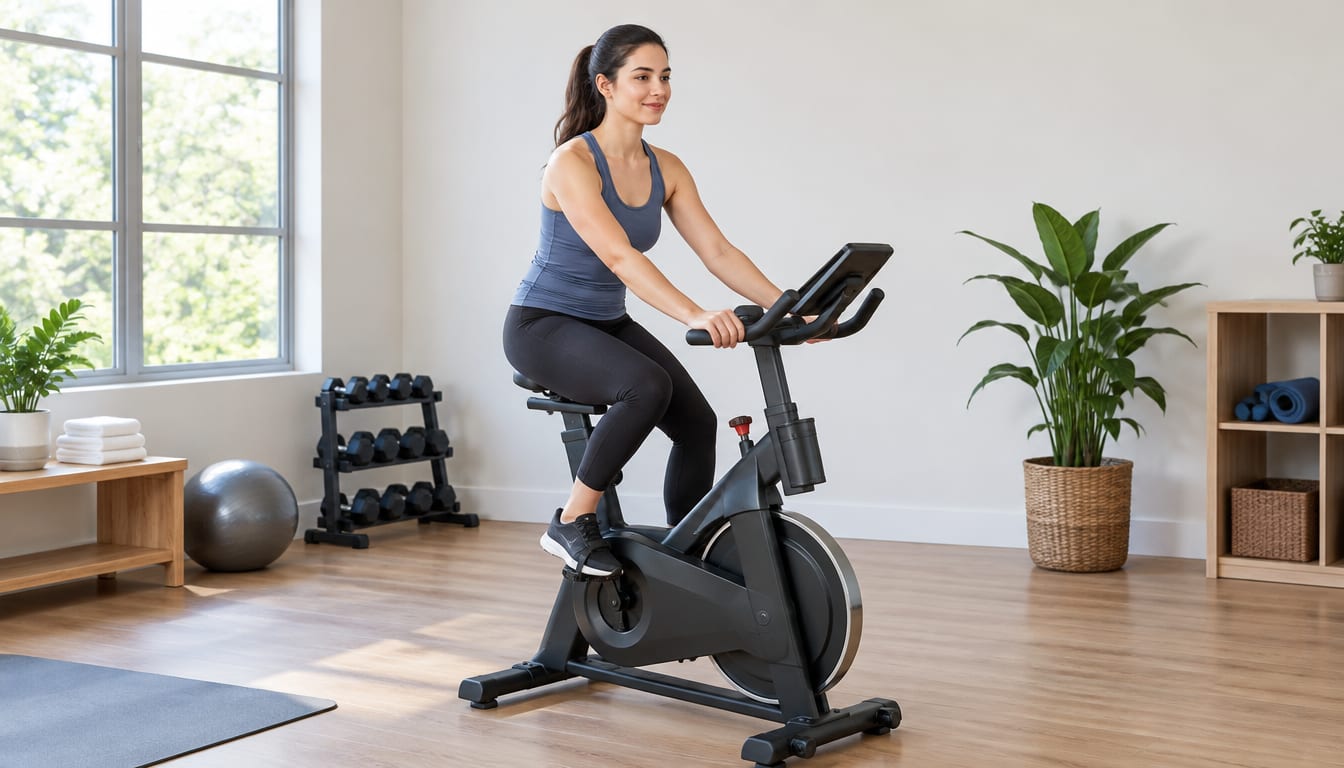
Pick one or two of these and repeat them. You don't need novelty here. A familiar option is easier to keep easy.
- Walking. This is the default. It needs no equipment, rarely bothers joints, and is hard to overdo.
- Easy cycling. It's good if your knees like it. Keep the resistance low and the cadence relaxed.
- Swimming or pool walking. Water is gentle on joints. Still, hard laps turn into conditioning fast.
- Light rowing. It's fine at an easy pace with clean form. Rowing hard is a full-body workout.
- Relaxed bodyweight movement. Try comfortable-depth squats, hip hinges, arm circles, and slow crawling.
Walking wins for most lifters. A brisk walk also counts toward the national guideline for adults. That guideline calls for at least 150 minutes of moderate aerobic activity each week, plus muscle-strengthening work at least twice in that span. Your lifting covers the second part, and walking is the cheapest way to cover the first.
What should you do on rest days? A simple session
Keep the session short and in this order:
- Easy warm-up movement. Walk around, march in place, and swing your arms until the stiffness eases.
- Light cardio. Walk, cycle, or swim at a pace you could chat at.
- Mobility. Do slow joint circles and a few gentle drills for the areas you trained hardest.
- Optional cooldown. Add slow breathing or light stretching if it helps you settle.
The session is the smallest piece of a good rest day. Meals and bedtime matter more, so plan the whole day like this:
| Part of the day | What to do | What it does for you |
|---|---|---|
| Morning | Short walk outside | Eases stiffness and gets you moving early |
| Meals | Normal meals with protein at each | Gives repair the raw material it needs |
| Afternoon | The gentle session above, if you feel like it | Loosens trained muscles without new fatigue |
| Evening | Log your last session and plan the next one | Keeps the routine alive without training |
| Night | Usual bedtime | Lets sleep do most of the recovery work |
Light cardio without the extra fatigue
Light cardio gets blood moving and loosens stiff legs. However, the dose matters more than the activity. Go long enough to feel looser and short enough that your legs feel fresh the next morning.
Watch for signs that it has turned into another workout:
- You're breathing too hard to talk.
- You're chasing pace, distance, or calories burned.
- Your legs feel heavy when your next lower-body session starts.
- You need a nap or a big snack afterward.
Timing matters too. Before a leg day, keep cardio flat and gentle. Hills, sprints, and hard cycling belong on days when they won't steal reps from your squats. If you want real conditioning, give it its own slot in the plan and count it as training.
Mobility work that earns its place
Mobility is your ability to move a joint through a useful range under your own control. For a lifter, useful means the positions your lifts demand: a deep squat, a clean hinge, a comfortable overhead reach.
Rest-day mobility should feel controlled and easy. Three types cover most needs:
- Controlled joint circles. Move your hips, shoulders, ankles, and upper back slowly through their full comfortable range.
- Gentle dynamic drills. Leg swings, cat-cow, and upper-back rotations wake up stiff areas without strain.
- Targeted stretching. Hold a mild stretch for areas that feel tight, and keep the tension mild.
Skip painful stretching and long, forced holds. The goal is owning the positions you lift in, not touching your toes for a photo. Extra flexibility beyond what your lifts need does little for muscle.
If one area stays restricted for weeks, add a drill to your warm-up before the lift that needs it. That's when you actually use the range.
Light movement helps soreness, up to a point
Delayed-onset muscle soreness (DOMS) is the achy, tender feeling that shows up the day after a hard or unfamiliar session. It can linger for a while, especially after new exercises or a jump in volume.
Easy movement can ease stiffness and make soreness feel better for a while. Still, it doesn't speed up repair in any dramatic way. Soreness also isn't proof of a good workout. It mostly reflects something new, so experienced lifters on a steady program often feel little of it.
So move gently, let it fade, and train if the sore muscle can still work with good form. Severe swelling, extreme pain, or dark urine after training is a different matter. Get checked by a doctor.
Eat and sleep like recovery is training

Natural lifters can't afford to under-eat on rest days. Repair keeps going after the session ends, and it runs on the food you eat on your off days. Keep calories close to normal and hit your usual protein target.
Keep some carbohydrate in too, because it refills the muscle fuel your next session will use. Fancy diet cycling isn't required either. A single bigger day won't reset your metabolism, and a low-food rest day won't make you leaner in any way that matters. Consistent eating does more.
Drink fluids through the day. Pale urine is a simple check that you're getting enough.
Then protect your sleep. Go to bed and wake up at about the same times every day. That habit does more for recovery than any gadget you can buy.
Keep the routine without forcing a workout
For some people, a day off breaks the habit, and the next session becomes easier to skip. The fix is a small training habit that isn't training:
- Walk at your usual gym time.
- Prep meals for the next couple of days.
- Review technique by watching a clip of a lift and checking depth or bar path.
- Update your logbook with weights, reps, and how the sets felt, then set targets for next time.
- Put the next session on your calendar.
None of this tires you out. All of it makes the next workout better, because you arrive fed, rested, and with a clear target to beat.
Common rest-day mistakes
Most of these come from feeling guilty about resting. Skip them:
- Hard cardio. Intervals, long runs, and spin classes leave your legs flat for the next lower-body day.
- Sneaking in extra lifting. "Just arms" or "a few quick sets" adds volume you didn't plan and may not recover from.
- Failure training. Chasing a pump to failure is still a hard session.
- Aggressive stretching. Pulling into pain doesn't speed recovery, and it can irritate muscles that are already sore.
- Recovery gadgets as a fix. Massage guns, compression boots, and cold tubs are fine if you enjoy them. None of them make up for short sleep or too little food, so spend on groceries first.
The pattern behind every mistake is the same. Each one turns a recovery day into a fatigue day. As a result, the next real workout gets worse.
How do you know rest is working?
Your next workout tells you. Run these checks during your warm-up and first working sets, before you decide to add weight or reps:
| Check | Good sign | Adjust if |
|---|---|---|
| Soreness | Mild or gone, and the muscle moves well in warm-ups | Soreness still changes your technique |
| Energy | Normal for you | You feel flat across several sessions |
| Joints | Comfortable through warm-ups | Pain is sharp, specific, or growing |
| Sleep | Your usual amount | You've been short for several nights |
| Performance | You match or beat the logbook | Reps keep dropping session after session |
If several checks come up short, make these changes in order:
- Do this first: fix sleep and food. Most stalled recovery starts there.
- Make rest days easier. Cut the cardio back to a gentle walk.
- Trim volume. Drop a set from your biggest lifts until performance returns.
- Add space. Move a session or add another rest day to your week.
For more detail on timing, see how long muscle recovery takes. Change one thing at a time so the logbook shows you what fixed it.
FAQ
Can I train a different muscle group instead of taking a day off?
Yes, and on a split that's where most of your muscle-specific rest comes from. Training upper body the day after legs still lets your legs recover. Even so, keep at least one full day off each week. Your joints and your energy don't care which muscles were on the schedule.
Is a long hike or a pickup game okay on a rest day?
Occasionally, yes, and enjoying it is a fine reason. A long hike or a full-court game is real work for your legs, so treat it as a training day when you plan the week. Ease off the lifting session before it, and expect the next leg day to feel a little flat.
Do I still need a rest day if I'm not sore?
Usually, yes. Feeling fine tells you the program is familiar, and that's all. Tendons, joints, and energy tire on their own schedule, so keep your planned days off. Let the logbook decide when you need extra.
Should I keep taking creatine on rest days?
Yes. If you use it, take it every day. Creatine works by keeping your muscle stores topped up over time, so skipping off days lets them drift down. Timing barely matters, so pair it with a meal you never miss.