
How to Keep Shoulders Down During Pull Ups the Right Way

 0
0
 0
0 You grip the bar, ready to prove your strength, but your shoulders instantly creep toward your ears. That frustrating hike isn’t just ugly—it’s stealing power from every rep you grind out.
The pull-up is the ultimate test of relative body strength. It demands total-body tension, not just getting your chin over the bar. Most people struggle because the issue isn’t raw power. It’s mastering shoulder positioning.
When your shoulders ride up, you create energy leaks. This reduces the effectiveness of the movement and increases injury risk. Proper scapular depression transforms a mediocre lift into a strength-building powerhouse.
This isn’t about aesthetics. It’s about protecting your joints and maximizing muscle recruitment for long-term progress. Let’s fix the core problem that plagues everyone from beginners to advanced athletes.
Key Takeaways
- Improper shoulder positioning is the main reason people struggle with pull-ups, not a lack of strength.
- Hiking your shoulders toward your ears creates energy leaks, making each rep less effective.
- Correct scapular depression directly protects your shoulder joints from injury.
- Mastering this form fundamental maximizes back muscle recruitment for better growth.
- Proper technique transforms the exercise from a basic lift into a true strength-building movement.
- This skill is essential for everyone, from first-timers to athletes chasing higher reps.
- Focusing on shoulder position is a non-negotiable requirement for safe, powerful performance.
Setting the Foundation: Understanding Shoulder Mechanics
Your ability to generate force during a pull-up is dictated by the coordinated effort of two key muscle groups: the lats and lower traps. Let’s translate complex anatomy into simple, actionable insight.
Discovering the Role of Lats and Lower Traps
Your lats—the latissimus dorsi—are among the largest muscles in your body. They are your primary pulling engines, responsible for driving your arms toward your torso. This is the core movement of the exercise.
Your lower traps are the unsung stabilizers. In most people, this muscle group is weak. Its job is to pull your shoulder blades down and back, a action called scapular depression and retraction.
The Importance of Scapular Control
Scapular control is the synergy between these muscles. It provides a stable platform for your powerful lats to work from. Without it, you create energy leaks.
At the bottom of a pull-up, your arms are overhead. This is a weak position for the lats. As you pull and your arms move closer to your sides, your lats gain mechanical advantage. This is why the middle of the movement often feels easier.
Proper control of your shoulder blades protects your joints and lets your strongest back muscles perform. It’s the non-negotiable foundation for a safe, powerful lift.
Establishing a Strong Hanging Position
Every powerful pull-up begins with a rock-solid setup at the bar. Your setup dictates every rep that follows. Get this wrong, and you’ll fight for stability from the start.
Nail it, and you create a platform for pure strength.
Proper Grip, Bar Setup, and Tension
Reach up and place your palms over the bar in a pronated grip. If you can’t reach, step up using a box—never jump and lose all tension.
Your grip width is a strategic choice. A wider grip shortens the range of motion and targets the lats hard. A narrower grip involves more biceps and allows for fuller extension.
Before you even think about pulling, activate your entire body. Actively squeeze and depress your shoulder blades. Brace your abs hard and clench your glutes.
Here’s a critical detail: position your feet slightly front of your torso, not hanging straight down. This alignment prevents excessive swinging and maintains balance.
Shift your elbows forward. This small move externally rotates your shoulders, engaging the lats more effectively and protecting the joints.
If holding this fully-tensed hang is difficult, practice dead hangs for 3 sets of 30 seconds. Build that foundational strength and positional awareness first.
Your choice of hand position significantly impacts the exercise. Use this table to guide your selection based on your goals.
| Grip Type | Hand Position | Primary Benefit | Best For |
|---|---|---|---|
| Overhand | Palms facing away | Maximizes lat engagement and external rotation | Building pure pulling strength and back width |
| Underhand | Palms facing you | Recruits biceps more, making the lift slightly easier | Beginners or focusing on biceps development |
| Neutral | Palms facing each other | Most shoulder-friendly, reduces joint stress | Training around shoulder issues or high volume |
Master this initial hang. It transforms your arms and body into a single, powerful unit ready to work.
Perfecting Technique: How to Keep Shoulders Down During Pull Ups
The final inches of a pull-up are where champions are made and form is broken. Perfecting your technique demands focus on the entire movement, not just the start. Your success at the top defines the lift’s quality.
Maintaining Tension Throughout the Movement
From the hang to the peak, your muscles must stay engaged. The moment you initiate, think “drive elbows down toward your hips.” This single cue prevents your shoulders from rising.
It maximizes lat engagement and keeps your scapulae depressed. Continuous tension is your anchor. Never let it go.
Ideal Shoulder Blade Positioning
Your shoulder blades must stay back and down. This creates a powerful back angle for your strongest muscles. At the top, when your chin clears the bar, fight the shrug.
Pull your scapulae down harder. A common failure occurs here when the lower traps fatigue. Control the descent with your blades back and engaged. Do not relax at the bottom.
Use this table to lock in perfect form. Compare correct actions against common errors.
| Correct Form Cue | Common Error | Muscle Impact |
|---|---|---|
| Drive elbows to hips | Shrug shoulders to ears | Engages lats fully; protects joints |
| Hold shoulder blades back and down | Hunch shoulders forward at top | Maintains strong back angle; uses lower traps |
| Control descent with tension | Collapse and relax on the way down | Prepares for next rep; prevents energy leak |
| Pull elbows into sides to finish | Strain neck to get chin over bar | Completes the movement with back strength |
Practice this mental checklist every rep. Brace your core, squeeze glutes, and keep those shoulder blades back. Your movement will transform from a grind to a display of pure strength.
Identifying and Avoiding Common Pull-Up Mistakes>
The biggest barrier to more pull-ups isn’t your muscles—it’s the bad habits you can’t see. These errors drain your power and invite injury. Let’s diagnose the most frequent offenders.
Preventing Hunched Shoulders and Energy Leaks
Chasing rep numbers wrecks your form. Every sloppy repetition reinforces a weak movement pattern. It limits long-term progress.
Energy leaks are the main culprit. You lose full-body tension, especially in your shoulder blades. This shifts work from your powerful back to your weaker arms.
Momentum and swinging might help you finish. But they rob you of true strength gains. The same goes for not extending your arms fully at the bottom—you miss crucial range of motion.
That hunched shoulder position at the top is a red flag. It means your lower traps have quit. Your front delts and biceps are forced to finish the exercise.
The universal fix is simple. Reduce your reps or use assistance. Perfect your shoulder position through the entire movement on every single pull.
| Common Error | Why It Hurts | The Immediate Fix |
|---|---|---|
| Hunched shoulders at the top | Dumps load onto weaker arm muscles; loses strong back angle | Focus on driving elbows down to hips, not shrugging up |
| Using momentum (kipping/swinging) | Builds momentum, not strict pulling strength; compromises scapular control | Pause at the top and bottom; eliminate all swing before pulling |
| Not locking out arms at the bottom | Cheats the hardest part of the range of motion; creates weakness | Fully extend arms, then re-establish scapular depression before the next pull |
| Losing core and glute tension | Creates an energy leak; makes the body swing uncontrollably | Brace your abs and squeeze your glutes before you leave the hang |
Master this checklist. Your form is the only way to build durable strength and protect your joints. Quality always beats quantity.
Drills and Techniques for Enhanced Pull-Up Form
Stop grinding through sloppy reps and start building real strength with these three game-changing exercises. They forge the mind-muscle connection and positional control you need.
Implementing Scapular Pull-Ups and Negative Reps
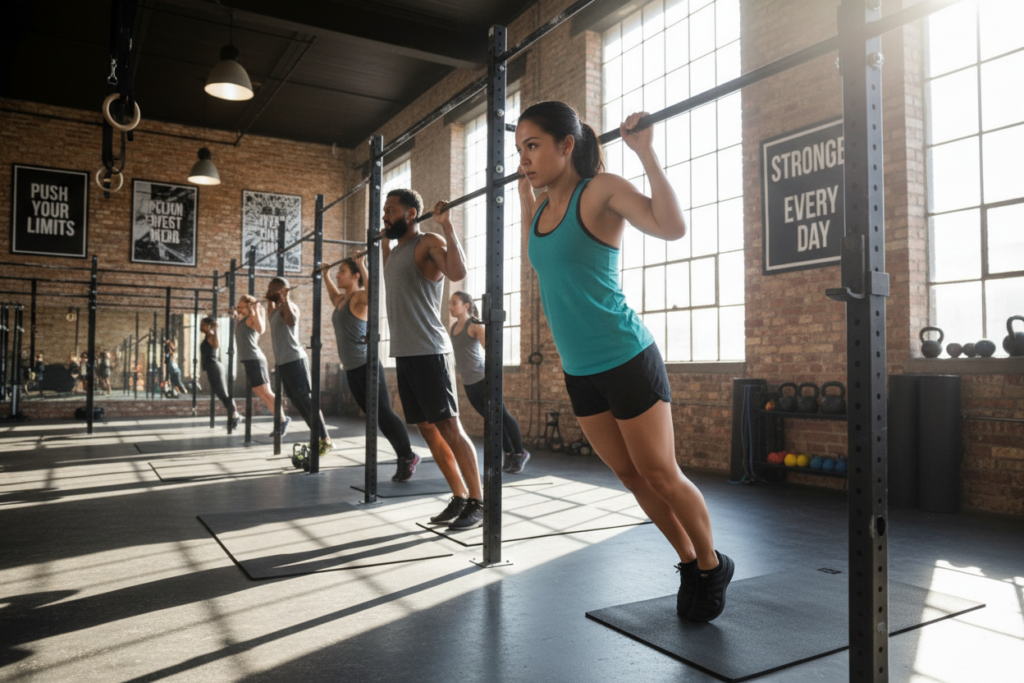
First, master the scapular pull-up. Hang from the bar. Pull your shoulder blades down and back without bending your arms.
Your chest will rise. All movement comes from your mid-back. Do 3-4 sets of 10 reps. This drill is foundational for lower trap strength and a powerful start position.
Negative reps are your secret weapon. Use a box to reach the top. Lower yourself with total control for a full 10 seconds.
Aim for 3-5 sets of 3-5 reps. This exercise builds raw strength fast. It overloads your muscles in the lowering phase.
Effective Pull-Up Holds for Muscle Engagement
Finally, practice the top hold. Get your chin over the bar. Squeeze your back muscles as hard as you can.
Hold this finish position for 10-12 seconds. Complete 3 reps. This builds incredible isometric strength right where form often fails.
Integrate these drills. Your control and power will transform in a short time.
Visual Insights: Trainer Tips and Video Guides
Watching a top-tier trainer execute a pull-up reveals a masterclass in total-body control, not just arm strength. As MH fitness director Ebenezer Samuel, C.S.C.S., states, it’s “an exercise in total-body tension.” Your eyes can learn what your body must do.
Breaking Down Pull-Up Dynamics
One golden cue from expert trainers is to “pull your elbows into your sides.” This mental shift automatically depresses your shoulder blades and fires your lats. It keeps your shoulders from hiking up.
The visual difference is clear. Hunched shoulders create a vertical torso. Proper form shows the back at an angle. This horizontal position is where your lats are strongest.
When you analyze your own movement, look for shoulder elevation. If they rise, you’ve found the breakdown. Master this by integrating foundational lat exercises into your routine. Great trainers and coaches maintain this blade position from start to finish.
Integrating Pull-Ups into Your Workout Routine
Programming this foundational exercise isn’t about random effort. It’s a strategic decision that shapes your entire upper body development. Place the movement early in your workout when your nervous system is fresh. This ensures perfect form and maximum muscle recruitment.
Balancing Progressions and Regression Techniques
Your current ability dictates your approach. If you can perform strict reps, aim for three to four sets of six to eight repetitions. Prioritize quality over quantity every time.
For those building toward a first rep, regression exercises are non-negotiable. Use them with the same focus as any major lift. Scapular pull-ups make an excellent warm-up or working set.
Assistance tools bridge the gap. Consider these options:
- Band-Assisted Variations: Maximum help at the bottom, less at the top. This builds strength where you’re weakest.
- Machine-Assisted Options: Constant support throughout the entire movement. Ideal for practicing the full pattern.
- Partner-Assisted Work: Adjustable help at sticking points. Perfect for pushing past plateaus.
Use a box to reach the top for negative reps. You can also step onto a box for scapular pull-up drills. The key is reducing help over time while maintaining perfect mechanics. Program your training with periodization, just like squats or deadlifts. Some sessions focus on pure strength, others on technique refinement.
Supplemental Exercises for a Strong Upper Back
Think beyond the bar—strategic accessory work forges the lat strength and grip endurance that make pull-ups feel easy. These movements build the exact muscles and motor patterns you need.
Lat Pulldowns, Seated Rows, and Farmer’s Walk Strategies
The lat pulldown is your primary tool. Use it as a warm-up or for extra volume. Your setup mirrors the pull-up: chest up, abs braced.
Drive your elbows down and retract your shoulder blades. A false grip—thumbs alongside fingers—maximizes lat engagement over bicep work.
Pause and squeeze at your upper chest for 1-2 seconds. This builds strength in the top position. If your grip fails, use straps to keep overloading your back.
For pure lat activation, try straight-arm pulldowns. Keep elbows locked. Focus on the muscle contraction, not heavy weight. Do 3 sets of 15-20 reps as a warm-up.
The farmer’s walk builds legendary grip and upper back endurance. Grab heavy dumbbells—70-100+ pounds per hand. Walk for distance or time.
Maintain perfect posture: chest up, shoulders back, glutes squeezed. This loaded carry directly reinforces the scapular control you need for multiple sets. Skip the straps here—grip development is the goal.
Strength and Endurance: Optimizing Your Program
Your programming choices determine whether you build durable strength or just chase empty reps. A smart plan turns good form into real results.
Setting Up Sets, Reps, and Rest Intervals
The fundamental rule is non-negotiable. Use as much resistance or as little assistance as you can while maintaining perfect shoulder position on every single rep. Compromising form to inflate your numbers is counterproductive and dangerous.
Structure your training with clear intent. Use these flexible frameworks based on your primary goal.
- Maximum Strength: Program lower rep ranges (3-5 reps) with added weight. Treat this movement like a major barbell lift. Rest 3-5 minutes between sets for full recovery.
- Muscle Building: Aim for 6-8 reps per set. Add 2-3 negative reps at the end of each working set for extra time under tension. Rest 90-120 seconds.
- Work Capacity & Endurance: Target higher reps (8-12). Use assistance only after reaching technical failure. Keep rest intervals under 60 seconds.
- For Your First Rep: If you can’t perform a single strict pull, start your workout with 3-5 sets of 3-5 negative reps. Control the descent from the top position to the bottom position.
Periodize your training across the week. Some sessions emphasize pure strength. Others focus on perfecting technique through a full range of motion.
Your supplemental exercises should support this progress. Include them after your main work. A balanced program is your best defense to protect your shoulder health for the long term.
Conclusion
The difference between a good pull-up and a great one lies in the subtle, powerful positioning of your shoulder blades. This isn’t just a form detail—it’s the foundation for real strength and joint safety.
Your path forward is clear. Commit to the drills and supplementary exercises with intensity. Focus on scapular control from day one.
For those already performing the movement, be ruthlessly honest. Reduce reps or add assistance to maintain perfect body position. Every repetition must demonstrate control.
Start your next workout the right way. Perform scapular pull-ups as a warm-up. Drive your elbows down during working sets. Add negative reps to extend time under tension.
Build sustainable strength. Protect your shoulders. Let your powerful back muscles do the work they’re designed for. Consider consulting a trusted trainer for personalized feedback.
FAQ
Why do my shoulders hunch up by my ears when I do a pull-up?
This usually happens when you lack the foundational strength in your lats and lower traps. You’re likely initiating the movement with your arms and biceps instead of driving the motion with your upper back. Focus on pulling your shoulder blades back and down before you even bend your elbows.
What’s the single best cue for better scapular control at the bar?
Think “chest to the bar” or “pull your elbows down and back.” These mental cues shift focus away from just getting your chin over the bar and engage the correct muscles in your upper back. It encourages you to lead with your chest, which naturally depresses your shoulders.
Can I still train if I can’t do a full, strict pull-up yet?
Absolutely. Use regressions like band-assisted pull-ups or negative reps. Lowering yourself slowly from the top position builds incredible eccentric strength and teaches proper shoulder blade positioning. Scapular pull-ups are also a perfect drill to isolate the correct movement pattern.
How do I know if my grip width is causing my form to break down?
If your elbows flare out wide to the sides, your grip is likely too wide, placing excessive stress on the shoulder joint. A grip just wider than shoulder-width typically allows for better lat engagement and a stronger body line. Your arms should move in a straight plane, not out to the sides.
What are the best supplemental exercises to build the strength for this?
Prioritize movements that train scapular depression and retraction. Lat pulldowns (pulling the bar to your chest, not your neck) and seated rows are excellent. The farmer’s walk is also fantastic for building the core and upper back stability that supports good pull-up form.
How long should I hold at the top of a pull-up for maximum benefit?
A 1-2 second squeeze at the top position is highly effective. This time under tension reinforces the mind-muscle connection with your lats and ensures you achieve a full range of motion. Just make sure you maintain that proud chest and depressed shoulder position during the hold.