Home Workout Plan for Muscle Gain Without Machines

 0
0
 0
0 Here’s a truth that might surprise you: nearly 50% of people who want to get stronger believe they need a gym full of machines to do it. That’s a myth—and it’s holding you back.
You do not need a membership or hundreds of dollars in fancy gear. Your own living room and your body’s weight are more than enough. According to official guidelines, consistency with a chosen routine is what drives real change.
This guide cuts through the noise. We’re stripping away fitness industry hype to focus on the science—how your physique responds to mechanical tension and progressive overload. It’s the sustainable, time-efficient way to build a capable frame.
We’ve mapped out 16 beginner-friendly movements that target your entire physique. Whether you’re starting from zero or have some experience, this path is clear. It builds a strong core, upper body, and lower body. For a deeper dive into bodyweight fundamentals, check out this beginner calisthenics guide.
Your journey starts right here. No machines, no excuses.
Key Takeaways
- You can build significant strength without any gym equipment or membership.
- Consistency with your routine is the primary driver of health and fitness improvements.
- The plan focuses on 16 foundational exercises designed for beginners to target all major muscle groups.
- It demystifies fitness by focusing on the proven science of mechanical tension and progressive overload.
- The approach is designed to be sustainable and efficient, respecting your time and real-world constraints.
- It is effective for complete newcomers and those with some training experience alike.
- The goal is to build a strong, capable physique using only your body weight and minimal space.
Understanding the Home Workout Landscape
Your living room holds more potential for transformation than you might think. Official guidelines back this up—aiming for 150 minutes of activity weekly improves health. You can hit that target right where you are.
Benefits of Home Training
Let’s be real. A commercial membership you barely use is a waste. Training in your own space slashes that cost. You also reclaim all the time spent commuting.
That time and energy go straight into your session. This lower barrier is why consistency soars. Your daily effort becomes a non-negotiable habit.
| Factor | Home Training | Commercial Gym |
|---|---|---|
| Cost | Minimal to none | Monthly fees + possible initiation |
| Time Commitment | Just your session time | Session + commute + wait for equipment |
| Consistency Driver | High (no travel barrier) | Often lower (logistics get in the way) |
| Equipment Needed | Your body weight; optional basics | Full machine array provided |
Adapting to Your Home Environment
You don’t need a garage full of gear. Your own body provides the primary resistance. A clear floor area is your main requirement.
This approach is incredibly manageable. It turns any corner into a potent training zone. Your physique responds to smart effort, not expensive machines.
Science and Strategy Behind Building Muscle
Let’s cut straight to the science—your physique doesn’t care about the tools, only the tension.
A 2020 study in the Journal of Strength and Conditioning Research made this clear. It found that low-load resistance can produce muscle growth comparable to heavy weights.
Evidence-Based Training Principles
Your tissues respond to mechanical stress and progressive overload. The brand on a squat rack is irrelevant.
Official guidelines recommend muscle building activity at least two days weekly. This maintains strength and metabolic health.
The process is straightforward. You must recruit fibers, fatigue them through effort, and then allow recovery. Repeat this cycle consistently over time.
You can achieve impressive results without ever stepping inside a commercial gym. The key is creating enough resistance to provide a real challenge.
This is the core strategy to build muscle. It’s about intelligent effort, not a specific location.
home workout plan for muscle gain without machines
The secret to real change isn’t more gear. It’s a smart sequence of movements you can do anywhere.
This routine provides a structured approach using only your own physique. It turns any room into a potent training zone.
We’ve curated 16 beginner-friendly exercises. They target your upper body, lower body, and core without specialized equipment.
Following this specific order ensures your frame receives the necessary stimulus. It triggers hypertrophy and strength gains over the coming weeks.
Each movement maximizes your time for a full-body effect. They build a solid foundation when you maintain proper form and push yourself every set. For a focused approach on building a lean physique, explore this guide on lean muscle gain for women at.
Upper Body Exercises to Sculpt and Strengthen
Science confirms: your hands’ position dictates how hard your chest and triceps work. Your upper body responds to smart tension, not complex gear.
Official guidelines note that training this area boosts your metabolic rate. It builds the functional strength you use every day.
Push-Up Variations That Maximize Chest Activation
Three separate EMG studies agree. A diamond hand placement fires up your chest and triceps far more than a wide stance.
This simple shift creates intense mechanical stress. It’s a proven path for growth.
| Push-Up Type | Chest Activation | Triceps Activation | Difficulty Level |
|---|---|---|---|
| Standard (Wide Hands) | Moderate | Moderate | Beginner |
| Diamond (Close Hands) | High | High | Intermediate |
Triceps and Shoulder Strengthening Techniques
Target your shoulders and triceps with pike push-ups. Form an upside-down V and lower your nose toward the floor.
Tricep dips using a sturdy chair are equally powerful. Lower until your elbows bend between 45 and 90 degrees.
For balanced arm development, explore these effective body-weight bicep exercises. Together, these movements sculpt a capable, resilient physique.
Lower Body Workouts for Robust Leg Development
Your foundation for strength starts from the ground up—with powerful legs. This area supports your entire frame and drives every movement you make.
Let’s build that engine. Robust development here means more than size—it means stability, power, and resilience that carries into daily life.
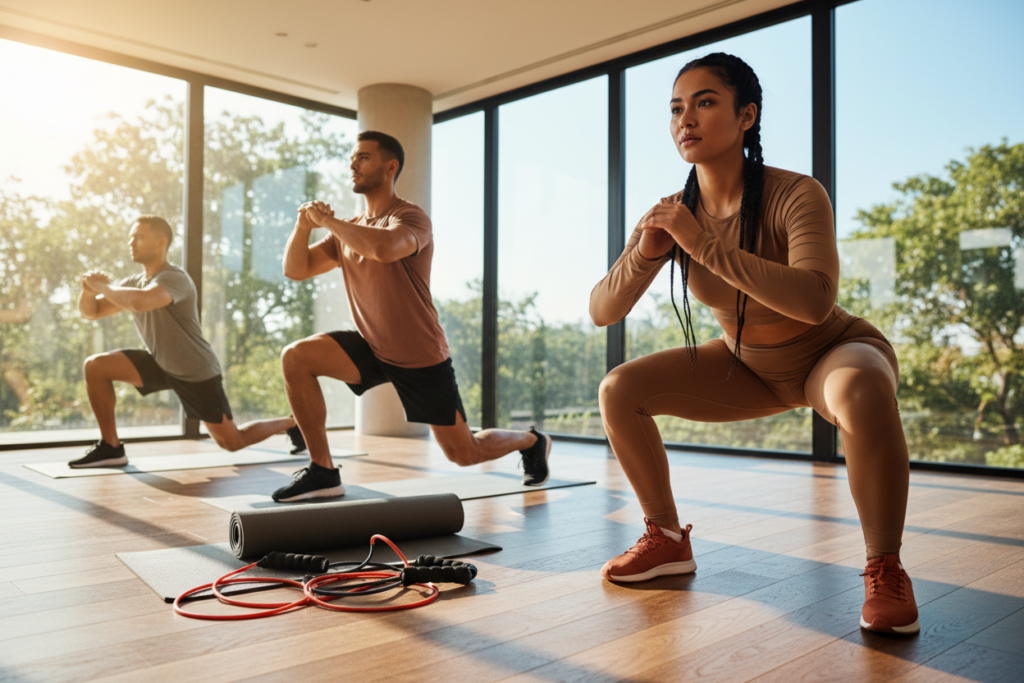
Effective Squats, Lunges, and Jump Squat Techniques
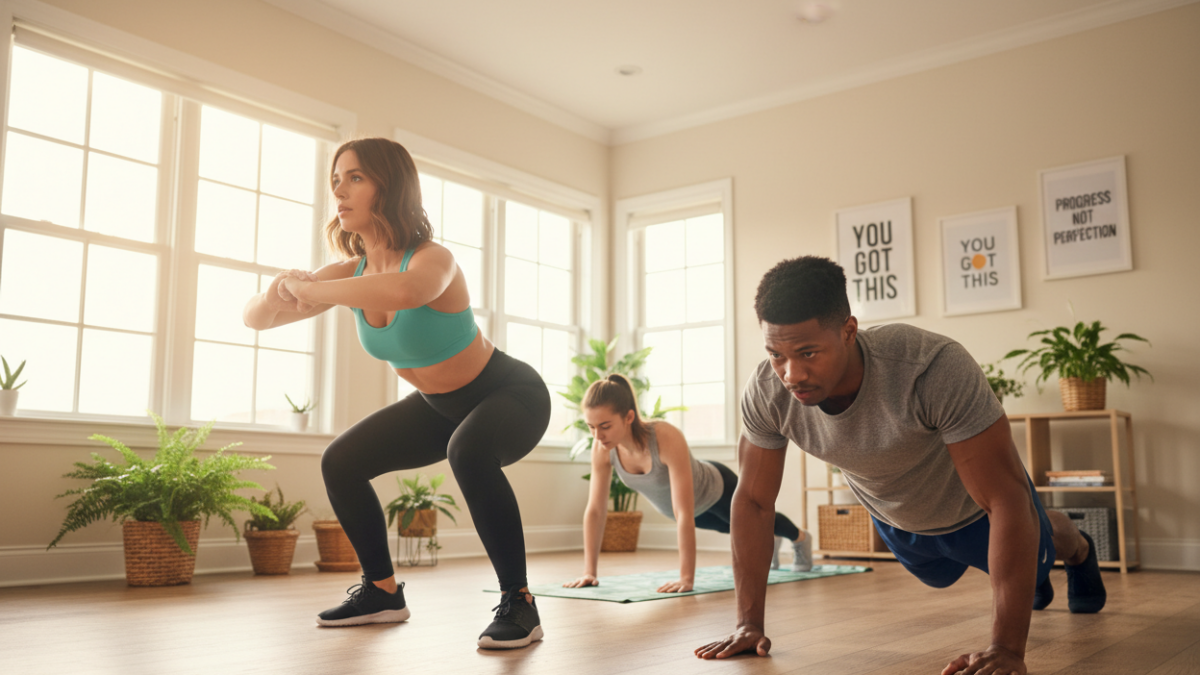
Bodyweight squats are your cornerstone. They fire up your quads, glutes, back muscles, and inner thighs simultaneously. Perfect your form: feet shoulder-width, chest up, and descend with control.
Lunges build unilateral strength. They target your hip and knee extensors—vital for maintaining stability as you age. Step forward or backward, keeping your torso upright.
Now add explosion. Jump squats improve your range of motion, speed, and dynamic balance. Push through your heels and explode upward, landing softly to reset.
| Movement | Primary Focus | Key Benefit | Muscle Groups |
|---|---|---|---|
| Bodyweight Squat | Fundamental Strength | Full lower body engagement | Quads, Glutes, Core |
| Forward Lunge | Stability & Balance | Unilateral hip/knee strength | Quads, Hamstrings, Glutes |
| Jump Squat | Explosive Power | Dynamic balance & speed | Full lower body + calves |
Don’t neglect supporting moves. Standing calf-raises target muscles missed by squats. Glute bridges build core stability—push through your heels until your body forms a straight line.
Together, these techniques create a complete lower body development strategy. Your legs will thank you.
Full Body Circuit Workouts for Efficiency
Efficiency isn’t about doing less. It’s about combining the right elements for maximum impact.
A well-designed circuit delivers a potent full body stimulus in a fraction of the time. You keep moving, which spikes your heart rate and engages every major muscle group.
Designing a 20-Minute Full Body Circuit
Here’s how to structure it. Blend upper, lower, and cardio movements back-to-back with minimal rest.
A sample sequence: two minutes of high knees, then three rounds of squats, push-ups, lunges, and planks. This order ensures total body engagement and a significant metabolic burn.
| Circuit Format | How It Works | Best For |
|---|---|---|
| Time-Based (AMRAP) | Perform each movement for 45 seconds, rest 15 seconds. Complete as many rounds as possible in 20 minutes. | Maximizing calorie burn and cardiovascular endurance. |
| Rep-Based | Perform 10-15 reps of each exercise, moving quickly to the next. Rest 60 seconds after completing the full circuit list. | Focusing on muscular endurance and maintaining perfect form. |
Balancing Cardio and Resistance Movements
This balance is the secret. Research shows it keeps your heart rate elevated. It also improves how your body uses glucose throughout the day.
This type of body workout is perfect for limited schedules. You see measurable improvements in cardiovascular and muscular health.
New to this? Reduce reps by half. Take a full 60-second rest between rounds. Prioritize safety and form—the intensity will follow.
Core Workouts for Stability and Functional Strength
The muscles wrapping your midsection are your body’s natural weightlifting belt, activated in every lift and step. This isn’t about vanity. It’s about creating an unshakable pillar of stability.
Maximum engagement comes from challenging this central zone from every angle. Let’s target it directly.
Ab and Plank Variations for Maximum Engagement
Start with the fundamental test: the plank. It fires up your abdominals and lumbar muscles. Hold a straight line from ears to toes.
Now add movement. Bicycle crunches deeply engage your obliques and rectus abdominis. This builds critical rotational stability.
Russian twists are potent exercises. Maintain a V-shape with your torso and legs. This works your abdominal and shoulder muscles together.
For spinal flexibility, incorporate sit-ups. The key? Draw your navel toward your spine throughout the motion.
Consistent practice here pays off. You’ll see better posture, sharper balance, and a stronger, more resilient physique. This training can significantly ease chronic lower back tension over time.
Home Workout Equipment Tiers and Creative Alternatives
Your budget doesn’t have to be a barrier to getting stronger. Let’s break it down into three clear investment levels.
You’re not locked into one tier forever. Start where you are and upgrade as your commitment and goals evolve.
Maximizing Bodyweight Options
Tier 1 costs $0. Your own physique provides all the resistance you need.
This is your perfect starting point for testing commitment. Master the fundamental movements first.
Get creative with household items. A broom across two chairs becomes an inverted row station. Bed sheets tied over a door allow for rows and curls.
You can absolutely build muscle at home with zero investment. It’s about intelligent effort, not expensive gear.
Upgrading with Minimal Equipment
Ready for more? Here’s the smart move. A small investment unlocks a massive exercise library.
Tier 2 requires $100 to $300. Think adjustable dumbbells and a sturdy pull-up bar.
This minimal setup unlocks 80-90% of the exercises you’d find in a commercial gym. It’s the ultimate value-for-money stage.
Tier 3 is for the dedicated lifter. Investing $500+ gets you a power rack and barbell for heavy leg training.
| Tier | Cost | Best For | Key Pieces | % of Gym Exercises |
|---|---|---|---|---|
| Tier 1 | $0 | Beginners testing commitment | Your body weight, household items | 60-70% |
| Tier 2 | $100-$300 | Serious trainees wanting variety | Adjustable dumbbells, pull-up bar | 80-90% |
| Tier 3 | $500+ | Experienced lifters prioritizing legs | Power rack, barbell, weight plates | 95%+ |
The choice is yours. Your progress depends on consistency, not the cost of your equipment.
Optimizing Intensity, Progression, and Recovery
The difference between staying the same and getting stronger boils down to three levers. You must manage intensity, volume, and recovery. Master these, and your physique has no choice but to adapt.
Here’s the honest truth. Growth requires a specific stimulus. Your tissues need a reason to change.
Strategies for Progressive Overload
You need sufficient resistance. Science says at least 30-40% of your one-rep max is the threshold. That’s roughly 30-40 reps per set to maximize growth.
If you’re cranking out more than 40 reps, the variation is too easy. Switch to a harder move.
| Progression Method | How It Works | Best For |
|---|---|---|
| Add Sets | Increase total volume. Going from 3 to 4 sets is a 33% boost in stimulus. | Building work capacity and endurance. |
| Manipulate Tempo | Slow the lowering phase to 3-4 seconds. This increases time under tension without extra weight. | Enhancing mind-muscle connection and control. |
| Use Harder Variations | Progress to more demanding exercises when reps exceed 40. | Continuing strength gains when bodyweight feels easy. |
The Importance of Pushing to Near Failure
Research is clear. You must push to near failure during your sets. This fully activates all the motor units in your working muscle.
That final tough rep is where the magic happens. It signals your body to rebuild stronger.
Then you rest. Smart recovery lets that adaptation stick. It completes the cycle.
Integrating Varied Training Techniques for Lasting Results
Plateauing isn’t a sign to quit—it’s a signal to get smarter with your approach. Your body adapts quickly. To keep seeing changes, you must introduce new challenges.
This is where advanced strategies come in. They force continuous adaptation for long-term progress.
Combining Tempo Manipulation and Unilateral Movements
Unilateral exercises are a game-changer. Moves like Bulgarian split squats double the effective load on each leg. This builds robust strength when heavy weights aren’t available.
Now, pair them with tempo control. Adding a 2-3 second pause at the hardest part removes momentum. Your muscle must generate force from a dead stop.
Another powerful way is the 1.5 rep. You go all the way down, come halfway up, and return down. This doubles the time under tension in the toughest range.
| Technique | Primary Benefit | Best Application |
|---|---|---|
| Unilateral Movements | Doubles relative load per limb | Lower body exercises like split squats |
| Tempo Pauses | Eliminates stretch reflex, increases control | Any movement’s sticking point |
| Agonist-Antagonist Supersets | Saves time, maintains performance | Push/pull pairings in a circuit |
Use agonist-antagonist supersets to save time. Research shows pairing opposing movements keeps your performance sharp. This efficient training method maximizes your session.
Your body thrives on this variety. It’s the key to unlocking results long after beginner gains fade. Consistent, smart training is what builds a resilient physique.
Conclusion
Consider this your final piece of actionable truth: you have everything you need. Your own body and willpower are the ultimate tools. You now possess the knowledge to build muscle effectively.
Your physique responds to relentless effort, not a specific location. Stay disciplined with your routine. Track your sets and reps—always challenge your last performance.
Showing up every week is the non-negotiable. Whether using bodyweight or minimal gear, your consistency builds the frame. For continued guidance, explore these simple home workouts.
You don’t need a gym. You need a plan, the right movements, and the grit to push to the edge. Start now.
FAQ
Can I really build significant muscle without a gym membership or heavy barbells?
Absolutely—here’s the truth. Your body doesn’t know if it’s lifting a barbell or your own bodyweight against gravity. It only recognizes progressive overload—the consistent challenge that forces adaptation. By manipulating tempo, adding reps, and using creative resistance (like a backpack filled with books), you create the necessary tension for growth. The limitation is rarely the equipment; it’s the strategy.
How many days a week should I train for the best results?
A> For a full-body approach, aim for 3 to 4 sessions weekly. This gives each muscle group a solid 48 hours to repair and grow stronger—that’s where the magic happens. More isn’t better; consistency is. Your routine must include hard work, but your body’s recovery time is non-negotiable for real gains.
Do I need to buy any equipment at all?
You can start with pure bodyweight movements—push-ups, squats, lunges. But to keep progressing long-term, minimal gear is a game-changer. A set of resistance bands or a single adjustable dumbbell opens up endless exercise variations. Think of it as a strategic upgrade, not a requirement, to continually shock your muscles.
How important is my diet compared to the training program?
A> They’re inseparable partners. You can’t out-train a poor diet. To build new tissue, you need sufficient protein—the building block—and enough overall calories to fuel the process. Think of your training as the blueprint for growth and your nutrition as the construction materials. Neglect one, and the project stalls.
Is muscle soreness required to know I had a good session?
No. Soreness (DOMS) is just inflammation and a novel stimulus, not a trophy. The true markers of an effective workout are performance increases—completing more reps, adding a harder variation, or mastering a slower tempo. Chase progress, not pain.
How long until I see visible changes in my physique?
Stay patient but obsessed with the process. With a dialed-in program and nutrition, you might feel strength gains in 2-3 weeks. Visible muscle definition and size often take 8-12 weeks of relentless consistency. Your body transforms in layers—trust the cumulative effect of every single set you complete.
Related: A Simple Total Gym Plan for Steady Progress