Improve Your Mind-Muscle Connection With Better Reps

 0
0
 0
0 The mind to muscle connection is your ability to direct attention and force toward the muscle doing the work. Improve it with stable exercises, lighter practice sets, controlled reps, a full usable range of motion, and steady progression. It can make your training more precise, but it cannot replace enough food, recovery, or adding weight and reps over time. Novelty and punishment are poor substitutes for control.
Last updated: 2026-08-10
What is the mind to muscle connection, and how do you improve it?
The mind-muscle connection, mind to muscle focus, and mind muscle control all describe the same useful skill. You deliberately pay attention to the target muscle while you lift, then keep that muscle working through the rep.
That does not mean your thoughts are pulling individual fibers like puppet strings. Your brain, nerves, joints, and muscles still coordinate the entire movement. Your job is to improve the quality of that coordination.
For a chest press, you might think about bringing your upper arms together and shortening your chest. For a pulldown, you might drive your elbows toward your sides instead of yanking the handle with your hands.
The cue should improve the rep. If it makes you tense your neck, lose your position, or forget the next rep, it is a bad cue.
The right standard is simple:
- The target muscle feels consistent tension.
- Your technique stays repeatable.
- The load moves without momentum taking over.
- Your reps and strength remain measurable.
- You recover well enough to train again.
A pump can support this process, but it does not prove that the workout worked. Soreness proves even less.
Neuromuscular control during lifting
The neuromuscular connection is the working relationship between your nervous system and muscles. Your brain creates an action, nerves carry the signal, and muscles produce force while your joints move through space.
You do not need to memorize the anatomy to use this. You need to understand one practical point: your attention can change how you perform a lift.
An external cue directs attention toward the result of the movement. “Move the bar to your chest” is an external cue. An internal cue directs attention toward your body. “Squeeze your chest as your hands come together” is an internal cue.
Both can work. The better choice depends on the exercise and your goal.
For heavy squats, deadlifts, and presses, an external cue often keeps the movement clear. You need to brace, drive, and keep the bar path consistent. Trying to inspect every muscle during a demanding compound lift can make you slower and less stable.
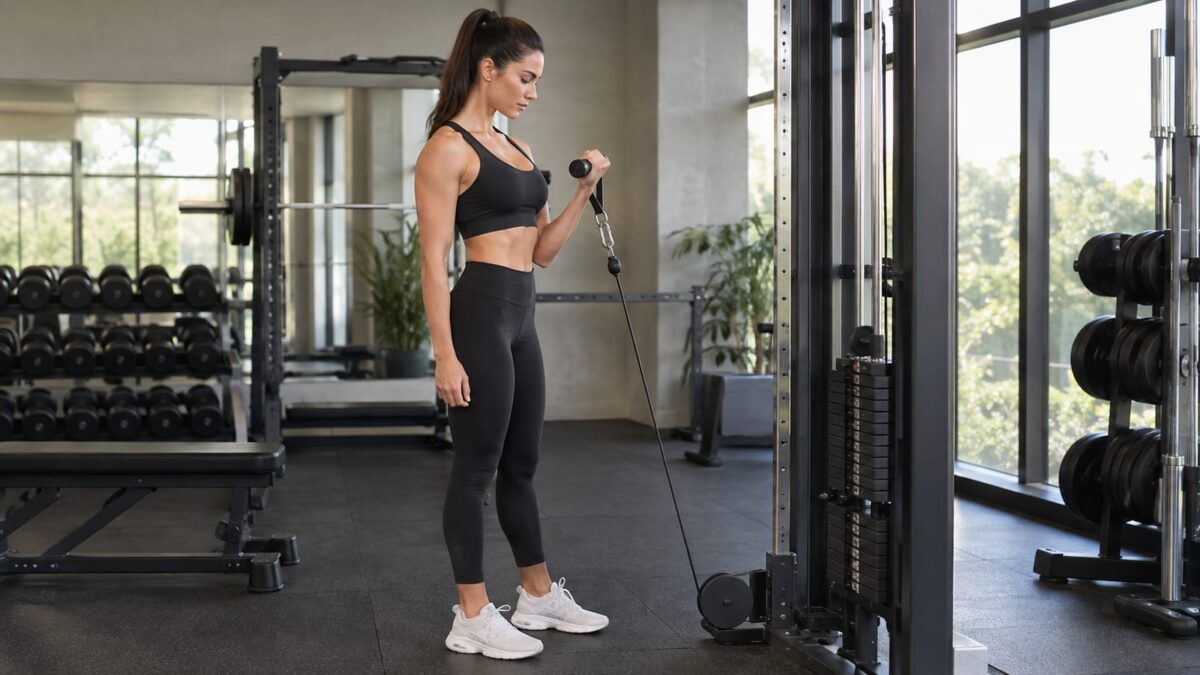
For curls, lateral raises, leg extensions, and other isolation exercises, an internal cue often helps. These movements give you more control over which muscle carries the load.
The 2017 Calatayud et al. study examined intentional focus and muscle activation during a pushing movement. Its useful lesson is that internal focus can affect muscle activation during a lift.
That still does not mean higher activation automatically creates more growth. A muscle must also receive enough hard work, progress over time, and recover from the training.
Why does focused attention matter for strength and muscle growth?
Mind-muscle connection matters because better attention can improve execution. When you know which muscle should work, you can spot momentum, shortened reps, and unwanted joint movement sooner.
That can improve stimulus quality. Stimulus quality means the target muscle receives a useful amount of tension without other muscles or bad technique stealing most of the work.
For strength, the connection helps you repeat the same movement. Stable technique gives you a cleaner comparison between workouts. You can then add weight or reps without guessing whether the improvement came from stronger muscles or looser form.
For muscle growth, the benefit is more selective. You do not need to feel a huge contraction in every muscle during every set. You need productive sets that challenge the target muscle and fit into a plan you can repeat.
A controlled training study by Schoenfeld and colleagues compared internal and external focus during 24 sessions over 2 months. The participants trained 3 days per week and performed 4 sets of 8-12 reps to momentary concentric failure on standing barbell curls and machine leg extensions.
The external-focus group had a 6.9% increase in elbow-flexor muscle thickness. However, the same study found a 0.00 mm difference in quad thickness between the groups.
That result is more useful than the usual marketing claim. Internal focus may help some muscles and exercises, especially isolation work. It is not a universal growth switch.
Use the connection to improve a lift, not to chase a feeling. Your logbook still gets the final vote.
The best techniques for a time-limited natural lifter

Use techniques that improve control without turning a normal workout into a meditation class. You have a job, a schedule, and limited recovery. The plan has to fit your week.
Train with intent
Before each set, name the target muscle and the action you want from it.
- Chest press: drive through the hands while bringing the upper arms together.
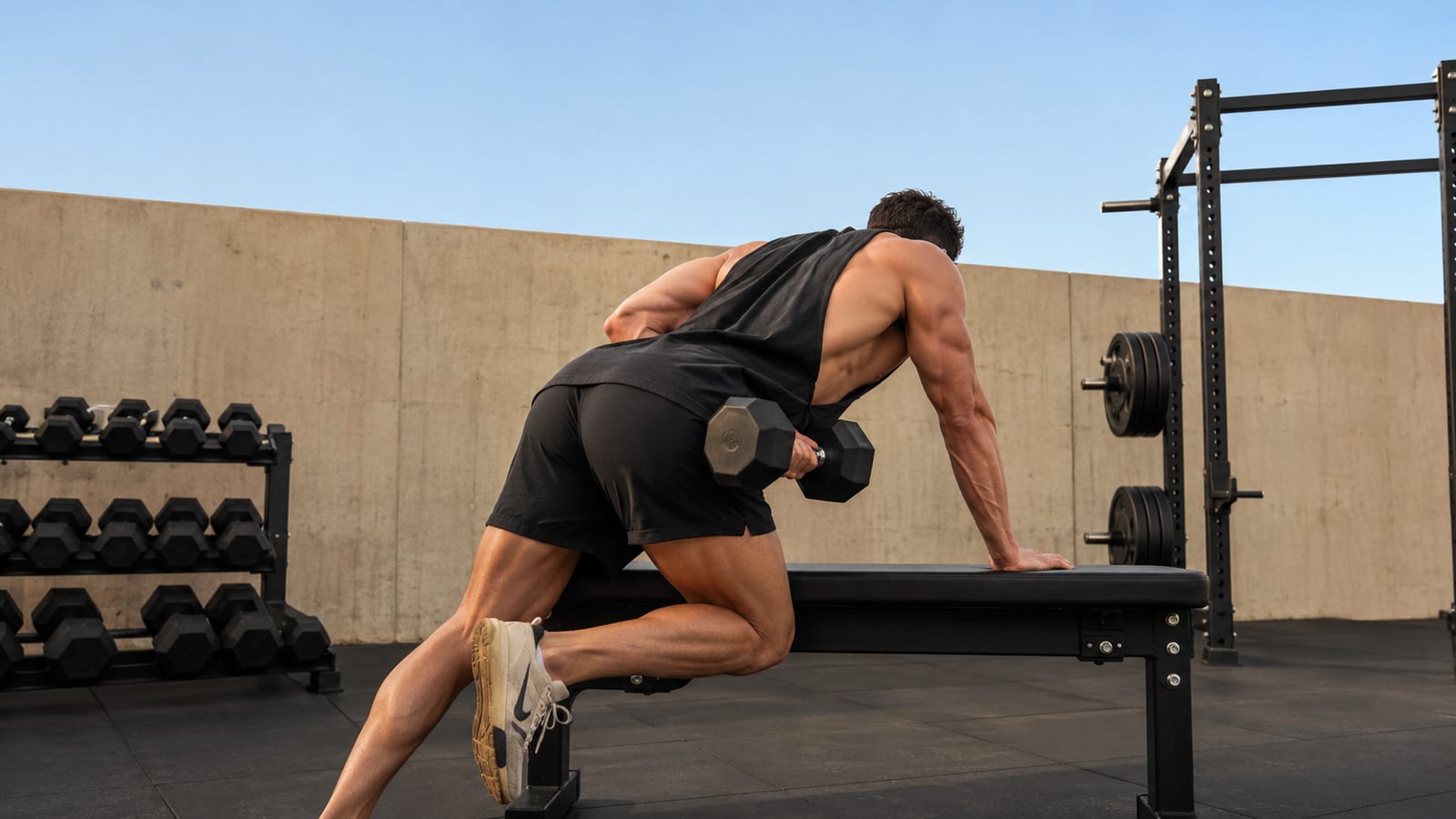
- Row: pull the elbows back and keep the shoulders from shrugging.
- Curl: bend the elbow without letting the shoulder swing forward.
- Leg extension: straighten the knee and shorten the quadriceps under control.
Then perform the set. Do not change the cue every rep.
Control the lowering phase
Lower the weight slowly enough to keep the target muscle loaded. You do not need exaggeratedly slow reps that turn a useful set into a punishment drill.
A controlled eccentric, or lowering phase, helps you keep your position and notice where tension leaves the muscle. If slowing down causes the weight to become too light to progress, use it for practice sets or selected isolation work.
You can read more about using time under tension without turning every exercise into slow-motion training.
Add brief pauses
Pause briefly where the target muscle is hardest to control. For a curl, that may be near the top. For a chest fly, it may be when your hands are close together. For a leg extension, it may be near full knee extension.
The pause should expose weak control. It should not become a long rest disguised as a rep.
Use tactile or visual feedback
Lightly touch the target muscle before a set if that helps you locate it. You can also use a mirror to check whether your shoulders, hips, or elbows are moving as planned.
Do not stare at your muscles for the entire workout. A mirror is feedback, not entertainment.
Use a lighter practice set
If you cannot feel or control the target muscle, reduce the load for one practice set. Use clean reps and find the position that keeps tension where you want it.
Then return to a load you can progress. Lighter work is a tool for learning, not a permanent excuse to avoid challenging sets.
Leave reps in reserve
Most working sets should finish with 1 to 3 good reps in reserve. That means you could complete one to three more clean reps before technique breaks down.
You can occasionally take a safe isolation movement to failure. Still, routine failure on heavy squats, deadlifts, and presses adds fatigue faster than it adds useful control.
Stable exercises are easiest to learn
Stable exercises are the best place to practice mind-muscle connection exercises. They reduce balance demands and make it easier to keep attention on the target muscle.
| Muscle group | Good practice exercises | Useful cue |
|---|---|---|
| Chest | Machine chest press, cable fly | Bring the upper arms together |
| Back | Chest-supported row, pulldown | Drive the elbows, not the hands |
| Shoulders | Cable lateral raise, machine shoulder press | Move the upper arm while keeping the neck relaxed |
| Biceps | Seated dumbbell curl, cable curl | Bend the elbow without swinging |
| Triceps | Cable pressdown, supported extension | Straighten the elbow while keeping the upper arm still |
| Glutes | Hip thrust, stable split squat | Drive the hips through while keeping the ribs controlled |
| Quadriceps | Leg extension, leg press | Let the knees bend and straighten without rushing |
| Hamstrings | Seated leg curl, lying leg curl | Pull the heel down and control the return |
Start with one or two exercises that feel stable. Do not replace your whole program because one muscle feels difficult to locate.
For chest and back, use a load that lets you keep your shoulders in position. For shoulders and arms, avoid swinging the weight. For legs, use a range of motion your joints can control.
The exercise earns its place by helping you train consistently and progress. A movement that gives you a strong pump but never improves your reps or load has not proven much.
How should you use focused attention in a real workout?
Use focused attention during selected sets, not every second of every session. Your workout still needs heavy enough work, clear progression, and enough total training to produce change.
Follow this process:
Set up the exercise the same way each time.
Adjust the bench, grip, stance, and range of motion before the set begins.Perform one light practice set.
Use it to find the target muscle and remove obvious momentum.Choose one simple cue.
Keep it short. “Drive the elbows” works better than a paragraph of anatomy.Complete your working sets with control.
Use a load that lets you keep the same technique from the first rep to the last.Record the result.
Write down the load, reps, and any clear technique issue.Progress when the reps are earned.
Add weight or reps only after you can repeat the target range with clean form and the target muscle doing its share.
For a chest press, you might use one light practice set before your normal work. During the working sets, keep your attention on pressing through the hands and bringing the upper arms together.
For a pulldown, think about pulling your elbows toward your sides. If your biceps take over and your shoulders shrug, reduce the load or adjust the setup.
Do not slow every exercise to a crawl. Use normal controlled reps for compound lifts, then add pauses or extra attention to isolation movements where control is easier to maintain.
The role of focused contraction in bodybuilding
Mind-muscle connection has a clear place in bodybuilding. It is especially useful when you need to train a specific muscle without letting stronger muscles dominate the movement.
Bodybuilders often use it during curls, lateral raises, flyes, pressdowns, leg curls, and leg extensions. These exercises have fewer balance demands, so you can focus on the target muscle and adjust your position.
The idea of conscious muscle control has been part of bodybuilding culture for decades. Arnold Schwarzenegger discussed it in the first edition paperback of The Encyclopedia of Modern Bodybuilding, published by Simon & Schuster.
That tradition is useful, but it can be overplayed. Flexing and concentrating on a muscle do not replace hard training. You can learn more about the limits and uses of flexing for muscle growth.
Keep compound lifts in the program because they train more muscle with fewer exercises. Use focused contraction on the movements where it improves the target muscle’s work.
Bodybuilding also demands enough food and recovery. If your body weight, performance, or measurements never improve, a stronger pump will not solve the problem.
Signs your control is improving

A better connection should show up in your training, not only in your thoughts. Track changes you can repeat and compare.
Look for these signs:
- Your target muscle stays under tension through more of each rep.
- Your technique looks similar across working sets.
- You use less momentum at the same load.
- Your reps remain stable instead of collapsing early.
- You can add reps or weight without losing the target muscle.
- You recover before the next planned session.
- You can repeat the same sensation across several workouts.
A pump is temporary. It can help you notice a muscle, but it is not a reliable scorecard for growth.
Soreness is also a poor test. A new exercise can make you sore because the movement is unfamiliar. That does not prove it trained the intended muscle better.
The strongest test is performance with repeatable technique. If your target muscle works consistently and your logbook moves forward, the connection is serving its purpose.
If your load and reps stall, check sleep, food, exercise selection, and effort before adding more focus work. A new cue cannot repair a program you cannot recover from.
Common mistakes that weaken muscle control
The most common mistake is using too much weight. Heavy loading often shifts work toward momentum, joints, and stronger assisting muscles. Reduce the load until you can control the path, then earn the next increase.
The next mistake is changing exercises constantly. You cannot build reliable control if the setup, resistance curve, and range of motion change every session. Keep stable movements long enough to learn them.
Watch for these other errors:
- Rushing reps: Fast reps can hide where tension leaves the target muscle.
- Chasing soreness: Soreness changes with novelty and does not measure progress.
- Forcing an unnatural squeeze: A hard contraction is not useful if it causes joint pain.
- Using too many isolation sets: More exercises can create fatigue without improving the target muscle.
- Taking every set to failure: Fatigue can make your later reps less controlled.
- Ignoring compound lifts: Focused isolation work does not replace broad strength training.
- Sacrificing progression: A lighter pump set is useful practice, but your program still needs measurable overload.
- Holding your breath without purpose: Brace for demanding lifts, then breathe normally when the exercise allows it.
- Treating pain as feedback: Sharp or joint pain is a reason to stop and adjust, not concentrate harder.
Your joints get a vote. If a cue creates pain, change the exercise, range, grip, or load.
Beginners can improve muscle control
Beginners often benefit from simple exercises, clear cues, and enough repetition to make technique familiar.
Start with stable machines, cables, supported rows, leg curls, leg extensions, and controlled dumbbell work. These movements reduce the number of things you need to manage at once.
Use 1 to 3 reps in reserve while learning. You are building repeatable technique and a baseline you can beat, not trying to prove that every set can become a grind.
A beginner should also learn basic movement patterns:
- Squat or leg press
- Hip hinge
- Horizontal press
- Row or pulldown
- Simple arm or shoulder isolation
Practice the target muscle on the lighter sets. Then train hard enough for the set to count once your technique is stable.
If your reps look different every week, adding plates only makes the mistake heavier.
Muscle focus versus load
Focus on the muscle when it improves the rep. Focus on the weight when the exercise is stable and the load can progress without technique breaking down.
You do not need to choose one forever. Use internal focus for control, then use your logbook to judge whether that control supports progress.
For a heavy compound lift, think about the task. Brace, press, pull, or stand with a clear movement goal. For an isolation lift, think more directly about shortening and lengthening the target muscle.
The right cue is the one that helps you complete more quality reps over time. If it makes you weaker, slower, or distracted without improving control, skip it.
FAQ
Does mind-muscle connection work for every exercise?
No. It tends to help most with stable isolation exercises and movements where one muscle is easy to identify. Heavy compound lifts still need bracing, balance, and a clear movement goal.
Can you build muscle without feeling the target muscle?
Yes. A strong sensation is not required for growth. If your technique is sound, the target muscle receives enough hard work, and your performance progresses, the plan can work without a dramatic pump.
Should you close your eyes during a set?
Usually, no. Closing your eyes can remove useful balance and position feedback. Use it only during a light, safe practice set if it helps you focus and does not affect control.
Does mind-muscle connection reduce strength?
It can reduce the load you use if you deliberately slow down or change your technique. That is acceptable during practice, but your full program should still include challenging work that you can measure and progress.
How long does it take to improve mind-muscle connection?
There is no useful fixed timetable. Most people improve by repeating the same exercises, using one clear cue, and reviewing their technique across several workouts. Keep the movement stable long enough for your logbook and execution to show a pattern.
Related on this blog