

How to Reduce Gym Anxiety Naturally and Feel More Confident

 0
0
 0
0 That flutter in your stomach as you scan the weight room. The feeling that everyone’s eyes are on you. You’re not imagining it—this experience is so common it has a name: gymtimidation.
Gym anxiety is the specific fear or self-consciousness that makes people avoid fitness spaces altogether. It manifests in racing thoughts, avoidance, and a dread that can overshadow your entire fitness journey.
Good news? This isn’t pop psychology. Clinical and Sport Psychologist Dr. Craig W. Cypher from the University of Rochester Medical Center provides science-backed strategies to move past the fear. This guide delivers those actionable methods.
We’ll respect your intelligence. No generic platitudes—just proven psychological techniques and practical preparation. You’ll learn mindset shifts and simple steps so you can walk into any facility with genuine assurance.
Overcoming this hurdle isn’t just about physical gains. It directly boosts mental health, self-esteem, and your overall quality of life. Let’s begin.
Key Takeaways
- Gym anxiety, or “gymtimidation,” is a widespread and valid experience for many people entering fitness spaces.
- This nervousness is defined by fear, self-consciousness, and intimidation that can lead to avoiding workouts entirely.
- Strategies from clinical research, like those by Dr. Craig W. Cypher, provide an evidence-based path forward.
- Natural, actionable methods rooted in psychology can build real confidence without medication.
- Conquering this challenge positively impacts mental well-being and self-esteem, not just physical fitness.
- Effective solutions involve specific mindset reframing and practical preparation, not vague encouragement.
- With the right approach, gym anxiety is a solvable problem, not a permanent character flaw.
Understanding Gym Anxiety and Its Roots
Gymtimidation doesn’t appear out of thin air—it’s rooted in specific mental and environmental factors. Recognizing these origins is your first powerful step toward managing the unease.
Psychological Factors Behind Gym Anxiety
Three core thought patterns often fuel this discomfort. Perceived competence is that nagging belief you don’t belong or know the routines. It’s a common cognitive distortion, not reality.
Social comparison is hardwired into human psychology. In a fitness setting, constantly measuring yourself against others traps you in a cycle of negative self-assessment.
Physical awareness means hyper-focusing on every movement. This self-consciousness about your body can spark a spiral of avoidance.
Environmental and Social Triggers
External elements play a huge role. Fear of judgment is pervasive, but research shows most people are focused on their own sessions, not scrutinizing yours.
Unfamiliar machines and complex exercises create legitimate barriers. Cultural stereotypes that paint these spaces as exclusive clubs for the already-fit build an artificial wall for newcomers.
This nervousness can intersect with broader clinical anxiety conditions. Remember, feeling this way is a normal experience, especially for beginners or those returning after a hiatus.
How to Reduce Gym Anxiety Naturally: Process Over Results
What if your anxiety wasn’t about the gym itself, but about the pressure you put on yourself to perform? Research reveals a critical distinction: outcome goals versus process goals. This shift redefines your entire approach to fitness goals.
Reframing Your Mindset for Success
Outcome goals—like losing weight or hitting a personal record—exist in the future. They’re outside your immediate control. This lack of control fuels pressure and avoidance.
Process goals are different. They are small, controllable actions you take right now. Laying out your clothes. Driving to the facility. Walking through the doors. Each step is a win.
Use the “just get to” technique. Tell yourself, “Just get in the car.” You’re not committing to a perfect session, just the next step. Give yourself time to master this mindset.
Inside, break your workout into single exercises. You’re not facing an hour of intimidation. You’re just completing one movement, then the next. This focus removes performance pressure. Pairing this with breathing exercises can sharpen your focus further.
This isn’t fluffy self-help. It’s a cognitive behavioral strategy backed by sports science. Consistency built from process goals delivers the results outcome thinking never does.
Starting Small: Home Workouts and Introductory Gym Visits
Building confidence begins in a space you control completely: your own home. This isn’t avoiding the challenge. It’s strategic skill-building.
You’re creating a foundation of competence. That foundation makes your first gym visit a logical next step, not a leap into the unknown.
Building a Simple Routine at Home
Start with bodyweight exercises. Squats, lunges, push-ups, and planks are fundamental. They build strength and teach movement patterns.
Schedule short, 20-30 minute workouts a few times weekly. This builds consistency without overwhelming your schedule. Follow a beginner calisthenics plan for structure.
Use beginner-friendly videos for visual guidance. Add minimal equipment like resistance bands later. The goal is mastery, not complexity.
Here, you can repeat new exercises and perfect your form. There’s zero pressure. You learn at your own pace, which is perfect for beginners.
| Strategy | Key Advantage | Best For |
|---|---|---|
| Home Workouts | Total control over environment and pace | Establishing a consistent routine and learning fundamentals |
| Off-Peak Gym Visits | Quieter atmosphere with more available equipment | Transitioning your practice into the gym setting with less social pressure |
Choosing Off-Peak Hours for a Quieter Start
When you’re ready, visit during slow hours. Most facilities are packed from 6-8:30 AM and 5:30-8 PM.
Aim for mid-morning or early afternoon. You’ll find fewer people and plenty of open machines.
This quieter environment reduces social friction. You won’t feel rushed or watched. Staff also have more time for questions.
Starting small is intelligent preparation. It builds lasting confidence for your long-term workout success.
Practical Tips for Building Confidence in the Gym
Walking into a gym with a clear plan is like having a map in a new city. It eliminates the paralysis of not knowing where to start. Your strategy begins before you even step through the doors.
Preparing Ahead with a Clear Workout Plan
Write down your session. Choose four to six exercises, note the required equipment, and specify sets and reps. Keep this blueprint on your phone.
This simple act removes decision fatigue on the floor. You’re not wondering what to do next—you’re executing a mission.
Seeking Professional Guidance and Using Gym Tours
Most gyms offer free orientations. A staff member will guide you through the layout, demonstrate machines, and answer questions. It’s a pressure-free way to learn the place.
Consider an introductory session with a personal trainer. This expert assesses your level, teaches proper form, and creates a customized plan. That’s a confidence boost you can’t get from guessing.
Arrive ten minutes early for any scheduled session. Use that time to meet your trainer, voice any concerns, and settle in. They’re professionals who can tailor your workout accordingly.
Research basic etiquette online. Knowing the unwritten rules—like wiping down equipment—reduces social friction. Watch a quick video on any machine you plan to use. These practical tips turn uncertainty into competence.
Exploring Group Fitness and Social Connections
The thought of joining a crowded class might spike your nerves. Structured group fitness often delivers the opposite effect. A supportive community and clear instruction dismantle uncertainty.
You follow the leader. Every move is explained. This built-in structure removes decision fatigue. Your only job is to move.
Finding Classes That Match Your Goals
Align the class with your intent. Want stress relief? Try yoga or Pilates. Seeking strength? A beginner group strength class is perfect.
Research shows exercising with others boosts enjoyment and effort. You feed off the collective energy. This makes your fitness journey more sustainable.
Start with beginner-labeled sessions. Everyone is learning. You immediately feel comfortable knowing you’re not alone.
| Your Primary Goal | Ideal Class Type | Key Benefit |
|---|---|---|
| Stress Relief & Mindfulness | Yoga, Tai Chi, Slow-flow Pilates | Focuses on breath and movement, reducing mental clutter. |
| General Strength & Conditioning | Beginner Strength, Bodyweight Circuits, Light Cardio | Builds fundamental fitness in a structured, repeatable way. |
| Community & Accountability | Small-Group Training, Running Clubs | Creates built-in support and familiar faces. |
Benefits of a Workout Buddy and Support Systems
Bring a friend. This single act transforms the gym from solo territory into a shared experience. You have immediate emotional support.
Accountability is powerful. Committing to meet someone gets you there, even on tough days. A partner provides encouragement and shared focus.
You don’t need to be chatty. Simply exercising alongside familiar people reduces isolation. These connections build belonging over time.
Your next workout becomes something you look forward to, not a source of anxiety.
Leveraging Exercise to Enhance Mental Health
Moving your body is a direct line to a quieter mind, backed by hard science. Conquering gym unease isn’t just about physical gains—it’s about unlocking powerful mental health benefits.
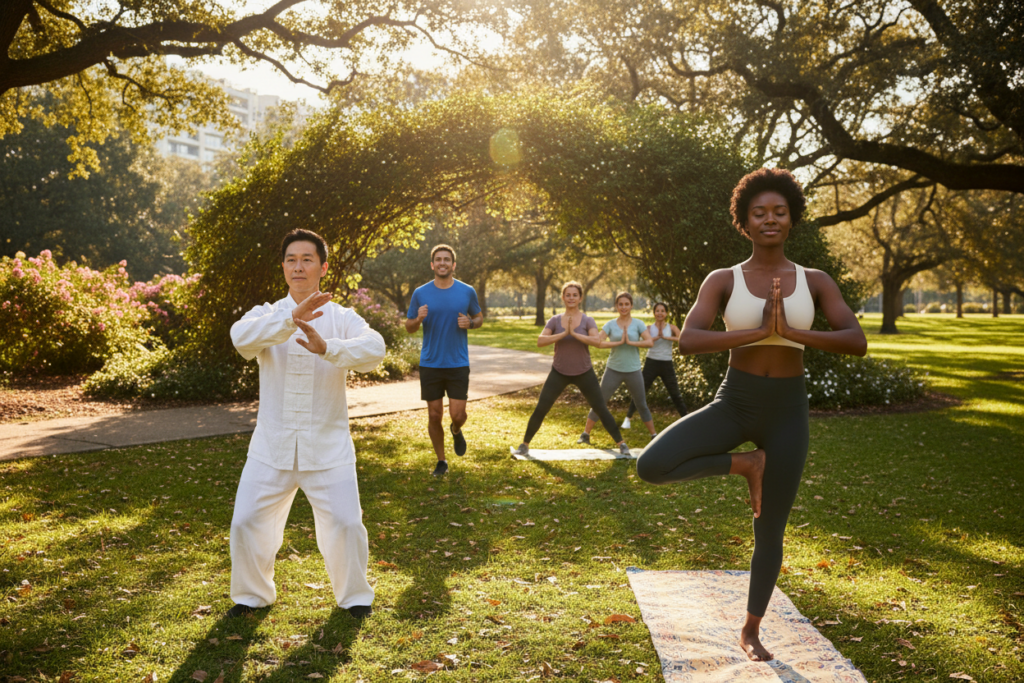
Exercise as a Natural Stress-Reliever
Physical activity is one of the most effective natural treatments for unease. It lowers cortisol, the stress hormone that keeps your body in fight-or-flight mode.
This creates a calmer baseline state. Your workout also triggers a release of endorphins and serotonin.
These neurochemicals improve mood and create feelings of wellbeing. Controlled cardiovascular work teaches your body to regulate heart rate variability.
This directly improves your stress resilience. Better sleep is another major benefit.
Regular movement improves sleep quality, which dramatically reduces anxiety symptoms. Every session you complete builds self-esteem through proven competence.
You learn you can do hard things. Yes, gym nerves make you want to avoid the cure.
But the activity itself is the solution. You must work through discomfort to access it.
You don’t need intense workouts. Even moderate walking or light strength training triggers positive neurochemical changes.
Consistent exercise rewires your stress response system for long-term psychological resilience. Practices like using yoga to build mental toughness perfectly illustrate this mind-body connection.
Conclusion
Every confident lifter you see today started with that same uncertain first step. Feeling uneasy is a normal, solvable part of the fitness journey.
Focus on process over results. Small, controlled actions build real momentum. Preparation is your anchor—home practice, off-peak visits, and a written plan eliminate guesswork.
Lean on your support system. A trainer, a class, or a friend transforms the space. Each visit strengthens your mind as much as your body.
Progress isn’t linear. Some days you’ll feel strong; other days the nerves may spike. Both are okay. You don’t need perfect form or total confidence to begin.
Your action step? Pick one strategy from this guide and commit this week. Walk through the doors. That alone is a victory.
FAQ
What exactly is gym anxiety?
I’m a complete beginner. Where should I start?
How can I feel less self-conscious during my workout?
Should I hire a personal trainer?
Are group fitness classes a good idea?
Can exercise itself help with this stress?