

Proper Hip Hinge Drill for Beginners Who Want Safer Lifts

 0
0
 0
0 That sharp twinge in your spine when you lift a heavy box isn’t just bad luck—it’s a warning sign you’re moving wrong. Mastering the hip hinge is the single most protective skill you can learn, transforming how you pick up anything from weights to your kids.
This fundamental movement teaches your body to break at the hips, not your lower back. Most people bend incorrectly, compensating with their spine and inviting pain. Skipping this basics explains why so many gym-goers struggle with nagging back issues.
When you learn to hinge correctly, you build a fortress of strength in your posterior chain. This makes every day easier—groceries feel lighter, playing with your kids becomes effortless. It’s the foundation for safe deadlifts, rows, and countless other exercises.
Think of it as your body’s built-in injury prevention system. This guide will show you the exact progression to lock in perfect form, starting with simple drills that give instant feedback.
Key Takeaways
- The hip hinge is a foundational movement pattern for safe bending and lifting.
- Performing it incorrectly is a common cause of lower back pain and injury.
- Mastering this movement strengthens your entire posterior chain.
- It directly translates to safer performance in weight training and daily activities.
- Learning to hinge properly protects your spine long-term.
- It is a prerequisite for getting the full benefit from many strength exercises.
- This skill is the biggest return on investment for lifelong movement health.
Understanding the Hip Hinge Movement
Your body is designed to move with power from the hips, not flexibility from the spine. This fundamental pattern involves pushing your hips backward while keeping your back straight. You’re rotating your pelvis around your thigh bones.
It’s the difference between bending safely and straining your lumbar region. Mastering this action protects you during countless daily tasks.
The Role of the Hinge in Everyday Lifts
Every time you grab a laundry basket or lift a child, you’re executing a hinge. The problem arises when you bend from your waist instead of your hips.
This incorrect motion places dangerous stress on spinal discs. A proper hip hinge distributes force through your robust lower body chain. Your glutes and hamstrings become the primary movers, not your vulnerable back.
Identifying Key Muscle Groups Involved
The posterior chain drives this entire movement. Your glutes and hamstrings generate the power to return you to a standing position.
Your spinal erectors and upper back muscles work to stabilize your torso. Your core engages isometrically to lock your spine in a safe, neutral position throughout the range of motion.
Training this pattern strengthens these critical muscles as a unified system. That built-in strength makes every lift safer and more powerful.
Mastering the “proper hip hinge drill for beginners”
Forget guessing about your form. This drill delivers instant, physical feedback you can’t ignore.
You’ll use a simple dowel—a broomstick or mop handle works perfectly. It becomes your coach, showing exactly where your movement breaks down.
Step-by-Step Dowel Drill Instructions
Stand tall with your feet hip-width apart. Place the dowel along your spine, holding it with one hands behind your neck and one on your lower back.
It must touch three points: the back of your head, your upper back, and your tailbone. This creates a neutral spine.
Push your hips straight back. Imagine closing a car door with your butt. Your torso will lean forward.
Keep a slight bend in your knees—don’t let them travel forward. Your weight shifts into your heels.
Hinge until you feel a strong stretch in your hamstrings or the dowel loses contact. That’s your stopping point.
Drive your hips forward to stand up, squeezing your glutes. The dowel must stay glued to all three points.
Key Form Points and Instant Feedback
The stretch in your hamstrings is your success signal. No tension means you’re squatting or rounding.
If the dowel leaves your head, you’re rounding your upper back. If it leaves your tailbone, you’re tucking your pelvis.
This is the foundational pattern for a perfect hinge pattern under load. Master eight perfect reps before moving on.
| Common Error | The Correction | Feedback Clue |
|---|---|---|
| Dowel loses head contact | Pull shoulders back, chest up | You’ll feel upper back strain |
| Dowel loses tailbone contact | Push hips back further, don’t tuck | Pressure shifts to lower back |
| No hamstring stretch | Initiate movement from hips, not knees | Feels like a squat, not a hinge |
| Knees bend excessively | Lock knee angle, focus on hip travel | Weight moves to toes |
Bodyweight Variations and Progressive Drills
Let’s upgrade your hinge by manipulating your center of gravity with simple arm position changes. This adds subtle load, challenging your posterior chain without any equipment. It’s the critical bridge to all future loaded exercise.
Transitioning from Dowel Drills to Wall-Based Exercises
Stand a few inches from a wall, feet hip-width apart. This setup gives you spatial feedback. Place your hands palms-up on your lower back.
Now, perform the same hip hinge pattern. Push your hips straight back. Your glutes should gently tap the wall at the bottom.
Feel that deep stretch in your hamstrings? Perfect. Drive through your heels and squeeze your glutes hard to stand. This teaches your muscles to fire correctly.
Once that’s easy, progress. Try with your fingertips touching your ears. This shifts your body weight forward, demanding more control.
The final step is crossing your arms over your chest. It’s another forward weight shift, testing your movement integrity. This is a fantastic foundation for lifelong strength.
Aim for two sets of ten reps with the hardest variation. Your hamstrings should feel warm and engaged—that’s your success signal.
| Arm Position | Effect on Center of Mass | Primary Challenge |
|---|---|---|
| Hands on Lower Back | Weight remains behind you | Learning the basic pattern without a guide |
| Hands by Head/Ears | Weight shifts forward | Glute and hamstring strength to prevent rounding |
| Arms Crossed on Chest | Maximum forward shift | Full posterior chain control and core stability |
Common Mistakes and How to Fix Them
The most common flaws involve your spinal position and where you carry weight. Get these wrong, and the hinge pattern stops protecting you. It actually multiplies injury risk once you add load.
Avoiding Rounding of the Back
Spinal rounding is public enemy number one. It forces your vertebrae to handle pressure they can’t manage.
Your spine must stay rigid from tailbone to head. The dowel drill is your truth-teller. If it loses contact, you’ve lost your safe, neutral alignment.
Keeping Weight Shifted Behind for Safer Lifts
Two things happen here. First, your hips drop down instead of back—that’s a squat, not a hinge. Fix it by tapping a wall with your glutes.
Second, when you add weight, letting it swing in front pulls you forward. Keep it against your thighs. This forces your posterior chain to work, not your vulnerable lower back.
| The Flaw | The Instant Fix | Why It Matters |
|---|---|---|
| Rounding your spine | Use the dowel drill; maintain three points of contact. | Prevents disc shear and protects vertebral integrity. |
| Hips dropping down (squatting) | Practice 3 inches from a wall; tap glutes on each rep. | Ensures you’re training the true hip hinge movement. |
| Weight drifting too far forward | Keep hands or weights glued to your thighs during the descent. | Keeps load over midfoot, engaging glutes and hamstrings. |
| Excessive knee bend | Lock your knee angle; focus on pushing hips rearward. | Shifts focus to the hip joint, where the power is. |
Master these corrections before adding any resistance. It’s the non-negotiable foundation for safely programming heavy compound lifts later on.
Benefits of a Proper Hip Hinge for Daily Life and Fitness
The real-world payoff for mastering this movement is a life with less pain and more capability. It’s your best defense against chronic back pain.
You build a protective muscular system. Your glutes, hamstrings, and spinal erectors form a strong posterior chain. This team supports your lower back during every bend.
Better posture is a natural side effect. A strong core and active glutes counter slouching. This reduces strain from sitting all day.
Athletic power skyrockets. The explosive hip extension in sprints and jumps comes from this pattern. Your entire body learns to move as one unit.
Your core gets incredibly strong. It works isometrically to lock your spine safe. This builds anti-flexion strength for life’s surprises.
| Life Domain | Direct Benefit | Muscles Strengthened |
|---|---|---|
| Daily Tasks (Lifting, Gardening) | Reduces lower back strain; makes objects feel lighter. | Glutes, Hamstrings, Erector Spinae |
| Posture & Desk Work | Counters forward slouch; alleviates upper back tension. | Core, Mid-Back, Glutes |
| Athletic Performance | Boosts power in jumps, sprints, and throws. | Entire Posterior Chain, Legs |
| Long-Term Health | Dramatically lowers injury risk from bending. | Stabilizer Muscles, Deep Core |
The benefits compound. Each safe hinge reinforces good mechanics. This builds movement confidence and erases the fear of injury.
Integrating Hip Hinge Into Your Workout Regimen
Integrating this fundamental pattern into your routine transforms it from a drill into a powerful tool. Your training now builds real-world strength and resilience.
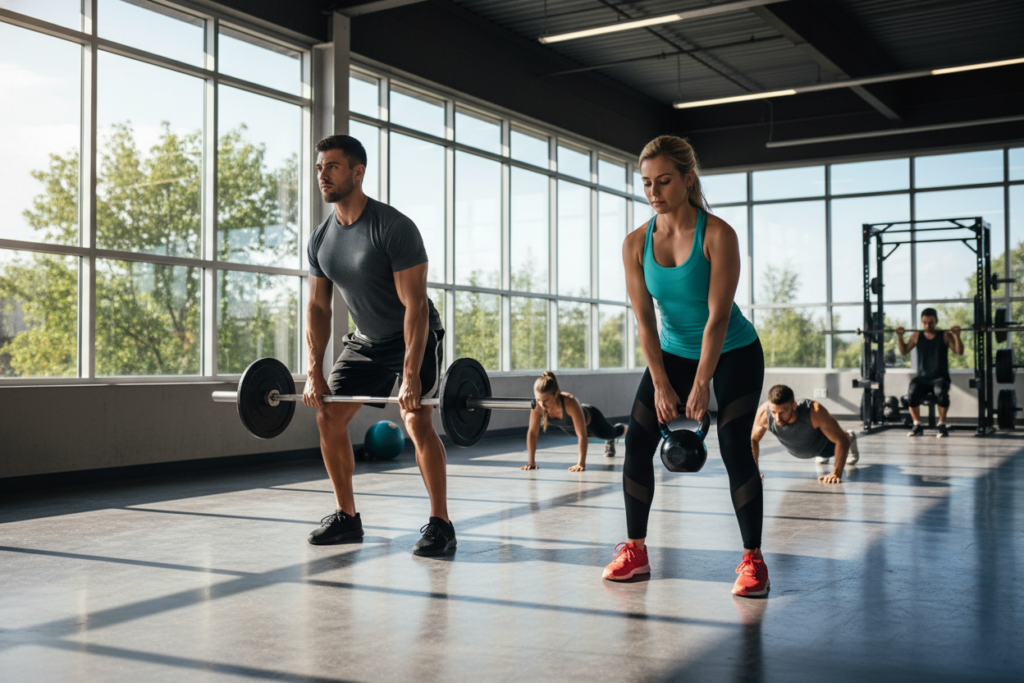
Combining the Movement with Posterior Chain Exercises
Loaded hinge exercises are your next step. Romanian deadlifts (RDLs) teach your glutes and hamstrings to control weight.
Kettlebell swings develop explosive power. Cable pull-throughs offer constant tension for muscle growth.
Program these exercises 2-3 times weekly. Always start light to protect your form.
| Exercise | Load Type | Primary Focus |
|---|---|---|
| Romanian Deadlift | Barbell/Kettlebell | Maximal lower body strength |
| Kettlebell Swing | Dynamic | Explosive hip extension |
| Cable Pull-Through | Constant Tension | Hypertrophy & form reinforcement |
| Banded Hinge | Elastic Resistance | Activation & mobility |
Adapting the Drill for Moms and Busy Lifestyles
Short on time? Use the bodyweight movement as a warm-up. Two sets of ten reps takes under three minutes.
This activates your entire posterior chain. Pair it with upper body work in a circuit for efficiency.
Your back and legs stay protected during daily tasks. Consistency trumps duration every time.
Conclusion
The difference between a lifetime of strong lifts and chronic back pain often comes down to this single movement pattern.
This isn’t just another gym exercise. It’s the foundational movement that protects your back during daily tasks and heavy training. Your entire posterior chain gets stronger.
Your next step is clear. Master the dowel drill, focusing on that deep hamstring stretch through a full range. Only then progress to bodyweight variations.
This skill safeguards your body across thousands of movements. Pair it with a basic stretching routine for complete muscle health. That’s how you build resilience for life.
FAQ
Why is learning this movement pattern so critical before I lift weights?
How do I know if I’m “hinging” and not just squatting down?
Can I practice this drill if I already have some lower back pain?
What’s the single most important form cue I should remember?
How often should I practice these drills?
Will getting better at the hip hinge actually improve my deadlift numbers?