How to Balance CrossFit With Weightlifting

 0
 0
Start with a clear priority: keep weightlifting technical and progressive, then use CrossFit to build work capacity around it. You can combine them through separate sessions, lifting followed by controlled conditioning, or alternating priority days. Combining the two should leave you with a plan you can recover from, not two full training programs fighting for the same legs, back, and nervous system. Lift with intent, choose conditioning that supports your strength work, and reduce intensity when fatigue changes your technique.
Last updated: 2026-10-07
CrossFit and weightlifting train different qualities
CrossFit’s definition of fitness is work capacity across broad time and modal domains. In plain terms, CrossFit asks you to perform many types of work across different time frames and movements, and its training aims to increase that work capacity over time.
Weightlifting has a narrower target. Weightlifting consists of two events: the snatch, and the clean and jerk. Both lifts demand speed, balance, timing, strength, and repeatable technique. They punish rushed practice because the bar moves quickly and mistakes show up immediately.
That makes the two methods useful together. CrossFit can improve your conditioning and ability to handle varied work. Weightlifting can improve power, coordination, and strength in the Olympic lifts.
The problem starts when you treat both as full-time priorities. A hard squat session, heavy clean work, high-rep deadlifts, and a demanding metcon can become one long lower-body beating. Your joints get a vote, and your recovery decides what improves.
What does a combined CrossFit and weightlifting week look like?
A workable plan gives each session one main purpose. You might have a weightlifting session for technique and strength, a CrossFit workout for conditioning, and another session that combines lighter lifting with controlled work capacity.
The basic order is:
- Practice technical lifts while you are fresh.
- Complete strength work with stable technique.
- Add a conditioning piece that does not repeat the same fatigue.
- Leave enough recovery before the next demanding session.
- Track performance so you know what is improving.
- Reduce the workload when quality drops.
This is the central rule for CrossFit weight training: the conditioning work must serve the plan. If it ruins your next lifting session, it is not helping your lifting.
Build the week around one primary goal
Pick the quality that matters most right now. If your snatch and clean and jerk need work, weightlifting takes priority. If your main weakness is conditioning, CrossFit can receive more attention while the lifts stay in the plan.
Do not try to peak every quality at once. That approach looks ambitious on paper and usually produces tired training, missed reps, and no clear progress.
Use this decision guide:
| Main goal | Start the session with | Keep the second priority |
|---|---|---|
| Improve the snatch | Snatch technique and strength work | Short, controlled conditioning |
| Improve the clean and jerk | Clean and jerk practice | Upper-body or low-impact conditioning |
| Build general strength | Squat, press, pull, or hinge work | A simple CrossFit workout |
| Improve conditioning | A planned CrossFit workout | Light technical lifting |
| Maintain lifting skill | Snatch or clean and jerk drills | Moderate conditioning |
The table is a starting point. It does not authorize hard training every day. Choose the first priority before you enter the gym. Otherwise, the workout of the day will choose it for you.
For broader planning, see this guide to an advanced strength and conditioning program. The same principle applies here: decide what must improve, then control everything around it.
Use weightlifting for skill, not punishment
Weightlifting belongs early in the session because speed and precision decline under fatigue. You can still lift after conditioning, but the work should be lighter and simpler.
Start with positions and drills that let you repeat the correct movement. Then use the full lift when your technique is ready. Keep the bar moving well and stop a set when the catch becomes unstable or the pull loses its shape.
Ugly reps do not improve weightlifting. A missed lift gives you information, but repeated misses usually show poor loading, poor timing, or too much fatigue.
Use these checks during CrossFit lifting:
- The bar stays close to your body.
- Your receiving position remains stable.
- Your feet do not jump wildly to find balance.
- You can repeat the setup before each rep.
- The final rep looks like the first rep.
- You stop before speed and timing disappear.
If the lift looks different every set, lower the load or switch to a simpler drill. Good reps come before more weight.
Keep strength work simple and measurable
CrossFit strength training works best when the main lifts have a clear progression. Choose a small group of movements that cover the squat, hinge, press, and pull patterns.
You do not need a separate powerlifting program, bodybuilding split, and CrossFit WOD in the same week. That is how productive training turns into a recovery problem.
For strength work, record:
- The exercise
- The load used
- The reps completed
- The quality of the final rep
- Any pain or technique change
- How the movement affects the next session
Progress can mean adding weight or reps. It can also mean cleaner technique, better control, or the same work with less strain. Change one part of the plan at a time so the logbook tells you what improved.
The main strength lift should not become a race. Rest until you can perform the next set with purpose. Then earn the next increase.
Choose CrossFit workouts that fit the lifting
A CrossFit weightlifting workout often combines an Olympic lift with conditioning. That can work well, but the details decide whether it builds fitness or buries your recovery.
Choose the conditioning piece based on the lifting already completed. After heavy squats or pulls, avoid a workout dominated by more squats, deadlifts, or high-repetition Olympic lifts. After pressing and upper-body work, a lower-body and aerobic piece may fit better.
Good pairings include:
- Technical snatch work followed by steady rowing or cycling
- Clean and jerk practice followed by controlled bodyweight work
- Squat strength work followed by upper-body conditioning
- Pressing strength work followed by moderate running or low-skill intervals
- Pulling strength work followed by simple leg conditioning without more heavy hinging
Avoid stacking the same stress by habit. A famous WOD is not automatically a good choice for your week. The right workout is the one that supports the next training session as well as the current one.
You can also use the advice in this guide to mix cardio and weight training. The useful lesson is the same: keep the hard work planned, and give easier work a real purpose.
Manage intensity when fatigue changes the plan
Movement quality outranks the written workout. If your technique changes, adjust the session.
Use a simple traffic-light system:
- Green: Your reps are controlled, your breathing settles between efforts, and the planned work feels appropriate. Continue.
- Yellow: Your speed slows, your positions become inconsistent, or your joints feel irritated. Reduce the load, shorten the conditioning, or remove the final piece.
- Red: You have sharp pain, repeated technical failures, dizziness, or movement you cannot control. Stop the session. If the pain or dizziness does not settle with rest, have it checked by a medical professional before you train hard again.
This matters most during CrossFit lifting workouts. Fatigue can hide poor positions because the workout rewards completion. Your logbook should reward quality instead.
Partial sessions still provide benefits. If you have enough energy for technical lifting but not a hard metcon, do the lifting and leave. If you are too fatigued for heavy work, complete an easier conditioning session and return stronger next time.
Skipping the final block is better than turning a good session into three bad days.
A practical CrossFit weightlifting program
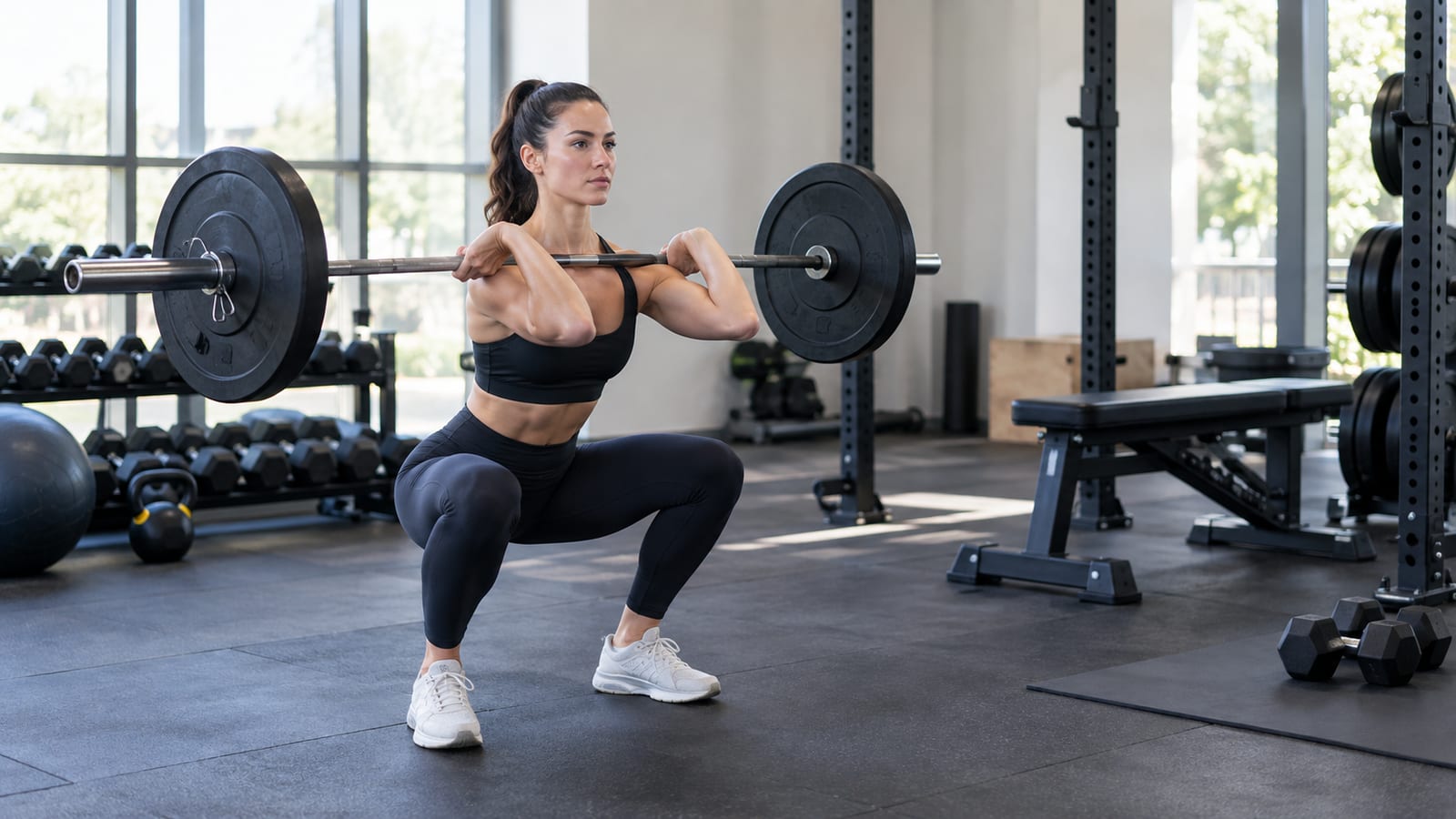
Use the following structure as a flexible template. The exact exercises can change, but the order should remain clear.
Session A: weightlifting priority
- Warm up with simple mobility and movement practice.
- Perform snatch drills and technical lifts.
- Add one lower-body strength movement.
- Finish with short conditioning that does not repeat the hardest work.
The goal is speed and position. Do not turn this into a test of survival.
Session B: CrossFit strength priority
- Start with a squat, press, pull, or hinge.
- Keep the main strength work controlled and measurable.
- Add a CrossFit workout using different muscles or a different energy demand.
- Stop before technique breaks down.
This is your general CrossFit strength training session. The conditioning should make you fitter without stealing the next session.
Session C: clean and jerk priority
- Practice the clean and jerk with attention to the setup and receiving position.
- Add a supporting pull or press.
- Finish with moderate conditioning.
- Keep the final work simple enough to perform well.
The clean and jerk already demands speed and coordination. It does not need extra complexity to be useful.
Session D: recovery or optional work
- Walk, cycle, row, or perform easy mobility work.
- Practice empty-bar positions if they feel restorative.
- Skip hard lifting if your legs, back, or shoulders remain fatigued.
- Return to full training when movement quality improves.
An optional session should stay optional. If missing it causes the whole plan to fall apart, it was not optional.
Avoid doubling squat and deadlift stress
Squats and deadlifts are useful. They are also easy to repeat without noticing the total cost.
The snatch includes a squat, pull, and overhead demand. The clean and jerk includes a pull, catch, front squat position, and drive. Add heavy back squats, deadlifts, front squats, and high-rep kettlebell work, and your lower back may never get a quiet session.
Balance the week by changing the demand:
- Pair heavy squatting with lighter pulling.
- Pair heavy pulling with lighter leg conditioning.
- Use upper-body conditioning after demanding lower-body work.
- Keep technical Olympic lifting lighter after hard strength sessions.
- Replace repeated hinging with cycling, rowing, or controlled bodyweight work when needed.
Keep useful exercises, but count their combined fatigue. Every hard lower-body movement has a cost.
Max weeks need stricter control
Testing heavy lifts during a CrossFit week requires planning. A max attempt is not another ordinary working set. It creates more fatigue and leaves less room for careless conditioning.
Before a max-focused session, reduce competing stress. Keep the warm-up focused, take only attempts you can control, and avoid a hard metcon that repeats the same muscles afterward.
Do not test the snatch, clean and jerk, squat, and deadlift close together simply because they are available. Give each lift a reason to appear in the week.
If your goal is performance in a weightlifting meet, weightlifting controls the plan. If your goal is general fitness, frequent max attempts are usually a poor trade. Stronger training is built through repeatable work, not constant proof.
Recovery is part of CrossFit and weight training
Adults should perform muscle-strengthening activities on two or more days per week that work all major muscle groups, according to the Centers for Disease Control and Prevention. CrossFit and weightlifting can both contribute to that work.
The same guidance says adults should aim for at least 150 minutes of moderate-intensity aerobic activity per week. Seventy-five minutes of vigorous-intensity aerobic activity per week is an accepted alternative.
Those are general activity targets. They do not require you to add more hard workouts. Your CrossFit sessions may already provide vigorous work. Add easy movement only when it helps you recover and maintain fitness.
Prioritize the basics:
- Eat enough to support training.
- Sleep as consistently as your schedule allows.
- Keep easier days genuinely easy.
- Warm up for the movement you plan to perform.
- Address pain before it changes your technique.
- Track fatigue instead of pretending it does not exist.
Recovery is not separate from the program. It determines whether the program works.
Common mistakes that stall progress
Treating every WOD as mandatory
A workout can be well designed and still be wrong for your current week. Choose the session that fits your fatigue and primary goal.
Lifting heavy after a hard metcon
Heavy technical lifts require attention and speed. Put them first or use lighter practice after conditioning.
Adding weight before earning it
If your positions change, more weight only makes the error harder to fix. Repeat clean reps before increasing the load.
Doubling up on lower-body fatigue
Heavy squats followed by high-rep squats and deadlifts is not automatically better. Change the movement or reduce the intensity.
Using soreness as the score
Soreness does not tell you whether the plan is working. Better technique, stronger lifts, improved conditioning, and consistent attendance matter more.
Changing the program every week
You need enough repeated practice to see a trend. Keep the main structure steady and adjust only what the logbook says needs attention.
When CrossFit and weightlifting should stay separate
Some lifters should not combine hard CrossFit and weightlifting in the same session. Separate them when:
- Your Olympic lifting technique breaks down under conditioning fatigue.
- Your strength numbers are falling across several sessions.
- Your lower back stays tired before each workout.
- You are preparing for a weightlifting competition.
- You cannot recover between demanding sessions.
- You are learning the lifts and still need focused practice.
You can still do both. Place the sessions on different days, keep one session easier, or make CrossFit the conditioning portion after a lighter lifting practice.
A schedule only works if your week can support it. A perfect schedule you cannot repeat is a bad schedule.
FAQ
Can beginners combine CrossFit and weightlifting?
Beginners can combine them, but they should learn the lifts under controlled conditions before adding fatigue. Start with simple technique work, stable strength movements, and conditioning you can perform without losing position.
Is CrossFit enough for strength training?
CrossFit can build strength, especially when its workouts include progressive resistance work. However, strength usually improves faster when the main lifts are tracked and practiced consistently instead of changing every session.
Should I do CrossFit before or after weightlifting?
Do weightlifting first when improving the snatch or clean and jerk is the priority. Put conditioning first only when conditioning performance matters more and the later lifting work is light and technical.
Can I combine powerlifting and Olympic weightlifting with CrossFit?
You can, but each method adds fatigue. Choose one primary strength focus, keep the other lifts limited, and avoid stacking heavy squats, deadlifts, pulls, and high-repetition conditioning without a recovery plan.
What should I do if I miss part of a workout?
Complete the highest-priority section and stop if the remaining work would reduce quality. A partial session that protects your next workout is productive training.
Related on this blog