Beginner Push Pull Legs Routine at Home

 0
0
 0
0 Here’s a hard truth: most people who start training give up before day 90. They don’t fail from lack of effort. They fail from following a bad plan.
The PPL split—short for push, pull, legs—cuts through that noise. It’s a flexible, logical way to build strength and muscle. It doesn’t overcomplicate your life.
Your first 30 to 90 days are everything. This is when you build the habit that lasts. This is when your body learns the movements that create real change.
We’re cutting out the fluff. This guide delivers a proven structure. It respects your time and intelligence. You’ll learn how to organize your training to maximize efficiency, right in your living space.
This isn’t about quick fixes. It’s about building a foundation. Follow this, and you’ll avoid the pitfalls that make people quit. For a bodyweight-focused approach, check out this calisthenics workout plan as a powerful complement.
Key Takeaways
- The PPL framework offers a straightforward, flexible path to building strength.
- The initial 30-90 day period is critical for establishing a sustainable training habit.
- This approach cuts through fitness industry complexity and focuses on what works.
- You can achieve measurable results by training in the comfort of your own home.
- A clear structure helps you avoid common mistakes that lead to quitting.
- Mastering fundamental movement patterns is the key to long-term progress.
- The program is designed to respect your time and deliver real-world results.
Understanding the Push/Pull/Legs Split
Your body doesn’t work in isolation—it works in patterns. That’s the entire premise of the push pull legs split. It organizes your effort based on how you naturally move weight.
This isn’t a random list of exercises. It’s a logical map. You train movements, not just muscles.
Defining Push, Pull, and Legs Movements
Here’s how it breaks down. Push actions involve pressing away from your torso. They target your chest, shoulders, and triceps.
Pull movements bring weight toward you. They focus on your back and biceps.
Legs day covers everything from the waist down. This means your quads, hamstrings, glutes, and calves.
| Movement Category | Primary Muscle Groups | Example Movements |
|---|---|---|
| Push | Chest, Shoulders, Triceps | Push-ups, Overhead Press |
| Pull | Back, Biceps | Rows, Pull-ups |
| Legs | Quads, Hamstrings, Glutes, Calves | Squats, Lunges, Calf Raises |
How Grouping Muscle Movements Aids Recovery
This structure is powerful for a simple reason: recovery. When you train a push pull pattern one day, those muscle groups get worked thoroughly.
Then you leave them alone for 48-72 hours. You can train other areas, like your pull legs muscles. Research shows this split works perfectly for 3 to 6 days of training per week.
Your body repairs itself systematically. You avoid overtraining. It’s like giving specific teams a day off while others work.
Benefits of a Home Push Pull Legs Routine for Beginners
What if you could build strength without ever stepping foot in a crowded gym? That’s the real power of this setup.
Your schedule is chaotic. This plan isn’t. It bends to your life.
Convenience and Flexibility of Home Workouts
Yang Chen, an NSCA-CSCS certified expert who trained Team China at the Tokyo Olympics, highlights that this split is ideal for functional training. It builds real-world capacity.
Training at home erases the commute. It saves you hours each week. More importantly, it removes the intimidation a commercial gym can create.
This is perfect for busy people. You can adapt the schedule around work or family. A solid three-day weekly plan builds muscle effectively.
The convenience factor is everything. When your workout is this accessible, you’re far more likely to stick with it. That consistency is the true engine of long-term success.
Embracing a Beginner Push Pull Legs Routine at Home
The secret to sticking with fitness isn’t willpower—it’s a system that makes sense from day one. This is where the PPL framework shines for someone just starting out.
Why This Routine Works for New Lifters
You’ll likely see real changes in your physique within 30 to 90 days. That’s the standard window for initial results when you’re consistent.
This plan works because it trains movement patterns. You’re not just hitting one muscle. You’re building a coordinated, functional foundation.
Dedicate time to learning each lift’s mechanics. This drastically cuts your injury risk. It sets you up for years of pain-free training.
The clear structure provides mental clarity. That’s crucial for staying motivated in the first few weeks of a new habit.
Your body adapts fast to this stimulus. You’ll be able to safely increase your intensity as you grow more comfortable.
| Key Principle | How It Helps a New Lifter | Expected Benefit |
|---|---|---|
| Movement-Based Training | Teaches functional patterns instead of isolating single muscles | Builds a strong, injury-resistant foundation |
| Structured Recovery | Groups similar pull legs movements, allowing proper rest | Prevents overtraining and fuels consistent progress |
| Clear Progression Path | Focuses on mastering a few key lifts each session | Delivers measurable improvements every week |
Essential Exercises and Muscle Groups
The difference between a good workout and a great one is exercise selection. You need to know which movements deliver the most results for your time.
Your plan should focus on two main types of exercises. Each serves a distinct purpose for building your body.
Compound Movements for Strength and Hypertrophy
These are your foundation. Compound exercises work several muscle groups at once.
Think of a bench press. It builds serious strength in your chest and triceps. A standard set is 3 rounds of 6 to 8 reps.
You get a better return on effort. Your body releases more growth hormone. This stimulates maximum muscle tissue.
Isolation Exercises to Target Specific Muscles
Use these for polish. Isolation work zeroes in on one area.
After your big compound lifts, add movements like bicep curls. They bring up lagging parts. This creates a balanced physique.
They are not the main event. But they are essential for detail work.
| Exercise Type | Primary Goal | Example Movement |
|---|---|---|
| Compound | Build overall strength & size | Bench Press, Squat |
| Isolation | Target a specific muscle | Bicep Curl, Lateral Raise |
| Compound | Maximize hormonal response | Barbell Row, Overhead Press |
Structuring Your Weekly Workout Schedule
The best training plan in the world is useless if you can’t fit it into your life. Your schedule needs to be sustainable, not just optimal on paper.
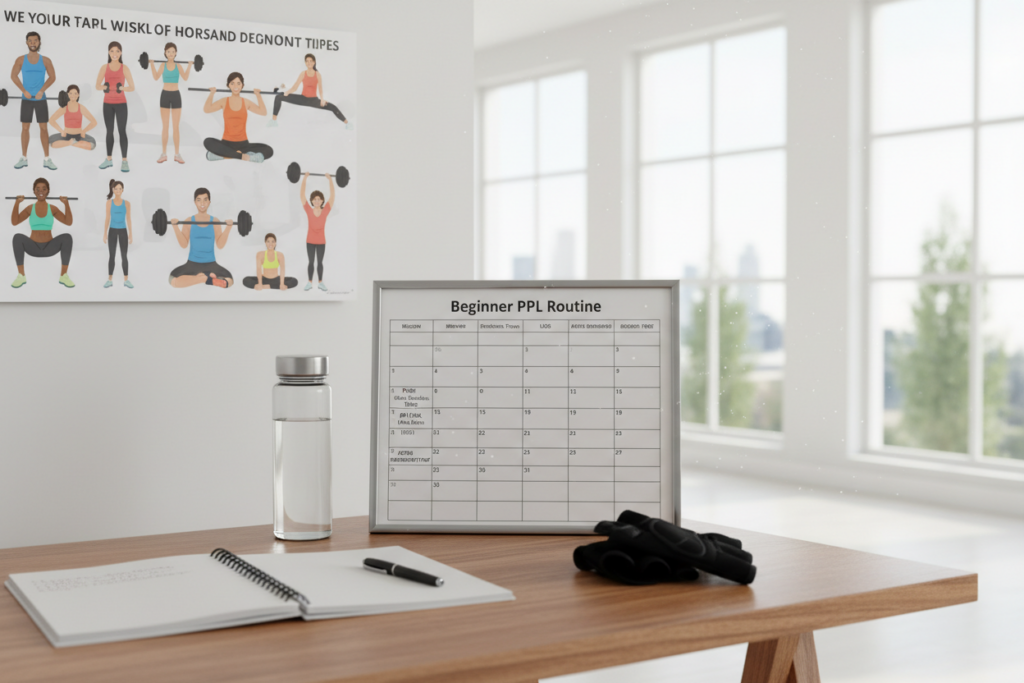
Frequency is your choice. More days isn’t automatically better. The right plan matches your recovery capacity and lifestyle.
Choosing Between 3, 4, 5, or 6-Day Splits
For most people starting out, a three-day schedule is the sweet spot. Train Monday, Wednesday, and Friday. This gives each muscle group ample time to repair.
A four-day plan offers more frequency. You might train two days on, one day off. This balances stimulus with recovery beautifully.
Advanced athletes sometimes use a six-day split. They’ve built the work capacity for it. Don’t jump here too soon.
Here’s the truth: consistency beats perfection. If you miss a session, just resume your normal rotation. Stick with your chosen plan for eight solid weeks before changing anything.
| Split (Days/Week) | Sample Schedule | Best For |
|---|---|---|
| 3 Days | Mon: Push, Wed: Pull, Fri: Legs | Building the foundation |
| 4 Days | Push, Pull, Legs, Upper Body | Increasing frequency |
| 6 Days | Push, Pull, Legs, Repeat | Advanced trainees only |
Progressive Overload and Tracking Your Progress
Progress stalls for one simple reason: you’re not systematically asking your body to do more work over time. This principle is called progressive overload. It’s the foundation of any good ppl plan.
Tracking your sets and reps in a notebook or app is non-negotiable. It’s the only way to verify actual strength gains over the course of weeks. Your logbook doesn’t lie.
Methods to Increase Weight, Reps, or Sets
Here’s the rule. Add 2.5 to 5 pounds to your upper body lifts each week. Do this once you hit the top of your rep range for a given exercise.
For lower body movements, aim for 5 to 10 pounds. If adding weight isn’t possible, increase your reps instead. Or, add an extra set to that exercise.
| Method | How to Apply | Best Used When |
|---|---|---|
| Increase Weight | Add small increments weekly (2.5-10 lbs) | You consistently hit the top of your target rep range |
| Increase Reps | Add 1-2 repetitions per set | You cannot safely increase the load yet |
| Increase Sets | Add one extra set to an exercise | You need a new stimulus but are plateauing on weight/reps |
A successful ppl workout relies on safely pushing your limits. Always aim to beat your last performance. Building real strength is gradual. Don’t get discouraged if you repeat the same weight for a few sessions. For a deeper dive into applying these principles, see this comprehensive push-pull-legs guide.
Perfecting Technique and Form at Home
Form isn’t about looking good—it’s about moving safely and effectively for years to come. This is the non-negotiable foundation of any successful exercise plan.
Your body learns patterns. Teach it the right ones from the start.
Key Cues for Safe and Effective Execution
Here’s a powerful trick: record your lifts. Watching yourself back reveals flaws you can’t feel.
For any pressing push pull movement, retract your shoulder blades. This creates a stable shelf for the weight and protects your joints.
Always maintain a neutral spine. This protects your lower back during heavy pull legs work.
Avoiding Common Beginner Mistakes
The biggest error is ego lifting. Adding weight too fast wrecks your form.
If you struggle with an exercise, don’t just push harder. Take the time to review your stance or grip.
Proper technique is the foundation of a safe gym experience, even at home. A smart ppl session prioritizes control over load.
Your push pull technique must be clean before you add intensity. This is how you build durable strength.
Compare your pull legs form to professional guides. Small adjustments prevent big problems.
Stick to this principle, and your entire ppl journey becomes sustainable.
Incorporating Recovery and Nutrition Strategies
Your muscles grow when you rest, not when you lift—this is the fundamental law of strength. You can’t out-train poor recovery. It’s the silent partner to every rep you complete.
Here’s the truth. Your progress depends on what you do between sessions. This is where smart strategy separates lasting results from burnout.
The Role of Sleep and Deload Weeks
Aim for 7 to 9 hours of quality sleep each night. This is when your body repairs damaged muscle tissue. It’s non-negotiable for effective recovery.
Schedule a deload week every 4 to 8 weeks. During this time, you drastically reduce your training volume. It allows your nervous system to reset from the cumulative stress of your ppl plan.
Light cardio on your off days improves blood flow. This helps clear metabolic waste and speeds up the recovery process.
Nutrition is just as critical as your workout. Consume enough protein to fuel muscle repair. If you feel constantly fatigued, your recovery is insufficient.
| Recovery Strategy | Key Action | Recommended Frequency |
|---|---|---|
| Sleep | Get 7-9 hours of uninterrupted rest | Every night |
| Deload Week | Reduce training volume by 40-60% | Every 4 to 8 weeks |
| Active Recovery | Perform light cardio (e.g., walking) | On off days |
| Nutrition | Consume sufficient protein (0.7-1g per lb of bodyweight) | Daily |
Treat these recovery pillars with the same respect as your training days. They are what make your hard work in the gym stick.
Adjusting the Routine as You Advance
Knowing when to change your approach is just as important as the work itself. Your initial progress will eventually slow. This is a natural signal, not a failure.
Most people experience this shift after 8 to 12 weeks of consistent effort. Your body adapts. It needs a new challenge to keep building strength and muscle.
Transitioning from Beginner to Intermediate Training
Moving to an intermediate routine means increasing volume. You might add more sets or advanced techniques. Think tempo work or paused reps.
This refined ppl workout demands more from your body. Your recovery strategy must level up, too. The central nervous system gets taxed.
Only make this jump once your technique is rock solid. Linear progress should have stopped. That’s your green light.
Keep logging every session. Your data tells the real story. It guides your next smart change.
Essential Equipment and Home Setup Tips
Forget the myth that you need a room full of machines to get strong. Here’s the truth: a few key pieces of gear are all you require for a complete ppl training cycle. Your space becomes a personal gym with the right strategy.
Minimal Equipment Options for Effective Workouts
A pair of adjustable dumbbell sets is your foundation. They let you perform every essential push pull and pull legs movement. This is the most efficient use of your time and money.
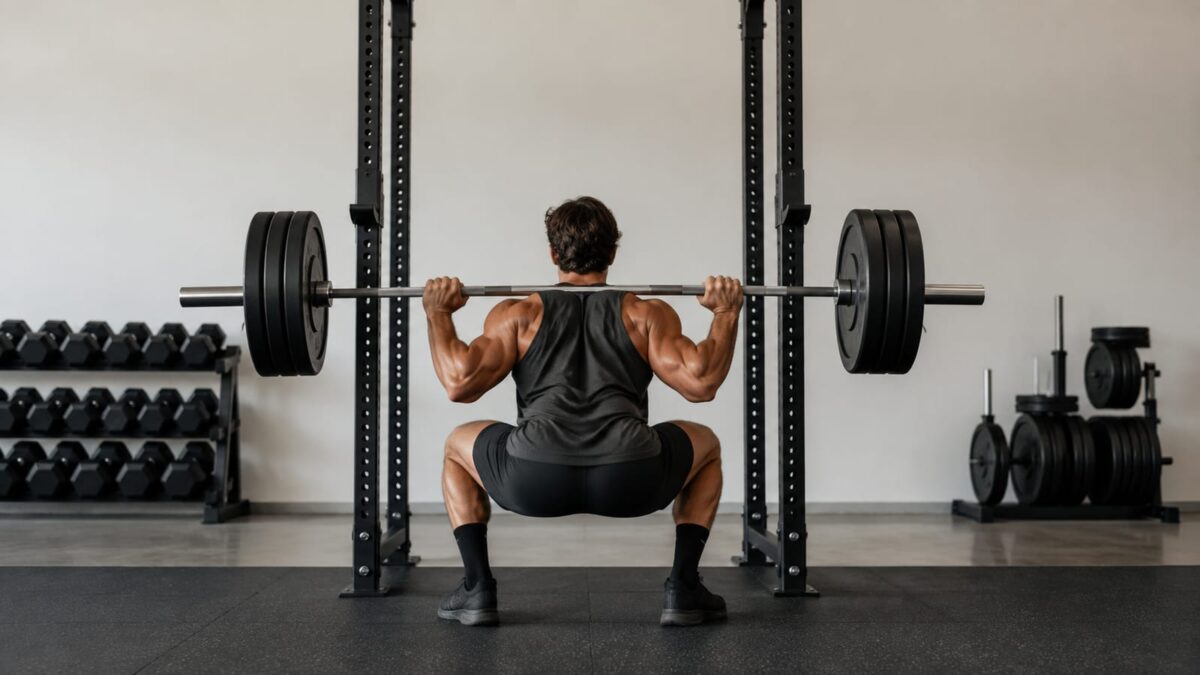
If you have the space, add a barbell. It unlocks heavier compound lifts. These are difficult to match with just a dumbbell. Your strength gains will accelerate.
Incorporate cardio easily. Use a jump rope or bodyweight movements between sets. This keeps your heart rate up and saves dedicated time.
Dedicate a corner for your workout. This mental cue improves focus. You won’t waste minutes setting up your routine each session.
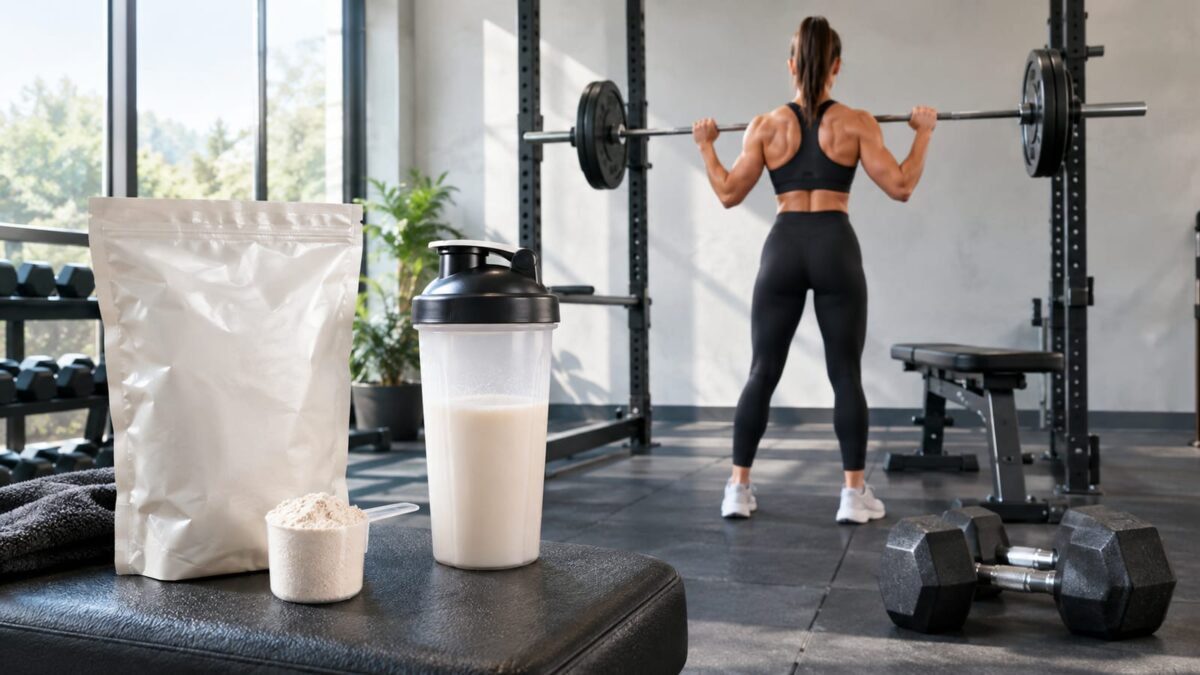
Supplements can support your goals. A product like SteelFit Creapure delivers 5 grams of creatine per serving. It’s a useful tool if your strength plateaus.
| Equipment Type | Best For | Key Benefit |
|---|---|---|
| Adjustable Dumbbells | Full push pull & pull legs routine | Maximum exercise variety in minimal space |
| Barbell & Weight Plates | Heavy compound lifts (e.g., Squats, Deadlifts) | Allows for maximal strength progression |
| Jump Rope / Bodyweight | Integrating cardio & active recovery | Boosts heart health without extra gear |
Conclusion
Your transformation hinges on the principles you apply, not just the sweat you shed. Committing to a structured PPL framework is one of the most effective paths to building lasting strength and muscle.
Focus on consistent training and progressive overload. These forces create the physical change you see over weeks.
Remember this truth: recovery is just as critical as the workout itself. Prioritize sleep and nutrition to fuel your results.
Do not hesitate to adjust your plan as you grow stronger. This evolution is a natural part of the journey. For example, mastering movements like the proper dumbbell row ensures quality progression.
Stay patient. Keep logging your sessions. Trust this process to turn fitness goals into a sustainable lifestyle.
FAQ
What exactly is the Push/Pull/Legs split?
It’s a smart way to organize your weekly training schedule. You group exercises based on how your body moves. “Push” days train your chest, shoulders, and triceps with movements like presses. “Pull” days target your back and biceps with rows and curls. “Legs” day is all about your quads, hamstrings, and glutes. This method lets each muscle group recover fully while you train others.
Can I really build strength without a gym membership?
Absolutely. Your body doesn’t know if you’re lifting a barbell at a commercial gym or a set of dumbbells in your living room—it only knows tension. By mastering fundamental movements and consistently applying progressive overload (adding weight or reps over time), you can build impressive strength and muscle at home with minimal gear.
How many days per week should I follow this schedule?
For most people starting out, the sweet spot is 3 to 4 days per week. This often looks like training Monday, Wednesday, and Friday. That schedule gives you a full day of rest between sessions, which is crucial for your body to repair and grow stronger. As you advance, you can consider adding more days.
What if I don’t have a full rack of weights at home?
No problem. Start with what you have. A pair of adjustable dumbbells, like those from Bowflex, or even heavy resistance bands can provide all the resistance you need for months. The key is intensity and consistency—not the amount of iron. You can progress by doing more reps, slowing down each repetition, or adding bands for extra challenge.
How do I know if I’m using the correct form without a trainer?
Focus on movement quality over the amount of weight. Record yourself with your phone and compare your technique to reputable sources like Squat University or Jeff Nippard on YouTube. Key cues are: keep your spine neutral, brace your core, and move with control. If you feel joint pain instead of muscle fatigue, that’s your signal to lighten the load and reassess.
Is cardio necessary on this plan?
It’s beneficial for overall health, but it shouldn’t sabotage your recovery. If you do cardio, place it on your “Pull” or “Legs” day, or on a separate day entirely. Keep it moderate—like a brisk walk or a light bike ride. The priority for building muscle is your strength training and your nutrition, so don’t let cardio exhaust you.
When should I move on from this beginner program?
Your body will tell you. When you stop making noticeable strength gains for several weeks in a row—that’s your signal. This might happen after 4-6 months of consistent effort. At that point, you might tweak your exercise selection, increase your training frequency, or manipulate your set and rep schemes to keep challenging your muscles.