Good Morning Form: Build a Stronger Hip Hinge

 0
0
 0
0 The good morning exercise is a worthwhile posterior-chain movement for a natural lifter with limited time. The hamstrings are its primary movers, while the glutes, spinal erectors, and trunk help complete the work. Use it as a controlled hip hinge, start light, and add load gradually. Keep the exercise demanding but recoverable.
What is the good morning exercise?
The good morning is a loaded hip-hinge exercise. You place the load on your upper back, move your hips backward, let your torso lean forward, then drive your hips through to return to standing.
Your spine stays braced throughout the movement. The motion comes mainly from the hips, while your trunk resists unwanted bending and twisting.
The barbell good morning can develop muscular strength and hypertrophy in the posterior chain. That includes the hamstrings, glutes, and muscles that keep your trunk stable.
The exercise looks simple on paper. However, the bar position makes poor technique obvious. A load that feels manageable during a squat can feel demanding when your torso moves forward.
Start with a load you can control. Your first goal is repeatable technique, not an impressive plate count.
The muscles this hinge trains
The good morning trains several muscles at once, but the hamstrings do much of the direct work.
- Hamstrings: They help extend the hip and control the lowering phase as they lengthen under load.
- Glutes: They finish hip extension as you return to standing.
- Spinal erectors: They hold your spine in position while your hips move.
- Upper back: It supports the bar and helps prevent your shoulders from collapsing forward.
- Abdominal and trunk muscles: They brace the torso and resist unwanted spinal movement.
The hamstrings act as a primary mover for hip extension and receive an eccentric stretching stimulus. That means they work while lengthening during the descent.
Your lower back may feel active. The erectors should hold position while the hips do the moving, so treat the exercise as a hip hinge rather than a lower-back curl.
A useful test is simple: after a set, ask whether your hips moved backward before your chest lowered. If your chest dropped first, you turned the exercise into a risky version of spinal flexion.
Why good mornings build strength and durability
Good mornings train the posterior chain in a position many lifters avoid. You must control a forward-leaning torso, keep your balance, and produce force through the hips.
That makes them useful for:
- Building hip-extension strength with a controlled load.
- Improving control during the lowering phase.
- Practicing bracing under a changing torso angle.
- Adding posterior-chain work without another heavy pull from the floor.
- Teaching you to keep tension while your hips move backward.
They can also improve your tolerance for repeatable training. Your body learns to handle the same movement with less wasted motion and better control.
Treat that as a training benefit, not an injury-prevention promise. No exercise guarantees a pain-free back. Good mornings can strengthen useful tissues, but the result depends on load, technique, recovery, and how well the movement fits your body.
The exercise earns its place when it improves your training without damaging the next session. If your hamstrings and back stay fatigued for days, the dose is too high.
The hip hinge makes or breaks the exercise
A good morning begins with the hip hinge. Push your hips backward while keeping a soft bend in your knees. Your torso leans forward because your hips move, not because your spine folds.
Use these checkpoints:
- Keep your feet planted and your stance stable.
- Soften your knees without turning the movement into a squat.
- Push your hips backward.
- Keep your ribs stacked over your pelvis.
- Hold a neutral, braced spine.
- Stop when hamstring tension or your position limits more range.
- Drive your hips forward to return to standing.
You do not need to reach a certain depth. The right depth is the deepest position where your spine, hips, and knees remain controlled.
Some lifters chase a nearly horizontal torso because it looks more difficult. That usually adds range without adding useful tension. Stop before the position falls apart.
If you struggle to feel the hinge, practice the pattern with a dowel or your hands across your chest. The dynamic warm-up exercises that help prepare you for training can also help you arrive at the session ready to move.
Proper form and technique
Use a barbell only after you can repeat the hinge without load. Then follow the same setup every session.
1. Set the bar on your back
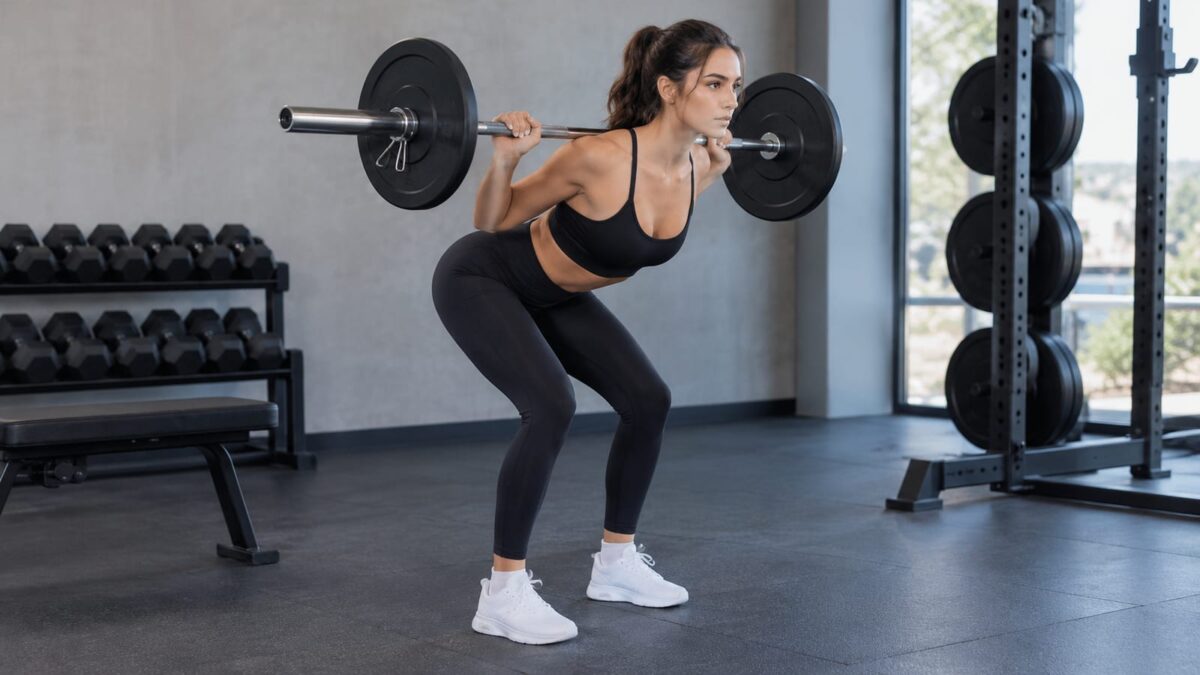
Place the bar across your upper back in a position you can support without neck pressure. A higher bar position usually keeps the load closer to your torso. A lower position may increase the forward lean and demand more from the hips and trunk.
Choose the position that lets you brace and keep the bar steady. There is no prize for using a bar position that makes your shoulders or wrists miserable.
2. Build a stable stance
Stand with your feet around hip width and point your toes slightly outward if that matches your natural position. Keep your whole foot connected to the floor.
Your stance should let your knees track over your feet. If your knees collapse inward, reduce the load and fix the setup before progressing.
3. Breathe and brace
Take a controlled breath before each repetition. Brace your trunk as if you expect the bar to pull you forward.
Keep that pressure through the descent and the hardest part of the return. Reset your breath between repetitions if needed. Do not rush through repeated reps just to keep the set moving.
4. Hinge down under control
Bend your knees and push your hips backward. Let your torso lean forward while the bar stays over your midfoot.
Use a controlled tempo. You should feel the hamstrings load as your hips travel backward, not a sudden pull in your lower back.
5. Stop at your useful range
Lower only as far as you can maintain a braced, neutral spine. The bar does not need to touch your neck, and your torso does not need to become parallel to the floor.
Range of motion is useful when you can own it. Extra depth gained by rounding your back is just extra error.
6. Return by driving the hips forward
Push through your feet and extend your hips. Keep the bar path steady and finish tall without leaning backward.
Your glutes should help complete the movement. Do not throw your chest upward or snap your knees straight.
The full rep should look the same from the first repetition to the last. If the final reps turn into a different exercise, the set was too heavy.
Common mistakes
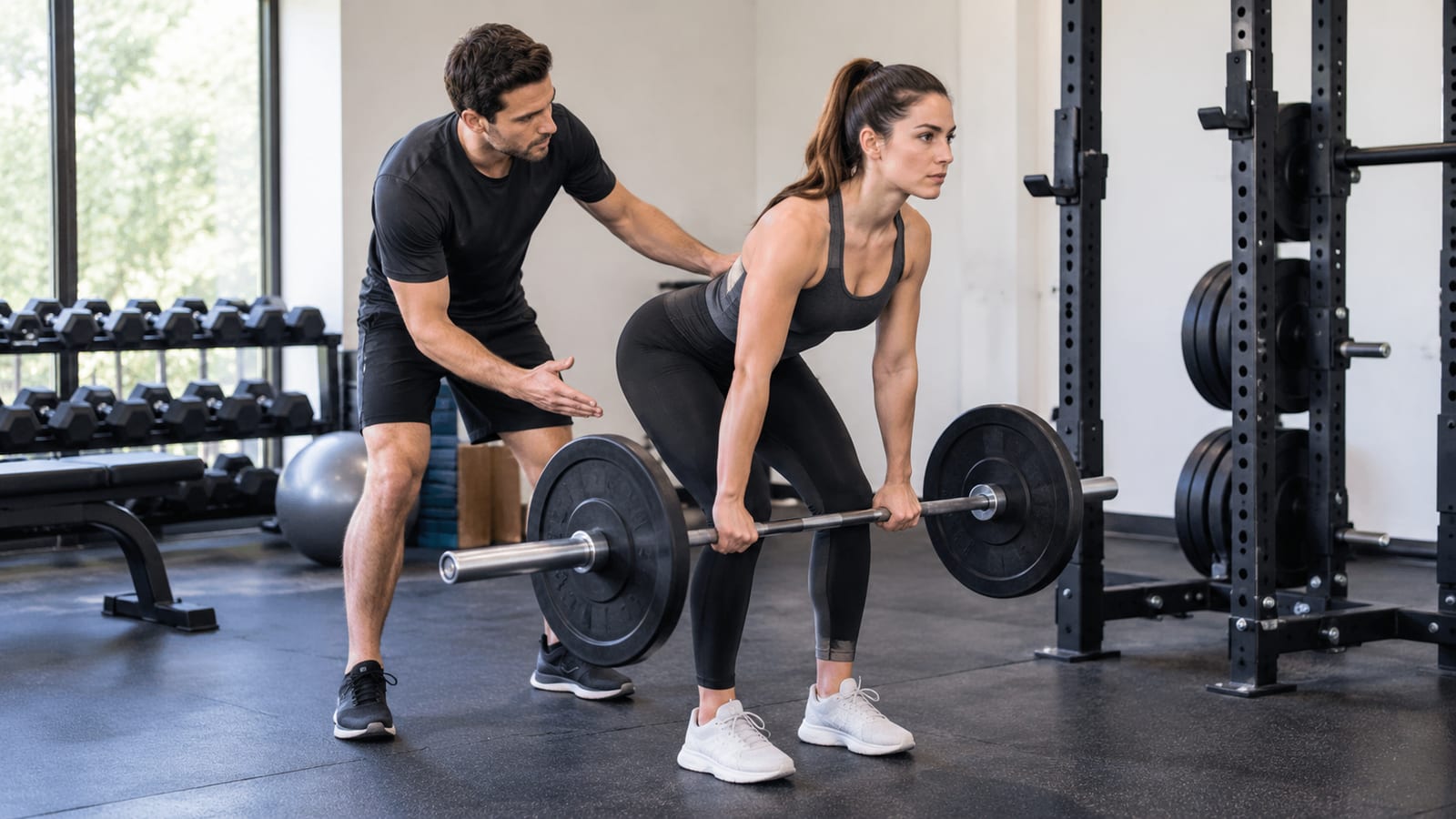
Most good morning problems come from using a load that exceeds your current control.
Using excessive load
A heavy bar increases the demand on your trunk before your hips can do their job. The movement then becomes a slow fight to keep the bar from pulling you down.
Reduce the load until you can keep the same hinge, brace, and return on every rep. Earn the next increase through cleaner work.
Rounding the spine
Some movement through the upper back may occur, but your working position should not collapse as you descend. A rounded lower back under a forward load is a poor trade.
Shorten the range and lower the weight. If you cannot do both, choose a simpler hinge while you build the pattern.
Letting the knees collapse
Your knees should stay aligned with your feet. They can bend slightly, but they should not cave inward as you lower or stand.
Use less load and slow the descent. Your joints get a vote, and poor knee control is useful information.
Squatting instead of hinging
If your knees travel forward and your hips drop straight down, you are performing a shallow squat with a bar on your back. That misses the main reason to use the exercise.
Keep the knee bend soft. Think hips backward first.
Chasing depth
Depth is not the score. Hamstring tension, trunk control, and a steady bar path matter more.
Stop when the next inch would force you to lose position. Then build range through better control instead of forcing it.
Using momentum
Bouncing out of the bottom removes control from the hardest part of the rep. It also makes the bar move before your hips are ready.
Lower smoothly and reverse direction without a dip. Each repetition should begin from the same braced position.
Variations that earn a place in training
Variations are useful when they solve a specific training problem. An unusual setup does not improve the exercise by itself.
| Variation | Best use | Main trade-off |
|---|---|---|
| Seated good morning | Limiting leg contribution and emphasizing trunk control | It can place more demand on the lower back |
| Wide-stance good morning | Giving your hips more room and changing the stance demands | The position may not suit your hip structure |
| Safety-bar good morning | Making the bar easier to hold when shoulder mobility is limited | The bar can pull you forward more aggressively |
| Belt-squat good morning | Loading the hips without placing a bar directly on your upper back | The equipment setup may not be available |
| Banded good morning | Adding accommodating resistance and practicing the hinge | Band tension changes through the range |
| Single-leg good morning | Training balance, hip control, and side-to-side differences | Balance may limit the load before the target muscles do |
Seated good mornings primarily work the lower back. That can be useful when you want a stricter trunk challenge, but it also means you should treat the variation with respect.
Banded good mornings, safety squat bar good mornings, and yoke bar good mornings are established options. Choose one for a clear limitation or goal. A complicated setup earns its place only when it solves a real problem.
The safety-bar version can help if a straight bar bothers your shoulders. Still, it may increase the forward pull, so start lighter than your normal barbell version.
Single-leg versions work best as controlled assistance work. If you are wobbling through every rep, the exercise is testing balance more than building the hinge.
Bodyweight versus weighted versions
Bodyweight good mornings are useful for learning the hinge. They also work as low-fatigue volume during a warm-up, travel session, or lighter training day.
Stand with your hands behind your head or across your chest. Practice moving your hips backward while keeping your trunk organized.
A bodyweight version becomes limited when the movement feels easy and your technique no longer needs attention. At that point, external load gives you a clearer way to measure progress.
You can add load with a barbell, dumbbells, a kettlebell, a band, or a belt-squat setup. The best option is the one you can control and repeat.
Do not add resistance just to make the exercise feel harder. Add it when you can maintain the same range, brace, and tempo with the current version.
Good mornings versus Romanian deadlifts
Good mornings and Romanian deadlifts are both hip hinges, but they place the load in different positions.
| Feature | Good morning | Romanian deadlift |
|---|---|---|
| Loading position | The load rests on the upper back or uses a specialized setup | The load is held in the hands |
| Balance demand | The torso must control a forward bar pull | The hands and hips help keep the load close |
| Hamstring emphasis | High, with the trunk also working hard | High, often with a clearer loaded stretch |
| Range of motion | Limited by torso control and hamstring position | Limited by the load path and hamstring tension |
| Trunk demand | The back and upper back stabilize the bar | The back stabilizes the body and the hanging load |
| Fatigue | Can create substantial trunk fatigue with modest load | Can create more grip and whole-body fatigue |
| Best practical role | Posterior-chain assistance and hinge control | Main hinge work and measurable load progression |
Romanian deadlifts are often the simpler choice for building a heavy, repeatable hinge. The load stays in your hands, and you can track the movement with a familiar bar path.
Good mornings are useful when you want the hips and trunk to work together under a bar position. They can also fit well after a squat when you want extra posterior-chain work without pulling from the floor again.
You do not need both in every program. Pick the hinge that gives you quality reps, fits your recovery, and does not make the rest of the week worse.
How to program and progress good mornings
Treat good mornings as assistance work unless you have a clear reason to make them a main lift. They are demanding enough to train the posterior chain without needing maximal loading.
Keep the effort recoverable. Leave a few clean reps in reserve, especially while learning the movement. Your final repetition should still look like the first.
Westside Barbell programming has used a top set of 3-5 repetitions when the good morning serves as a main exercise on a max-effort lower training day. That approach is demanding and requires strong technique, experience, and a well-managed program.
As a primary accessory exercise, Westside Barbell recommends 3-5 sets of 5-8 repetitions. You do not need to copy that workload automatically. Start with less work if the exercise is new or your week already contains heavy squats and deadlifts.
Use these progression rules:
- Keep the stance and bar position consistent so your logbook measures the same lift.
- Add repetitions before load when your program allows it.
- Increase weight only when every rep stays controlled.
- Change one variable at a time.
- Record the load, repetitions, and how your back and hamstrings felt afterward.
- Reduce the dose if the next lower-body session suffers.
Small increases add up. A good morning program should leave you able to recover and come back stronger, not make you prove that you can survive one ugly set.
For a short training schedule, place good mornings after the main squat or press pattern. They can also fit into a 30-minute lunchtime gym routine when you keep the setup simple and avoid turning every set into a long event.
When to reduce or replace good mornings
Reduce the load or range of motion when your spine rounds, your knees collapse, or the bar shifts during the set. Those are technique problems, not signs that you need more toughness.
Replace the exercise when it creates sharp, spreading, or worsening pain. Muscle effort and general fatigue are expected. Pain that changes your movement deserves a different plan and, when needed, qualified medical advice.
Also reduce or replace good mornings when:
- Your lower back stays unusually fatigued into the next session.
- Your squat or deadlift technique worsens after adding them.
- You cannot brace before each repetition.
- Your shoulder position makes the bar unstable.
- Your balance or hip structure prevents a controlled range.
- The exercise takes more recovery than the rest of your program can support.
Simpler options include Romanian deadlifts, light hip hinges with a dumbbell, cable pull-throughs, or bodyweight practice. The right replacement still trains the pattern you need without forcing a position you cannot own.
Keep the good morning if it builds strength and fits your week. Skip it if it repeatedly takes more than it gives back.
FAQ
Are good mornings safe for your lower back?
They can be appropriate when the load is light enough for a stable brace and controlled hip hinge. They become a poor choice when spinal rounding, excessive weight, or momentum controls the rep.
Should you do good mornings before or after squats?
Most lifters should place them after squats or another main lower-body movement. Doing them first can fatigue the trunk and hips before exercises that need more stability and force.
Can good mornings replace Romanian deadlifts?
They can replace them if the good morning gives you better control and fits your recovery. Romanian deadlifts remain easier to load and track, so they’re the better default for many lifters.
How often should you do good mornings?
Use them often enough to practice the hinge, while leaving room for recovery from your other lower-body work. If your next session shows weaker technique or unusual back fatigue, reduce the frequency or total work.
Do good mornings build glutes?
Yes. The glutes help extend the hips as you return to standing. They share the work with the hamstrings and trunk, so program the exercise as posterior-chain work rather than a glute isolation movement.
Related on this blog