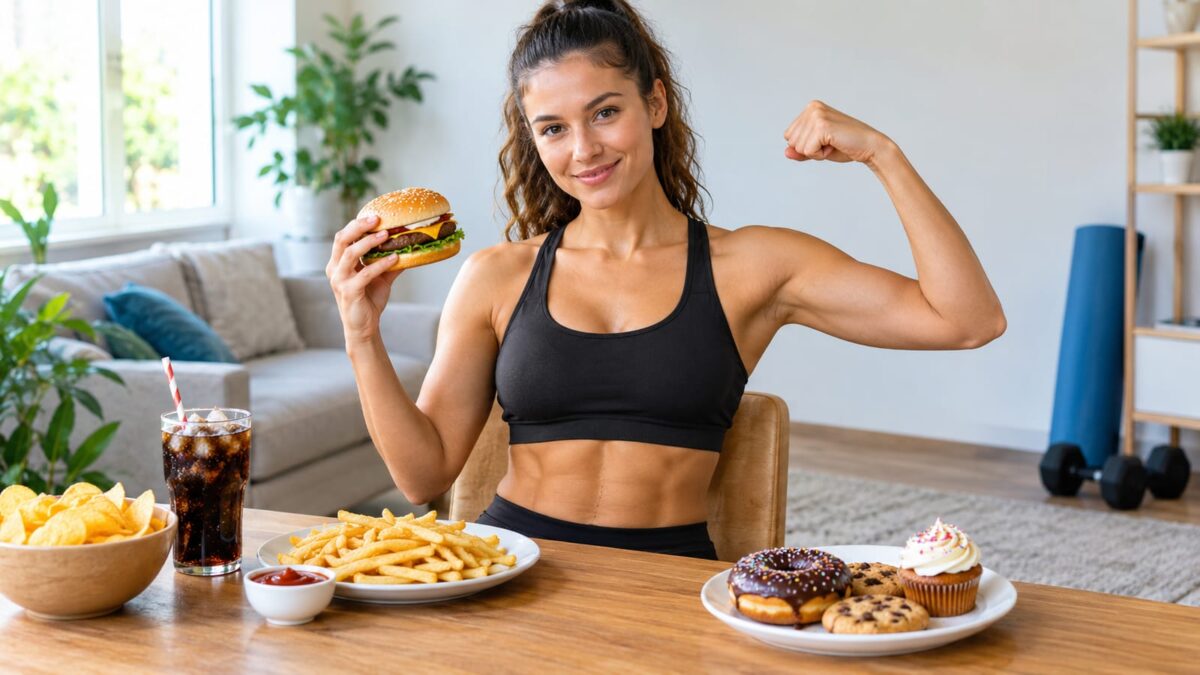
How to Fit Treats Into a Plan for Visible Abs

 0
 0
Yes, you can eat burgers, pizza, candy, and sugar and still get abs. The hard part is portion control and total intake. These foods can fit when you keep calories under control, eat enough protein, and train consistently. They become a problem when oversized meals replace useful foods, push you into excess calories, or leave you too tired to train well.
Last updated: 2026-10-19
How abs and food work together
Visible abs depend mainly on two things: developed abdominal muscles and low enough body fat for them to show. No single food creates abs, and no single food automatically hides them.
Your calorie balance controls much of the fat-loss side. If you regularly eat more energy than you use, losing the fat covering your abs becomes harder. If you eat too little, training quality and recovery can suffer.
Protein helps you keep and build muscle while you train. Whole foods also make it easier to get fiber, vitamins, minerals, and enough food volume to stay satisfied.
That gives you a standard you can use:
- Eat enough protein at most meals so each meal serves a purpose.
- Build most meals around minimally processed foods that keep you fueled and satisfied.
- Keep treats measured instead of eating from the package.
- Train your abs and the rest of your body with progressive resistance.
- Track your waist, body weight, strength, and gym performance.
- Adjust only when progress has stalled long enough to judge.
You don't need to ban bread, fries, or dessert. You do need a diet you can repeat while keeping calories under control.
For a complete training outline, use this guide to getting abs. Food reveals the muscle, but resistance training gives it something to reveal.
Can you eat junk food and still get abs?
Yes, if junk food stays a controlled part of your diet. A burger after training won't erase weeks of good work. Repeated oversized meals can erase the calorie deficit you needed for fat loss.
The useful question is not whether a food is clean or dirty. That language creates more confusion than it solves. Ask whether the meal fits your calories, gives you useful protein, and leaves room for the rest of your nutrition.
A fast-food meal may contain plenty of calories before it feels satisfying. Candy and sweet drinks have the same problem. They can use a large part of your daily intake without giving you much protein or fullness.
You can still get ripped while eating junk food when you handle the trade-offs:
| Keep in the plan | Watch closely |
|---|---|
| A burger with a sensible portion of fries | Large meals that turn into an all-day binge |
| Pizza with a protein-rich side | Several low-protein meals in a row |
| Candy in a measured serving | Eating straight from a large bag |
| Water or a low-calorie drink | Sugary drinks added to every meal |
| Regular lifting and daily activity | Using extra exercise to punish overeating |
Do not plan a hard workout around the idea that you must “earn” junk food. Train because training builds muscle and improves performance. Your joints get a vote, and your recovery still matters.
Teenagers need a different standard
A teenager can show abs while eating lots of fast food. Genetics, growth, sports, daily activity, and total food intake all affect how lean someone looks.
Some teenagers move a lot and burn through food without trying to diet. Others may look lean because they are still growing. That does not make a fast-food-heavy diet a good model to copy.
Teenagers need enough food to support healthy development, school, sport, sleep, and training. Restrictive dieting can make those jobs harder. It can also turn normal eating into a constant argument with yourself.
If you're a teenager, start with regular meals and useful basics:
- Include protein in meals and make it a normal part of eating.
- Eat fruit and vegetables most days instead of treating them as decoration.
- Drink water regularly.
- Keep fast food as one part of the week.
- Train with good technique instead of chasing exhaustion.
- Talk with a parent, doctor, or qualified dietitian if weight loss becomes the main focus.
A teenager can show abs and still eat fast food. That does not prove the fast food caused the result or that the diet supports healthy growth.
Burgers, pizza, and a six-pack
You can have a six-pack while eating burgers and pizza. The meal needs to fit the larger plan.
For a burger, keep the useful part obvious. Choose a serving that gives you protein, then decide how much fries, sauce, or dessert fits your intake. You don't need to remove every enjoyable part. You do need to stop treating the meal as permission to keep eating after you're full.
Pizza requires the same judgment. Have a portion that satisfies you, add a protein-rich food if the pizza is light on protein, and return to normal meals afterward. Do not starve earlier in the day to create room, then arrive so hungry that the plan collapses.
Meal frequency is flexible. Some people do better with regular meals, while others prefer fewer larger meals. The right schedule is the one that helps you train, recover, and control portions.
Use this check before ordering:
- Where will the protein come from?
- What portion will you eat?
- What will you drink?
- What meal will come next?
- Can you return to your normal plan afterward?
That last question matters. One pizza meal is manageable. A pizza meal that becomes a whole weekend of unplanned eating is a different problem.
Meat can support getting abs
You can eat meat and still get abs. Meat can provide useful protein, which supports muscle repair and helps you keep muscle during fat loss.
The type and portion still matter. Fatty cuts, fried meat, processed meat, sauces, and large restaurant portions can raise calories quickly. Leaner options may make calorie control easier, but you don't need to avoid every higher-fat choice.
Build variety into the diet. Eggs, dairy, beans, fish, poultry, and other protein foods can all contribute. Meat can serve the plan without becoming the entire plan.
The mistake is blaming meat for body fat. Total calories, food quality, activity, and consistency decide more than one food category.
Candy and visible abs
You can eat candy and still have abs. Candy does not automatically prevent a lean physique, but it offers little protein and usually does little for fullness.
That makes portion control the main skill. Put a serving in a bowl or choose a small package. Eating from a large bag turns a planned treat into a guessing exercise, and guessing is poor nutrition tracking.
The FDA Daily Value for added sugars is 50 grams per day based on a 2,000-calorie daily diet. That figure gives you context, not a personal target. Your needs depend on your total diet and calorie intake.
Candy can fit after a meal or alongside food that provides protein and fiber. It becomes harder to manage when it replaces meals or appears in drinks, snacks, and desserts throughout the day.
Sugar and six-pack abs
You can eat sugar and still get six-pack abs. Sugar itself does not switch fat loss off. The bigger issue is how much it adds to your total intake and what it replaces.
The Dietary Guidelines for Americans, as summarized on the FDA's added sugars page, recommend keeping calories from added sugars below 10 percent of total daily calories.
Use that figure as a guardrail. It does not mean every gram above the limit instantly ruins your progress. It does mean a diet built around added sugar can crowd out protein, fiber, and useful micronutrients.
Sugary drinks deserve extra attention because they are easy to consume quickly. Liquid calories often provide less fullness than a solid meal. If fat loss has stalled, check drinks before blaming your training program.
The Dietary Guidelines for Americans recommend that adults limit sodium intake to less than 2,300 mg per day, according to the FDA's guide to sodium in your diet. A salty meal may increase water retention, but that temporary change is not the same as gaining body fat.
The repeatable plan for eating for abs
Use a simple plan that gives each meal a job. You need enough protein, enough energy to train, and enough control to reduce body fat when that is the goal.
Start with these basics:
- Build meals around protein. Use meat, fish, eggs, dairy, beans, or another reliable source.
- Add mostly minimally processed foods. Fruit, vegetables, potatoes, rice, oats, and similar foods help with fullness and training fuel.
- Measure calorie-dense treats. Weigh or portion foods such as candy, fries, desserts, and sauces when progress matters.
- Train with resistance. Use squats, presses, rows, hinges, and direct abdominal work with repeatable technique.
- Progress slowly. Add weight or reps when you can keep quality reps and controlled form.
- Stay active outside the gym. Walking and normal daily movement support energy balance without turning recovery into another workout.
- Sleep enough to recover. Poor sleep can make hunger, training effort, and food choices harder to manage.
- Review your results. Use your logbook, waist measurement, photos, and gym performance together.
You can also read this guide on building muscle in a calorie deficit if you're trying to lose fat while keeping muscle.
The goal is not to make every meal impressive. The goal is to make most meals predictable, then fit treats around them.
Consistency beats food perfection
A strict diet can look impressive for a week and fail by the weekend. A repeatable diet gives you enough structure to make progress while still living your life.
Do not use extra cardio to punish a high-calorie meal. Do not skip meals to compensate for candy. Do not turn one burger into a reason to abandon the whole week.
Instead, return to the next normal meal. Keep training. Earn the next increase in the gym. Adjust portions if your waist and performance show that your current intake is too high.
Food perfection is a poor standard because nobody follows it forever. Measurable progress, sound technique, enough protein, and sustainable habits will beat a complicated rulebook.
FAQ
Can junk food make abs disappear overnight?
No. One salty or high-carbohydrate meal can change water retention and stomach fullness, which may make your abs look softer temporarily. Meaningful fat gain comes from repeated calorie excess, not one meal.
Should you eat junk food before or after training?
Use the timing that lets you train well and keep the rest of your intake under control. A small treat can fit before or after training, but your main recovery meal still needs protein and enough carbohydrate for your needs.
Do you need to count calories to get abs?
No, but you need a reliable way to control intake. Repeatable meals, sensible portions, and regular checks of your waist and body weight can do that job. Counting becomes useful when progress stalls and the extra calories are hard to find.
Should you stop eating fast food during a cut?
Not automatically. Keep it if you can choose a sensible portion, get enough protein, and return to your normal plan afterward. Skip it if one meal repeatedly turns into overeating for the rest of the day.
Related on this blog