Recovery Tips That Every Fitness Beginner Should Know

 0
0
 0
0 You want clear, practical recovery tips for fitness beginners that actually move the needle — not gimmicks. Start here: progress happens between sessions, when your body repairs muscle, refills energy, and calms inflammation so you can train again with quality.
Begin with the basics: sleep and solid nutrition are nonnegotiable. Nail those two before chasing gadgets like cold baths or fancy supplements; those are helpful additions, not replacements.
Expect simple, repeatable habits that keep you consistent instead of crushed. This short guide will show a plain-language system: smart sleep, sensible training load, basic nutrition, hydration, and low-intensity active recovery that fits real life.
If you’re unsure which drills or rest routines fit your schedule, check practical workout guidance at workout tips for beginners to pair with this approach.
Key Takeaways
- Progress happens between workouts — prioritize sleep and food first.
- Use smart load management and regular low-intensity movement to stay consistent.
- Avoid “all gas/no brakes” thinking; simple guardrails prevent injury.
- Tools like massage or cold exposure help, but only after fundamentals are solid.
- Build repeatable habits you can keep week after week for better results.
Recovery is where your progress actually happens
Training starts in the gym, but adaptation happens during the break between sessions. When you change an exercise or push heavier, tiny tears in muscle fibers cause delayed onset muscle soreness. That soreness is a normal signal your body is adapting.
What muscle soreness means
DOMS shows up as stiff, tender muscles that ease as you warm up. It’s not the same as sharp pain that worsens or alters how you move. If movement feels unsafe, back off and seek advice.
How long recovery takes
Expect ranges, not rules: light sessions often recover in ~24 hours. Challenging workouts usually need 2–3 days. Very intense efforts can take longer, especially at a low fitness level.
Why “no pain, no gain” breaks down
Chasing pain encourages too many max efforts. That stacks fatigue, reduces training quality, and raises injury risk. Aim to leave sessions challenged—not crushed.
- Decision rule: If soreness improves with movement, train cautiously.
- Warning sign: Sharp or worsening pain = stop and get checked.
- Mindset: Consistency wins; steady progress beats occasional hero sessions.
Recovery tips for fitness beginners you can use starting today
Small changes beat big promises. Focus on three actions that stack: sleep, real rest days, and easy movement. Do this sequence and you’ll stop burning energy on hacks that don’t move the needle.
Prioritize sleep to support muscle repair, hormones, and inflammation control
Sleep is the fastest way to help muscles recover. Missing sleep raises inflammation and skews hormones that control energy and repair. Aim for consistent bedtimes and 7–9 hours most nights.
Plan real rest days so your muscles recover instead of stacking fatigue
Think of rest days as paying into your energy bank. A true rest day means no hard sets or long intervals—light chores, walking, and good sleep. That keeps your program sustainable and performance steady across the week.
Use active recovery to boost blood flow without turning it into another workout
Choose low-intensity movement that raises blood flow but won’t create new soreness. Keep effort to a conversational level. If you can’t speak in full sentences, ease off.
- Priority list: sleep first, smart rest, then active recovery.
- Do this: short walks, gentle cycling, or mobility work on easy days.
- Avoid that: hard intervals on your rest day—they steal recovery.
Post-workout recovery basics: cool down, stretch, then refuel
Finish strong: a short cool-down and a few targeted stretches set you up to move well tomorrow. Aim to spend about 6–10 minutes after your workout on easy movement, then follow with gentle stretches and quick fueling.
A short cool-down that helps your heart rate and body shift into recovery mode
Keep the effort low and steady. Walk or pedal at an easy pace for 6–10 minutes to let your heart rate drop gradually. Sudden stops can feel like slamming the brakes on your system; an easy cool-down signals the body to switch into repair mode.
Match the cool-down to the session: walk after lifting, an easy spin after intervals, or slow jogging after tempo work. The goal is simple: raise blood flow gently without adding stress.
Gentle stretching to support flexibility and reduce stiffness the next day
Stretch only until you feel mild tension — never sharp pain. Hold each position 20–40 seconds while breathing steadily. That steady effort helps lengthen tight areas and supports flexibility without overstretching sore muscles.
- Simple flow: 6–10 minutes easy movement → 3–5 gentle stretches → food and fluids.
- Stretch cue: mild pull, relaxed breath, no bouncing.
- Pick stretches that match what you trained: hips and hamstrings after squats, calves after running, chest stretches after pressing work.
Do this the same way every session. Small, consistent habits are an easy way to reduce next-day soreness and keep your movement quality high over time.
Eat and drink for muscle recovery without overcomplicating it
What you eat and drink shapes how quickly your muscles mend and how ready you feel the next day.
Start with total daily protein. Aim for about 1.6 g per kg of body weight each day (a workable range is 1.4–2.0 g/kg). Daily totals matter more than exact timing. Hitting this target helps repair damaged muscle fibers and supports strength gains.
Protein examples that fit real life
Choose easy options: Greek yogurt, eggs, chicken breast, tofu, lentils, and canned tuna. Mix them across meals and snacks so you meet your daily number without overthinking portions.
Carbs after workouts
Include carbs post-workout to refill glycogen and protect next-day energy. A simple guideline is a snack or meal with carbs plus protein within a couple hours—fruit and yogurt, rice with beans, or whole-grain toast and eggs.
Balanced plates and hydration that make sense
Build plates around a protein source, a serving of whole carbs, and colorful vegetables. Limit ultra-processed foods and favor whole items that cover micronutrients.
Hydration practical rule: drink to thirst, and replace about 1.5 L per kg of body weight lost during heavy sweat sessions, especially in hot or humid conditions. Plan fluids and salty snacks if workouts run long or you sweat a lot.
Tart cherry juice as a food-first option
Tart cherry juice may help control inflammation and reduce soreness when used in the days around hard sessions (2022 reviews show consistent benefits). Treat it as an optional, food-first tool — not a fix-all.
- Simple goal: hit daily protein → add carbs post-workout → prefer whole foods → stay hydrated.
- Quick swaps: canned fish or beans when meat isn’t convenient; fruit or oats for fast carbs.
- When to plan more: higher training volume or hotter conditions need extra carbs and fluid.
| Need | Practical target | Example |
|---|---|---|
| Daily protein | ~1.6 g/kg (1.4–2.0 g/kg) | 3–4 servings: 1 cup Greek yogurt, 2 eggs, 4 oz chicken |
| Carbs post-workout | Moderate portion within 2 hours | 1 banana + yogurt, or 1 cup rice + beans |
| Hydration | Drink to thirst + replace ~1.5 L/kg lost | Water during day; electrolyte drink after heavy sweat |
| Optional aid | Tart cherry juice (food-first) | Small glass in days around heavy sessions |

Active recovery ideas for your next rest day
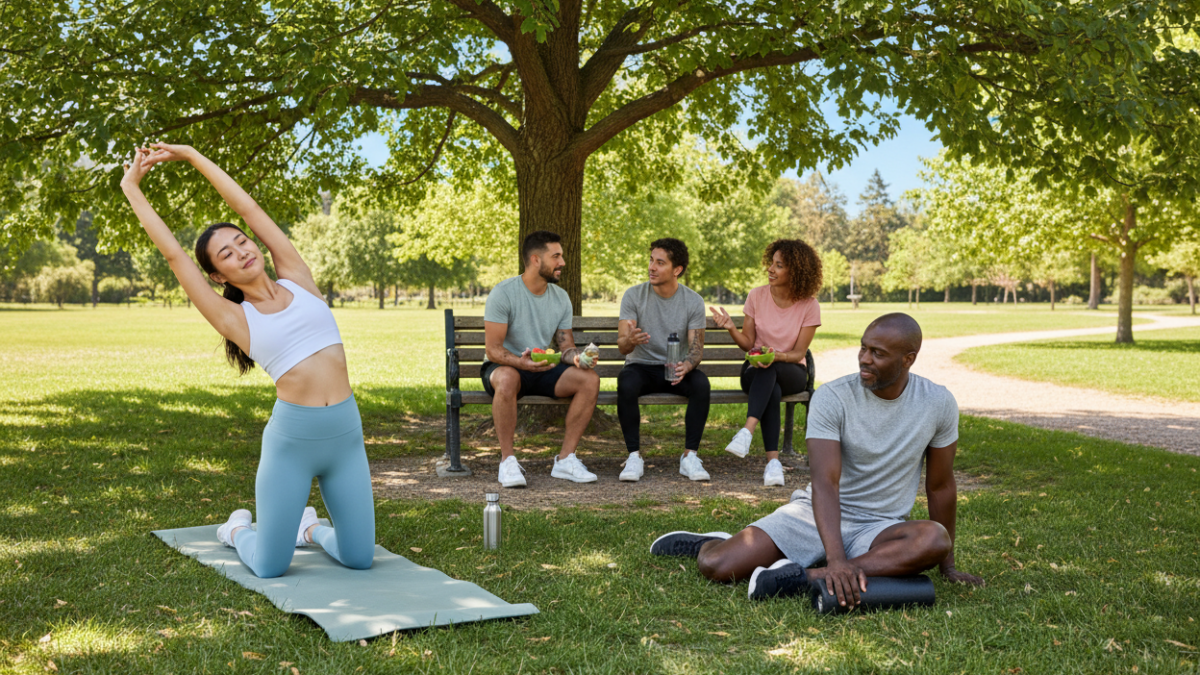
A smart rest day moves blood and mobility without turning into another hard session. The goal is gentle flow: raise circulation, ease tight spots, and let your muscles settle without adding fatigue.
Easy cardio example: 30-minute template
Try this plug-and-play session to keep intensity low and helpful.
- 5 minutes warm-up (easy walk or light pedal)
- 20 minutes at a conversational pace — you should be able to talk comfortably (talk-test)
- 5 minutes cool-down and slow breathing
How to know it’s working: your breathing returns to normal quickly and sore areas feel looser, not more tired. Aim for ~30–60% max HR.
Band and mobility sequence
Target common tight spots from sitting and training with simple sets.
- Calves: ankle banded dorsiflexion, 2 sets x 12–15 reps each side
- Hip flexors: half-kneeling banded stretch, 2 sets x 30 seconds each side
- Pecs: banded doorway pull-aparts or band-assisted doorway stretch, 2 sets x 12–15 reps or 30 seconds hold
Why this way: short sets increase range without creating new soreness.
Foam rolling basics
Use moderate pressure and slow passes. Work a tender spot until it eases, not until you chase pain as a badge.
- Pressure: tolerable pain ~7/10 at most
- Timing: hold 30 seconds to 2 minutes on a spot, then move on
- Red flags: numbness, tingling, or a heartbeat-like throb — stop and reposition
Quick cue to make sure it’s helping: after 1–2 passes the area should feel less tight or show small range gains. If it worsens, back off.
Yoga as a low-intensity option
Choose gentle flows or restorative classes. Avoid sweaty power yoga if you can’t breathe comfortably — that becomes another workout, not active recovery.
Menu idea: pick one session from easy cardio, band mobility, foam rolling, or a short yoga flow. Keep each session short and calm — that’s the way to support training without stealing your next workout.
Soreness vs pain: how to avoid injury while your muscles recover
Not all aches are the same — learning the signs prevents small issues from turning into injuries.
Practical difference: soreness (DOMS) is dull, improves with movement, and peaks 24–72 hours after a hard session. Pain is sharp, changes your form, or gets worse with simple tasks. Treat soreness as a signal; treat pain as a warning.
Signs you should stop pushing and scale back
- Worsening pain during a lift or run.
- Pain that makes you change technique or limp.
- Swelling, numbness, or loss of range of motion.
- Soreness that never eases with a warm-up or gets steadily worse over days.
When to see a doctor or physical therapist
Get evaluated if pain is persistent, increasing, causes limping, or interferes with daily life. If you can’t sleep or you feel sharp, stabbing pain, seek professional care. Early assessment often prevents longer-term injuries.
Programming guardrails to protect your muscles and joints
Keep increases gradual: add weight or volume slowly week to week. A small, steady climb lowers injury risk and improves long-term results.
Alternate muscle groups: schedule pressing and pulling days so the same muscles get a break. That gives each muscle more time to mend between workouts.
Leave sessions challenged — not crushed. Finish feeling capable of another short set, not spent. Scaling back for a few days often helps you get back faster, not lose progress.
| Issue | Typical sign | Action to take | When to seek care |
|---|---|---|---|
| Normal soreness | Dull, improves with movement | Light activity, sleep, hydration | If it persists >7 days or worsens |
| Acute pain | Sharp, sudden, alters form | Stop exercise, ice, rest | Immediate medical or PT consult |
| Overuse | Gradual increase in ache with activity | Reduce volume, alternate muscle groups | If swelling or daily tasks affected |
| Red-flag symptoms | Limping, numbness, fever | Don’t train; seek urgent care | Same day evaluation |
If you want extra reading on handling muscle soreness and how to get back to training safely, check this short guide: get rid of soreness. Make sure you act early — small steps now protect long-term gains.
Tools and techniques that can help (after the fundamentals are handled)
When sleep, steady nutrition, and smart training are in place, certain techniques can help ease soreness and support performance. Treat these as nice-to-haves, not foundations. Use them selectively and note the strength of evidence.
Hands-on and wearables
Massage can slightly reduce DOMS and improve flexibility; a session after a very hard effort is worthwhile. Self-massage and foam rolling are fine daily tools—keep pressure moderate and stop at sharp pain.
Compression garments show limited benefits. They may help during travel or after long events, but don’t expect huge gains alone.
Cold, heat, and short-term relief
Cryotherapy or cold baths can lower pain and inflammation after intense sessions. Heat, hot tubs, and topical creams ease symptoms but don’t replace sleep or nutrition. Use them to manage soreness before your next training day.
Evidence-backed supplements
Creatine monohydrate has solid data for strength and may reduce muscle damage. Protein powder is simply an easy way to hit daily protein targets. Discuss doses with a pro if unsure.
| Method | Evidence | Best use |
|---|---|---|
| Massage | Small but real benefit | After heavy sessions; 30–60 min or self-massage |
| Cold exposure | Moderate pain/inflammation effects | Short-term after very hard workouts |
| Creatine & protein | Strong (creatine) / practical (protein) | Daily creatine; protein powder to meet goals |
| Compression | Limited evidence | Travel, long events, or light post-session use |
Use caution and avoid pitfalls
Other options—magnesium, fish oil, turmeric, ginger—may help some people. Talk with a clinician before adding them.
Be careful with muscle guns: light pressure, avoid bones and acute pain, and stop if symptoms worsen.
Avoid alcohol, tobacco, and skipped sleep—they hurt sleep quality and blunt performance. If you want a short guide on mindful approaches, see mindful recovery practices.
Conclusion
Wrap this guide with a few simple steps you can repeat every week to protect progress.
Start with the fundamentals: sleep well, eat enough protein and whole foods, drink to thirst, and schedule at least one true rest day. Keep active recovery easy and conversational so it helps blood flow without adding fatigue.
Soreness is normal as your muscles adapt. Sharp or worsening pain that changes how you move is a cue to scale back or see a pro.
Next-week plan: pick your training days, add one full rest day, and slot one 20–30 minute conversational active session. Repeat that pattern weekly and adjust slowly.
Consistency beats motivation spikes. Protect your energy and joints now, and you’ll get back to stronger workouts and steady results month after month.
FAQ
What does muscle soreness mean and is it normal after new workouts?
How long does muscle recovery typically take based on workout intensity and fitness level?
Why is the “no pain, no gain” idea misleading for people new to training?
What’s the single most important habit to support muscle repair and reduce inflammation?
How should I plan rest days so my muscles can recover instead of just stacking fatigue?
What is active recovery and how can it boost blood flow without turning into another workout?
How can I use a simple talk-test to keep recovery sessions low intensity?
What does a useful post-workout cool-down look like?
Which gentle stretches help with next-day stiffness?
How much protein should I aim for after workouts and across the day?
Why are carbohydrates important after training?
What does a balanced plate to support muscle repair look like?
How should I think about hydration targets during training in hot or humid conditions?
Can tart cherry juice help with soreness and inflammation?
What are easy active recovery options for a rest day?
What does a band-and-mobility recovery session target?
How do I use foam rolling safely—what pressure, timing, and sensations should I watch for?
What signs indicate I should stop pushing and scale back my training load?
When should muscle pain prompt a visit to a doctor or physical therapist?
What programming guardrails help prevent overtraining and injury?
Which tools and techniques can help after fundamentals are in place?
What supplements have solid evidence to support muscle goals?
Which other popular supplements should be approached carefully?
When should I use heat versus ice, hot tub time, or topical creams for short-term soreness relief?
How do muscle massage guns and self-massage tools fit into a recovery plan?
What common habits slow down muscle repair and should be avoided?