

Build Muscle With Three Full-Body Workouts Weekly

 0
0
 0
0 A full body workout 3 times a week builds muscle effectively for a natural lifter with limited time. Train on nonconsecutive days, use repeatable compound lifts, add weight or reps gradually, eat enough food, and keep most sets just short of failure. Consistent sessions build more muscle than a plan you keep missing.
Last updated: 2026-09-04
How does a full body workout 3 times a week build muscle?
Training each major muscle group across the week gives you several useful chances to practice lifts and stimulate growth. You also get a rest day between sessions, which helps you recover before the next round of productive sets.
A full-body routine works because weekly training quality matters more than the name of the split. A meta-analysis examined 14 studies comparing full-body and split-body resistance training. The resistance programs lasted 4 to 12 weeks, and muscle growth was similar when weekly training volume was matched.
That finding removes one common distraction. You do not need a body-part split to grow. You need enough hard work, repeatable technique, food, and months of steady training.
A three-day schedule also gives beginners frequent practice without forcing long daily workouts. You learn the main patterns faster, build tolerance to training, and see more chances to beat your previous performance.
The plan works best if you:
- Train every major muscle group during each session
- Keep most sets within a productive rep range
- Stop with clean reps still available
- Record your lifts and reps
- Add weight or reps only after earning the increase
- Eat enough calories and protein to support growth
- Keep the same core exercises long enough to improve
The weekly schedule for full-body training
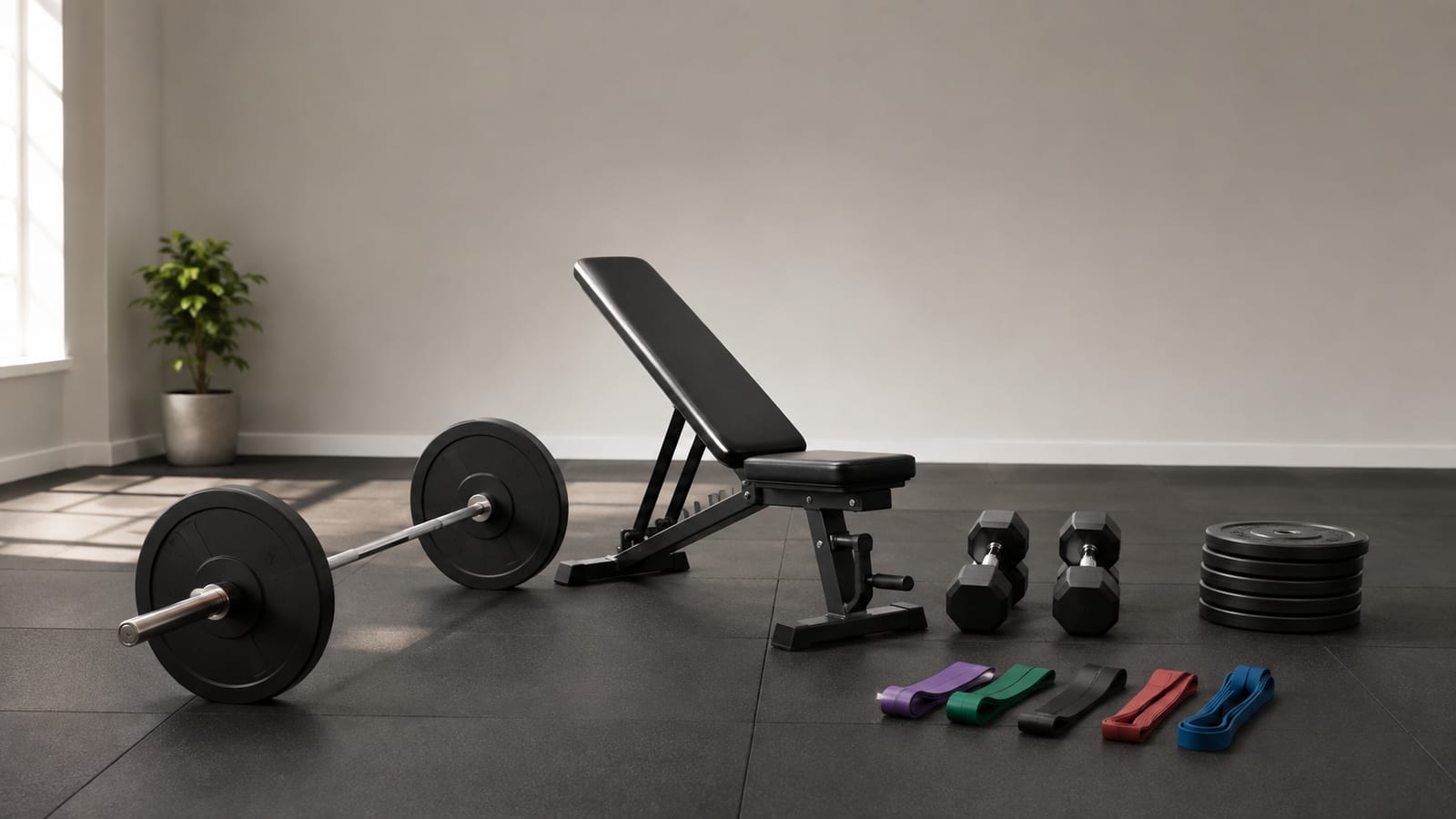
Use Monday, Wednesday, and Friday for training. Keep Tuesday, Thursday, Saturday, and Sunday for recovery or light activity.
| Day | Session | Main focus |
|---|---|---|
| Monday | Workout A | Moderate full-body work |
| Tuesday | Rest | Walking or normal activity |
| Wednesday | Workout B | Heavier main lifts |
| Thursday | Rest | Recovery |
| Friday | Workout C | Higher-rep muscle-building work |
| Saturday | Rest | Optional easy activity |
| Sunday | Rest | Recovery and preparation |
The exact weekdays can change. The rule is simple: leave a rest day between demanding sessions.
If your work schedule changes, use an A-B-A schedule in one week and B-A-B the next. This keeps the training balanced without forcing you into a calendar that does not fit your life.
Dependable sessions beat a plan you regularly miss. Your joints get a vote, and your schedule has one too.
A full-body workout 3x a week template
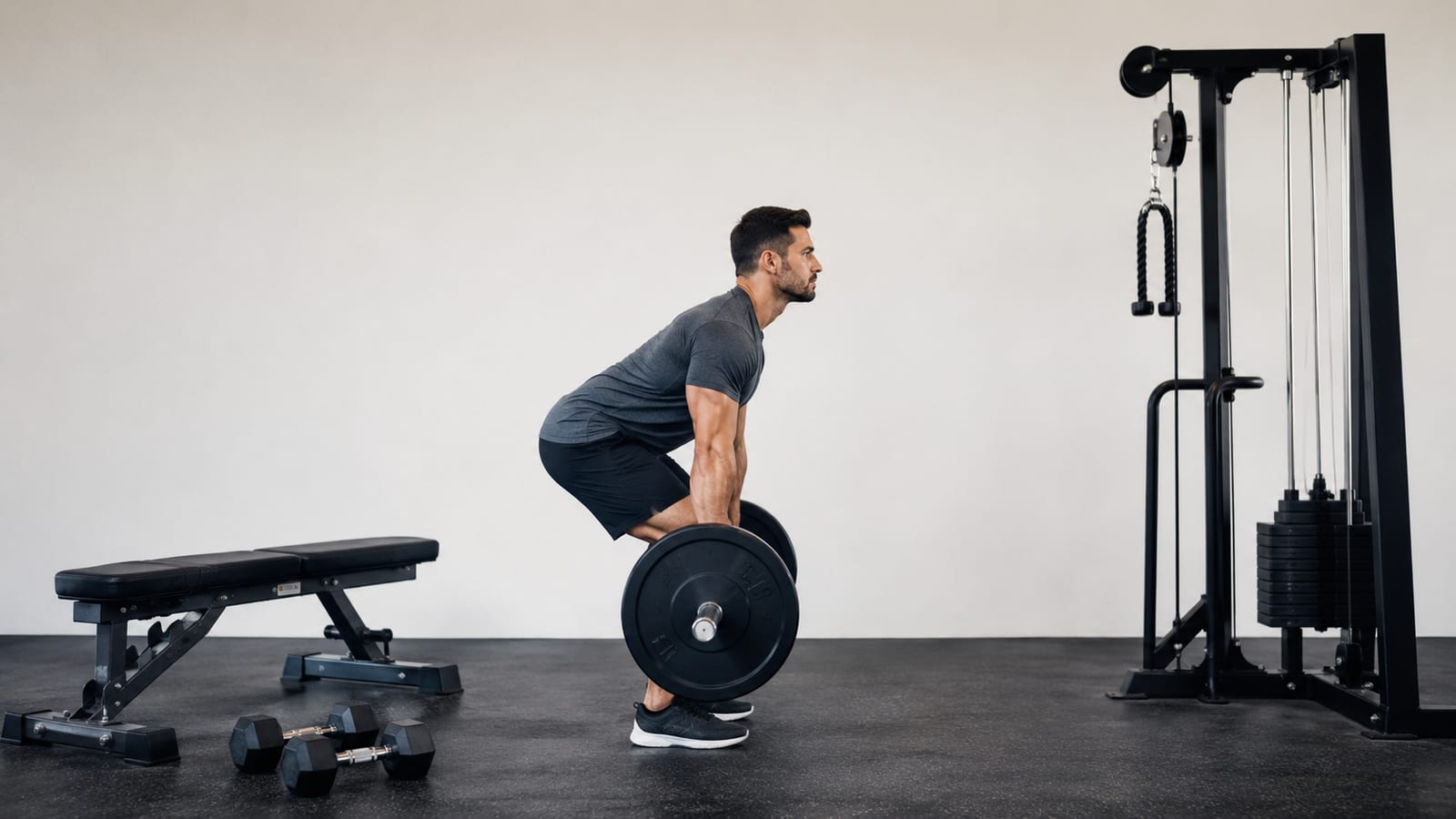
Start with two or three working sets per exercise. Use mostly 6 to 15 reps, depending on the movement and your experience.
Warm up with easy sets of the first few exercises. These sets prepare your joints and technique, but they do not count as working sets.
Workout A
- Back squat or leg press: 3 sets of 6 to 10 reps
- Bench press or machine chest press: 3 sets of 6 to 12 reps
- Seated cable row: 3 sets of 8 to 12 reps
- Romanian deadlift: 2 sets of 8 to 12 reps
- Dumbbell lateral raise: 2 sets of 10 to 20 reps
- Cable curl: 2 sets of 10 to 15 reps
Workout B
- Deadlift variation or hip thrust: 2 to 3 sets of 5 to 10 reps
- Overhead press: 3 sets of 6 to 12 reps
- Lat pulldown or pull-up: 3 sets of 8 to 12 reps
- Split squat or hack squat: 2 to 3 sets of 8 to 15 reps
- Leg curl: 2 sets of 10 to 15 reps
- Triceps pressdown: 2 sets of 10 to 15 reps
Workout C
- Front squat, goblet squat, or leg press: 3 sets of 8 to 15 reps
- Incline dumbbell press: 3 sets of 8 to 15 reps
- Chest-supported row: 3 sets of 8 to 15 reps
- Bulgarian split squat or reverse lunge: 2 sets of 8 to 15 reps
- Leg extension: 2 sets of 10 to 20 reps
- Dumbbell curl: 2 sets of 10 to 15 reps
This is a full body workout three times a week because each session trains your legs, chest or shoulders, back, and smaller supporting muscles.
Start with the lower end of the set range. Add another set only if your performance, recovery, and measurements have stalled for several weeks. More work is easy to prescribe and harder to recover from.
Full-body compound lifts with targeted accessory work
Your core menu should cover five movement patterns:
- A squat or knee-dominant leg exercise
- A hip hinge or hip-dominant exercise
- A horizontal or vertical press
- A row or vertical pull
- One or two isolation movements
Compound lifts train several joints and muscles at once. They give a natural lifter a strong return on limited gym time.
Use a squat, leg press, or split squat for the front of your legs and glutes. Use a Romanian deadlift, deadlift variation, hip thrust, or leg curl to train the back of your legs and hips.
Pressing movements train your chest, shoulders, and triceps. Rows and pulldowns train your back and biceps. The overlap helps, but it does not remove the need for direct work.
For example, a bench press trains your triceps. It still may not provide enough work for your triceps to grow as much as you want. Add pressdowns or another simple extension if those muscles need more attention.
Accessories fill the gaps without turning the session into a parade of exercises. Use curls, lateral raises, leg curls, leg extensions, calf raises, or a simple abdominal movement.
Choose exercises that feel stable and let you repeat the same range of motion. If a movement causes pain, change the variation. A technically impressive lift that irritates your joints has failed its main job.
For more guidance on keeping training short, use this low-volume workout routine for muscle growth.
Full-body weight training 3 times a week
A full body weight training 3 times a week routine can use barbells, dumbbells, machines, cables, and bodyweight exercises. The equipment changes the exercise. It does not change the basic rule: the target muscles must work hard through a repeatable range of motion.
Free weights
Free weights are useful for squats, presses, rows, hinges, and lunges. They demand more balance and coordination, so they can be excellent practice for beginners.
However, free weights are not automatically better for muscle growth. If a machine lets you train the target muscle harder with cleaner technique, use the machine.
Machines and cables
Machines often provide more stability and make it easier to push close to failure safely. They work well for chest presses, rows, pulldowns, leg presses, leg curls, leg extensions, and arm exercises.
Use them for exercises where balance limits the target muscle. A supported row may train your back better than a loose row that ends with your lower back doing most of the work.
Bodyweight movements
Push-ups, pull-ups, inverted rows, split squats, and dips can fit into the plan. Make them harder with added load, a harder variation, more reps, or slower controlled reps.
Bodyweight training becomes harder to progress for some lower-body movements. You may eventually need weights to keep adding resistance. That is fine. Use the simplest tool that lets you train with intent.
Heavy, moderate, and volume-focused training days
The three sessions can use different demands without becoming a complicated strength program.
- Workout A: Use moderate loads and controlled sets in the middle of the rep range.
- Workout B: Use heavier compound lifts with fewer reps and longer rests.
- Workout C: Use lighter loads, higher reps, and more machine or dumbbell work.
This setup spreads fatigue across the week. You can train heavy enough to build strength without asking every exercise to test your limits.
Heavy sets suit stable compound lifts. Higher-rep sets often work better for lateral raises, curls, leg extensions, and leg curls. A high-rep squat can build your legs, but your breathing may fail before your legs receive their best work.
Keep the movement stable enough to measure. Change the rep range or load when needed, but do not replace every exercise each week.
Sets, reps, rest, and effective effort
Start with 2 to 3 working sets per exercise. Most muscle-building work can stay between 6 and 15 reps, while smaller isolation exercises can use higher reps.
Train most sets with 1 to 3 reps in reserve. That means you stop when you could still perform one to three clean reps before your technique breaks down.
You can occasionally take the final set of a safe isolation exercise to failure. Curls, pressdowns, lateral raises, and leg extensions are reasonable choices. Avoid routine failure on squats, deadlifts, and heavy presses because the added fatigue can damage the next session.
Rest about two minutes between demanding compound sets. Take less time for smaller movements if your reps and technique stay strong. If the next set drops sharply, your rest was too short.
Use this simple standard for a hard set:
- The target muscle does most of the work
- Your range of motion stays consistent
- Your last reps slow down without falling apart
- You could complete only a few more clean reps
- The next session remains recoverable
A set counts because it challenges the target muscle. Sweating, shaking, and feeling destroyed do not prove that it worked.
Progressive overload that works for a three-day workout
Progressive overload means gradually doing more useful work. It does not mean forcing more weight onto the bar every workout.
Use a rep range for each exercise. If your target is three sets of 8 to 12, keep the same load until you can complete 12, 12, and 12 with 1 to 2 reps in reserve. Then add the smallest practical amount of weight and build the reps again.
Progress can also mean:
- Adding one clean rep
- Using better control
- Reaching a longer range of motion
- Keeping the same load with less effort
- Completing the same work with more consistent technique
Change one variable at a time. Otherwise, your logbook cannot tell you what improved.
Write down the exercise, load, reps, and any useful note about technique. If your squat depth changes, the number on the bar tells only part of the story.
Earn the next increase. Good reps come before more weight.
How to recover between full-body sessions

Recovery starts with enough food. If your body weight and gym performance keep falling, add food before adding exercises.
Eat regular meals with a useful protein source. Protein supports muscle repair, while carbohydrates help you train with enough energy. Include fats and a varied diet so the plan remains practical.
Sleep as consistently as your life allows. Poor sleep can reduce training quality, worsen effort control, and make normal soreness feel harder to manage.
Keep rest days easy. Walking, light mobility work, and normal daily activity are fine. Hard conditioning sessions can interfere with leg recovery if you add them without adjusting the lifting plan.
Reduce effort or volume when several warning signs appear together:
- Your normal loads feel unusually heavy
- Reps fall across more than one workout
- Joint pain keeps increasing
- Your motivation stays low
- Soreness lasts into the next session
- Your technique breaks down earlier than usual
First remove an accessory set or stop further from failure. Do not immediately replace the whole program. Small adjustments usually solve small recovery problems.
Warm up with gradual practice sets. You do not need a long ceremony. You need enough preparation to perform the first working set with control.
What results should you expect from a full body workout three times a week?
Expect strength to improve before your physique changes dramatically. Early progress often comes from better coordination, stronger technique, and learning how to use the exercises efficiently.
Muscle gain takes longer and depends on training age, food, sleep, genetics, and consistency. Beginners may see faster changes because almost any well-structured training provides a new stimulus. Experienced lifters need more patience and tighter execution.
The meta-analysis on full-body and split-body training found similar muscle growth when weekly volume was equated. That means the split does not decide your results by itself. Your completed sets, progression, recovery, and food do.
Track performance alongside body measurements and progress photos. One bad workout means little. Several weeks of stalled performance suggest that you should inspect sleep, calories, protein, exercise form, and effort before adding volume.
You may plateau because the load stopped increasing, your reps became inconsistent, or your recovery fell behind. Fix the cause you can identify. Do not respond by adding random exercises.
Small increases add up when you can repeat them.
Common mistakes in a three-times-a-week full-body plan
Using too many exercises
A full-body session does not need to train every muscle from every angle. Six focused movements can cover the job.
Crowded workouts create rushed sets and poor tracking. Remove exercises that do not improve performance or address a clear weakness.
Taking every set to failure
Failure has a place, but it should not control the plan. If every set becomes a test, fatigue rises faster than useful training.
Leave reps in reserve on most compound lifts. Use failure sparingly on stable isolation exercises.
Skipping legs or pulling work
Pressing movements are easy to favor because they feel familiar. Still, a complete plan needs squats, hinges, rows, and pulls.
A neglected back or lower body eventually limits the rest of your training. Keep the movement patterns balanced before adding more arm work.
Changing the program too soon
A new routine feels productive because every exercise is unfamiliar. That feeling does not prove progress.
Keep the main exercises long enough to improve your technique and beat your logbook. Change a movement for pain, poor fit, equipment limits, or a genuine plateau.
Under-eating
Training gives your body a reason to adapt. Food supplies the material and energy for that work.
If you want muscle gain but consistently eat too little, your plan has a built-in ceiling. Make meals easier to repeat and include protein each time.
Rushing heavy compounds
Supersets can save time with curls, triceps work, lateral raises, and other small movements. Do not rush squats, deadlifts, or heavy presses to finish faster.
Rest long enough to produce quality reps. A short workout is useful only if the important sets still count.
If you are new to lifting, start with this beginner muscle gain guide. Learn the patterns before you chase heavier loads.
Who should use this plan?
Use a three-day full-body routine if you:
- Can train on three dependable days
- Want muscle gain without spending most evenings in the gym
- Prefer a simple plan with frequent practice
- Are a beginner or intermediate lifter
- Need flexibility around work, family, or school
- Recover better from moderate sessions than long high-volume workouts
A four-day upper-lower split may suit you if you can protect four training days most weeks. It gives you more room for direct shoulder, arm, hamstring, and calf work.
The tradeoff is clear. Missing one day removes a larger share of your weekly training. If four days regularly becomes three, use full body instead. Your calendar decides which split you can sustain.
How the terminology maps to the same effective plan
These phrases usually describe the same basic approach:
- Full body workout 3 times a week
- Full body workout three times a week
- Full body workout 3x a week
- Full body 3x a week
- Full body 3 times a week
- Three times a week full body
- Workout 3 times a week
- Three times a week workout full body
- Full body compound workout 3 times a week
- Full body weight training 3 times a week
The wording matters less than the structure. Each session should train the major muscle groups through a squat or leg movement, a hinge, a press, a pull, and selected accessories.
Some routines call themselves full body while barely training the legs or back. That label does not fix a weak program. Check the exercises, sets, progression, and recovery demands.
FAQ
Can you build muscle with only three gym sessions each week?
Yes. Three sessions provide enough training frequency for many natural lifters, especially beginners and busy adults. Your results depend on completing enough productive work and improving over time.
Should you do cardio on the days between full-body workouts?
You can perform easy cardio or walking between lifting days. Keep harder conditioning separate from your most demanding leg work, and reduce it if your lifting performance starts falling.
Is a full-body plan suitable for an experienced lifter?
It can work well if you manage volume and exercise order. An experienced lifter may need more direct work for stubborn muscles, but that work still has to fit within recovery.
What should you do if you miss one workout?
Continue with the next scheduled session instead of doubling up. If possible, complete Workout A, Workout B, and Workout C across the next available nonconsecutive training days. Avoid turning one missed workout into two exhausting sessions.
Can home training follow the same structure?
Yes, if you can progressively challenge the main movement patterns. Use adjustable weights, resistance bands, a pull-up bar, or harder bodyweight variations, then track reps and technique the same way.
Related on this blog