

A 5-Day Muscle-Building Split You Can Recover From

 0
0
 0
0 Novelty is a poor substitute for a plan you can repeat. The best way to maximize gains with a 5 day workout is to use a push/pull/legs schedule followed by upper and lower sessions. Train each major muscle about twice weekly, build around stable compound lifts, add targeted accessories, eat enough to grow, and keep most sets short of failure so you can recover and come back stronger.
Last updated: 2026-08-28
A five-day split suits you if your schedule can protect five useful training sessions. If missed workouts are common, start with a three-day muscle-building workout instead. The best gym split is the one your calendar can keep.
The best five-day split for muscle gain
Use this weekly schedule:
| Day | Focus |
|---|---|
| Monday | Push |
| Tuesday | Pull |
| Wednesday | Legs |
| Thursday | Upper body |
| Friday | Lower body |
| Saturday | Rest or easy activity |
| Sunday | Rest |
This push/pull/legs plus upper/lower split is the best overall choice for maximizing muscle gain. It gives most muscles two useful exposures each week without forcing every session to carry your entire program.
The first three sessions cover each movement group with focus. The upper and lower sessions then give you a second chance to train the same muscles with different exercises, rep targets, or loading demands.
Training frequency helps organize the week, but it does not perform the work for you. A systematic review and meta-analysis found that training frequency has a limited role when weekly training volume is kept identical. Two weekly exposures work well because they spread productive sets across the week and keep individual sessions manageable.
Multiple sets also matter. A systematic review and meta-analysis found that multiple-set programs produced effect sizes about 40% greater for hypertrophy than single-set programs in trained and untrained subjects. That does not mean you need endless exercises. It means one token set per muscle is a weak plan.
Progress still decides the result. Record your exercises, loads, reps, and technique notes. Then earn the next increase instead of changing the routine every few weeks.
How the main split options compare
Push/pull/legs plus upper/lower
Verdict: best overall.
This split balances frequency, exercise focus, and recovery. It also gives you clear places for heavy presses, pulls, squats, hinges, and smaller movements.
Use it if you want a structured five-day plan with enough room for both strength and muscle-building work.
Upper/lower plus push/pull/legs
Verdict: best alternative for heavier early-week training.
Start with upper and lower sessions, then use push, pull, and legs later in the week. This arrangement works well if you feel strongest early in the week or want your main squat, press, and pull sessions first.
The drawback is simple. Your later sessions may arrive after more work and life fatigue. Keep the final sessions focused.
Chest/back, legs, shoulders/arms, upper, lower
Verdict: useful for body-part emphasis, but easier to mismanage.
This schedule lets you give extra attention to a lagging chest, back, shoulders, or arms. However, pressing overlaps across chest, shoulders, and triceps. Pulling overlaps across back, rear delts, and biceps.
Use fewer direct sets when exercises overlap heavily. Otherwise, your elbows and shoulders may complain before your muscles get better.
Five-day full-body rotation
Verdict: flexible, but usually less practical.
A full-body rotation can work for an advanced lifter with an unpredictable schedule. Each session can cover a few movements without depending on a fixed weekday.
Still, it demands careful exercise rotation and fatigue control. For most natural lifters with limited time, the structured split is easier to track and recover from. If you prefer full-body training, this minimalist gym workout plan gives you a simpler place to start.
A practical push/pull/legs plus upper/lower template

The template below uses a small number of exercises per session. That is deliberate. Each movement has a job, and the plan leaves room to improve those movements.
Start with a few working sets per exercise. Use a moderate rep range for compound lifts and a moderate-to-high rep range for isolation work. Keep most sets with one to three clean reps in reserve.
A rep in reserve is a rep you could complete with sound technique before the next rep would slow down or change shape.
Monday: Push
Train the chest, shoulders, and triceps.
- Flat bench press or machine chest press
- Incline dumbbell press
- Seated shoulder press
- Cable or machine lateral raise
- Triceps pressdown
Use the first press as your main performance lift. Keep the later movements controlled and make the target muscle do the work.
Tuesday: Pull
Train the back, rear shoulders, and biceps.
- Pull-up or pulldown
- Chest-supported row
- Single-arm cable row
- Reverse fly or rear-delt machine
- Dumbbell curl or cable curl
A supported row is often easier to progress than a loose barbell row. Your lower back has its own work later in the week. Do not make it limit every pulling exercise.
Wednesday: Legs
Train the quads, hamstrings, glutes, and calves.
- Squat or leg press
- Romanian deadlift
- Leg curl
- Split squat or another single-leg exercise
- Calf raise
Choose either a squat or leg press as the main knee-dominant lift. Then use the hinge and curl to train the hamstrings without turning the session into a contest of exhaustion.
Thursday: Upper body
Train the upper body again with slightly different exercises.
- Incline press or dumbbell bench press
- Pulldown or pull-up
- Machine or cable row
- Lateral raise
- Curl and triceps extension pairing
Keep this session productive rather than maximal. Your chest, back, shoulders, and arms already worked earlier in the week.
Friday: Lower body
Train the lower body again with a different emphasis.
- Front squat, hack squat, or leg press
- Hip thrust or a controlled hinge
- Leg extension
- Seated or lying leg curl
- Calf raise
If Wednesday leaves you sore for several days, reduce the later accessory work first. Your main lifts should remain stable while you adjust the fatigue around them.
Rest and session structure
You can move the rest days if your week requires it. Keep the basic order when possible, and avoid placing the hardest lower sessions back to back.
Begin each workout with a short warm-up and several lighter practice sets for the first compound lift. Then perform the work sets with repeatable technique.
Rest long enough to repeat good reps. Compound lifts usually need longer rests than curls, raises, and machine work. Rushing heavy sets turns conditioning fatigue into a fake measure of progress.
How do you maximize gains with a 5 day workout?
Use double progression. Pick a rep range, keep the same load until you reach the top of that range on every work set, then add the smallest practical amount of weight.
For example, your bench press may use a moderate rep range. Keep the load steady while your reps rise across the weeks. Once every set reaches the top with clean technique and a small reserve, increase the load and build the reps again.
Use the same rule for accessories. If your cable curl improves through extra clean reps, that counts. You do not need heavier weight every session.
Progress can also mean:
- More reps with the same load
- Better control during each rep
- A fuller range of motion
- Less strain at the same workload
- More consistent technique
- The same performance with better recovery
Change one variable at a time. Otherwise, the logbook cannot tell you what improved.
If your form changes to complete the target reps, the set does not count as progress. Good reps come before more weight.
Weekly volume and intensity natural lifters can recover from

Start with a moderate amount of hard work. Give each major muscle a few direct working sets across the first weekly exposure and a few more across the second. Add volume only when performance has stalled and recovery is clearly in order.
Count overlapping work honestly:
- Bench pressing trains the chest, front shoulders, and triceps.
- Rows train the back, rear shoulders, and biceps.
- Squats train the quads, glutes, and trunk.
- Romanian deadlifts train the hamstrings, glutes, and back.
- Pressdowns and curls provide direct arm work that compounds may not cover fully.
A hard set should finish close enough to failure that the muscle has to work. It should not end with a technical collapse.
Keep most working sets with one to three reps in reserve. Use failure sparingly on safe isolation movements, such as curls, lateral raises, and leg extensions. Skip routine failure on squats, deadlifts, and heavy presses. The extra fatigue usually costs more than the final ugly rep gives back.
Use heavier loads for stable compound lifts when your technique stays consistent. Use higher reps for raises, curls, extensions, and machine work when that feels better on your joints.
Your joints get a vote. A movement that looks impressive but repeatedly causes pain has not earned its place.
Recovery between targeted muscle sessions
The split works because it spreads stress across the week. It fails when every session trains the same joints and muscles harder than your recovery can support.
Watch the overlap between sessions. Chest pressing stresses the triceps and front shoulders. Back work stresses the biceps and rear shoulders. Deadlift variations can affect your back long after the target hamstrings stop feeling tired.
Use these checks before adding work:
- Are your loads or reps improving?
- Does your technique look similar from set to set?
- Are you still motivated to train?
- Do normal aches settle before the muscle is trained again?
- Is your performance stable after the rest day?
- Are you eating enough to support the workload?
Sleep supports repair, focus, and training output. Keep a regular sleep schedule and protect enough time for recovery. The old plan of adding more work while sleeping less usually ends with weaker sessions.
Food matters just as much. A modest calorie surplus supports muscle gain, but a large surplus mostly makes the later diet harder. Track body weight under similar conditions and judge the trend over time rather than reacting to one morning.
When performance drops across several exercises, reduce accessory work first. If the problem continues, take a lighter training week or reduce the number of hard sets. Recovery is part of the program.
The best hypertrophy five-day split by training experience
Beginners
Beginners should use fewer exercises and leave more reps in reserve. Your first task is learning the patterns and building tolerance to regular training.
Use the main movement from each category:
- One squat or leg press
- One hip hinge
- One press
- One pull
- One simple isolation exercise
Keep the load controlled and stop before technique changes. You can also use a beginner gym workout for building muscle before moving to five weekly sessions.
A five-day split is not automatically better for a beginner. If five sessions reduce your effort, sleep, or consistency, train fewer days and improve faster.
Intermediate lifters
Intermediate lifters can use the full template as written. Add direct work for muscles that need more attention, but keep the total workload recoverable.
Use the logbook to find the slow points. If your presses progress but your lateral raises do not, improve the shoulder work. If your leg work stalls while your upper body improves, review lower-body fatigue, food, and sleep before adding more exercises.
Advanced lifters
Advanced lifters may need more precise exercise choices and fatigue control. They can also benefit from rotating emphasis across the week.
For example, make one upper session press-focused and the other pull-focused. Make one lower session squat-focused and the other hinge-focused. Keep the second exposure hard enough to count, but do not repeat the same stress twice.
Advanced training does not mean collecting complicated methods. It means knowing which sets produce progress and which ones only make recovery worse.
How the five-day gym routine fits different goals
Maximum hypertrophy
Keep both weekly exposures. Use stable compounds first, then accessories that train the target muscle without adding unnecessary joint stress.
Add work only when the current volume no longer produces progress. More exercises are not a substitute for better execution.
Strength and size
Place the heavier compound work first in each session. Use lower rep targets for the main lift and moderate reps for the remaining work.
Keep some direct hypertrophy work for muscles that compounds undertrain. Strength-focused training alone can leave shoulders, arms, calves, and hamstrings short of useful work.
Fat loss
Keep the main lifts in the plan and reduce accessory volume if recovery falls. The goal is to preserve strength and muscle while the calorie deficit does its job.
Do not turn every workout into a circuit. Hard lifting, sensible conditioning, protein, and a manageable deficit work better than making every session miserable.
Short sessions
Use a main compound lift, one opposing movement, and a small accessory pairing. Pair curls with triceps work or lateral raises with calf work.
Do not rush heavy squats, hinges, or presses. Save time by removing low-value exercises, not by cutting rest until your technique falls apart.
Compound lifts and accessories that earn their place
Choose exercises that are stable, loadable, and easy to repeat. A movement earns its place when you can perform it safely, feel the target muscle working, and track improvement.
Good primary options include:
- Squat, front squat, hack squat, or leg press
- Romanian deadlift, hip thrust, or controlled deadlift variation
- Bench press, dumbbell press, or machine press
- Pull-up, pulldown, or chest-supported row
- Cable or machine row
Useful accessory options include:
- Lateral raises
- Rear-delt flyes
- Leg curls
- Leg extensions
- Calf raises
- Cable curls
- Triceps pressdowns
- Overhead triceps extensions
Novel exercises are not automatically bad. They simply need to beat a simpler option in stability, comfort, target-muscle tension, or progression.
Skip exercises that require a circus act to keep balanced. Also skip redundant variations that train the same pattern while irritating the same joint. Six movements done with intent will beat a crowded routine you cannot recover from.
Nutrition for maximizing muscle gain
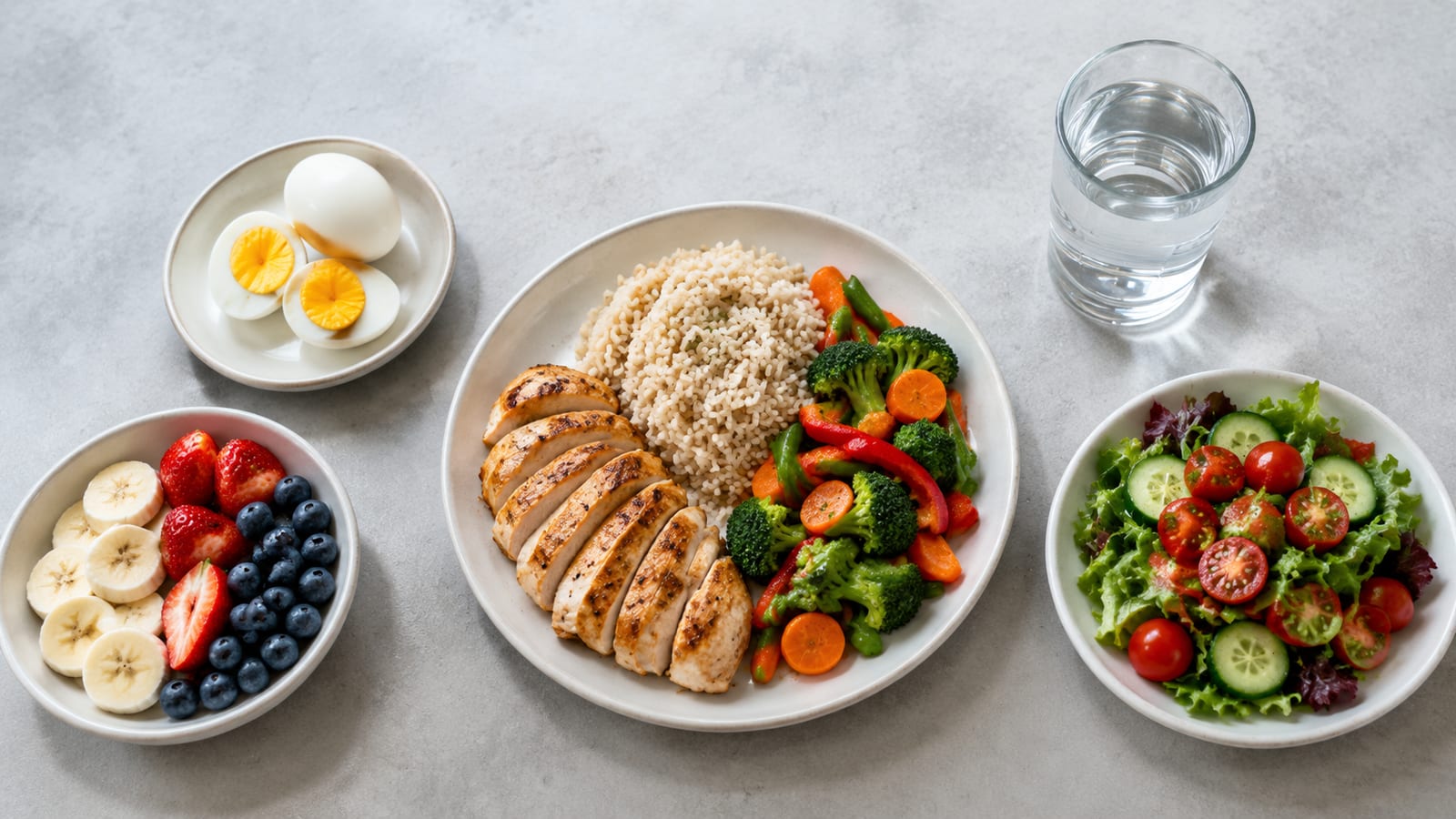
Eat enough to support training and recovery. A modest calorie surplus is the right starting point for most people trying to add muscle without unnecessary fat.
Protein matters, but more is not endlessly better. A meta-analysis of protein supplementation included 49 studies with 1,863 participants. It found that dietary protein supplementation significantly enhanced changes in muscle strength and size during prolonged resistance training in healthy adults.
The same meta-analysis found that total protein intake above approximately 1.6 grams per kilogram of body weight per day did not further increase resistance-training-related muscle-mass gains for most adults. Spread protein across regular meals and make the daily total consistent.
Carbohydrates support hard training. Include them around the meals that help you train with intent and recover afterward. Fats also belong in the diet for general health and food quality.
Hydrate consistently, especially before training. Then track body weight under similar conditions and watch the trend. If weight and gym performance remain flat for a sustained stretch, add food gradually. If weight rises quickly while performance does not improve, the surplus is doing too much.
Supplements can fill a gap. They cannot repair poor training, low food intake, or short sleep.
Common five-day split mistakes
Excessive volume
Five training days can hide a large amount of work. Pressing every day and adding direct triceps work after each session will eventually show up in your elbows.
Start with a manageable workload. Earn the right to add more through stable performance and recovery.
Failure on every set
Taking every set to failure makes the plan harder to recover from without guaranteeing better growth. Keep most sets one to three reps short of technical failure.
Save true failure for occasional safe isolation work. Your heavy compounds need repeatable technique.
Poor exercise technique
Adding weight while your range of motion shrinks or your body position changes is not progressive overload. It is a different exercise with a heavier load.
Film a difficult set if you need an honest check. Then reduce the load until your reps look the same from the first to the last set.
Random programming
Changing exercises every session prevents useful comparison. Keep the main lifts long enough to build skill and measure progress.
You can swap an exercise when it causes pain, fails to suit your structure, or stops progressing. Do not change it because a new video made the old one look boring.
Insufficient food or sleep
Muscle growth needs training stress and the resources to recover from it. If you train five days while eating too little and sleeping poorly, the split becomes five reminders of the same problem.
Fix recovery before adding more work. The plan has to fit your week.
How to customize the split without breaking it
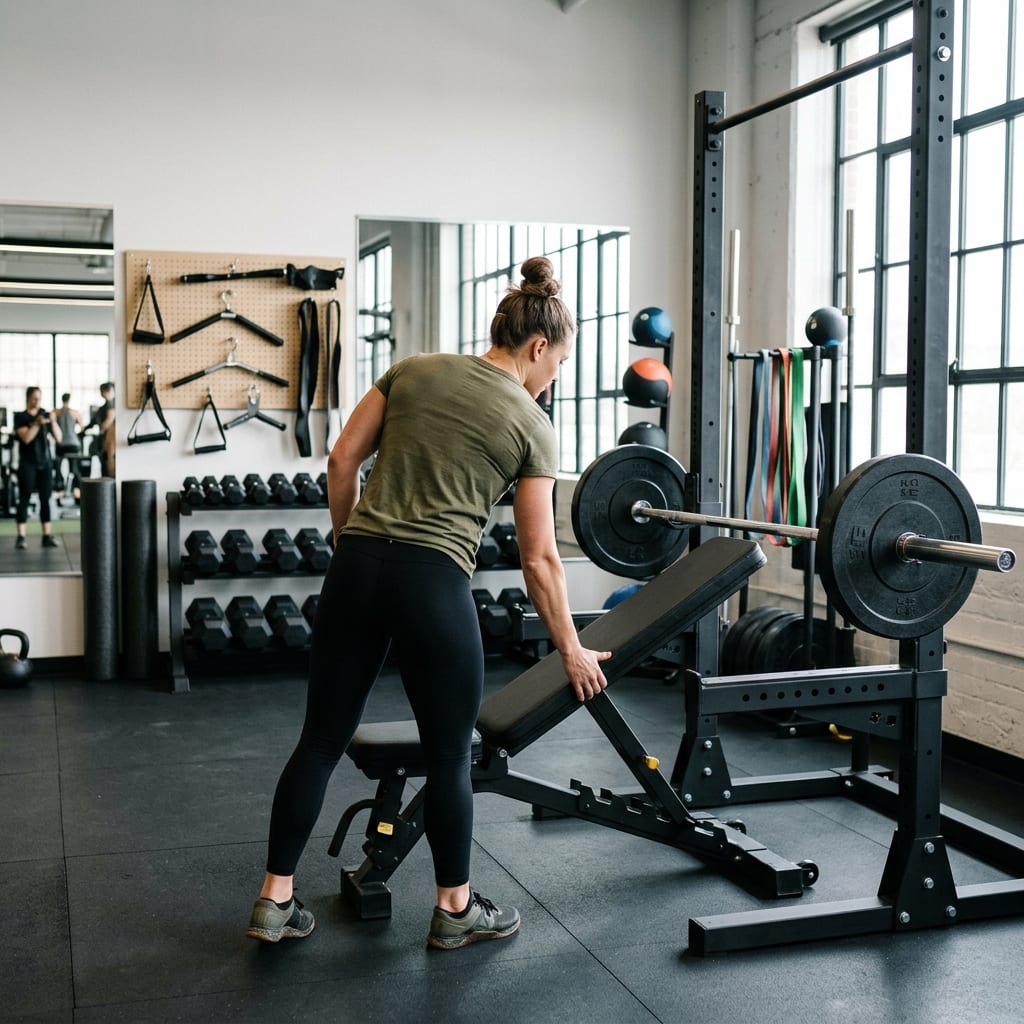
Keep the movement pattern when you swap an exercise.
- Replace a barbell squat with a leg press or hack squat.
- Replace a bench press with a dumbbell or machine press.
- Replace a barbell row with a chest-supported or cable row.
- Replace a deadlift with a Romanian deadlift or hip thrust.
- Replace pull-ups with pulldowns.
- Replace free-weight isolation work with cables or machines.
The replacement should train a similar pattern and let you progress without pain. It does not need to look identical.
You can also change training days. Move the sessions around work, family, or travel while keeping rest between demanding lower-body sessions when possible.
Adjust volume in this order:
- Keep the main lift.
- Keep the first accessory that fills a clear gap.
- Remove redundant exercises.
- Add work only after performance and recovery support it.
- Reduce work when fatigue stays high or technique declines.
If five sessions stop fitting your life, use four-day upper-lower training. Four consistent sessions beat five planned sessions that keep turning into three.
FAQ
Can you build muscle with a five-day split without using advanced techniques?
Yes. Use stable exercises, productive sets, consistent food, and measurable progression. Advanced techniques may help with a few accessories, but they are optional and often distract from the work that drives progress.
Should you train on consecutive days with this split?
You can train on consecutive days because the sessions emphasize different muscle groups. Still, pay attention to shared joints and smaller muscles. If your triceps or lower back remain tired, reduce overlap before moving sessions around.
How long should you run the same split?
Keep the split while your performance, technique, and recovery are moving in the right direction. Change an exercise when it causes pain, stops fitting your body, or no longer gives you a useful way to progress.
Is a five-day split suitable for someone who also plays sports?
It can work, but your other activity counts toward fatigue. Reduce leg accessories first when sports performance or lower-body recovery starts to suffer. A sustainable plan leaves enough energy for the activities you care about.