A Smarter 45-Minute Kettlebell Workout Plan

 0
0
 0
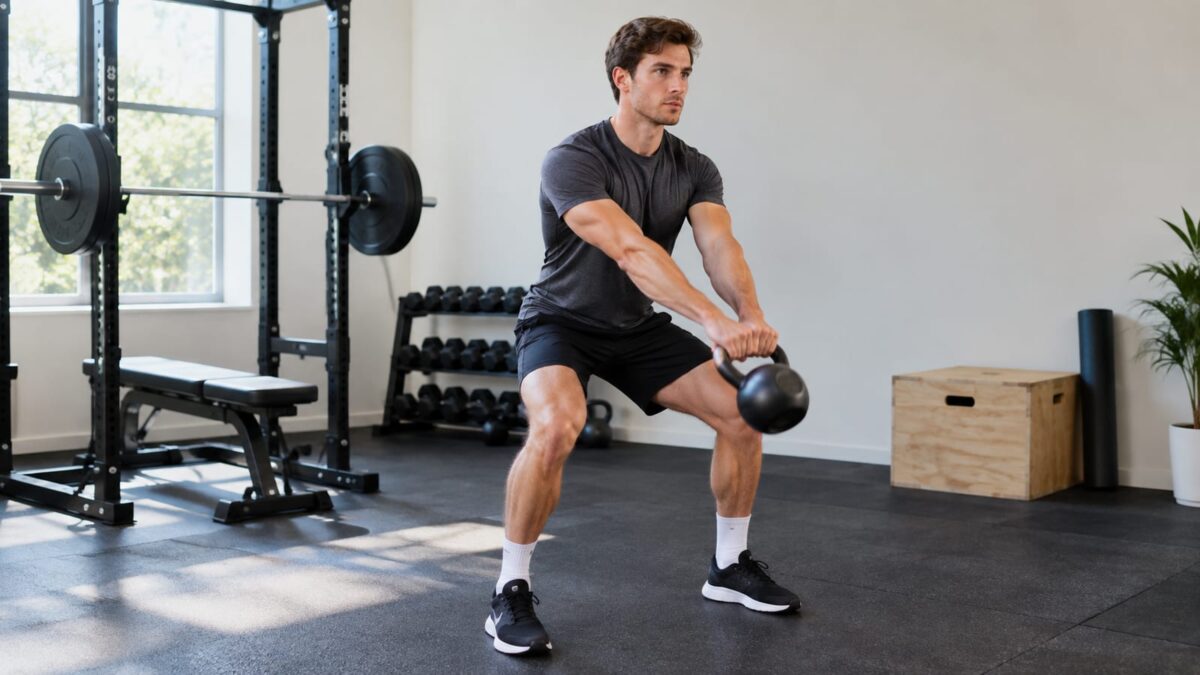
0 Use one kettlebell, six basic movements, and a clock you’ll obey. This Energize Your Routine 45-minute kettlebell workout combines strength, swings, and conditioning without turning the session into a sloppy race. You’ll warm up, complete three focused training blocks, and cool down. Choose a load that leaves good reps in reserve, then make every set serve a purpose.
Last updated: 2026-08-23
How can a 45-minute kettlebell workout energize your routine?
A kettlebell lets you squat, hinge, press, row, carry, and train power with little equipment. However, the tool isn’t magic. The workout succeeds because you train with intent and keep moving between useful exercises.
The full session breaks down like this:
| Time | Block | Main purpose |
|---|---|---|
| First 5 minutes | Warm-up | Prepare your hips, shoulders, and hinge |
| Next 12 minutes | Strength circuit | Train your legs, back, and grip |
| Next 3 minutes | Reset and technique check | Recover and clean up your swing setup |
| Next 10 minutes | Swing intervals | Build power and conditioning |
| Next 10 minutes | Full-body circuit | Press, lunge, and carry under control |
| Final 5 minutes | Cool-down | Lower the pace and check how you feel |
Forty-five minutes isn’t a magic duration. It’s simply long enough to train your whole body without dragging the session past the point of quality work.
Who should use this workout?
This workout suits healthy adults who know the basic squat, hip hinge, row, and press. It also works well if a normal gym routine has become stale and you want a simple conditioning day.
Beginners can use it, but swings need coaching and practice. If your hinge turns into a squat or the bell pulls your back out of position, use kettlebell deadlifts instead.
This workout is a poor choice during an active back, shoulder, elbow, or knee injury. Your joints get a vote. Speak with a qualified clinician if exercise causes sharp pain, numbness, or symptoms that continue after the session.
You should also skip the swing block if you’re still learning to control the bell. Power work done with weak positions is just a faster mistake.
What equipment do you need?
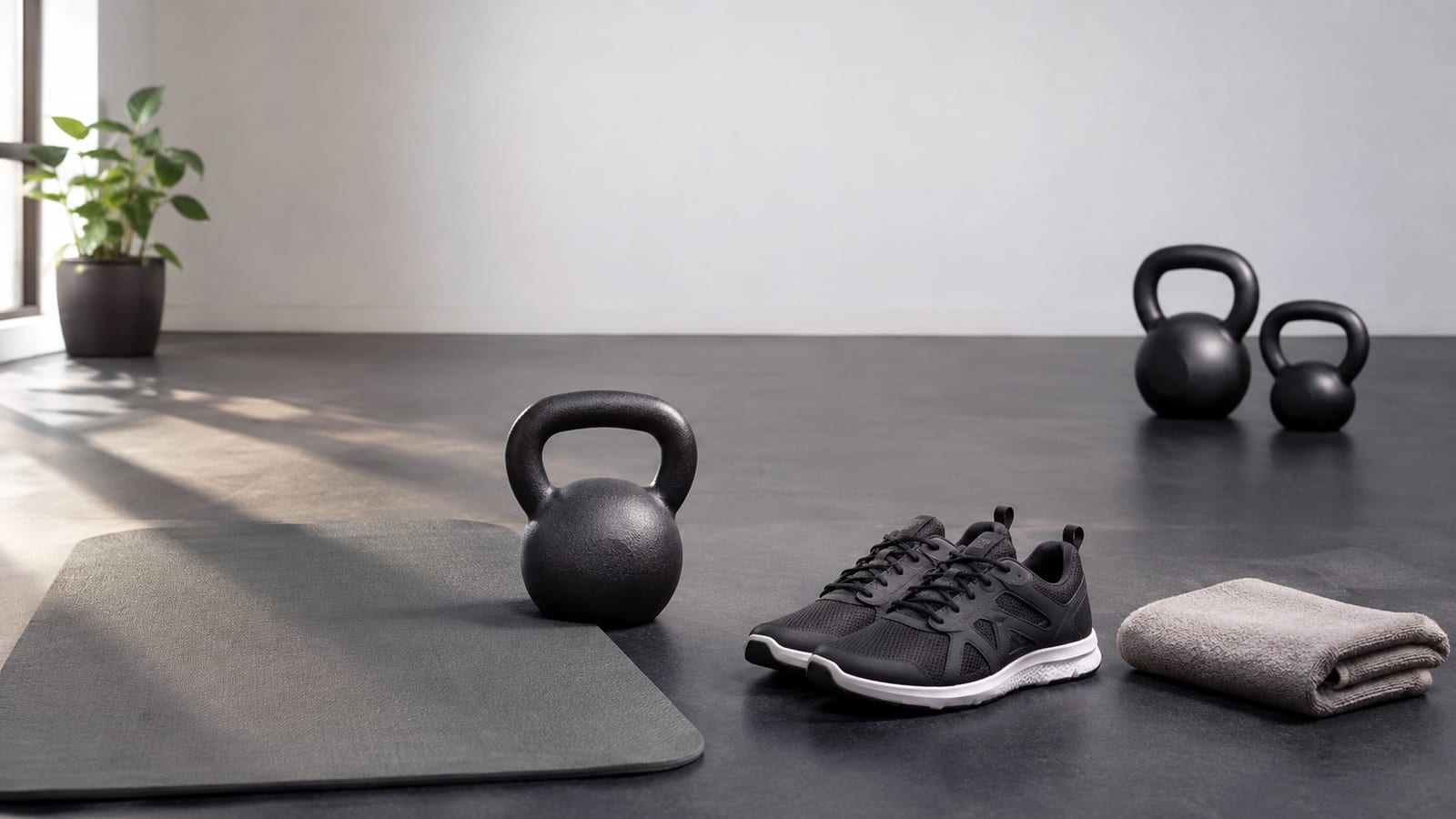
You need one kettlebell, a clear training area, and a timer. A mat is optional for floor presses, but thick foam can make standing work less stable.
Choose a kettlebell you can:
- Goblet squat without folding forward
- Row without twisting your torso
- Press without leaning away from the bell
- Swing without pulling with your arms
- Control during every transition
One load may not suit every exercise. Your legs can usually handle more than your shoulders, so use a lighter bell for the whole workout if you only own one.
An adjustable kettlebell can solve that problem, but changing the load takes time. Set the main weight before each block instead of stopping after every exercise.
Gloves aren’t required. They can bunch under the handle and hide grip problems. Keep your hands dry, smooth any rough calluses, and hold the bell firmly without trying to crush the handle.
How should you warm up?
Spend the first 5 minutes preparing the movements you’re about to train. Long static stretches can wait until later.
Complete each drill for about 1 minute:
- March with arm swings: Stand tall and raise your body temperature.
- Bodyweight squat: Sit between your hips while keeping your whole foot down.
- Hip hinge: Push your hips back without rounding your lower back.
- Alternating reverse lunge: Step back under control and keep the front foot planted.
- Light kettlebell deadlift: Brace, stand tall, and return the bell to the same spot.
The hinge matters most. Your knees should bend, but your hips must travel backward. If you can’t feel your hamstrings working during a slow deadlift, don’t rush into swings.
What is the complete 45-minute routine?
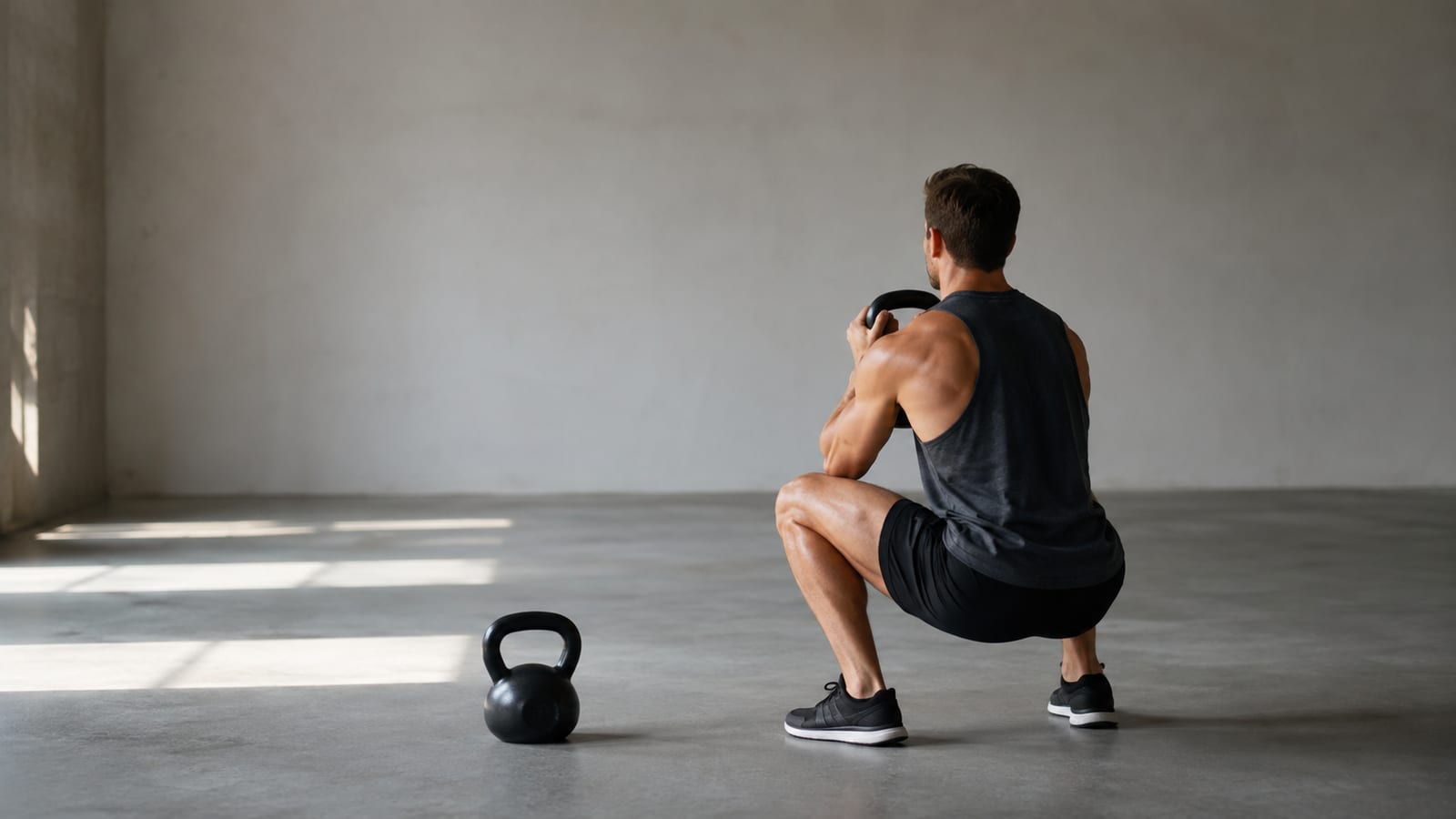
Use the following plan as written for your first few sessions. After that, adjust the reps or load based on technique and recovery.
Strength circuit: 12 minutes
Complete steady rounds of these exercises:
- Goblet squat: 8 to 12 reps
- One-arm kettlebell row: 8 to 12 reps per side
- Kettlebell deadlift: 10 to 15 reps
Rest when you need it. However, don’t sit down and disappear into your phone. Take enough time to repeat the exercise with the same technique.
Hold the bell close to your chest during goblet squats. Keep your elbows under control and let your knees track in the same direction as your toes.
For rows, support your free hand on your thigh or a stable bench if needed. Pull toward your hip and stop before your shoulder rolls forward.
The deadlift is your chance to reinforce the hinge. Keep the bell close, brace before lifting, and finish by standing tall. Leaning backward at the top adds strain without adding useful work.
Reset and technique check: 3 minutes
Take a drink and let your breathing settle. Then perform a few controlled deadlifts and hinge rehearsals before the swing block.
Check three positions:
- The bell starts slightly in front of you
- Your hips move backward before the bell passes between your legs
- You finish tall without leaning back
If any position feels uncertain, stay with deadlifts. Earning the swing takes priority over finishing the plan exactly as written.
Swing intervals: 10 minutes
At the start of each minute, perform 10 to 15 two-hand swings. Rest for the remainder of that minute.
The bell should move because your hips extend hard. Your arms guide it, but they shouldn’t lift it. At the top, stand tall with your ribs stacked over your pelvis.
Stop the set if the bell drops lower each rep or your back begins doing the work. Reduce the reps during the next round rather than forcing the original target.
If your grip starts slipping, end the interval. A tired set isn’t productive once you can’t control where the bell goes.
For more options, use this guide to kettlebell swing variations and when to use them. Don’t add a harder variation until your standard swing is repeatable.
Full-body circuit: 10 minutes
Complete controlled rounds of:
- Reverse lunge with a goblet hold: 6 to 8 reps per side
- One-arm floor press: 8 to 12 reps per side
- Suitcase march: 20 controlled steps per side
Keep one or two good reps in reserve. This block should feel demanding, but it isn’t a race to see which movement breaks first.
During lunges, step back far enough to keep the front foot planted. Reduce the depth if your balance or knee position falls apart.
For floor presses, keep your wrist stacked over your elbow. Pause when your upper arm reaches the floor, then press without letting the shoulder roll forward.
During the suitcase march, hold the bell at one side and resist leaning toward it. Move slowly enough to keep your torso quiet. Switch hands before your grip fails.
If you want a harder conditioning session later, choose movements from this list of high-intensity kettlebell exercises. Add difficulty only after this circuit stays clean.
Cool-down: 5 minutes
Walk around until your breathing becomes comfortable. Then use relaxed stretches for the muscles that feel tight.
Good options include:
- Kneeling hip flexor stretch
- Hamstring stretch
- Chest and shoulder stretch
- Child’s pose with relaxed breathing
Don’t force a deep stretch while you’re tired. The cool-down helps you shift out of hard work, but it won’t cancel poor recovery or careless exercise form.
How hard should the workout feel?
Keep most strength sets with 2 to 3 reps in reserve. In plain terms, stop while you could still complete a few clean reps.
The swing intervals need a different test. Stop before your speed, grip, or hinge position changes. Kettlebell power work should look sharp, not desperate.
Use these signs to judge the load:
| What happens | What it means | What to change |
|---|---|---|
| Every rep looks controlled | The load is appropriate | Keep it and add reps gradually |
| The final reps slow slightly | The set is hard enough to count | Keep the same load |
| Your torso twists during rows or presses | The bell is too heavy | Use a lighter load |
| Swings become front raises | Your hinge or timing has failed | Stop and return to deadlifts |
| You finish every set without effort | The load or reps are too low | Add reps before more weight |
A guided workout video can help with timing. However, a screen can’t tell you that your back is rounding or your shoulder is drifting forward. Use video for pacing, not permission to ignore technique.
Does kettlebell training burn more calories?
Kettlebell training can demand plenty of energy, especially during repeated snatches and swings. Still, calorie claims are often stripped of the exact workout that produced them.
In an American Council on Exercise study, participants completed a 20-minute kettlebell snatch workout. The measured energy use was 13.6 calories per minute, with another 6.6 calories per minute estimated from blood lactate. That produced approximately 20.2 calories per minute when blood lactate was included, while the direct measure averaged 272 calories over 20 minutes.
Those figures belong to that short, demanding snatch workout. They don’t prove that every kettlebell session burns the same amount, and they shouldn’t be multiplied to predict this 45-minute routine.
Snatches are also a technical overhead exercise. Adding them only to chase a calorie estimate is poor programming. Learn the clean and swing first, then add snatches when you can keep the bell close and control the overhead position.
Fat loss still depends on your food intake and total activity over time. Use training to build strength and work capacity. Don’t judge every session by a watch estimate.
The official Physical Activity Guidelines for Americans also treat strength and aerobic work as parts of a complete week. One hard kettlebell session doesn’t cover everything by itself.
Is a kettlebell better than traditional strength training?
A kettlebell is better for some jobs, not every job. It works well for swings, carries, compact home training, and quick transitions between exercises.
Traditional barbells, machines, and dumbbells make load progression easier. They also give you more exercise choices when one position bothers a joint.
| Goal | Kettlebell | Traditional weights |
|---|---|---|
| Home training with little space | Strong choice | Depends on the equipment |
| Explosive hip work | Excellent for swings | Possible, but less convenient |
| Precise load increases | Often limited | Usually easier |
| Heavy leg training | Limited by available bells | Better long-term options |
| Quick strength-conditioning circuits | Strong choice | Works, but setup may take longer |
| Muscle isolation | Fewer practical choices | More exercise options |
For general fitness, keep the kettlebell. For maximum strength or muscle gain, use it alongside more stable resistance exercises.
A 45-minute kettlebell workout can build strength and conditioning, but it won’t replace every kind of training. The plan has to fit your goal, not the marketing around the tool.
Can you use a dumbbell instead?
Use a dumbbell for goblet squats, rows, deadlifts, lunges, floor presses, and suitcase marches. Those substitutions work without changing the purpose of the exercise.
Swings are the problem. A dumbbell can be swung, but its shape makes the grip and path less natural. If you can’t hold it securely with both hands, replace swings with controlled dumbbell deadlifts.
Don’t improvise explosive movement with a loose or awkward grip. The conditioning benefit isn’t worth launching a dumbbell across the room.
If you only have dumbbells and want a shorter session, this minimal-equipment strength routine is a cleaner fit.
How do you progress the routine?
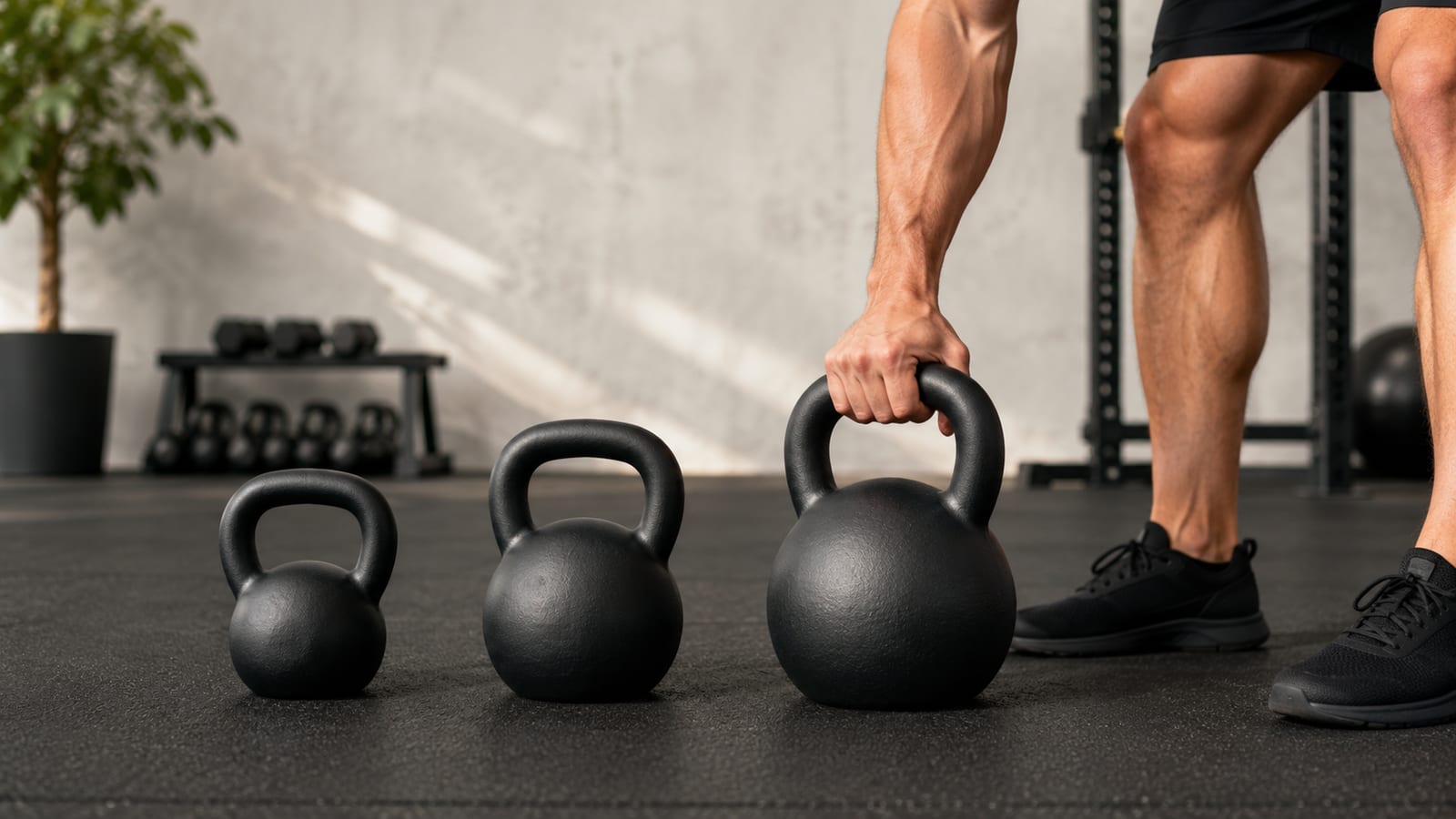
Repeat the Energize Your Routine 45-minute kettlebell workout long enough to learn what needs improving. Changing exercises every session makes the workout entertaining but hard to measure.
Use this order:
- Clean up your technique.
- Reach the top of the rep range.
- Complete more quality rounds within the block.
- Add the smallest practical load.
- Return to the lower end of the rep range.
Change one variable at a time. If you add weight, reps, and speed together, the logbook can’t tell you what improved.
For swings, progression may mean cleaner hip drive or less grip fatigue. You don’t need to cram more reps into every minute. Good reps before more weight.
Use this routine once or twice in your week, depending on your other training. If you also lift hard, keep the kettlebell session away from demanding lower-body days when possible.
What are the main trade-offs?
This workout packs plenty into one session, but that creates limits. You won’t use maximum loads because fatigue carries from one movement to the next.
The fixed blocks also reward restraint. If you sprint through the strength circuit, the swing block suffers. If you attack every swing interval, the final circuit becomes survival work.
The main trade-offs are clear:
- You gain efficiency but lose some exercise-specific strength work.
- You train several physical qualities but specialize in none of them.
- You need little equipment, but one bell may be too light for legs and too heavy for presses.
- You can train at home, but explosive movements require clear space and sound technique.
- You break training monotony, but novelty won’t replace measurable progress.
Use the routine as a repeatable full-body session. Skip it if your main goal requires heavy barbell practice, detailed muscle isolation, or rehabilitation work.
FAQ
Can I do this workout without kettlebell swings?
Yes. Replace each swing interval with controlled kettlebell deadlifts and rest before your grip or back position changes. You’ll lose some explosive work, but you’ll keep the hinge pattern and full-body effort.
Should I train barefoot?
Barefoot training can work on a clean, stable surface if your feet tolerate it. Otherwise, wear shoes with a firm sole that doesn’t wobble during squats, lunges, or hinges.
Can I split the workout into two shorter sessions?
Yes. Complete the strength work in one session and the swing-conditioning work later. However, warm up again before the second session rather than starting with explosive reps while cold.
What if the kettlebell hits my forearm during presses?
Keep your wrist straight and let the bell sit diagonally across your palm. If it still crashes onto your arm, practice the rack position with a lighter load before adding cleans or faster transitions.
Should I repeat the same workout every week?
Repeat it while your reps, control, or load continue to improve. Change an exercise only when equipment, pain, boredom, or a clear training goal gives you a reason. Small increases add up when the plan stays simple on paper and demanding in practice.