Kettlebell Swings and Back Pain: How to Reset

For kettlebell swing lower back pain: stop pushing through it. Pause or reduce the swings, keep moving in ways that feel comfortable, and reset your hip hinge before you test the exercise again. Return only when symptoms are settling and you can perform controlled reps without a back twinge. Repeatable basics beat grinding through pain.
Last updated: 2026-11-09
Lower-back pain affected 619 million people globally in 2020, and estimates project 843 million cases by 2050. That makes back pain common, but common doesn’t mean you should ignore pain during training.
What to do about lower-back pain after kettlebell swings
Stop the swings that aggravate your back. Don’t keep testing the same painful movement to prove you can tolerate it.
For the next session, choose comfortable activity instead. Walking, easy mobility, or upper-body training may be reasonable if they don’t increase your symptoms. Avoid any movement that causes sharp pain, spreading symptoms, or a worsening ache afterward.
When symptoms settle, return with a lighter kettlebell and fewer controlled reps. Keep the bell close, move from the hips, and stop the set as soon as your technique changes.
Use this simple check before you return:
- Does the pain ease when you stop swinging?
- Can you hinge without sharp pain?
- Can you brace your trunk without holding your breath or arching your back?
- Do comfortable movements remain comfortable afterward?
- Does the next day feel the same or better?
If the answer is no, skip swings for now. You can build strength with other exercises while the problem settles.
Back pain often improves within a few weeks, though it can last longer or return. Follow the World Health Organization guidelines on chronic primary low back pain for the broader role of education, self-care, and exercise programs.
Why kettlebell swings load the lower back
A swing is a fast hip-hinge exercise. Your glutes and hamstrings should drive the bell, while your trunk holds your spine steady.
The lower back still works. Its job is to resist unwanted movement while the hips produce force. That demand rises when the bell moves quickly or when fatigue makes your position less consistent.
A study of swings with a 16-kg kettlebell found about 3,200 N of low-back compression. That figure applies to that study and that load. It doesn’t mean every swing creates the same force, but it shows why technique and fatigue matter.
The back often takes over when:
- You squat down instead of pushing your hips back.
- You lift the bell with your shoulders.
- You lean backward at the top.
- You let the bell drift far from your body.
- You lose your brace as the set continues.
- You use a load you can’t control.
- You swing again before recovering from the previous session.
The common mistake is chasing speed after the hips stop driving. The bell still moves, but your lower back starts supplying the motion.
Keep the set hard enough to count and clean enough to repeat. Once your hips stop doing the work, the set is over.
Are swings a good exercise for your lower back?
Swings can strengthen the hips and trunk, but they aren’t a universal treatment for lower-back pain. They also don’t replace an assessment when your symptoms are severe, persistent, or spreading.
For a healthy trainee with no current symptoms, swings can train:
- Hip extension from the glutes.
- Hamstring strength under a hinge.
- Trunk stiffness during fast movement.
- Coordination between the hips and upper body.
- Work capacity with a simple implement.
The trade-off is speed. A slow deadlift gives you more time to control each position. A swing demands coordination while the kettlebell is moving quickly.
That makes swings useful for some lifters and a poor first choice for others. If you can’t control a slow hinge, adding speed usually hides the problem until the back complains.
Start with a slow hinge, a deadlift pattern, or a loaded carry. Then earn the right to add faster work. The wall hip hinge drill can help you learn where the hips should travel before the bell leaves the floor.
Reset the hinge before adding reps
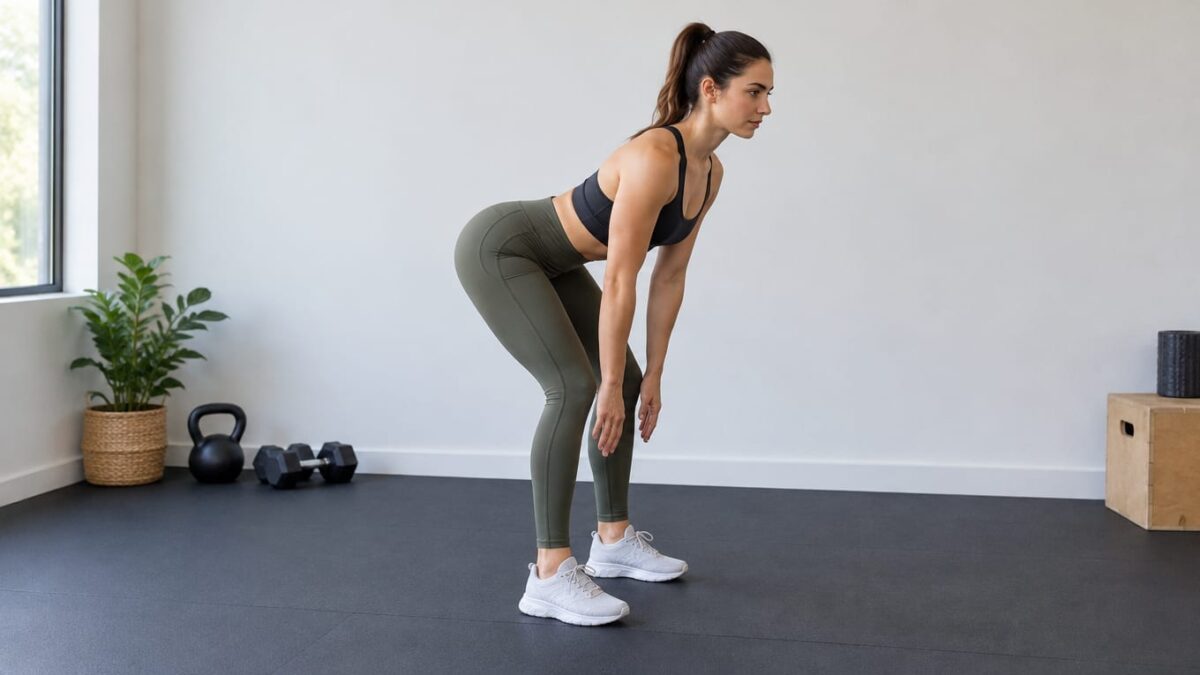
A hip hinge sends your hips backward while your knees bend only as much as needed. A squat sends your knees forward and your hips down.
Neither pattern is automatically bad. They serve different purposes. A swing needs a hinge because the hips must load behind you and then drive the bell forward.
Use these checkpoints to keep the movement consistent:
- Stand tall with the bell a short distance in front of you.
- Push your hips back and reach for the handle.
- Keep your spine in a comfortable neutral position.
- Pull the bell toward you and guide it between your thighs.
- Drive your feet into the floor and snap your hips forward.
- Let the bell float to chest height.
- Stand tall without leaning backward.
- Let the bell return and repeat the hinge.
Keep the bell close to your body. A bell that swings away increases the demand on your back and shoulders.
Brace as if you’re preparing to receive contact, but don’t turn the brace into a rigid breath-holding contest. Your ribs should stay stacked over your pelvis. Your glutes should finish the rep without pushing your hips past your feet.
Film a set from the side if you can. Look for a squatty start, a rounded back, a bell that travels too far away, or a backward lean at the top.
If you can’t keep the same shape from the first rep to the last, reduce the load or stop the set. Good reps come before more weight.
What to do about a lower-back twinge during a swing
Stop the set immediately. Put the bell down safely and walk around if walking feels comfortable.
Don’t perform a heavier or faster test in the same session. A twinge is useful information, and ignoring it rarely improves your technique.
After stopping, check whether the symptom eases with ordinary movement. Don’t force a deep stretch or repeatedly bend forward to see if the pain is still there.
For the rest of the session:
- Skip swings and other fast hinges.
- Use only movements that stay comfortable.
- Avoid loading the painful position.
- Note what changed before the twinge.
- Reassess before your next lower-body session.
The trigger may have been load, fatigue, setup, speed, or a technical error. You won’t identify it by repeating the same painful rep.
If a light, controlled hinge still causes symptoms, keep swings out of the plan and get individual guidance. The right adjustment depends on the pattern of pain, your training history, and how your body responds.
Prevent back pain with a short warm-up and steady progression
A warm-up should prepare the exact pattern you’ll train. It doesn’t need to become a second workout.
Use a short sequence that rehearses the hinge without tiring you out:
- Easy walking or another comfortable general movement.
- Bodyweight hip hinges.
- Slow deadlift setups.
- Glute bridges if they feel comfortable.
- Light bracing practice with normal breathing.
- A few unloaded or very light swing rehearsals.
The first loaded sets should feel like technique practice. Don’t turn the warm-up into a fatigue test before the work begins.
Progress one variable at a time. You can add a small amount of load, a few quality reps, or another controlled set. You don’t need to increase everything in the same workout.
Track the details that tell you whether the work is manageable:
| Track this | What it tells you |
|---|---|
| Kettlebell load | Whether the weight is manageable |
| Reps completed | Whether your work capacity is improving |
| Technique quality | Whether the movement remains repeatable |
| Back symptoms during training | Whether the exercise is tolerated |
| Symptoms later and the next day | Whether recovery is keeping up |
Use the smallest increase that lets your technique stay consistent. If your back feels worse after each session, the plan is asking for more than you can recover from.
Food and sleep matter here. Hard training without enough recovery makes fatigue arrive earlier, and fatigue is where good hinge mechanics often fall apart.
Single-arm swings add rotation demands
Single-arm swings challenge the trunk differently from two-handed swings. The uneven load tries to rotate your torso, and your muscles must resist that rotation while the hips drive the bell.
That can be useful once two-handed swings are solid. It can also expose poor control that a two-handed swing hides.
If you have a lower-back twinge or a recent injury, don’t force unilateral work because it looks more advanced. Return to a two-handed hinge, a lighter load, or a slower exercise first.
Progress to single-arm swings only when you can:
- Keep your ribs and pelvis controlled.
- Stop your torso from twisting.
- Keep the bell close.
- Finish with the hips instead of the lower back.
- Repeat the same pattern on both sides.
- End the set before your control fades.
A lower-back injury and single-arm kettlebell swings are a poor combination for testing your toughness. Build control first, then add the rotation demand when your symptoms and technique allow it.
You can review other kettlebell swing variations after the basic two-handed pattern is reliable.
Build back support with recoverable basics
You don’t need a punishment circuit to support your back. Use a few exercises that train the hips, trunk, and upper back without recreating the painful swing.
Choose options that let you train without bringing back the same symptoms:
- A controlled Romanian deadlift or other slow hinge.
- Loaded carries with a weight you can keep under control.
- Bird-dog variations with slow, steady movement.
- Side planks if they feel comfortable.
- Rows that keep your trunk stable.
- Glute bridges or hip extensions when tolerated.
These exercises have different demands. A carry trains bracing while you walk. A row builds upper-back strength while you hold position. A slow hinge lets you practice hip loading without the speed of a swing.
Start with exercises that leave you feeling more capable, not beaten down. Keep the work recoverable and add difficulty only when symptoms stay settled.
The goal is to build a back that can handle training, work, and daily life. More fatigue isn’t proof that the session worked.
When back pain needs professional attention
Seek medical assessment instead of self-managing with exercise if your pain is severe, worsening, or persistent. Also get help if it keeps returning despite reducing the aggravating movement.
Radiating pain, tingling, weakness, or numbness needs more care than a simple technique adjustment. The National Health Service guidance on back pain lists pain, tingling, weakness, or numbness in both legs as a reason for urgent attention.
Seek urgent care for serious symptoms such as:
- New loss of bladder or bowel control.
- Numbness around the genitals or inner thighs.
- Significant weakness in the legs.
- Pain after major trauma.
- Severe symptoms that are rapidly getting worse.
- Fever or feeling seriously unwell alongside back pain.
You don’t need to diagnose yourself before asking for help. A qualified clinician can assess the pattern and tell you which movements are appropriate.
FAQ
Can I keep training while my lower back settles?
You can often train around the problem, but only if the activity stays comfortable during and afterward. Choose movements that don’t reproduce the swing pain, and leave fast hinges out until your control returns.
Should I stretch my lower back after swings?
Stretching can ease stiffness, but it won’t correct a hinge that breaks down under fatigue. Use comfortable mobility if it helps, then adjust the load and movement that brought on the pain.
How can I tell if the kettlebell is too heavy?
The load is too heavy if your hinge changes, the bell drifts away, your back extends at the top, or your reps rush. Lower the weight until you can repeat the same position throughout the set.
Should I switch from swings to deadlifts?
A slower deadlift is a sensible starting point because you can control the hinge and load more easily. Use it to rebuild confidence and strength, then consider swings once you can move without symptoms and maintain your position under manageable effort.
Related on this blog