Build More Muscle: When to Use Compounds and Isolation

Build your program on compound lifts and finish it with isolation work. That's the useful answer to compound vs isolation exercises for hypertrophy, and it's less dramatic than most online arguments make it. Squats, rows, and presses train several muscles in one set, so they cover a lot of ground fast. Curls, raises, and leg curls then hit the muscles those big lifts leave short.
Compound exercises give you the most muscle trained per minute. Isolation exercises give you the most control over one muscle. A good muscle-building plan uses both, with compounds carrying most of the work for big muscles and isolation carrying most of the work for small ones.
What's the difference between compound and isolation exercises?
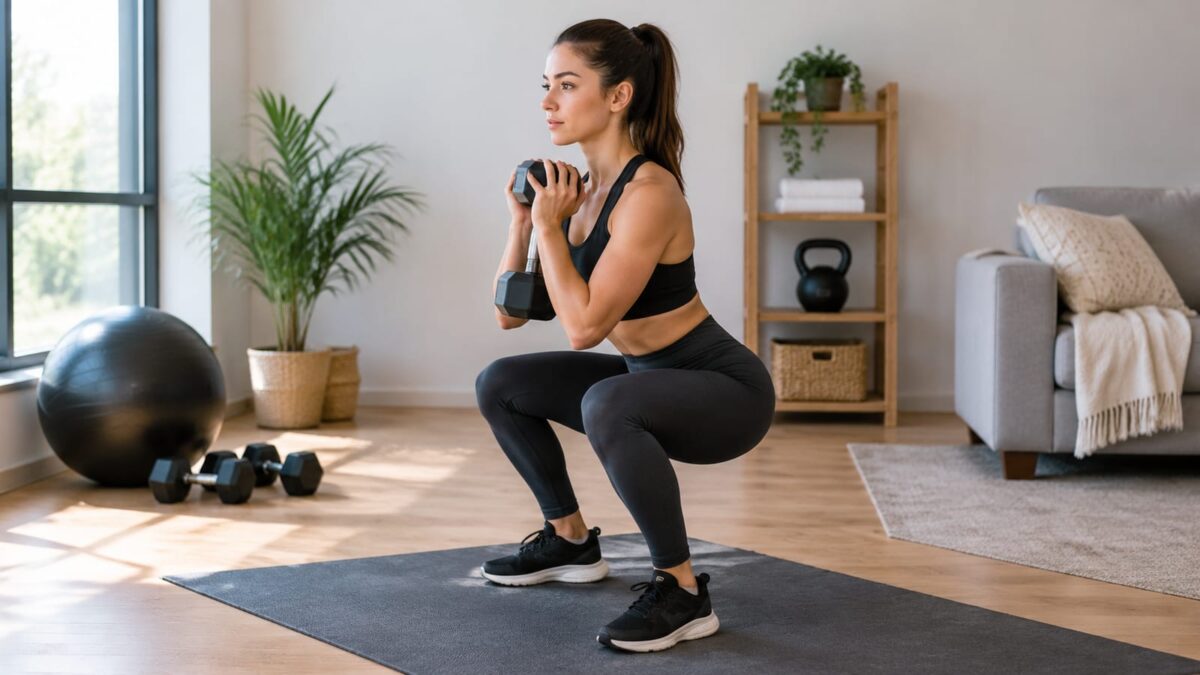
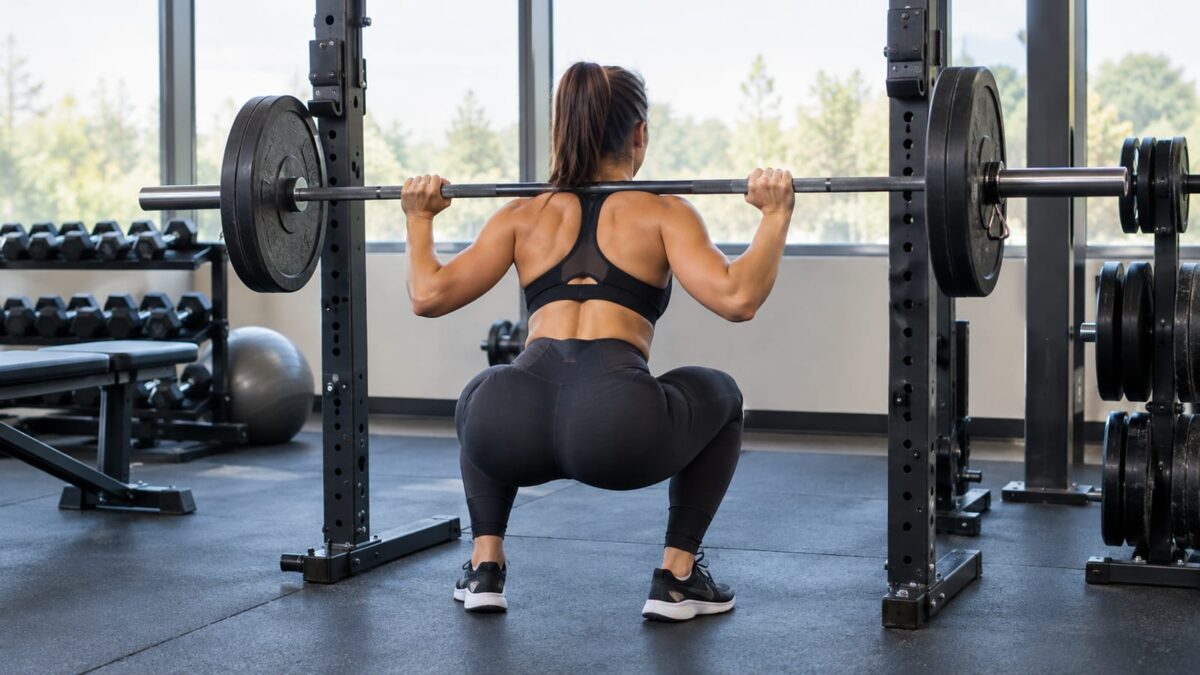
A compound exercise moves two or more joints at once. A squat bends your hips, knees, and ankles together, so your quads, glutes, and adductors all share the load. Research papers call these multi-joint exercises.
An isolation exercise moves one joint, so one muscle group does most of the work. A biceps curl bends only the elbow. A leg extension straightens only the knee. Papers call these single-joint exercises.
| Compound (multi-joint) | Isolation (single-joint) | |
|---|---|---|
| Examples | Squat, leg press, Romanian deadlift, bench press, row, pull-up | Curl, triceps pushdown, lateral raise, leg curl, leg extension, calf raise |
| Muscles trained per set | Several | Mostly one |
| Load you can handle | Heavy | Light to moderate |
| Fatigue cost | High, felt across the whole body | Low, felt mostly in the target muscle |
| Technique demand | High | Low |
| Best job in a program | The base of each session | Filling gaps and sparing cranky joints |
The category depends on the joints that move, so the equipment doesn't decide it. A leg press is a machine, but it's still compound. A cable fly uses a cable, but it's still isolation.
Compound vs isolation exercises for hypertrophy: which builds more muscle?
Neither one wins on muscle growth by itself. Growth comes from hard sets taken close to failure, and both types can deliver those. The research backs this up, with a caveat about how much research there is.
A systematic review and meta-analysis on single- versus multi-joint exercise of the limb muscles pooled 7 studies, which held 10 nested comparisons between the two. It found similar arm and leg muscle growth from both types. Seven studies is a small pile of evidence, though. Treat it as a tie on growth rather than proof that exercise choice doesn't matter.
So the decision comes down to practical things:
- How much time you have each session
- How much fatigue you can recover from
- Which muscles are falling behind
- What your joints tolerate
Those factors push you toward a mix. The sections below show where each type earns its place.
Where compound lifts earn their place
Compound lifts are the time-saver. A row trains your lats, upper back, rear delts, and biceps in the same set. For a natural lifter with three or four sessions a week, that efficiency matters more than anything else on this page.
They're also easy to progress. You can add weight in small jumps for months, and small increases add up. A logbook full of slowly rising squat and row numbers is one of the clearest signs your training is working.
The catch is the weakest link. A set ends when the first muscle gives out, and that's often not the one you're trying to grow. On a bench press, your triceps or front delts may quit before your chest gets the full stimulus. On a heavy squat, your lower back or your breathing may quit before your quads do.
Heavy compounds also cost more recovery. A hard set of deadlifts tires your grip, back, and hips, and that fatigue carries into the rest of the session. Bigger numbers on these lifts don't always mean bigger muscles either, which is why strength and muscle size don't always match.
Keep two or three compounds at the start of each session. Push them hard, stop with a couple of clean reps left, and beat the logbook over time.
Where isolation work earns its place
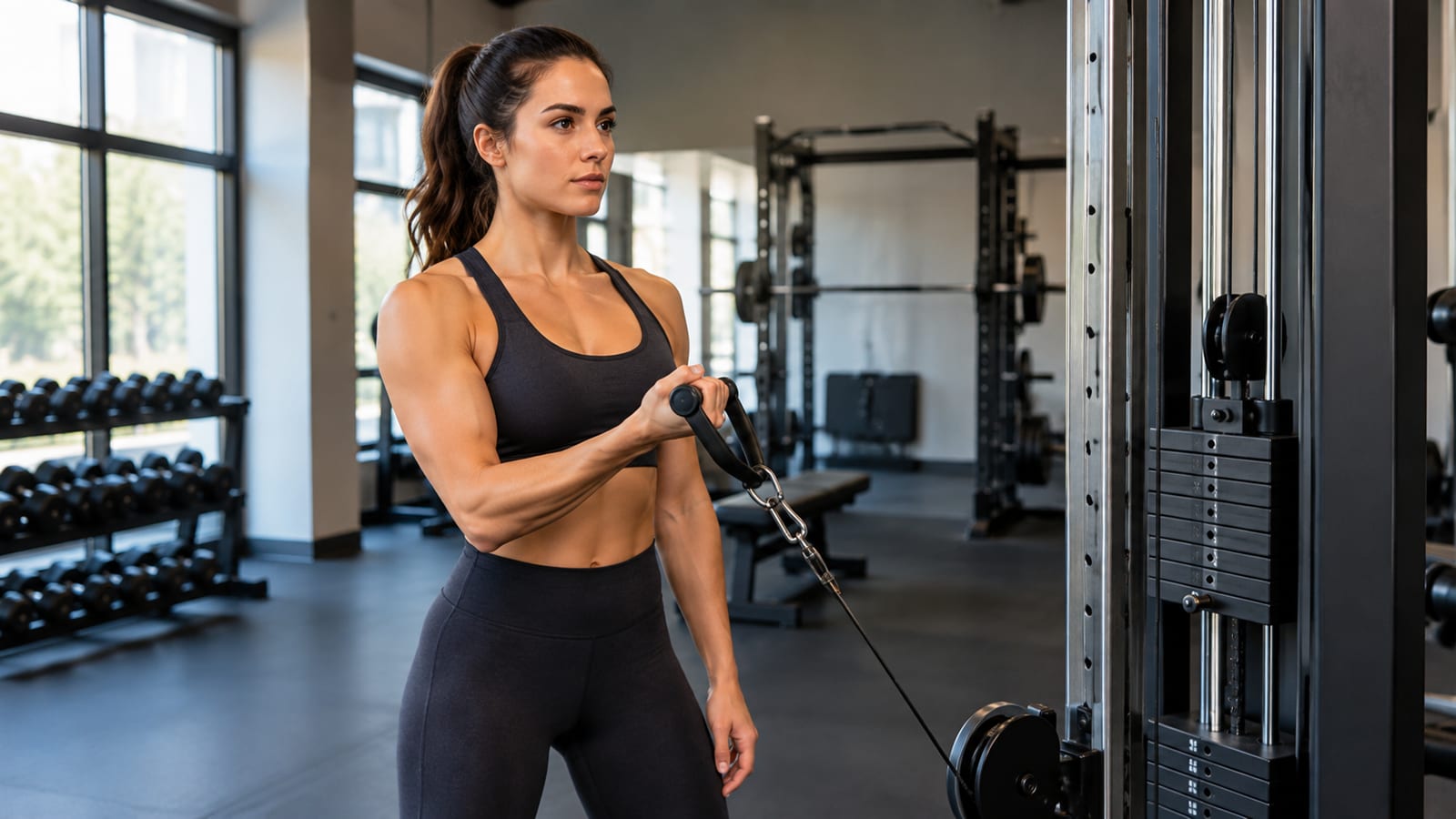
Isolation work fills the gaps compounds leave. Some muscles get very little from the big lifts:
- Side delts. Presses mostly train the front of the shoulder. Lateral raises reach the side.
- Hamstrings. Squats barely train them. A Romanian deadlift trains their hip role, while a leg curl trains their knee role, and you want both.
- Biceps and triceps. Rows and presses work them, but those sets usually end because your back or chest tires first.
- Calves. No major compound lift trains them hard enough to count.
Isolation also respects your joints. If your knees complain under a deep squat, leg extensions can keep loading your quads while you sort it out. Your joints get a vote, and isolation gives you a way to keep training around a sore spot.
These lifts are also safer to push close to failure. A missed rep on a curl just means you set the dumbbell down. A missed rep on a heavy squat has much bigger consequences.
The downside is cost per muscle. Training your whole body with isolation alone takes many more exercises and a lot more time. That's why isolation works best as the finish of a session.
How to split your weekly sets
Start with total sets per muscle, then decide which exercises supply them. The American College of Sports Medicine's 2026 Resistance Training Position Stand recommends higher weekly volume for muscle growth, about 10 sets per muscle group per week. The American College of Sports Medicine publishes these position stands as its official guidance.
Count sets honestly. A bench press clearly trains your chest, so it counts in full there. It trains your triceps only partly, so don't count it as a full triceps set.
As a rule, let compounds supply most of the sets for big muscles and let isolation supply most of the sets for small ones.
| Muscle | Compound that trains it | Isolation that fills the gap |
|---|---|---|
| Quads | Squat, leg press | Leg extension |
| Hamstrings | Romanian deadlift | Seated or lying leg curl |
| Glutes | Squat, hip thrust, Romanian deadlift | Usually covered by the compounds |
| Chest | Bench press, push-up, dip | Cable or machine fly |
| Back | Row, pulldown, pull-up | Usually covered by the compounds |
| Side delts | Overhead press (limited) | Lateral raise |
| Biceps | Row, chin-up | Curl |
| Triceps | Bench press, dip | Pushdown, overhead extension |
| Calves | Barely trained by any | Calf raise |
A sample session
Here's how the order looks in a single full-body day:
- Squat or leg press
- Row or pulldown
- Bench press or incline dumbbell press
- Romanian deadlift
- Lateral raise paired with a curl or triceps pushdown
- Leg curl or calf raise, depending on the day
Compounds go first, while you're fresh and your technique is sharp. Isolation goes last, when fatigue matters less. For a full weekly layout, see this three-day full-body plan for muscle gain. For how many reps to use on each type, read the best rep range for lean muscle growth.
Mistakes that waste the mix
Most people don't pick the wrong exercise type. Instead, they misuse the right one. Watch for these:
- Dropping compounds for a pump routine. Ten isolation moves feel productive. They also eat an hour and leave less energy for the lifts that train the most muscle.
- Stacking too many isolation lifts. Two or three per session covers most gaps. Beyond that, effort drops and sets stop being hard enough to count.
- Taking heavy compounds to failure. Save failure for the last set of a safe isolation lift. On squats and deadlifts, the last ugly rep costs more recovery than it gives back.
- Chasing the burn on isolation sets. A burning lateral raise isn't automatically a productive one. Use time under tension without chasing the burn and track weight or reps instead.
- Counting every set the same. A row doesn't replace direct biceps work for a lifter whose arms are lagging.
How to tell if your mix is working
Use your logbook as the test, because it settles the question better than any opinion. Every few weeks, ask two questions.
First, are your compounds still moving? If you're adding weight or reps on squats, rows, and presses with steady technique, your base is working. Second, are your smaller muscles keeping pace? Check photos, arm or calf measurements, and your isolation numbers.
If one muscle lags for a couple of months while everything else grows, add a couple of isolation sets for it. Change only that one variable. Then give it time, so the logbook can show you whether the change helped.
FAQ
Can you build muscle with only isolation exercises?
Yes, as long as the sets are hard and the volume is there. The problem is time. Covering your quads, glutes, back, and chest with single-joint moves takes far more exercises, so an isolation-only plan rarely fits a busy week.
Are machine exercises compound or isolation?
Look at the joints, not the machine. A leg press, chest press, and seated row move more than one joint, so they're compound. A leg extension and pec deck move one joint, so they're isolation.
Should beginners bother with isolation exercises?
Yes, in small doses. Curls, raises, and leg curls are simple to learn. They also teach a new lifter what a truly hard set feels like before applying that effort to heavier lifts.
Is it worth doing isolation before compounds?
Only for a specific reason. Some lifters do a leg extension before squats to warm up sore knees, or a fly before bench to bias the chest. Expect lower numbers on the compound that follows, and keep that order the same each week so your logbook comparisons stay fair.