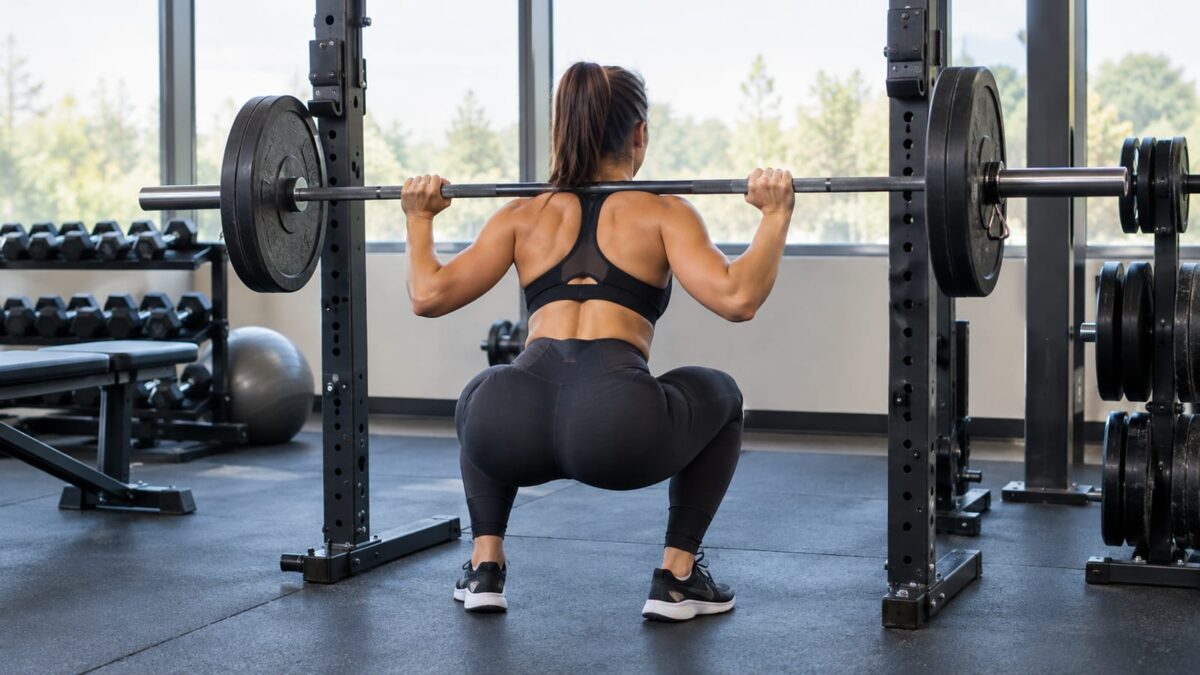
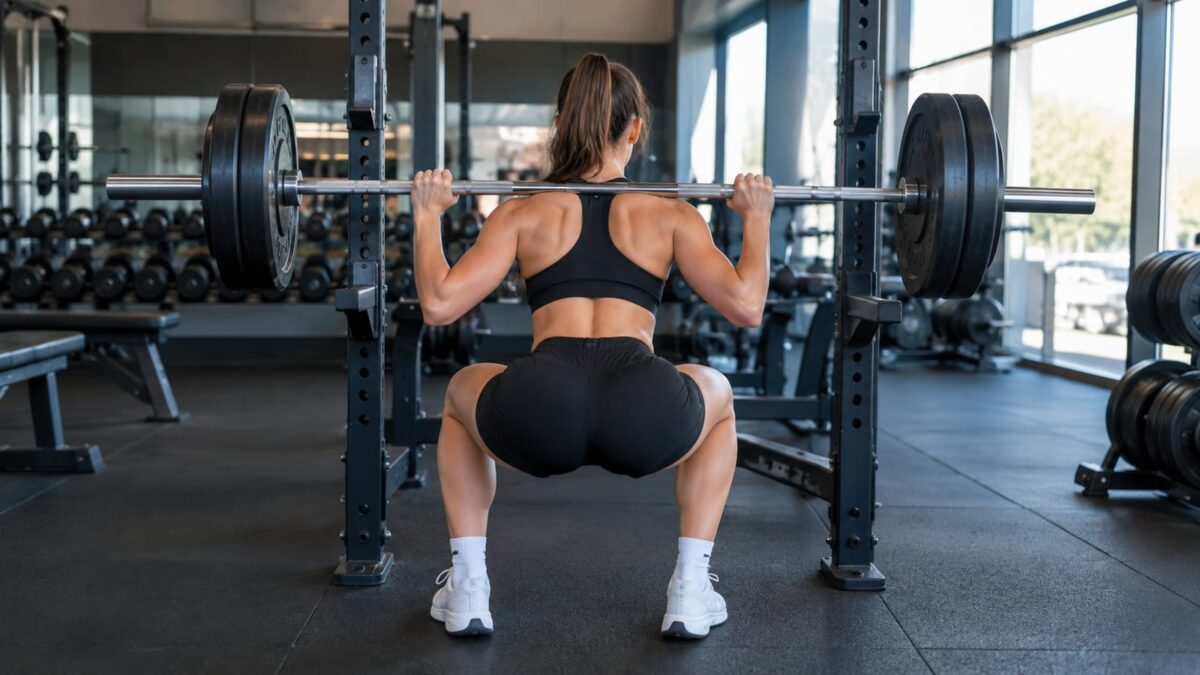
FST-7 Training: Seven Finishing Sets for Muscle Pumps

FST-7 training is a workable hypertrophy protocol, and the complete version is simple: seven finishing sets on the last exercise for a target muscle, using 10 to 12 reps and only 30 to 45 seconds between sets. It can add focused work to a stubborn body part. However, the pump is the feature, not proof that you have stretched your fascia into new muscle growth. Natural lifters should use FST-7 training as a controlled finisher rather than build their whole week around chasing a pump.
Last updated: 2026-10-07
What is FST-7 training?
FST-7, also called fascia stretch training, was created by Hany Rambod. The 7 in the name stands for the seven sets you add on the last exercise for the target muscle, at the end of the session.
Every set stays in the 10 to 12 rep range, with 30 to 45 seconds of rest before the next one. The short rests increase blood flow and create the intense muscle pumps associated with the method.
The usual claim is that the pump stretches the connective tissue around the muscle. That tissue is called fascia. The stronger claim says deep fascia can limit muscle growth and that FST-7 removes that limit.
That explanation is too neat. A pump can make a muscle look fuller for a short time, but appearance does not prove permanent fascia expansion. Your useful test is simpler: do your reps, loads, technique, and measurements improve over time?
FST-7 works best as a final block after normal productive sets. Start with stable exercises, use a weight you can control, and keep the target muscle doing the work. If your form falls apart before the final set, the load is too heavy or the earlier work was excessive.
What the pump can and cannot tell you
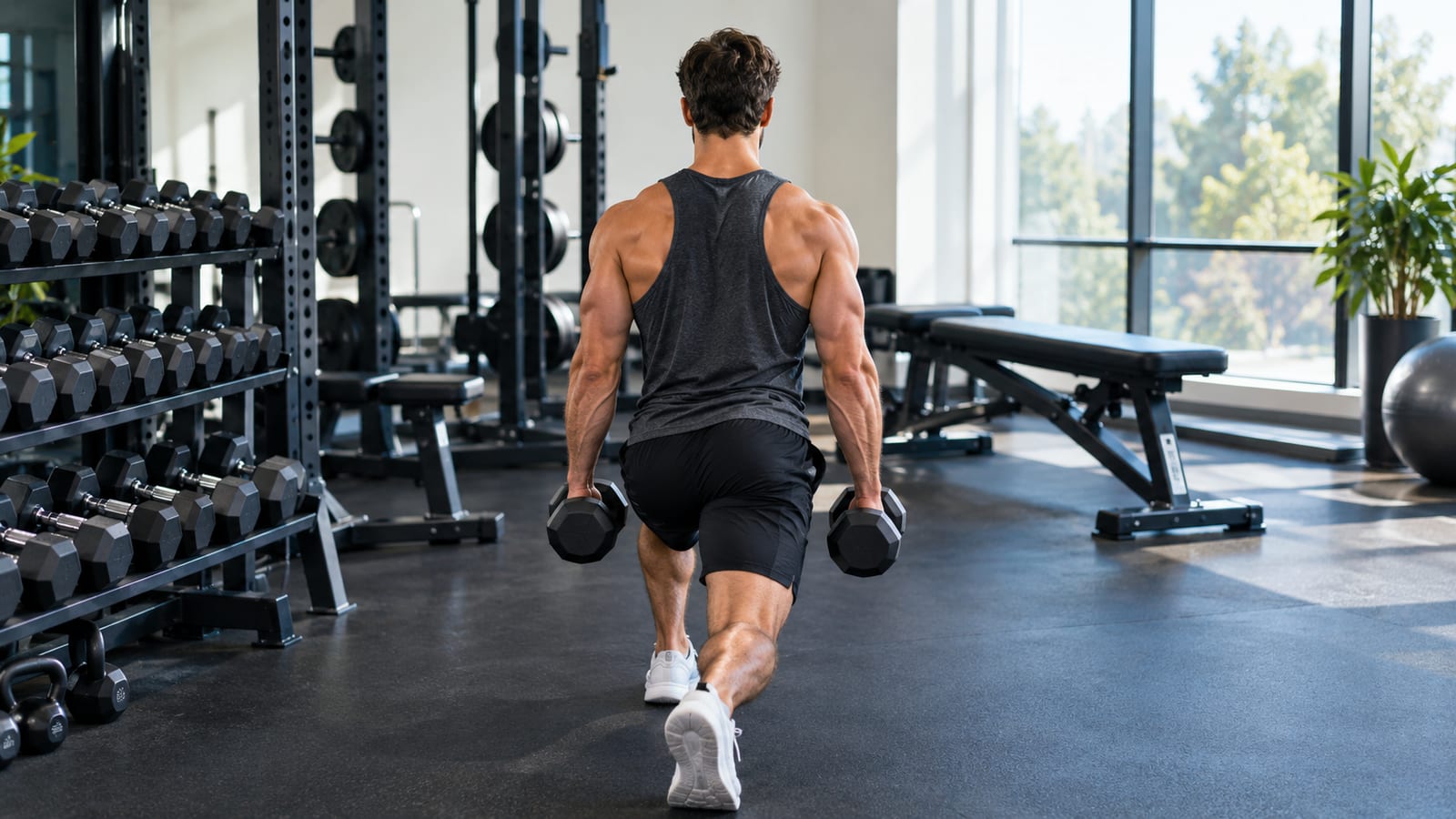
The pump comes from extra blood flow into the muscle during the last exercise, and it can make the muscle look bigger and harder for a while.
The idea is that a big enough pump pushes outward on the fascia and gives the muscle more room. That is the theory behind the system. It is not a reason to treat every swollen muscle as proof of new tissue.
The pump still has practical value. Short rests and repeated contractions can help you focus on a muscle that you struggle to feel during heavier compound lifts. They also give you a clear workload to record in your logbook.
Use this standard:
- Your technique stays repeatable.
- The target muscle limits the set.
- You complete 10 to 12 controlled reps.
- You keep rests between 30 and 45 seconds.
- You can recover before training that muscle again.
- Your performance improves across several sessions.
FST-7 should not replace progressive overload. You still need to add weight or reps when you can do so without losing control. The seven sets give you extra focused work. They do not suspend the basic rules of muscle growth.
The six-day body-part split
A traditional FST-7 workout plan spreads the body parts across six training days and leaves the seventh day for rest. Each session emphasizes one main muscle group and finishes that muscle with seven sets.
That schedule can work for an experienced lifter who can protect all the training sessions. It is a poor choice if your work, family, sleep, or joints already make regular training difficult. Missing one day removes a large part of the week’s work.
| Day | Main focus | FST-7 finisher |
|---|---|---|
| Monday | Chest | Cable fly or machine press |
| Tuesday | Back | Pulldown or supported row |
| Wednesday | Shoulders | Cable or machine lateral raise |
| Thursday | Arms | Curl or pressdown |
| Friday | Legs | Leg extension or leg curl |
| Saturday | Weak body part | The safest stable isolation exercise |
| Sunday | Rest | Recover and prepare to train again |
Keep the main work focused. Use presses, rows, squats, hinges, and pulls before the finisher. Save the seven-set block for an exercise that keeps your joints in a good position while fatigue rises.
The sixth day should target a weak body part, not become another full workout for everything. If your legs are still sore from Friday, move the weak-point work to another muscle or skip it. The plan has to fit your recovery.
For many natural lifters, full-body training gives you another way to add FST-7 to one muscle at the end of selected sessions without living in the gym. See this full-body workout plan for a simpler schedule.
Sample workouts for each muscle group
FST-7 exercises should be stable, simple, and easy to adjust. A machine, cable, or supported movement usually beats a free-weight lift that demands balance while your rest periods shrink.
Complete your normal compound work first. Then choose one finisher and perform seven sets of 10 to 12 reps. Rest 30 to 45 seconds between sets.
Chest
Use a cable fly or machine chest press for the finisher. Both let you keep tension on the chest without asking your shoulders to stabilize a heavy bar while tired.
A sample session can include:
- Flat press
- Incline dumbbell press
- Machine chest press
- Cable fly for seven finishing sets
Keep your shoulders down and control the stretch. Do not turn the final sets into short, bouncing reps.
Back
Use a pulldown or supported row. These options make it easier to keep your arms from taking over as fatigue builds.
A sample session can include:
- Pulldown
- Chest-supported row
- One-arm cable row
- Straight-arm pulldown for seven finishing sets
Drive the movement with your elbows. If your grip fails first, use a lighter load or choose a machine that lets your back stay involved.
Shoulders
Use a cable lateral raise or machine lateral raise. Heavy overhead pressing is a poor FST-7 choice because short rests can turn tired reps into shoulder and lower-back compensation.
A sample session can include:
- Overhead press
- Rear-delt fly
- Cable lateral raise for seven finishing sets
Raise with control and stop before your traps take over. Your joints get a vote, especially during repeated sets.
Biceps and triceps
Arms are a sensible place to use FST-7. Curls and pressdowns are easy to set up, easy to load, and less demanding on the rest of your body.
For biceps, use a cable curl, preacher curl, or machine curl. For triceps, use a rope pressdown or cable extension.
Choose one exercise for the seven-set block. Do not use seven sets for curls and seven more for pressdowns if your elbows already feel beat up. Add work only after your current training stops producing progress.
Quads
Use a leg extension for the finisher. It lets you train the quads without making your lower back and balance the limiting factors.
A sample session can include:
- Squat or leg press
- Split squat or another knee-dominant movement
- Leg extension for seven finishing sets
Keep the load modest enough to control the bottom and top positions. A short rest period is demanding enough without turning the set into a swing.
Hamstrings
Use a seated or lying leg curl. Hamstring curls provide a clear target and usually carry less whole-body fatigue than repeated hinge sets.
A sample session can include:
- Romanian deadlift
- Back extension if recovery allows
- Leg curl for seven finishing sets
Do not use deadlifts for the FST-7 block. The fatigue rises faster than the quality of the reps, and your back may give out before your hamstrings receive useful work.
Calves
Use a seated or standing calf machine if the range of motion stays consistent. Pause briefly in the stretched position and finish each rep under control.
Calves often tolerate frequent work, but that does not mean you should rush through sloppy sets. If the movement becomes a bounce, reduce the load.
Nutrition and recovery for hypertrophy
FST-7 adds fatigue. Food and recovery decide whether that extra work helps or simply makes your next session worse.
Eat enough total food to support training and gradual muscle gain. Include regular protein-rich meals, carbohydrates around demanding sessions, and dietary fats that help you keep calories high enough. You do not need a supplement stack to make seven sets work.
Adequate hydration matters just as much as food intake for an FST-7 workout routine. During training, most people need roughly a liter of water. The right amount changes with your body size, how much you sweat, and the time of year.
Most thermogenic products have a diuretic effect, so drink a little extra water if you use one. If you fade late in a session, a carb drink can help, but water still comes first.
The National Academies guidance on water and electrolytes is a better starting point than copying a bodybuilder’s bottle routine. Your sweat rate and training conditions matter more than a rigid internet rule.
Sleep matters too. If your performance drops, your joints ache, and the target muscle stays sore into the next session, reduce the extra work before adding supplements or another training day.
Why pro physiques do not prove the thin-fascia theory
Professional bodybuilders are often used to illustrate the thin-fascia theory. A famous lifter with full, round muscles gets labeled as someone with favorable fascia. A less developed body part gets blamed on thick fascia.
You cannot look at a physique and measure fascia thickness. Muscle shape also depends on genetics, muscle length, training history, body fat, posing, lighting, and years of consistent food and training.
That does not make professional examples useless. They show that high-level lifters often use pump-focused work, stable isolation exercises, and careful execution. They do not prove that seven sets stretched their fascia into permanent growth.
Take the useful lesson and leave the label. Train the weak muscle through a controlled range, record the work, eat enough, and wait long enough to judge the result.
Targeting stubborn body parts
Use FST-7 for a stubborn muscle only after checking the boring causes of stalled progress:
- You rarely train the muscle with consistent technique.
- You change exercises before building skill.
- You count indirect work as full direct work.
- You add weight while losing the target-muscle position.
- You do not eat enough to support growth.
- You train hard but recover poorly.
- You expect a visible change before the plan has had time to work.
Pick an exercise that keeps tension where you want it. A cable lateral raise is usually better than a heavy upright row for a lifter whose side delts lag. A leg curl is usually better than another set of tired deadlifts for hamstrings.
Run the finisher consistently and track the outcome. If your reps improve, the target muscle performs better, and recovery stays acceptable, keep it. If your elbows, shoulders, or sleep deteriorate, remove it.
A stubborn muscle does not always need more work. Sometimes it needs better reps.
Your FST-7 workout plan
Build the plan around normal training first. The finisher comes last, and it should serve a clear purpose.
Follow these steps
Choose one target muscle.
Start with a body part that needs extra focused work. Do not use FST-7 for every muscle in every session.Complete your main exercises.
Use presses, pulls, squats, hinges, and rows while you are fresh. These movements build the base of the session.Pick one stable finisher.
Use a machine, cable, or supported exercise. The target muscle should fail before your balance, grip, or lower back.Set the load for 10 to 12 clean reps.
The last reps should be hard, but your position should stay consistent. Reduce the load if you need to swing, shorten the range, or rush.Perform seven finishing sets.
Rest 30 to 45 seconds between sets. Keep the exercise and setup the same so your logbook gives you useful information.Stop adding work when recovery drops.
Soreness is not the main score. Watch your next session’s performance, joint comfort, sleep, and motivation.Progress gradually.
First earn more clean reps within the target range. Then add the smallest practical amount of weight and rebuild the quality.Review the plan after several consistent sessions.
Keep FST-7 if the target muscle is improving and your other lifts hold steady. Remove it if the pump is impressive but your performance keeps falling.
You can track this in a training app, a spreadsheet, or a paper notebook. The tool does not matter. Record the exercise, load, reps, rest, and whether technique stayed consistent.
The plan is simple on paper and demanding in practice. That is enough. You do not need special exercises, dramatic intensity techniques, or a new program every week.
Common FST-7 mistakes
Using heavy weight
Seven sets with short rests are not a test of maximum strength. Heavy loading usually causes shorter reps and poor control. Pick a weight that lets the target muscle work through the full movement.
Adding seven sets to every exercise
The method calls for seven finishing sets, not seven sets of every movement. Adding that much work turns a focused finisher into a recovery problem.
Treating the pump as the goal
A pump can feel productive and still fail to improve your training. Use the pump to focus your effort, then judge the method by performance and recovery.
Using unstable exercises
Barbell squats, deadlifts, and heavy presses are poor choices for short-rest finishers. The risk rises as fatigue changes your technique. Use a stable movement instead.
Ignoring the rest period
Resting too long changes the purpose of the method. Resting too little makes quality reps disappear. Keep your rest between 30 and 45 seconds and adjust the load as needed.
Training through joint pain
Muscle fatigue is expected. Sharp joint pain is a reason to stop and change the exercise. No pump is worth turning a manageable problem into an injury.
Is FST-7 right for natural lifters?
FST-7 can suit an experienced natural lifter who enjoys high-rep finishers and can recover from the extra work. It is less useful for a beginner who still needs to learn basic movement patterns and build consistent training habits.
Beginners should first learn the squat or leg press, hip hinge, press, row or pulldown, and a simple isolation exercise. Once those movements are repeatable, a short FST-7 block can be added to one muscle.
Natural lifters also need to be honest about time. A body-part split is not automatically better than a simpler plan. If you cannot protect the sessions, use an upper-lower workout and place the finisher where it fits.
The best FST-7 workout plan is the one you can repeat, recover from, and measure. If your calendar cannot support it, choose a simpler plan and beat the logbook there.
FAQ
Can FST-7 build muscle without heavy compound exercises?
Yes, the seven-set finisher can contribute to muscle growth with moderate loading. However, it should support your main training rather than replace presses, pulls, squats, and hinges entirely.
Should every FST-7 set reach failure?
No. Keep the reps controlled and stop when technique starts to break down. Taking every set to failure makes the short rests harder to manage and can reduce the quality of the later sets.
Can you use FST-7 at home?
Yes, if you have a stable exercise that lets you repeat the movement safely. Resistance bands, dumbbells, and a cable setup can work, but the exercise must keep tension on the target muscle as fatigue builds.
How do you know if FST-7 is working?
Your target exercise should improve in clean reps, load, control, or range of motion while your recovery stays acceptable. A temporary pump alone is not enough evidence.
Should you train a sore muscle with FST-7?
Wait until the muscle can contract and move normally without pain. Training through ordinary mild soreness may be manageable, but sharp pain or worsening performance means the plan needs more recovery.
Related on this blog