

Master Rest-Pause Training for Faster Muscle Workouts

 0
0
 0
0 Use rest-pause training to save time, not to turn every set into a punishment test. To master rest-pause training, apply it to one or two stable exercises after your main straight sets. Track the first set and total quality reps. Then add weight or reps only while your technique, food, sleep, and recovery stay intact. It can make workouts faster. It cannot rush muscle growth past what your body can recover from.
Last updated: 2026-08-10
What is rest-pause training?
Rest-pause training is one demanding set broken into smaller bouts. You complete an activation set near failure, rest for 15 to 30 seconds, then perform short mini-sets with the same load.
Those brief pauses let you complete more hard reps than one continuous set would allow. However, the rest is too short for full recovery. Each mini-set gets difficult quickly.
A rest-pause set may look like this:
- Perform a controlled activation set near failure.
- Rack or lower the weight safely.
- Rest for 15 to 30 seconds.
- Complete a small mini-set with the same load.
- Pause again.
- Repeat until you reach your rep cap or your technique changes.
Rest-pause is not several normal sets with rushed rest periods. Treat the whole sequence as one extended set.
Why rest-pause sets can build muscle
A rest-pause set packs more high-effort reps into less time. Because the first set creates fatigue, the later mini-sets reach a high effort level with fewer reps.
That can help you build muscle. Still, fatigue alone does not drive growth. You need productive sets, more reps or weight over time, enough weekly work, and enough recovery to adapt.
A 2019 study published in J Strength Cond Res reported an 11 ± 14% increase in thigh muscle thickness for its rest-pause group. That finding is interesting, but the wide variation matters. Some people responded much better than others.
Do not read one result as proof that rest-pause beats straight sets in every program. Use it because it saves time and gives you a clear way to add quality reps. Then judge it by your logbook.
Rest-pause works when those extra reps train the target muscle. If a cable curl turns into a hip swing and front raise, you are only extending a poor set.
How to master rest-pause training

Start with one exercise near the end of your workout. Pick a movement you can stop safely, keep the load unchanged, and count only clean reps.
Follow these steps:
Choose a stable exercise.
Use a machine, cable, isolation lift, or controlled bodyweight movement. Skip any exercise that becomes risky when fatigue arrives.Set a rep cap.
Decide your total target before the set begins. Keep that cap unchanged long enough to compare one workout with the next.Perform the activation set.
Stop when you are close to failure but still own the next rep. The target muscle should be working harder than your joints or lower back.Rest for 15 to 30 seconds.
Rack the weight, breathe, and keep the pause honest. A long conversation turns the method into separate sets.Complete a short mini-set.
Use the same load. Stop before the next rep would require swinging, bouncing, shortening the range, or changing position.Repeat only while the reps stay clean.
End the set when you reach the cap or your technique changes. Do not chase one ugly rep to prove the set was hard.Log the result.
Record activation-set reps, mini-set reps, total reps, and load. Those figures tell you whether to keep the method or change it.
Start with one rest-pause exercise. If your performance and recovery stay steady, you can use a second one for another muscle group.
That is how to master rest-pause training without letting it take over the program. The method should serve the plan, not replace it.
Choosing load, reps, and pause length
Choose a load that gives you a moderate-length activation set with repeatable technique. Loads that are too heavy produce tiny mini-sets and punish your joints. Loads that are too light turn the set into a long test of burning muscles and hard breathing.
The activation set should finish close to muscular failure. However, stop before your technique breaks. On each mini-set, use the same rule.
Judge the load with three checks:
- You can control the full range of motion.
- The target muscle limits the set.
- You can rack or release the weight safely when fatigue arrives.
Keep each rest pause between 15 and 30 seconds. Use the shorter end for a cable curl or leg extension. Use the longer end when breathing or setup takes more time.
Do not change the load, pause length, and rep cap in the same workout. Change one variable at a time so the logbook tells you what improved.
For more help choosing a practical range, see this guide to rep ranges for strength and muscle.
The best exercises for rest-pause work
Stable exercises work best because fatigue cannot wreck the setup as easily. You should be able to focus on the target muscle, stop safely, and restart without spending the short pause adjusting a bench or bracing under a bar.
Good choices
- Machine chest presses
- Cable rows and pulldowns
- Leg curls
- Leg extensions
- Calf raises
- Cable lateral raises
- Biceps curls
- Triceps pushdowns
- Supported machine rows
- Controlled push-ups
- Assisted pull-ups
These movements let you train with intent without spending the mini-set rebuilding your position. They also make progression easier to measure.
Poor choices
- Heavy barbell squats
- Conventional deadlifts
- Unsupported bent-over rows
- Heavy overhead presses
- Olympic lifting variations
- Any lift you cannot rack safely
These exercises demand more coordination and bracing. As fatigue rises, a rounded back, loose brace, or unstable bar path often ends the set before the target muscles get useful work.
A rest-pause deadlift may look demanding. That does not make it productive. Keep technically demanding barbell work in straight sets with enough rest to preserve skill and force.
Your joints get a vote. If an exercise feels worse during the mini-sets, use a more stable variation or return to straight sets.
Progress without burning out
Progress rest-pause work with total quality reps. Do not add load because the set felt dramatic.
Log these details:
- Exercise and setup
- Load used
- Activation-set reps
- Reps in each mini-set
- Total clean reps
- Any change in range or technique
- How the target joint and muscle felt
Use double progression. First, add reps while keeping the load, pause length, and technique consistent. Once you reach your rep cap cleanly, add the smallest practical amount of weight and build back up.
The activation set matters too. If those reps fall while total reps stay flat, you may be carrying fatigue from earlier training. Do not hide that problem by adding more mini-sets.
Return to straight sets when:
- Activation-set performance keeps falling.
- You need longer pauses to match old results.
- Your range of motion gets shorter.
- Joint discomfort appears.
- The target muscle stops limiting the set.
- Your next workout suffers.
A short reduction in training stress is not lost progress. It lets you recover and come back stronger.
A simple rest-pause workout routine
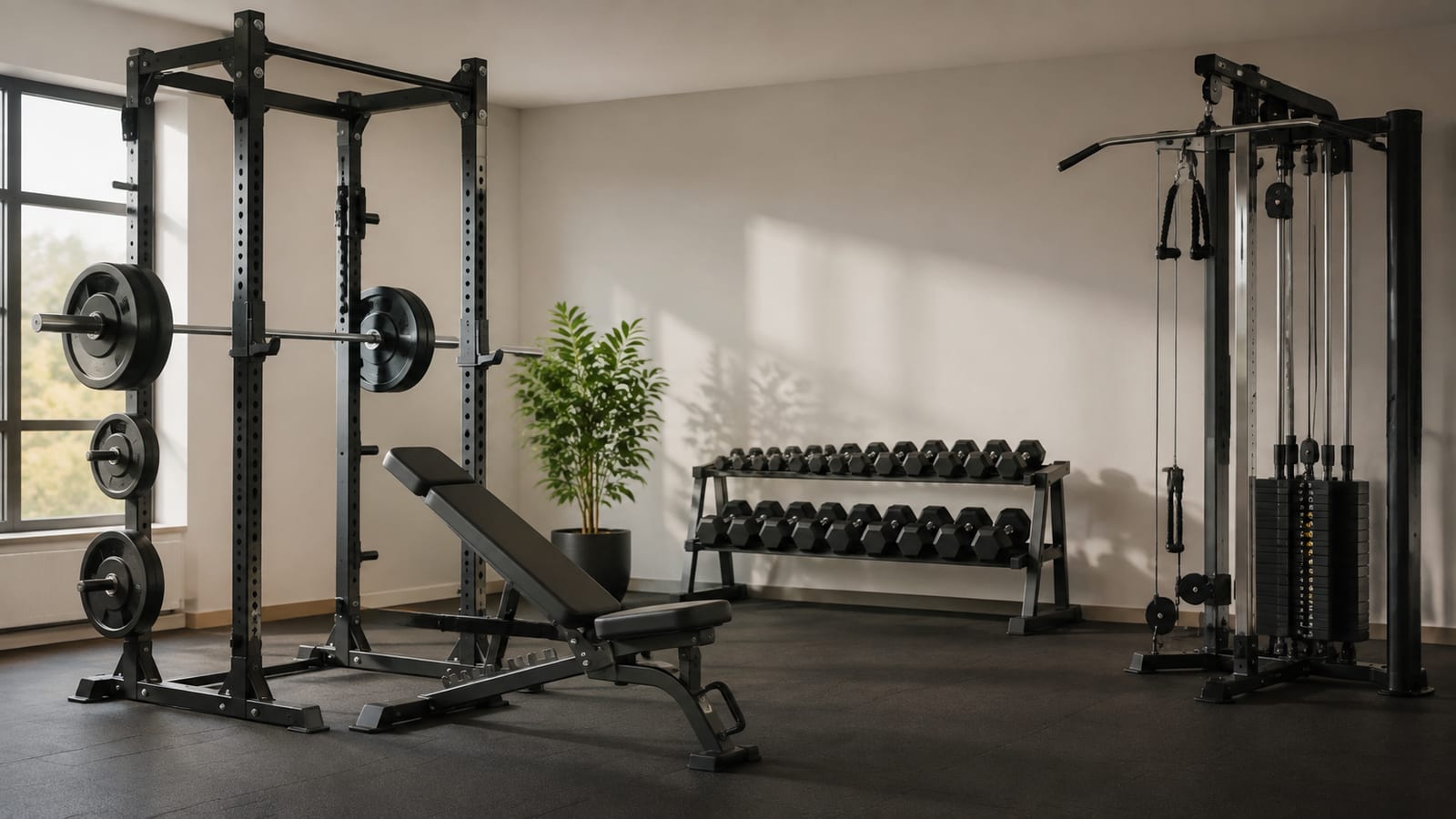
Keep your foundational lifts as straight sets. Then use rest-pause work on selected finishers where it saves time without lowering exercise quality.
Here is a simple full-body structure:
| Exercise slot | Training method | Coaching rule |
|---|---|---|
| Squat or leg press | Straight sets | Rest enough to keep depth and control consistent |
| Press | Straight sets | Keep the same setup and range on every rep |
| Row or pulldown | Straight sets | Do not shorten the pull as fatigue rises |
| Hip hinge or leg curl | Straight sets | Choose the safer option for your skill and recovery |
| Shoulder or arm exercise | Rest-pause | Use one activation set followed by clean mini-sets |
| Optional calf or arm exercise | Rest-pause | Add only if the first finisher does not hurt recovery |
This setup keeps the skilled work clean. Meanwhile, the finishers let you complete more work before leaving without turning every lift into a grind.
If time is tight, do not rush heavy compounds. Cut a minor exercise or use rest-pause on the final isolation lift. This guide to building muscle with short workouts gives you more ways to trim a session without trimming the work that matters.
On an upper-lower split, use the same idea. Keep presses, rows, squats, and hinges in straight sets. Save rest-pause work for lateral raises, curls, pushdowns, leg extensions, leg curls, or calf raises.
Rest-pause versus traditional straight sets
Straight sets remain the better base for most training. Rest-pause earns a place when time is tight or you want more work from a safe exercise.
| Factor | Rest-pause training | Traditional straight sets |
|---|---|---|
| Time efficiency | High | Moderate |
| Rep quality | Good if stopped early enough | Easier to maintain |
| Fatigue per set | High | Easier to control |
| Skill practice | Limited once fatigue rises | Better for complex lifts |
| Exercise selection | Best with stable movements | Works across more movements |
| Progress tracking | Requires detailed rep logging | Simple load and rep tracking |
| Long-term use | Best as a limited tool | Better as the program foundation |
Rest-pause gives you more work in a short period. However, straight sets give you more chances to practise clean technique while relatively fresh.
If you are learning an exercise, keep straight sets. If you already own the movement and need a shorter finisher, rest-pause can work well.
For a broader comparison of common set structures, read pyramid sets versus straight sets.
Rest-pause and cluster training are different
Rest-pause and cluster training both place short rests inside a set. Their purpose is different.
Rest-pause training usually begins with a hard activation set near failure. The mini-sets then extend the work while fatigue stays high. The main goal is usually muscle growth and time efficiency.
Cluster training uses planned rests earlier, before fatigue becomes severe. Those pauses help preserve speed, force, and rep quality with heavier or more explosive work.
| Method | Main purpose | Fatigue level | Rep quality |
|---|---|---|---|
| Rest-pause | Add high-effort hypertrophy reps | High | Falls as the set continues |
| Cluster training | Preserve force and speed | Controlled | Kept more consistent |
| Straight sets | Build skill, strength, and muscle | Adjustable | Usually easier to repeat |
Do not use the names as if they mean the same thing. If you are grinding near failure, you are not preserving power just because you paused briefly.
Strength and power limits
Rest-pause training can support general strength by helping you build muscle and perform more hard reps. However, it is not the best main method for maximal strength or explosive power.
Heavy strength work depends on practising the lift with a consistent setup, brace, and bar path. Rest-pause fatigue makes those details harder to repeat.
For maximal strength, keep most heavy practice in straight sets with full recovery. For power, use crisp reps that stop before speed drops. Cluster-style work fits that job better than near-failure rest-pause sets.
Use rest-pause for supporting exercises after the main lift. For example, train the heavy press normally, then use rest-pause on a machine press or triceps movement.
Muscle can support future strength. It does not replace specific heavy practice.
Hormone spikes do not make the method better
Do not choose rest-pause training because it creates a larger short-term hormone spike. Acute changes after a workout do not tell you how much muscle you will build over the coming months.
A hard workout can leave your shirt soaked and your legs shaking while still being poorly programmed. Sweat, soreness, and fatigue are not progression measures.
Track what matters:
- Are you adding quality reps?
- Is the load rising over time?
- Is the target muscle doing the work?
- Are you recovering before the next session?
- Are you eating enough to support training?
- Is your sleep steady?
If those pieces are missing, a temporary hormonal response will not rescue the plan. Beat the logbook with good reps before adding more intensity methods.
Mistakes that make rest-pause stop working
The biggest mistake is using rest-pause on every exercise. That creates plenty of fatigue but leaves little room for quality practice or recovery.
Watch for these common wrong turns:
- Taking every bout to complete failure: Stop when the next rep would be sloppy. Repeated failure turns a time-saving method into a recovery problem.
- Using unsafe exercises: A lift that is hard to rack while fresh becomes worse under fatigue.
- Counting shortened reps: Partial reps caused by fatigue do not equal clean full-range reps.
- Changing the rules each week: Keep the load, pauses, and rep cap consistent enough to measure progress.
- Adding rest-pause to an already crowded plan: Replace some work rather than piling more onto the end.
- Ignoring food and sleep: Extra effort raises recovery demands. Under-eating makes that bill harder to pay.
- Using soreness as the goal: A new method often makes you sore. That does not prove it built more muscle.
- Forcing progress after performance stalls: Reduce the stress or return to straight sets instead of adding another mini-set.
To master rest-pause training, make every mini-set serve a purpose. Keep the reps you can repeat and skip the ones that only make the workout look harder.
FAQ
Do I need a timer for rest-pause sets?
A timer helps because a quick guess often becomes a much longer break once you start breathing hard. Use a watch, phone, or gym clock and begin the next mini-set when the planned pause ends.
Keep the device close enough that you do not spend the pause unlocking a screen or searching for an app. The pause should be repeatable from one workout to the next.
Can I use dumbbells for rest-pause training?
Yes, but choose exercises that are easy to start and stop. Dumbbell curls, lateral raises, and supported rows are more practical than lifts that require you to kick heavy dumbbells into position.
If setup takes most of the pause, use a cable or machine instead. The short rest only works when you can restart without a wrestling match.
How should I warm up before a rest-pause exercise?
Warm up as you would for the exercise during straight-set training. Use lighter practice sets until the movement feels smooth and the target muscle is working.
Do not turn the warm-up into another extended set. Save the near-failure work for the logged rest-pause set.
Can I use rest-pause while eating in a calorie deficit?
You can, but recovery may be tighter because you are eating less. Keep the method limited and watch whether your activation-set reps, joint comfort, and next workout remain steady.
If performance keeps slipping, remove the rest-pause work before cutting useful straight sets. A harder set does not cancel out low recovery.
What should I do if someone takes the machine during my pause?
Do not move to a different load or exercise just to preserve the timer. The setup has changed, so the result no longer compares cleanly with your logbook.
End the sequence and record what happened. Next time, choose equipment you can keep for the full set or train during a quieter part of the session.