Build Stronger Rear Delts With Repeatable Exercises

 0
0
 0
0 The best rear delt exercises for a natural lifter with limited time are stable movements you can load and repeat. Start with the reverse pec-deck, chest-supported rear-delt row, or cable rear-delt fly. Use controlled reps, keep momentum out, and progress only after your technique stays consistent. Novelty is rarely the missing ingredient.
The rear delts don’t need a circus of novelty exercises. They need direct work that makes the back of your shoulder do the job, then enough food and recovery to adapt.
Rear deltoid function
The posterior deltoid sits on the back of your shoulder and covers the rear of the shoulder joint. Its main job is shoulder horizontal abduction, which means moving your upper arm out and back across your body.
It also helps extend the shoulder by pulling the upper arm behind you. The rear delt assists external rotation, but it is a minor contributor. The rotator cuff muscles handle much of that work.
Your deltoid has front, side, and rear fibers:
- The anterior deltoid raises the arm forward and helps with pressing.
- The lateral deltoid raises the arm out to the side.
- The posterior deltoid moves the upper arm backward and outward.
Rows, reverse flyes, and face pulls can all train the rear shoulder. However, the exact result depends on your elbow path, range of motion, load, and how much your upper back takes over.
A standard row pulls your elbows toward your body and mainly trains the lats, rhomboids, and mid-back. A rear-delt movement usually keeps the elbows farther out and uses less load. That difference matters.
The practical case for direct work
Direct rear-delt work gives your shoulders more balanced development. Pressing builds the front of the shoulder easily, while the rear often gets vague, indirect work that is hard to measure.
Stronger rear delts also help you control your upper arm during rows, pulldowns, and other pulling movements. They contribute to a stable shoulder position while the larger back muscles produce most of the force.
This does not mean the rear delts are the primary driver of your back. They are not. Your lats, traps, rhomboids, and other muscles still need their own productive sets. You can read more about that split in our guide to the best back exercises.
The practical benefit is better control. If your elbows drift, your shoulders shrug, or your upper arms swing through every pull, direct rear-delt work gives you a smaller movement to practice.
Use it to improve shoulder development and movement quality. Do not treat it as a replacement for pressing or back training.
Posture has limits
Stronger rear delts and upper-back muscles can support better shoulder positioning. They give you more strength to control the upper arm and shoulder blade during training and daily movement.
That support has limits. One exercise will not fix a posture shaped by your work setup, habits, pain, breathing, or general strength. Claims that a few face pulls will permanently pull your shoulders back belong in the marketing bin.
Posture is a position you control across the day. Training helps by building capacity, but you still need to sit, stand, and move with reasonable control.
The shoulder joint also needs movement in several directions. Forcing your shoulders into a rigid pulled-back position is not the goal. A strong shoulder can move freely and return to a controlled position.
Train the rear delts, upper back, and rotator cuff. Then check whether your shoulder position feels more controlled without pain. If pain or clear weakness persists, seek assessment from a qualified clinician instead of adding more exercises.
Why the rear delts get overlooked
Pressing-heavy programs make the problem easy to create. Bench presses, overhead presses, and push-ups give the front of the shoulder plenty of work. The rear shoulder often gets whatever is left over.
Generic pulling volume creates a second problem. A lifter may perform many rows but still use the lats, biceps, and mid-back for nearly every rep. Counting every pull as direct rear-delt work makes the logbook look better than the muscle’s actual workload.
Poor exercise selection adds friction. A heavy bent-over reverse fly can become a lower-back hold, a trap shrug, and a swinging arm movement before the rear delt gets useful tension.
Finally, lifters change exercises too often. You cannot judge progression if the movement, load, range, and technique change every session. Pick a stable option and earn the next increase.
The overall exercise ranking
Choose the movement that gives the rear delts steady tension with little setup and little interference from other muscles. The ranking below favors exercises you can repeat, load, and track without turning each set into a guessing exercise.
| Exercise | Stability | Direct rear-delt tension | Progression | Equipment | Main trade-off |
|---|---|---|---|---|---|
| Reverse pec-deck fly | High | High | Easy to measure | Machine | Needs a suitable machine |
| Chest-supported rear-delt row | High | High | Good | Bench and dumbbells or machine | Easy to turn into a normal row |
| Cable rear-delt fly | Moderate to high | High | Good | Cable station | Setup and line of pull take practice |
| Band rear-delt fly | Moderate | Moderate to high | Harder to measure | Band | Resistance changes through the movement |
| Face pull | Moderate | Moderate | Fair | Cable or band | Trains more than the rear delts |
Reverse pec-deck fly
This is the best all-around choice for most lifters. The machine supports your body and makes it easier to keep the movement consistent from set to set.
Set the handles so your arms move in line with the rear shoulder, not high toward your ears. Use a load that lets you open your arms without jerking your chest away from the pad.
The machine also makes progression simple. Add a small amount of weight only after you can repeat the same range and tempo. If the stack moves because your traps took over, the number on the pin is not useful progress.
Chest-supported rear-delt row
This is the strongest basic option when you want more load without your lower back or momentum taking control. A chest pad removes the need to hold a torso position, so you can focus on the upper arm.
The 45-degree incline row is a recognized posterior-deltoid exercise name used by the American Council on Exercise. The angle is less important than what your elbows and shoulders do during the rep.
Keep your elbows wide and pull the upper arms back rather than dragging the hands toward your ribs. Use a shortened pulling range compared with a normal row. Stop before your elbows travel so far behind you that your shoulder blades pinch hard and your traps finish the movement.
This exercise is simple on paper and demanding in practice. If your elbows tuck in, you are doing a row for the mid-back and lats.
Cable rear-delt fly
The cable gives you steady resistance and lets you change the line of pull. You can use a single handle, two handles, or a crossover setup, depending on the station.
Set the cable around shoulder height or slightly above it. Stand far enough away to keep tension at the start, then move your arms out and back with a soft bend in the elbows.
Cables are useful when dumbbells feel light at the top but awkward at the bottom. Still, the adjustable setup can tempt you into chasing angles instead of training. Keep the version that lets you repeat the same path.
Band rear-delt fly
Bands are cheap, portable, and useful for travel or home sessions. They also make a good low-fatigue option after pressing or pulling work.
Their weakness is measurement. Band resistance changes through the movement, and the band can lose tension at the start. You can still progress by adding reps, improving control, using a stronger band, or increasing the range.
Do not pretend the band gives you the same loading pattern as a cable. It does not. Use it because it fits your week, not because someone called it superior.
Face pull
The face pull is a worthwhile upper-back and external-rotation accessory. It trains the rear delts, mid and lower traps, rhomboids, and rotator cuff muscles depending on how you perform it.
It is not the most direct rear-delt builder. It also does not replace a dedicated raise or fly.
Use face pulls if you like the movement and can perform them without shoulder irritation. Add a more direct rear-delt exercise if the back of your shoulder needs measurable growth.
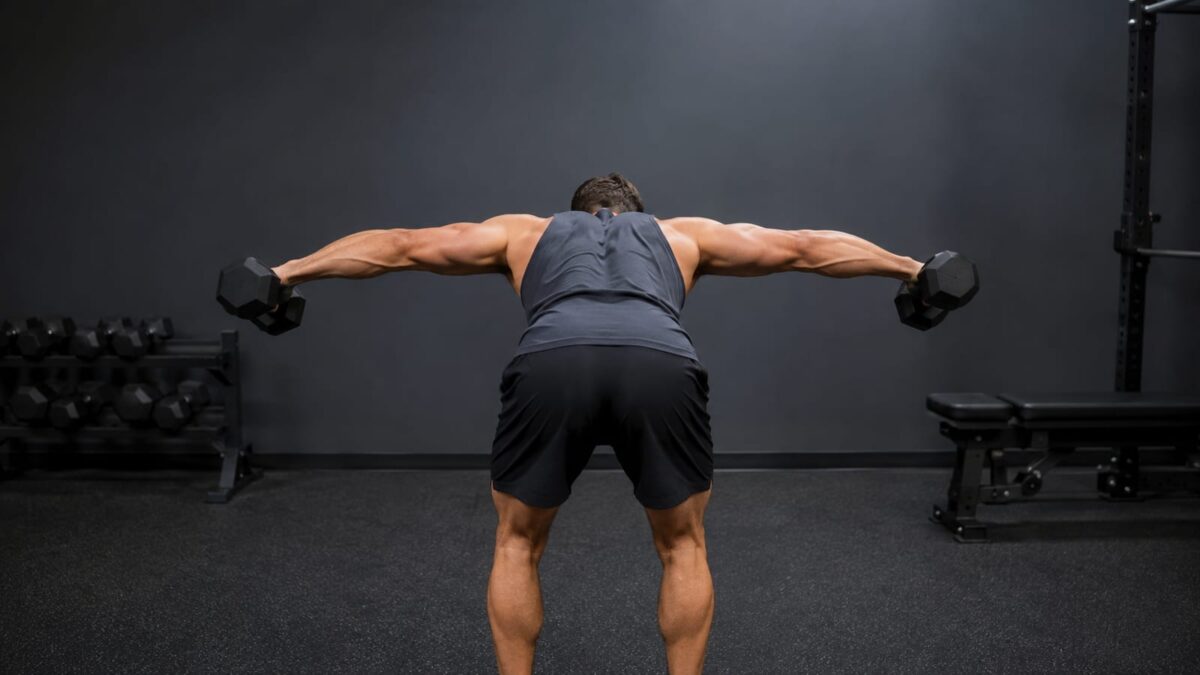
Rear-delt fly technique
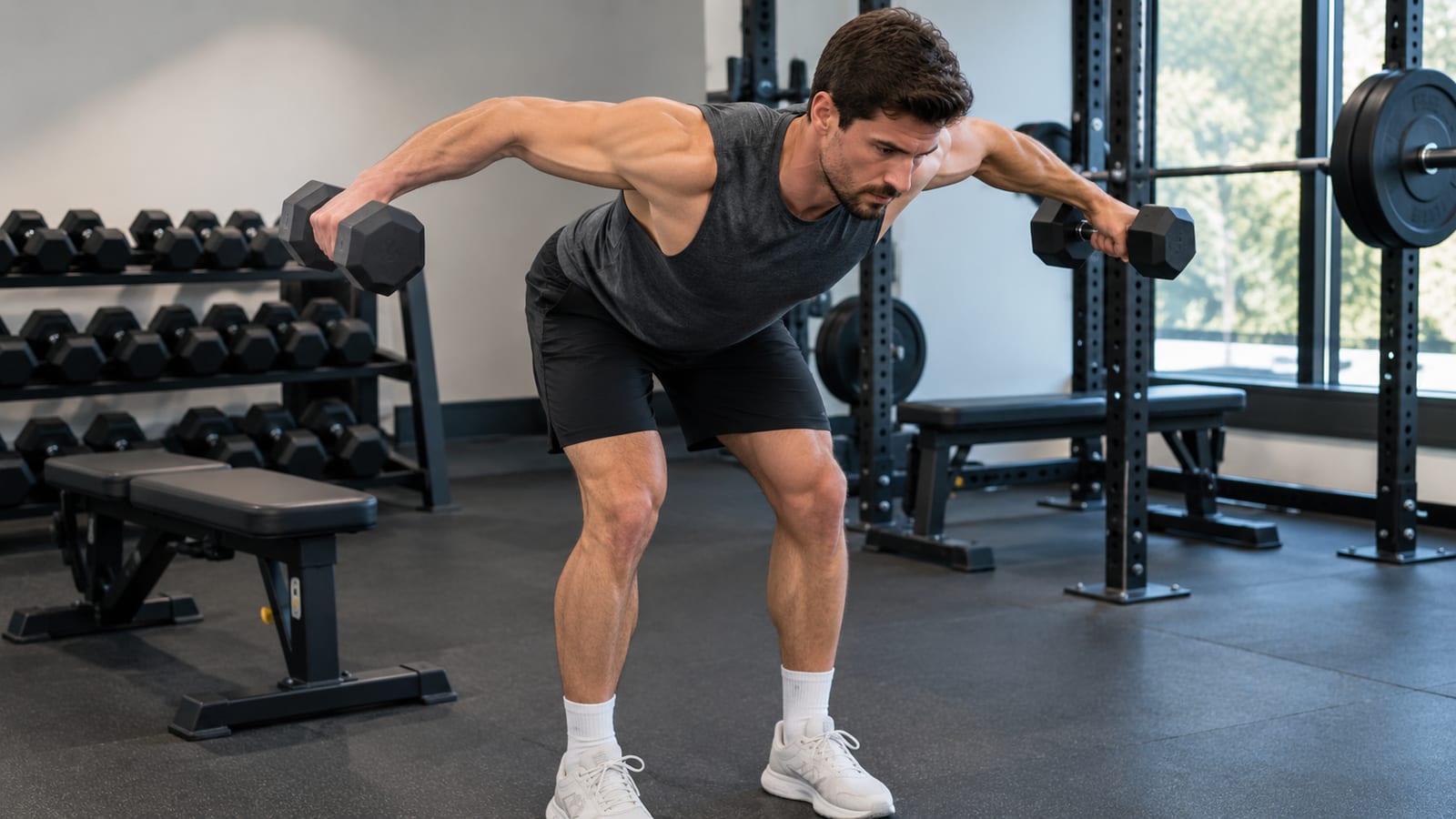
The rear-delt fly should look controlled from the first rep to the last. The load stays modest because the target muscle is small and the arm has a long lever.
Use this setup:
- Support your chest on an incline bench, or sit with your torso leaned forward.
- Let the arms hang with a slight elbow bend.
- Set your shoulders down without forcing them back.
- Raise the arms out and slightly back until the rear delts contract.
- Lower the weights under control and keep tension through the next rep.
The arm path should resemble a wide arc. Do not pull the elbows straight behind your ribs. That turns the exercise into a row.
Use a range that keeps the shoulder comfortable and the rear delts loaded. Higher is not automatically better. Stop before your traps shrug or your shoulder rolls forward.
Keep the tempo controlled. A brief pause near the top can expose momentum, but do not turn every rep into an exaggerated hold. You need quality reps and a repeatable path.
Useful cues include:
- Move the upper arms, not the hands.
- Keep the neck relaxed.
- Let the shoulders move naturally.
- Stop before the traps dominate.
- Leave a small amount in reserve if the next rep would be ugly.
The seated rear lateral raise is another recognized posterior-deltoid exercise name used by the American Council on Exercise. Treat it as a controlled raise, not a test of how much weight you can swing.
Chest-supported row technique
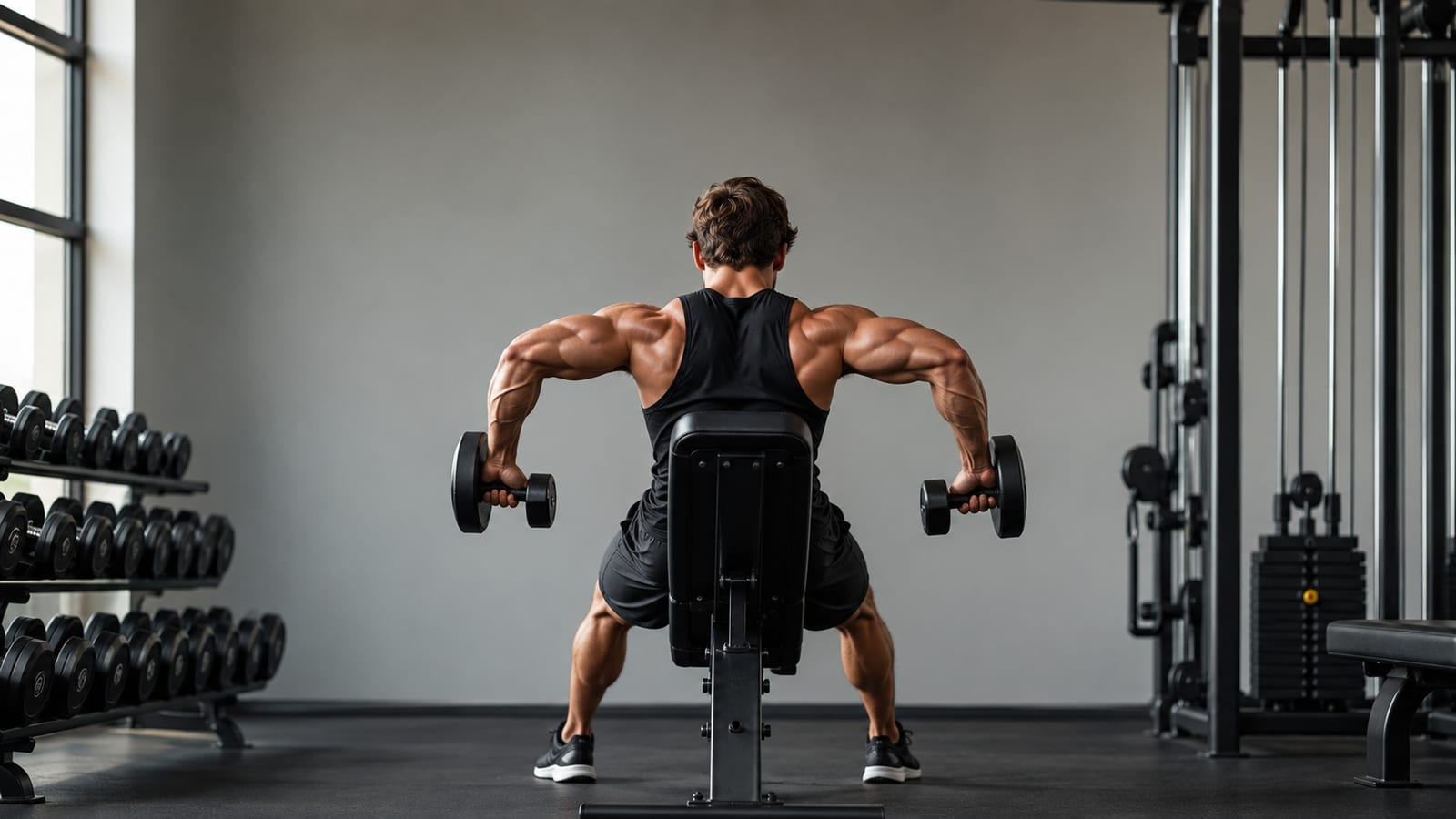
Set the bench so your chest stays supported while your arms hang freely. Hold the dumbbells with a neutral or slightly angled grip, then let the elbows move out from the body.
Pull the elbows wide and back. Think about moving your upper arms, not squeezing your shoulder blades as hard as possible.
Keep the load light enough that your chest remains on the pad. If your torso lifts, your elbows tuck, or your wrists bend, reduce the weight. The exercise has already told you what to do.
Use a shorter range than a standard dumbbell row. The goal is to load the rear delts through shoulder movement, not to pull the dumbbells toward your waist.
You can also use a machine with chest support. That often makes progression easier because the setup stays fixed. The best version is the one that lets you repeat your technique and beat the logbook without joint irritation.
Machine and cable setup
Adjust the reverse pec-deck seat so the handles line up with your shoulders. If the handles sit too high, your upper traps may take over. If they sit too low, the movement may feel cramped or force an awkward shoulder position.
Keep a soft elbow bend and avoid locking the joints. Move through a comfortable range, then return slowly without letting the weights crash.
For cable flyes, set the pulleys so the cables do not pull your shoulders into a painful stretch. Begin with your hands in a position that lets you control the first inch of the rep.
Do not chase a dramatic stretch by letting the arms travel far behind the body. The rear delts do not need an extreme range to grow, and irritated joints do not care how impressive the exercise looks.
Use a neutral or slightly turned hand position if that feels better. Shoulder-friendly training is not timid training. It is how you keep working productively next week.
The National Institute of Arthritis and Musculoskeletal and Skin Diseases provides general information on shoulder problems and symptoms. Use persistent pain, weakness, or loss of motion as a reason to get help, not as a reason to force more reps.
How do rear-delt exercises help your pulling movements?
The rear delts help control the upper arm during rows, pull-ups, pulldowns, and similar movements. They can contribute to a stable shoulder position while the lats and upper back produce the main force.
That support can make your pulling technique more repeatable. You may find it easier to keep the elbows moving in the intended path instead of shrugging or losing shoulder control near the end of a set.
Still, rear-delt work does not replace lat training. Your lat exercises for growth need their own plan, load, and progression.
Think of the rear delts as assistants with a clear job. They help control the upper arm, but they are not supposed to carry every pulling movement.
If your row improves because you can hold position better, that is useful progress. If your row improves because you added weight while the rear delts stopped working, the number is less meaningful.
How often and how hard should you train the rear delts?
Train the rear delts with a few direct weekly sets, spread across your existing upper-body sessions. That is enough for most lifters to start, especially if your rows and pulling work already provide indirect stimulus.
Use moderate-to-high repetitions and stop with clean reps still available. Rear-delt work responds well to controlled effort, but it does not require punishment or repeated ugly failure.
A simple setup looks like this:
- Add a reverse pec-deck after pressing on one session.
- Use a chest-supported rear-delt row or cable fly after pulling on another session.
- Keep the same exercises long enough to measure progress.
- Add reps or a small amount of load when technique stays fixed.
- Reduce direct work if your shoulders remain sore or your pulling performance drops.
You can train the final set of a stable machine or cable exercise close to failure if your joints feel good. Do not make failure the default on every set. The extra fatigue can interfere with pressing and pulling without giving the rear delts much more useful work.
Your target is hard enough to count, then recover and come back stronger. If the movement gets worse before the muscle gets tired, lower the load.
What should you eat and recover from rear-delt training?
Rear-delt growth still depends on total training and recovery. A small shoulder exercise cannot outwork a diet that leaves you underfed or a schedule that keeps you exhausted.
Eat enough total food to support your training. Include adequate protein across your normal meals, then keep your sleep and weekly workload in order.
You do not need a special food plan for the rear delts. You need enough resources to recover from pressing, pulling, leg training, work, and life at the same time.
Watch your performance. If your rear-delt work stalls while your sleep, appetite, and other lifts also decline, adding more sets is the wrong first move. Reduce unnecessary fatigue, eat better, and return with a plan you can keep.
Rear-delt mistakes to avoid
These mistakes all make the set look harder while making the target work worse:
- Using excessive weight: The rear delts are small. A heavy dumbbell often turns the exercise into a swing and shrug.
- Swinging through the reps: Momentum removes the reason you chose the movement. Slow down and use a load you can control.
- Shrugging: If your shoulders rise toward your ears, the traps are taking over.
- Pulling too far: A huge range can irritate the shoulder or shift tension away from the target.
- Chasing painful positions: Muscle effort is expected. Sharp pain, joint pain, or lasting irritation is a stop signal.
- Changing exercises too often: You need repeated exposure to judge progress.
- Counting every row as direct rear-delt work: Some rows train the rear delts well. Many leave the lats and mid-back doing most of the work.
- Rushing between sets: Small muscles still need enough rest to produce quality reps.
- Adding work before fixing technique: More sets will not repair a poor arm path.
Start with the reverse pec-deck if you have access to one. Otherwise, use a chest-supported row or cable fly, log your work, and let small increases add up.
A practical rear-delt plan for your week
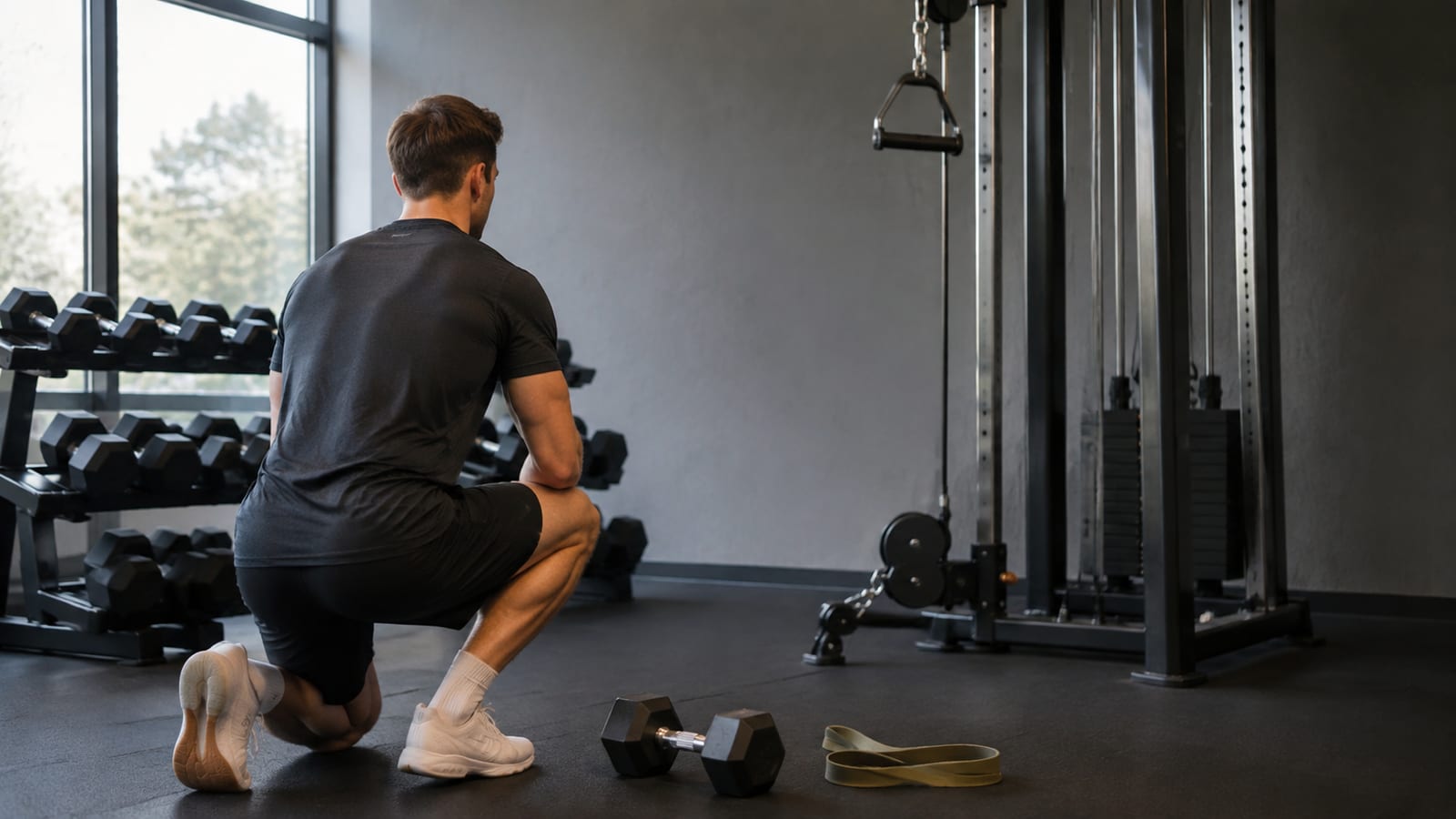
Place direct work after your main presses or pulls. That keeps the bigger lifts first while giving the rear delts focused attention before fatigue turns the exercise into noise.
Use one stable movement per session and keep the total workload modest. For example, pair a reverse pec-deck with an upper-body day, then use a cable fly or chest-supported rear-delt row later in the week.
Keep the exercise, setup, and range consistent. Add reps first, then add the smallest practical amount of load once your reps remain clean.
If your rear delts are growing and your shoulders feel good, keep the plan. If they are not progressing, check food, sleep, technique, and direct workload before adding another exercise.
FAQ
Are rear delts part of the shoulders or the back?
The rear delts are part of the shoulder muscle, not the back. They work with the upper-back muscles during pulling movements, which is why rows can make the distinction less obvious.
Should you train rear delts before back exercises?
Usually, no. Train your main rows, pulldowns, and pull-ups first if strength on those movements matters. Direct rear-delt work fits better afterward, unless shoulder control is the specific skill you’re practicing.
Can you train rear delts with only resistance bands?
Yes. Bands can provide useful rear-delt work at home or while traveling. Track progress through cleaner reps, stronger band tension, more control, or a better range instead of relying only on weight.
Why do my rear delts hurt during flyes?
Pain can come from excessive load, an uncomfortable arm path, too much range, or poor shoulder control. Adjust the setup and range first. If pain continues or affects daily movement, get it assessed rather than forcing the exercise.
Do rear delts need direct work if you already do face pulls?
Often, yes, if rear-delt size is a clear goal. Face pulls train several muscles and can be useful, but a dedicated fly or raise usually makes rear-delt tension easier to feel and progression easier to measure.
Related on this blog