How to Train the Subclavius Without Isolating It

 0
0
 0
0 You do not need to isolate the subclavius. The best subclavius exercises are pain-free presses, rows, carries, and simple shoulder-blade work. These movements train the collarbone and shoulder girdle as a working system. Progress those basics instead of turning one small stabilizer into a major project.
Last updated: 2026-08-11
What is the subclavius muscle, and where is it?
The subclavius is a small muscle beneath your collarbone. It sits between the first rib and the underside of the clavicle, which is the medical name for the collarbone.
You will not see it working like a biceps or chest muscle. You also may not feel it clearly during training. That does not mean it is inactive.
Its main job is support. It helps control the collarbone while your arm and shoulder blade move. Because it works deep under other tissues, trying to isolate or squeeze it on command is a poor use of training time.
Its anatomy points to basic shoulder-girdle work
The subclavius starts near the junction of the first rib and its cartilage. It attaches to the underside of the middle third of the clavicle. The subclavian nerve, from C5-C6, supplies the muscle.
Its primary actions are to anchor and depress the clavicle. It also helps stabilize the clavicle during movements of the shoulder girdle. The shoulder girdle means the collarbone and shoulder blade working together around the upper rib cage.
During breathing, the subclavius can help raise the first rib while lowering the clavicle. However, that does not make loaded breathing drills a sensible muscle-building exercise.
The anatomy points toward a simple training decision. Use movements that require steady collarbone and shoulder-blade control while the arms press, pull, or carry a load.
Direct subclavius exercises are usually unnecessary
No. Most lifters do not need direct subclavius muscle exercises.
Presses, rows, carries, and controlled shoulder-blade movements train the surrounding system more effectively. They also give you progress you can measure through better reps, more load, or improved range of motion.
Dedicated “clavicle pulldown” drills often create motion without giving you useful resistance. Worse, forcing the collarbone down can irritate an already sensitive area.
The same problem appears with many tiny-muscle routines. This guide to why a dedicated pectoralis minor workout falls short explains the broader issue. Anatomy matters, but your workout does not need an isolation drill for every label in an anatomy book.
The exercises worth keeping
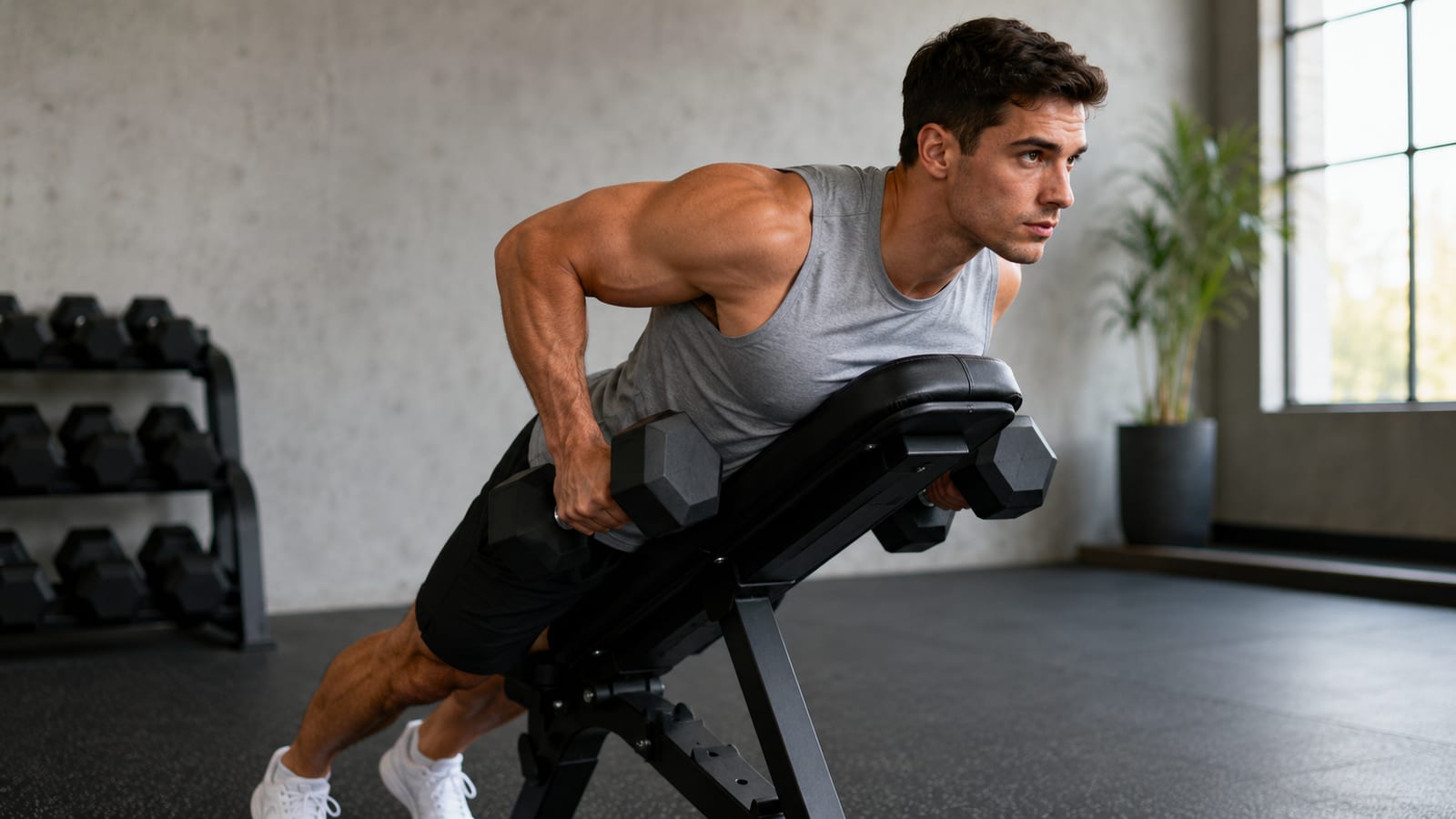
Keep the movements that let you train hard without producing collarbone pain, tingling, or altered arm sensation. The load should challenge the larger muscles while the subclavius handles its normal stabilizing role.
| Exercise | Verdict | How to perform it | Practical dose |
|---|---|---|---|
| Push-up or dumbbell floor press | Best pressing choice | Keep your ribs controlled and shoulders comfortable. Lower without bouncing or forcing a deep stretch. | Use a few controlled sets in a moderate rep range. Leave clean reps in reserve. |
| Chest-supported row | Best balance exercise | Keep your chest on the pad. Pull without throwing your head forward or shrugging hard. | Match your pressing work with steady rowing volume. |
| Suitcase carry | Best simple stability drill | Hold a moderate load at one side. Walk tall without leaning away or dragging the shoulder down. | Use measured walks on both sides. Stop before posture changes. |
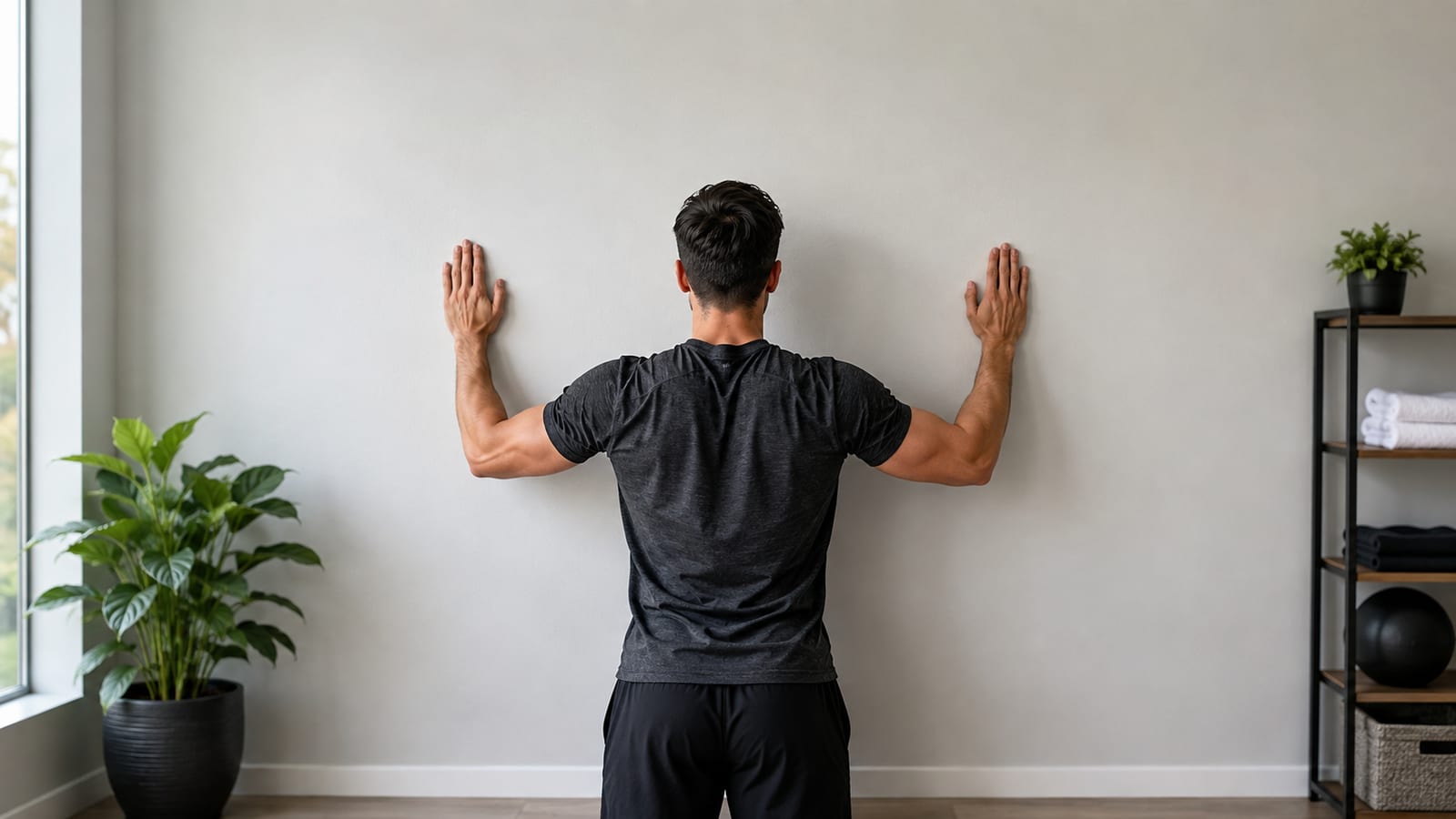
| Scapular wall slide | Best low-load control drill | Keep the movement smooth as your arms travel upward. Do not jam your shoulders down. | Use controlled reps during the warm-up or after pressing. |
Push-up or dumbbell floor press
Start with a push-up or dumbbell floor press. Both train the chest, triceps, and shoulder girdle without demanding a deep bottom position.
During push-ups, keep your hands in a position that lets your elbows and shoulders move naturally. This guide to proper push-up hand placement covers the setup.
For the floor press, let your upper arms meet the floor under control. Do not slam the elbows down to create momentum. Add weight or reps only while the collarbone area stays quiet.
Chest-supported row
Use a chest-supported row to build the upper-back support your pressing needs. The bench also removes much of the body swing that turns ordinary rows into a lower-back exercise.
Pull your elbows back without forcing the shoulder blades into an exaggerated pinch. Then lower the weight fully under control.
If your neck cranes forward or the front of the shoulder becomes irritated, reduce the load. Good reps before more weight.
Suitcase carry
A suitcase carry trains shoulder-girdle stability without complicated setup. Hold a dumbbell or kettlebell at one side and walk with level shoulders.
Do not lean away from the weight. Also, do not pull the loaded shoulder down as far as possible. Keep your arm relaxed, your grip firm, and your stride normal.
Use a load you can control without bracing like every step is a personal emergency. Carries should look boring. That is usually a sign you are doing them well.
Scapular wall slide
A wall slide gives you low-load practice moving the arms and shoulder blades together. It works well before pressing, especially if overhead motion feels stiff but not painful.
Move only through a comfortable range. Your shoulder blades should rotate as the arms rise rather than staying pinned down.
If wall slides cause pinching, shorten the range or skip them. Mobility work does not earn special permission to hurt.
A practical subclavius workout fits into normal training
A subclavius muscle workout should look like a balanced upper-body session, not a collection of collarbone tricks. Use this order:
- Begin with easy arm movements and scapular wall slides.
- Perform a push-up or dumbbell floor press for a few productive sets.
- Follow with chest-supported rows using repeatable technique.
- Add suitcase carries with a moderate load.
- Finish with mild chest and shoulder-girdle mobility if it feels useful.
Keep the pressing and rowing work balanced. Meanwhile, treat wall slides and carries as support work rather than tests of exhaustion.
You do not need a separate subclavius day. Put these movements into your normal upper-body or full-body training and let small increases add up.
Progress without aggravating the collarbone
Progress through better reps first. Then add reps, range, or load while keeping the same pain-free technique.
Use these rules:
- Start with a comfortable range of motion.
- Stop each set with clean reps in reserve.
- Change one training variable at a time.
- Hold the load steady if the collarbone area becomes more sensitive.
- Reduce range before removing the exercise completely.
- Skip movements that cause tingling, numbness, swelling, or sharp pain.
- Keep a log so you can connect symptoms with recent changes.
Do not add pressing load, extra sets, deeper range, and harder carries at the same time. If discomfort appears, you will have no idea which change caused it.
Subclavius exercises should support the rest of your training. They should not create a recovery bill larger than their benefit.
A gentle stretch is enough
You cannot reliably stretch the subclavius in isolation. Its position beneath the collarbone makes that claim hard to support, regardless of what a mobility video promises.
A mild doorway chest stretch may reduce tension around the front of the shoulder and collarbone. Gentle neck positioning can change the sensation, but it should never produce tingling or an electric feeling down the arm.
Keep the stretch brief and easy. Forcing the collarbone downward is not productive mobility work.
Aggressive stretching is especially poor when the area is already irritated. In that case, pain-free movement and gradual loading usually provide a better starting point.
How do you perform a subclavius stretch safely?
Use a doorway stretch as a general chest and collarbone-area mobility drill:
- Stand beside a doorway with your forearm supported on the frame.
- Keep the shoulder relaxed rather than pulling it hard downward.
- Turn your body away until you feel a mild stretch across the upper chest.
- If comfortable, tilt your head slightly away from the supported arm.
- Take several slow breaths without increasing the stretch.
- Return to the starting position before changing sides.
The sensation should stay mild and local. Stop if you feel tingling, numbness, sharp pain, dizziness, or symptoms running into the arm.
Common errors include twisting too far, pushing the shoulder forward, and chasing the strongest possible stretch. Use enough range to feel the area, then leave it alone.
Self-massage has a narrow use
Gentle self-massage may reduce the feeling of tightness for a short time. However, it does not prove that the subclavius is the source of the problem.
A trigger point is simply a tender area that may produce discomfort locally or elsewhere. Referred pain makes self-diagnosis unreliable because nearby chest, neck, and shoulder tissues can create similar symptoms.
If you use a tennis ball, place it against a wall rather than lying on it. Keep pressure light and stay away from the throat, the inner end of the collarbone, and any spot that produces nerve-like symptoms.
Stop immediately if you notice tingling, numbness, throbbing, arm weakness, or a change in hand color. More pressure is not better treatment.
Soft-tissue work may calm symptoms enough to move comfortably. It should never replace sensible training or a proper assessment when symptoms persist.
Common causes of collarbone-area pain
Pain beneath the collarbone does not automatically mean a subclavius strain. Several muscles, joints, nerves, and blood vessels share a small area.
Common training contributors include:
- A sudden jump in pressing volume
- Heavier loads before the shoulder has built tolerance
- Excessively deep pressing positions
- Repeated shrugging or forced shoulder depression
- Direct impact to the collarbone or upper chest
- Poor recovery between demanding sessions
- Tight or overworked chest, neck, and shoulder tissues
Sleeping with prolonged pressure on one shoulder may also aggravate an irritable area. However, sleep position and posture are not complete diagnoses.
First, compare the symptoms with recent training changes. Reduce the likely irritant and keep pain-free movements in place. If the problem does not settle, get it assessed rather than inventing a tiny-muscle explanation.
Could these symptoms be more serious than a muscle problem?
Yes. Nerves and blood vessels travel through the space between the neck, collarbone, and upper chest. Symptoms in this area can resemble thoracic outlet syndrome, although you cannot diagnose that from a tender spot alone.
Get medical help if you develop:
- Persistent numbness or tingling
- New grip or arm weakness
- Swelling in the arm or hand
- A hand that becomes pale, blue, or unusually cold
- Unexplained chest pain
- Shortness of breath
- Symptoms after a hard impact
- Pain that keeps worsening despite reduced training
Sudden chest pain, breathing difficulty, or a major change in arm color needs prompt medical attention. Do not test another stretch or massage angle first.
Training after a collarbone injury
Avoid loading the area after acute trauma, a suspected fracture, recent surgery, or a visible deformity. You also need medical assessment if you cannot use the arm normally after an impact.
Follow your clinician’s restrictions after a confirmed injury. The American Academy of Orthopaedic Surgeons guidance on clavicle fractures explains why treatment depends on the fracture and its position.
Do not use pain tolerance as clearance. A heavy press is not an assessment tool.
Return to training after you have medical clearance when needed and can perform the basic movement without worsening symptoms. Start with easy range, controlled reps, and recoverable work. Then earn the next increase.
FAQ
Can you make the subclavius visibly bigger?
Probably not in a way you can see or measure easily. It is a small, deep muscle beneath the collarbone. Track pressing strength, rowing control, carrying posture, and symptom-free movement instead.
Are resistance bands better than dumbbells for this area?
No tool has a special claim on the subclavius. Bands suit warm-ups and low-load control work, while dumbbells make progression easier to measure. Keep the option that feels comfortable and lets you train with intent.
Should both sides use the same weight during carries?
Start with the same load unless an injury plan says otherwise. However, one side may fatigue sooner. End the walk when the weaker side loses posture rather than letting the stronger side set the dose.
Is painless clicking near the collarbone a reason to stop training?
Not always. Clicking without pain, swelling, weakness, or loss of motion may be harmless. Still, get it checked if the clicking began after trauma, keeps worsening, or comes with other symptoms.
Can overhead pressing replace the other exercises?
Overhead pressing can build useful shoulder strength, but it does not replace balanced pulling and carrying. If you use it, follow a gradual plan for increasing your overhead press and keep the movement pain-free. Your joints get a vote.