A Smarter Calisthenics HIIT Plan for Fat Loss

 0
0
 0
0 Keep it simple. For a repeatable calisthenics HIIT workout, my top fat-burning tips are to use squats, incline push-ups, reverse step-backs, and planks, then track clean reps and rounds. Train for 20 minutes, eat enough protein, keep your calorie deficit moderate, and recover well. Hard circuits won’t outrun poor food choices.
Last updated: 2026-08-27
Constant punishment is not a plan. It’s how your knees, performance, and consistency leave the room.
Can calisthenics HIIT help you lose fat?
Yes, calisthenics high-intensity interval training can support fat loss by increasing energy use and improving fitness. However, your body still needs a sustainable calorie deficit to lose body fat over time.
A calorie deficit means you eat fewer calories than you use. The workout helps, but it doesn’t replace food control. A hard session followed by uncontrolled snacking can erase the energy you spent.
HIIT also has a recovery cost. Repeated all-out circuits can leave you sore, tired, and less active for the rest of the day. That matters because daily walking, work, sleep, and normal movement all affect your total energy use.
Use HIIT to support your routine, not to punish yourself for eating. The useful test is simple: can you repeat the session next week with similar technique and effort?
Adults should follow the CDC physical activity guidelines, which recommend at least 150 minutes of moderate-intensity physical activity per week. Adults also need muscle-strengthening activity on 2 or more days a week.
A short HIIT session can contribute to that larger goal, but it won’t cover every part of it by itself. Add walking, regular strength work, and active time that you can recover from.
What a beginner session should include
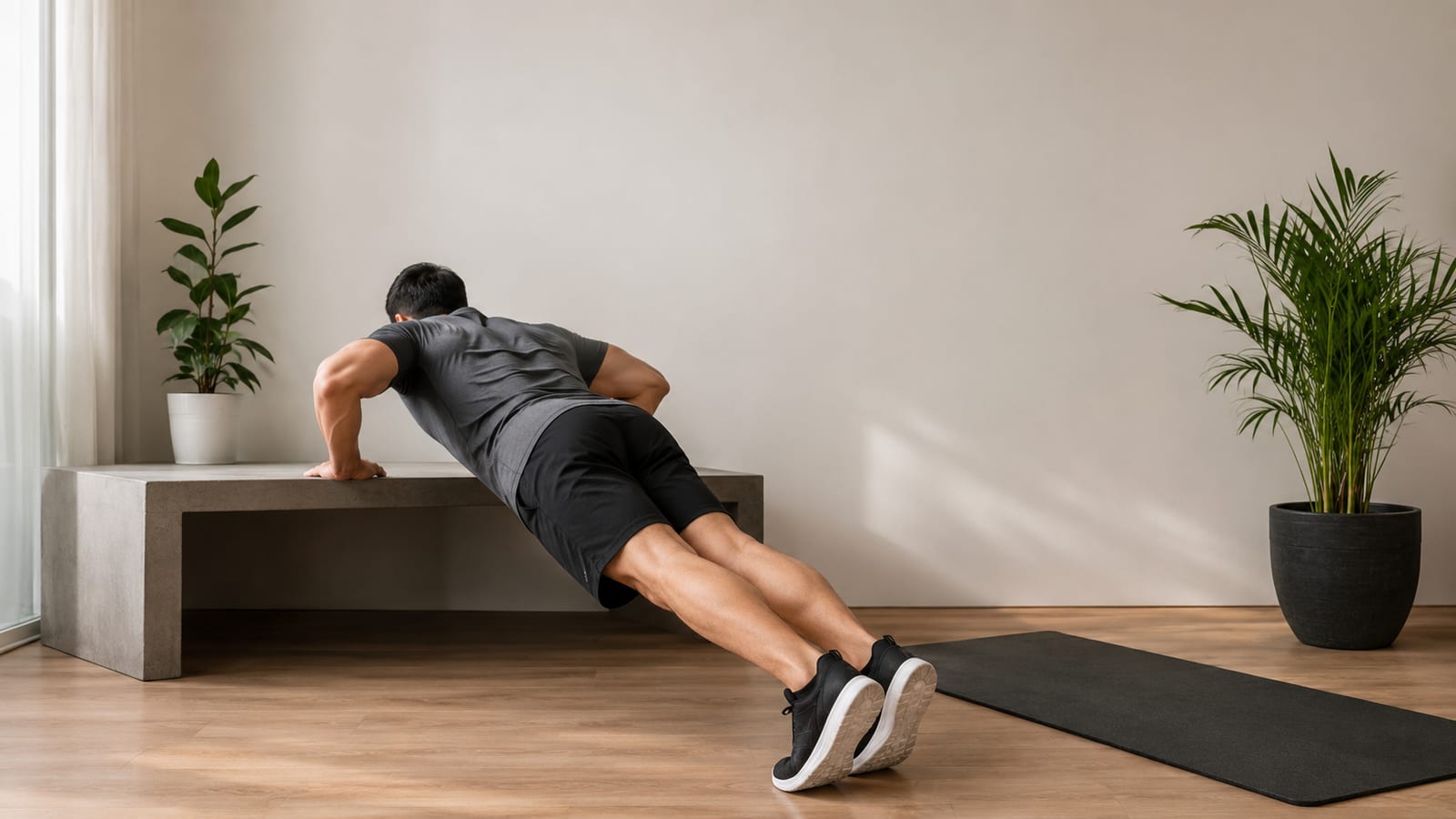
A beginner session should use five basic patterns:
- Squatting
- Pushing
- Stepping
- Hinging
- Bracing your trunk
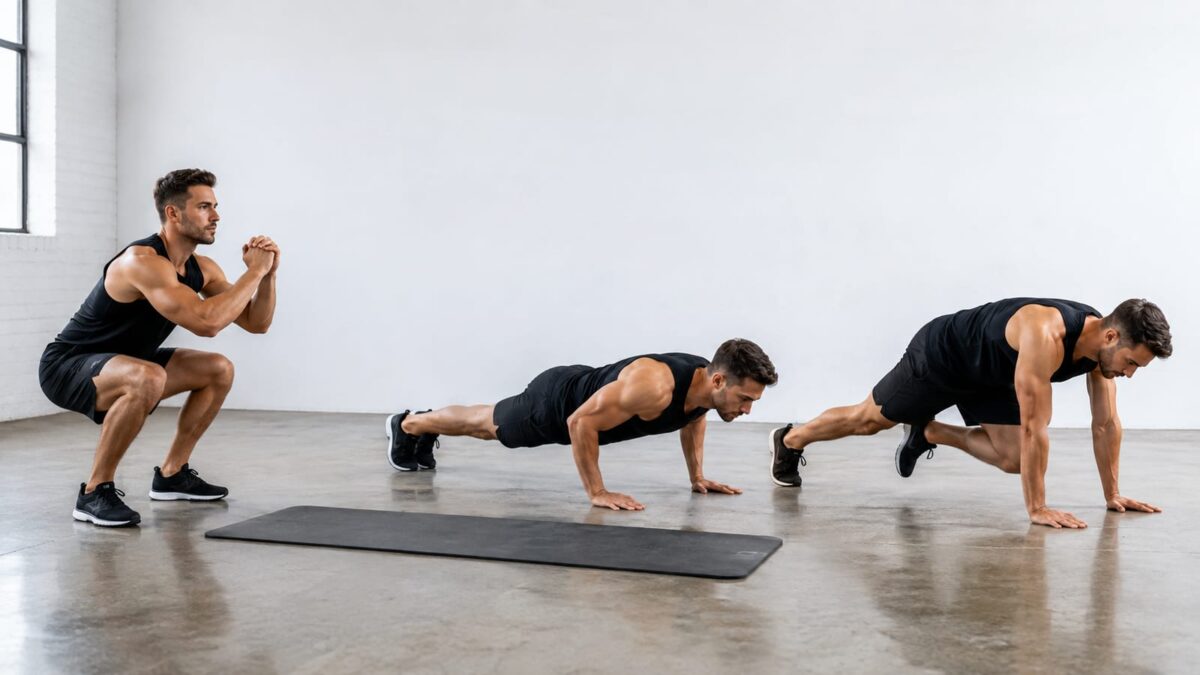
Start with controlled squats, incline push-ups, step-backs, hip hinges, and plank variations. These exercises are easy to scale, require little space, and give you clear technique standards.
Use a wall, countertop, bench, or sturdy table to change the difficulty. Incline push-ups are a better starting point than ugly floor push-ups. The goal is to build quality reps before you make the movement harder.
Beginner full-body calisthenics HIIT
This is the best starting point for most beginners because it trains the whole body without demanding jumping or advanced skills.
- Bodyweight squat
- Incline push-up
- Reverse step-back
- Standing hip hinge
- Elevated plank or knee plank
Perform each movement for a controlled work interval. Then rest until you can start the next exercise without rushing. Complete several rounds based on your current fitness.
Keep your reps clean:
- Squat to the deepest range you can control.
- Keep your ribs and pelvis steady during push-ups.
- Step back softly instead of dropping into the lunge.
- Push your hips behind you during the hinge.
- Brace your trunk without holding your breath for the entire set.
Stop a set when your range of motion shortens or your position changes. You don’t earn extra fat loss by turning a squat into a quarter-rep bounce.
If you can’t control the movement, reduce the incline, shorten the interval, or take more rest. The right version is the hardest one you can repeat well.
Combining bodyweight strength training with HIIT
Pair controlled strength exercises with short periods of faster work. Keep the strength movement first, then add speed only if your technique stays stable.
For example, use a push-up variation, squat variation, step-back, and plank. Move with intent during each work interval, but don’t treat every exercise like a sprint.
The common mistake is turning bodyweight strength work into random cardio. Fast push-ups become partial reps. Squats lose depth. Planks become sagging floor rests. Your heart rate may rise, but the target muscles stop doing useful work.
Use this standard:
| Exercise type | What to focus on | Easier option | Harder option |
|---|---|---|---|
| Push | Full range and steady trunk | Wall or incline push-up | Floor or decline push-up |
| Squat | Controlled depth and balance | Box squat | Split squat |
| Step | Quiet foot placement | Short step-back | Reverse lunge |
| Hinge | Hips move back, spine stays steady | Small-range hinge | Single-leg hinge |
| Core | Braced position and breathing | Elevated plank | Floor plank or harder lever |
You can also separate strength and HIIT. Perform your controlled calisthenics work first, then finish with a short conditioning block. This works better than forcing every set to be fast.
For more bodyweight strength ideas, use this guide to bodyweight exercises for muscle gain. Pick movements you can measure instead of changing exercises every session.
Is a 20-minute calisthenics HIIT workout effective?
A focused 20-minute session can be effective when you perform it consistently and recover from it. It can improve conditioning, add useful training volume, and support fat loss.
It is not a shortcut around nutrition, daily activity, or sleep. Twenty minutes of hard work does not cancel a week of poor recovery.
A good 20-minute session includes:
- A brief warm-up
- Four repeatable bodyweight movements
- Moderate work intervals
- Enough rest to keep technique intact
- An easy cooldown
The best default workout uses a squat, incline or floor push-up, step-back, and plank. Keep the same exercises long enough to track progress. Change the variation only when your current version becomes too easy or stops fitting your joints.
You should finish tired but functional. If you need the rest of the day to recover from a short circuit, the session was too hard for its role.
A 20-minute calisthenics HIIT workout is effective when it helps you train consistently, maintain good reps, and stay active outside the session. That is the standard.
Structuring the warm-up, intervals, and cooldown
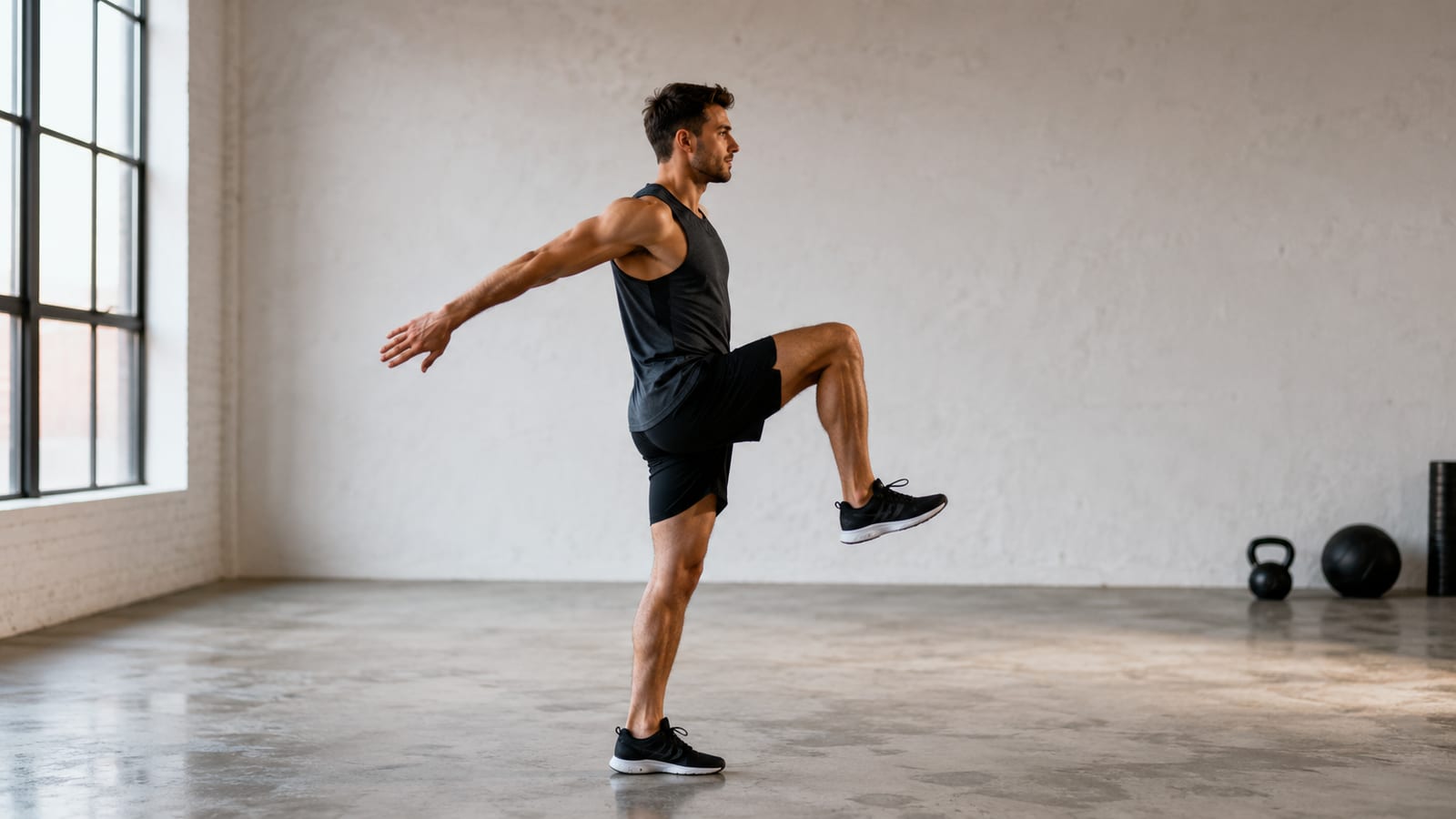
Use a warm-up that prepares the exact movements you’ll perform. The American Heart Association recommends a 5- to 10-minute warm-up before vigorous exercise. The more intense the activity, the longer your warm-up should be.
Start with easy movement, then rehearse the workout patterns:
- March in place or walk around the room.
- Circle your arms and move your shoulders.
- Perform easy squats.
- Practice slow step-backs.
- Use a few incline push-ups.
- Hold a short, easy plank.
Your first work interval should feel controlled. Don’t begin at full speed and hope your body catches up.
A practical session template
- Warm up with easy movement and practice reps.
- Perform the squat variation.
- Rest until your breathing settles enough for clean reps.
- Perform the push-up variation.
- Rest before the next movement.
- Perform the stepping or lunge variation.
- Rest again.
- Finish with the plank variation.
- Repeat the circuit while technique remains consistent.
- Cool down with easy walking and relaxed breathing.
Use equal work and rest at first. If your form falls apart, increase the rest. If every round feels easy and your reps remain crisp, make one exercise harder before making the whole session faster.
Cooldowns don’t need to become a second workout. Walk slowly, breathe normally, and use gentle stretches for muscles that feel tight.
How do you build a calisthenics HIIT workout? My top fat-burning tips
The best workout depends on your joints, training history, space, and ability to repeat the movements. There is no prize for choosing the most dramatic circuit.
Beginner full-body calisthenics HIIT
Verdict: keep it as your starting point.
Use controlled squats, incline push-ups, step-backs, and plank variations. Take generous rest and stop each movement before your technique changes.
This option suits people who are new to training, returning after a long break, or carrying extra body weight. It also gives you the clearest path to progression.
Track the incline, reps, range of motion, and completed rounds. Once those improve, the workout is working.
20-minute strength-first HIIT
Verdict: this is the best default workout.
Use a brief warm-up, four repeatable bodyweight exercises, moderate intervals, and a cooldown. Choose a squat, push, step, and trunk movement.
This setup gives you enough structure to train hard without turning the session into a random exercise playlist. It also fits a busy week better than a long routine you keep missing.
For another time-efficient approach, compare it with this minimal-equipment strength routine. Strength work remains useful even when fat loss is the main goal.
Low-impact fat-loss circuit
Verdict: choose this if jumping bothers your joints or your conditioning is limited.
Use brisk step-ups, reverse lunges, incline push-ups, and marching. Keep the pace steady and make each rep deliberate.
You don’t need burpees, jump squats, or mountain climbers to make a session demanding. Your joints get a vote, and low-impact work lets many people train more often.
Raise the challenge by using a higher step, a lower push-up incline, a deeper lunge, or a faster march. Change one factor at a time.
Advanced bodyweight power circuit
Verdict: use it only after your basic technique is solid.
Harder options can include floor push-ups, split squats, skater steps, squat thrusts, and faster plank variations. Add difficulty or more quality work instead of chasing reckless all-out intervals.
Advanced training should still be measurable. Track your rounds, clean repetitions, movement range, and rest. If your reps become frantic, you’ve increased fatigue without improving the training signal.
Calorie burn estimates have limits
No honest answer can give you one exact calorie figure for every calisthenics HIIT workout. Calorie use changes with your body size, exercise selection, pace, work duration, rest, conditioning, and what you do after the session.
A circuit with step-ups and incline push-ups won’t demand the same energy as a circuit with burpees and jumping lunges. A fitter person may work harder at the same pace, but they may also move more efficiently.
Fitness trackers don’t fix this problem. They estimate energy use from limited information, and the estimate can be off. Treat the number as a rough prompt, not a permission slip to eat back every displayed calorie.
Track outcomes that matter more:
- Body weight trends over time
- Waist or clothing changes
- Workout performance
- Daily movement
- Hunger and recovery
- Sleep quality
If fat loss stalls, first check your food intake and daily activity. Don’t immediately add more HIIT. More fatigue is not automatically more progress.
Choosing a recoverable weekly frequency
Most people should begin with a recoverable weekly frequency and leave room for walking and strength training. Start with one or two HIIT sessions, then judge your recovery before adding more.
Adults should perform muscle-strengthening activities on at least 2 days a week. Your calisthenics sessions can support that goal if they include challenging pushing, squatting, hinging, and trunk work.
However, a fast circuit is not the same as complete strength training. You may still need slower sets, harder variations, or separate strength sessions to train each movement properly.
Balance HIIT with:
- Regular walking
- At least two weekly strength-focused days
- Easier movement between hard sessions
- Adequate sleep
- Full rest when performance keeps dropping
Avoid placing demanding sessions on consecutive days at first. If your legs stay heavy, your joints ache, or your reps decline for several workouts, reduce the frequency or effort.
The plan has to fit your week. A smaller amount you repeat beats a larger amount that breaks your routine.
Progress without punishment
Progress by improving the training quality before increasing the suffering. A harder workout is useful only if it produces better work and you can recover from it.
Track:
- Completed rounds
- Clean repetitions
- Range of motion
- Exercise variation
- Interval quality
- Rest needed between efforts
Use one progression at a time:
- Keep the same exercise and add a clean repetition.
- Improve your range of motion.
- Use a slightly harder variation.
- Complete more consistent rounds.
- Reduce rest only after the earlier steps are stable.
- Increase speed last.
For example, move from wall push-ups to a higher incline, then a lower incline, then floor push-ups. Don’t jump straight to fast floor reps because the variation looks more serious.
Leave a small amount in reserve during most intervals. Finish hard enough to count, but not so hard that the next session becomes a negotiation with your sore muscles.
Eating and recovering for fat loss

Eat enough to train well while keeping your calorie deficit moderate. Protein should appear in regular meals, and your food choices should support training, sleep, and daily movement.
You don’t need a dramatic food rule. You need meals you can repeat while losing fat. Include a useful protein source, produce, carbohydrates that help you train, and enough fluid to avoid starting every session underhydrated.
Recovery is part of the fat-loss plan. Sleep, rest days, and lower-intensity activity help you keep performance high enough to train consistently.
Watch for warning signs:
- Your normal exercises feel harder each week.
- Your resting motivation keeps falling.
- Your sleep gets worse.
- Your joints stay irritated.
- Your hunger becomes difficult to manage.
- You stop moving much outside workouts.
If those signs appear, reduce HIIT before reducing all activity. Keep walking and easier training while your body catches up.
A calorie deficit that destroys your workouts is too aggressive for long-term progress. Fat loss should make your plan more sustainable, not turn every session into a test of willpower.
Who should skip high-intensity calisthenics for now?
Skip hard intervals when you’re injured, sick, severely sleep-deprived, or unable to control the basic movements. Use easy walking and simple mobility work until you can train without worsening the problem.
If you have a medical condition or haven’t exercised for a long time, get appropriate medical guidance before starting vigorous exercise. You don’t need to prove anything in the first session.
Also skip the advanced power circuit if you can’t perform the easier versions with repeatable technique. Start with the beginner option and earn the next increase.
HIIT is a tool. It isn’t a test of character.
The best way to start this week
Use the 20-minute strength-first format with four movements:
- Squat variation
- Incline push-up
- Reverse step-back
- Plank variation
Warm up first, use controlled intervals, rest enough to keep your form, and write down what you completed. Repeat the same session before changing the exercises.
Then add walking on other days and include muscle-strengthening work on at least 2 days each week. Adjust the difficulty only when your current version feels controlled and repeatable.
Good reps before more speed. Small increases add up.
FAQ
Can you do calisthenics HIIT without equipment?
Yes. You can perform squats, push-ups, step-backs, planks, marching, and squat thrusts with no equipment. A wall, countertop, or sturdy chair can help you scale exercises safely.
Is calisthenics HIIT better than steady-state cardio for fat loss?
Neither method wins for everyone. HIIT takes less time but creates more recovery demand, while steady-state cardio is often easier to repeat. Choose the option that fits your schedule and lets you stay active consistently.
Can calisthenics HIIT build muscle?
It can build muscle when the exercises challenge you, your repetitions use a full range of motion, and you progress over time. However, advanced lifters may eventually need harder variations or external resistance for continued progress.
Should you train calisthenics HIIT before or after lifting weights?
Do the work that matters most first. If strength progression is your priority, lift or perform controlled calisthenics before HIIT. If conditioning is the main goal, place the intervals first while accepting that strength performance may drop.
What should you do if your knees hurt during a circuit?
Stop the painful movement and switch to a lower-impact version. Try shallow squats, controlled step-backs, marching, or a higher incline for push-ups. Persistent pain needs assessment instead of more determination.
Related on this blog