
Train Hard Without Turning Pain Into Progress

 0
0
 0
0 “No pain, no gain” is bad fitness advice. Productive training can feel hard, tiring, and uncomfortable, but sharp pain, worsening symptoms, and forced suffering are warning signs, not proof of progress. No pain no gain: why this fitness saying isn’t always true comes down to one mistake: confusing effort with damage. You need enough effort to challenge your muscles and heart, but you don’t need to hurt yourself to improve.
Last updated: 2026-08-21
What does the “work hard” mindset get right – and what does it get wrong?
The saying gets one part right: easy effort forever won’t force much adaptation. Your body needs a challenge. Strength training, aerobic work, and skill practice all require focused effort that rises above your normal routine.
However, pain isn’t a reliable measure of that challenge. You can have a productive workout without soreness, a deep burn, or a dramatic collapse on the floor. You can also feel intense pain during a workout that does nothing useful for your strength or fitness.
The better standard is measurable progress:
- You add weight or reps with controlled technique.
- You move through a fuller range of motion.
- You perform the same work with less strain.
- You recover and come back stronger.
- You repeat the session without worsening symptoms.
A hard set should be hard enough to count. It shouldn’t leave you unable to train the movement again for an unreasonable stretch of time. For muscle-building work, most sets can finish with 1 to 3 clean reps in reserve. That means you stop before technique breaks down, while still giving the target muscle a serious reason to adapt.
Soreness can happen after useful training. It can also happen after poor exercise selection, too much volume, or a workout you weren’t ready to recover from. It’s feedback, not a score.
How can you tell productive training discomfort from pain?

Normal exertion usually builds as the set continues. Your muscles feel tired, your breathing gets harder, and the last few reps slow down. Once you stop, that feeling should settle rather than keep escalating.
Pain that deserves caution often feels different. Use this quick check during a set:
| What you feel | What it may mean | What to do |
|---|---|---|
| Muscle fatigue or a temporary burn | The working muscles are under stress | Finish with clean technique if the feeling stays controlled |
| Dull muscle soreness after training | A normal response to unfamiliar or demanding work | Use easy movement and assess how it changes |
| Sharp, stabbing, or tearing pain | Possible tissue irritation or injury | Stop the set and reassess |
| Joint pain or instability | The exercise may not suit your current position or load | Reduce the load, change the movement, or stop |
| Numbness, tingling, or radiating pain | Possible nerve involvement | Stop and seek professional advice |
| Symptoms that worsen with each rep | The movement is aggravating the problem | Do not push through it |
Your joints get a vote. A muscle burn during a leg extension is not the same signal as a sharp knee pain during the same exercise.
Also, pay attention to timing. If the discomfort appears only after the set and fades quickly, it may be ordinary exertion. If it changes your movement during the set, stop treating it as a toughness test.
Can you make progress without training to pain?
Yes. Repeatable basics drive progress better than punishment. Use sound technique, choose stable exercises, track your work, eat enough to support training, and recover before the next session.
For strength training, build around patterns you can perform consistently:
- A squat or leg press
- A hip hinge
- A horizontal press
- A row or pulldown
- One or two smaller movements for arms, shoulders, or calves
Start with a manageable amount of work. Keep most sets in a rep range that lets you control the weight and record clear progress. Then earn the next increase instead of forcing it.
Progressive overload does not mean adding weight every workout no matter what. It can mean an extra rep, better control, a longer range of motion, or the same load with less strain. Change one variable at a time so your logbook tells you what improved.
You don’t need to chase soreness, either. If you can train a muscle, recover, and improve your performance over time, the plan is doing its job. Read myths about muscle soreness if soreness has become your main way of judging a workout.
Cardiovascular progress works the same way. The Physical Activity Guidelines for Americans recommend 150 minutes of moderate-intensity aerobic activity each week for adults. They also recommend muscle-strengthening activity on at least 2 days per week.
That work can include brisk walking, cycling, swimming, or other activities you can repeat. The guidance also lists 75 minutes per week of vigorous-intensity aerobic activity as an alternative to moderate activity. You don’t need every session to feel brutal.
Is mild soreness normal, and when should you worry?
Mild muscle soreness can follow unfamiliar training or a sharp increase in workload. Delayed-onset muscle soreness, or DOMS, typically starts 12 to 24 hours after a workout and peaks after about 48 hours. It often resolves within 3 to 5 days.
DOMS usually feels like a broad ache or stiffness in the muscles you trained. Normal movement may feel uncomfortable, but your basic function remains intact. Light activity can help you move, although you don’t need to force another hard session onto a sore muscle.
Be more careful if you notice:
- Severe soreness that limits normal movement
- Swelling or unusual warmth
- Loss of strength that doesn’t improve
- Trouble walking, lifting, or bearing weight
- Pain in a joint rather than the working muscle
- Symptoms that persist, spread, or get worse
Soreness isn’t required for growth. A session that leaves you sore for days isn’t automatically better than one that lets you train well again soon.
If you’re unsure, compare the symptom with your normal movement. If you can’t use the body part normally, stop guessing and get assessed.
When should you adjust a workout instead of pushing through?
Adjust the workout as soon as symptoms or technique start moving in the wrong direction. Waiting until the final rep often turns a small problem into a larger one.
Use this order:
- Reduce the load. Take enough weight off to restore control.
- Shorten the range of motion. Work only through a pain-free range for the moment.
- Slow the movement. Remove momentum and check whether the symptom changes.
- Change the exercise. Use a variation that places the joint in a more comfortable position.
- End the movement. Stop if symptoms continue or your form keeps deteriorating.
- Rest and reassess. Don’t test the same painful movement repeatedly during one session.
For example, a squat that causes mild discomfort at the bottom may improve when you reduce the load and use a shorter range. A sharp pain that appears with every rep is different. Skip that movement and choose a safer option until you know what’s causing it.
Do not rush heavy compounds because you’re trying to prove a point. Productive training depends on repeatable technique, not one ugly set that beats your joints into submission.
What would a physical therapist say about training through pain?
A physical therapist would treat pain as useful information that needs context. Pain is a protective warning signal, but it doesn’t always show the exact amount of tissue damage. The right response depends on the symptom, the movement, the injury history, and how the problem changes over time.
That means “stop everything forever” is often as poor as “ignore it and push harder.” Many problems improve with graded loading, where you slowly reintroduce a tolerable amount of movement and increase it as symptoms settle.
A therapist may look at:
- Which movement triggers the pain
- Whether the pain changes your form
- How symptoms respond later that day
- How you move under lighter and heavier loads
- Whether weakness, numbness, or instability is present
- What training, work, and daily activities add to the problem
The practical lesson is clear. Don’t use pain as a command to quit every activity, and don’t use it as a badge you’re expected to ignore. Find the amount of work you can perform with control, then build from there.
If you’re managing a recurring condition, tailored exercise for chronic pain is a better starting point than copying a painful workout from someone else.
Which body warning signals should a lifter never dismiss?
Some symptoms deserve an immediate stop. Don’t bargain with sudden sharp pain, a tearing feeling, or a loud pop followed by weakness. Continuing the set won’t reveal extra toughness. It may only add stress to an already irritated area.
Stop the exercise and seek prompt medical advice for:
- Sudden severe pain
- A pop followed by swelling or weakness
- Numbness or tingling
- Pain that radiates down an arm or leg
- A joint that locks, gives way, or feels unstable
- A sudden change in how you walk or lift
- Swelling that appears after training
- Inability to bear weight or use the limb normally
- Pain that keeps escalating after you stop
Chest pain, faintness, severe shortness of breath, or unusual dizziness also require immediate caution. Stop exercising and seek urgent medical help when those symptoms are severe or don’t settle.
Recurring pain matters even if it isn’t dramatic. A low-level problem that appears every session is still a problem worth checking.
What are the risks of pushing through an injury?
Pushing through warning signs can worsen tissue irritation and alter how you move. You may shift work away from the painful area, brace differently, shorten a range, or change your stride without noticing.
That compensation can spread the problem. A painful shoulder may change your pressing pattern. A sore knee may change how you squat. The original issue then combines with poor technique and extra fatigue.
You also lose training time. A manageable irritation may need a small adjustment, while an ignored injury can force you to stop the entire movement for much longer. The dramatic session is rarely worth that trade.
Don’t confuse discomfort from effort with pain from a failing movement. If the symptom changes your mechanics, the set has stopped serving its purpose.
How should a time-limited natural lifter train hard without overdoing it?
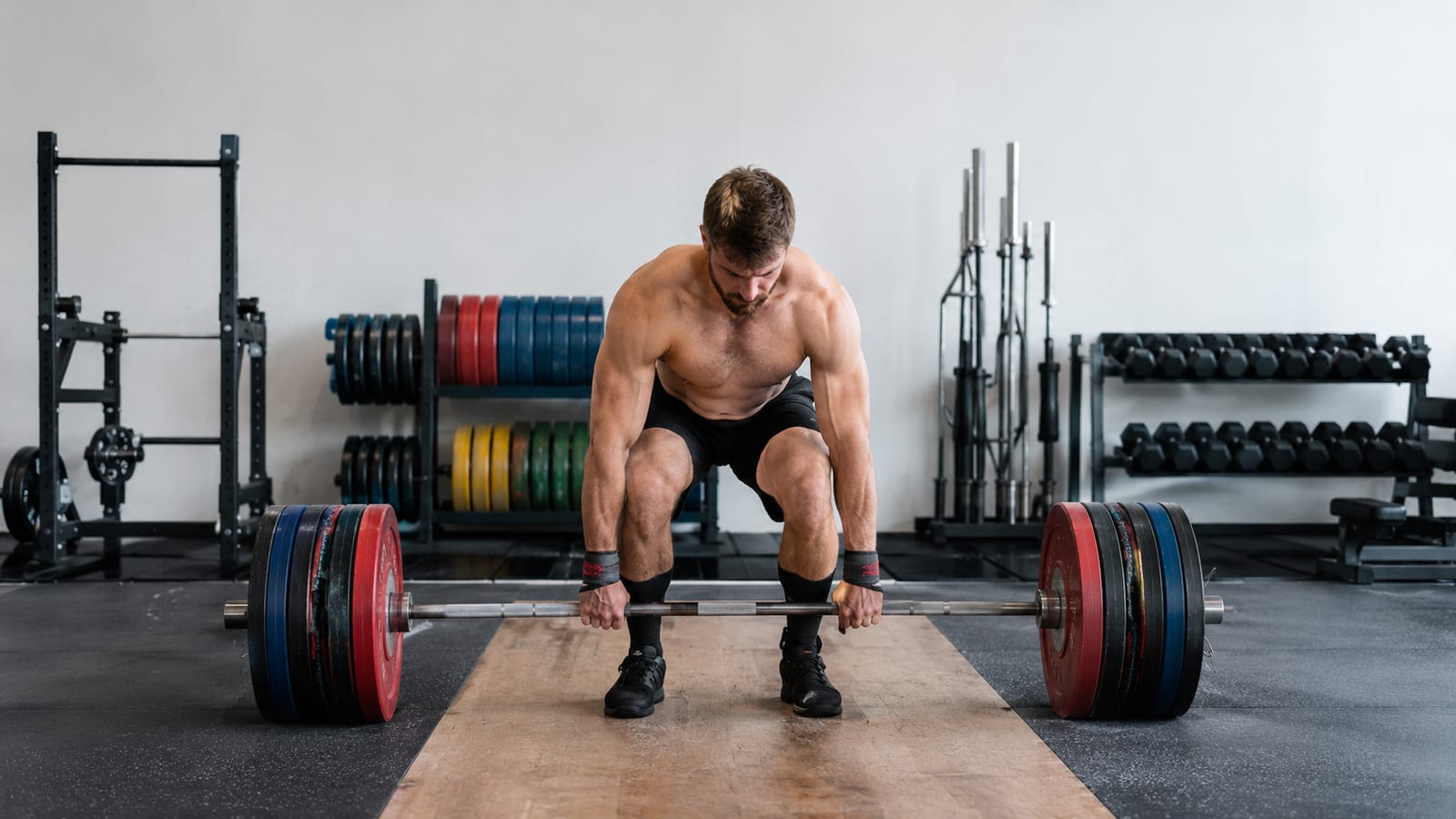
Choose a plan you can repeat during a normal week. Three focused strength sessions can work well for a natural lifter with limited time. Each session can include a leg movement, hip hinge, press, pull, and a short arm or shoulder pairing.
Keep most exercises to a manageable number of productive sets. Rest enough to repeat your technique. Pair smaller movements if time is tight, but don’t rush heavy squats, deadlifts, presses, or rows.
Use this framework:
- Train with intent, not panic.
- Keep 1 to 3 reps in reserve on most working sets.
- Record the load, reps, and any symptoms.
- Add weight or reps only after you own the current work.
- Keep technique consistent from the first rep to the last.
- Reduce work when sleep, food, or recovery falls apart.
- Leave painful movements out until you can perform a suitable variation.
- Return to the original exercise gradually.
The official Physical Activity Guidelines for Americans, second edition were published in 2018. They support regular activity, not a requirement to suffer through every session.
Only 47.2% of U.S. adults meet at least 150 minutes per week of moderate-intensity aerobic activity. The answer to that gap isn’t telling people to train harder until they quit. It’s helping them build sessions that fit their schedule and recoverable effort.
A sustainable plan may feel simple on paper and demanding in practice. That’s fine. Beat the logbook, protect your joints, and come back ready to train.
FAQ
Does muscle growth require soreness?
No. Muscle growth requires enough training stimulus, adequate food, and recovery. Soreness can follow a new exercise, but familiar productive training may cause little soreness.
Should you stretch an injured muscle?
Not automatically. Stretching can aggravate some injuries, especially when it reproduces sharp pain. Use comfortable movement and get an assessment if normal activity remains limited.
Can you train another body part while one area hurts?
Sometimes. You may be able to train unaffected areas, but avoid positions that increase the painful symptoms. Keep the session controlled and stop if the problem changes your movement.
Is a high heart rate the same as a better workout?
No. A higher heart rate shows greater cardiovascular demand, not better results by itself. Choose an effort that matches the session’s purpose and leaves you able to recover.
How long should you wait before returning to a painful exercise?
Return when normal movement is comfortable and the exercise can be performed with controlled technique. Start lighter than your previous working load, then increase only if symptoms stay stable.
Related on this blog