Own Strict Pull-Ups First, Then Master the Load

 0
0
 1
1 Keep weighted pull-ups simple. If you want to know how to master weighted pull-ups, first own strict bodyweight reps. Then add the smallest practical load, use the same range of motion every time, and log every productive set. Train hard enough to count, but stop before reps turn into kicks, neck cranes, and half-finished pulls. Eat enough, recover, and earn the next increase.
Last updated: 2026-08-10
Why are weighted pull-ups worth mastering?
Weighted pull-ups build measurable upper-body strength. They train your lats, upper back, biceps, forearms, grip, and trunk while forcing you to control your body under load.
They also give you a clear progression target. Bodyweight pull-ups can become hard to track once you can perform long sets. Adding external weight lets you add weight or reps without turning every workout into an endurance test.
However, weighted pull-ups aren't a complete back program. Rows still train positions that vertical pulling misses. Direct arm work can also help if your biceps or forearms limit the movement.
Keep weighted pull-ups if you want stronger vertical pulling and can perform them without joint pain. Skip them for now if your bodyweight technique changes from rep to rep.
Are you ready to add weight to your pull-ups?
Add weight only after you can repeat strict bodyweight pull-ups without swinging, kicking, or reaching with your chin. You don't need an impressive maximum. You need control that survives fatigue.
Check these standards first:
- Start each rep from a controlled hang.
- Keep your shoulders active rather than hanging from loose joints.
- Brace your trunk and control your legs.
- Pull until your chin clears the bar without craning your neck.
- Lower under control to the same bottom position.
- Finish with clean reps still available.
- Train without shoulder, elbow, wrist, or hand pain.
Shoulder control matters because external load makes every loose position more expensive. If you drop into the bottom and bounce straight back up, fix that before attaching a plate.
If full bodyweight reps aren't ready, use controlled assisted reps, pulldowns, and eccentric pull-ups. This guide to effective negative-rep training explains how to use the lowering phase without making every set a prolonged grind.
Own the movement before you load it. Adding plates only makes a weak position heavier.
Should you use a dip belt or a weighted vest?
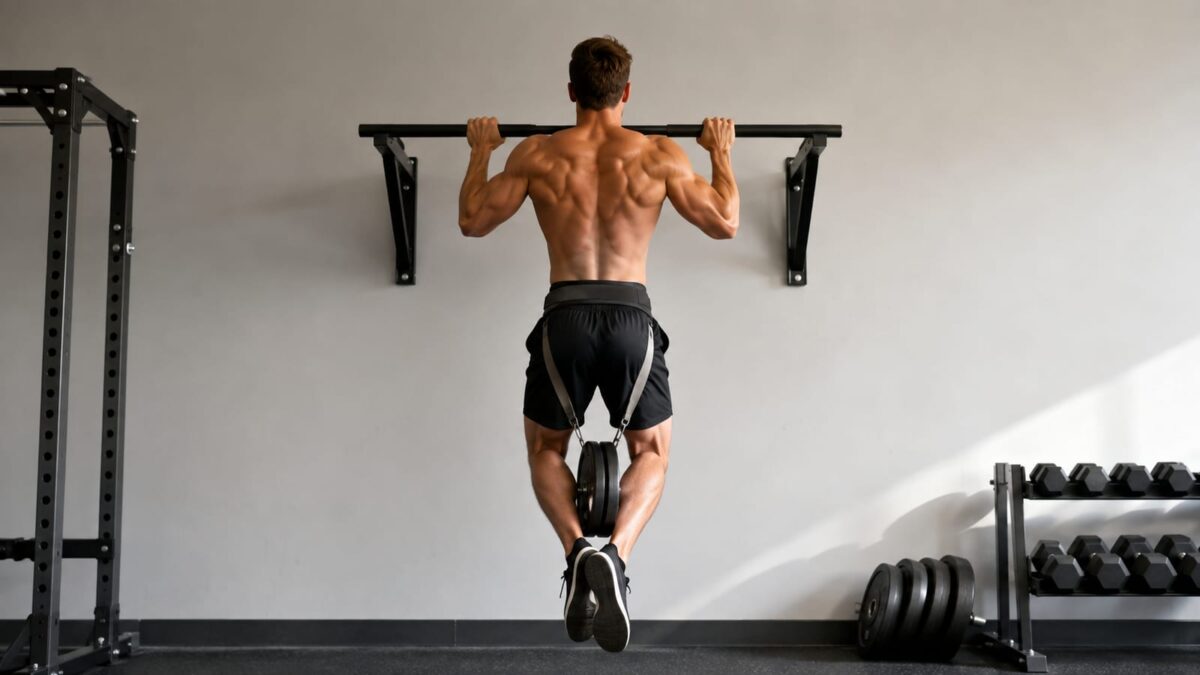
Use a dip belt for long-term weighted pull-up progress. Choose a weighted vest when quick setup and a close-fitting load matter more than loading room.
| Option | Keep it for | Main limitation | Verdict |
|---|---|---|---|
| Dip belt | Gradual loading, heavier work, easy plate changes | The plate can swing if the chain is too long | Best general choice |
| Weighted vest | Fast setup, lighter work, circuits, limited equipment | Load can press against your chest and restrict movement | Useful, but less flexible |
| Dumbbell between the feet | Occasional light loading | Grip and leg position can fail before your back does | Temporary solution |
| Loaded backpack | Home training with no other option | The load may shift and pull you out of position | Use only if secured well |
A dip belt leaves your torso free and makes small load changes easy. However, hang the plate high enough that it doesn't swing between your knees.
A vest is faster. It also keeps the load close to your body. Still, some vests bunch around the shoulders or press into the ribs at the bottom of the rep.
For a time-limited natural lifter, the belt wins. Setup takes little time, progression is easy to track, and it won't turn your pull-up into a wrestling match with a stuffed vest.
How much weight should you start with?
Start lighter than your confidence suggests. Your first load should let you keep the same grip, hang, pull height, and lowering speed as your bodyweight reps.
Use your training level to make the call:
| Training level | Starting approach | What earns more load |
|---|---|---|
| New to weighted pull-ups | Use the lightest practical external load | Every rep matches your bodyweight technique |
| Comfortable with weighted work | Choose a load that allows several clean reps with some left in reserve | You reach the top of your planned rep range across all work sets |
| Strong and experienced | Build from a known, repeatable training load | Performance improves without shortened reps or slower recovery |
Don't base the starting load on a bodyweight percentage or another lifter's video. Limb length, grip, body mass, and pull-up experience all change what a given plate feels like.
If the smallest plate causes a large drop in rep quality, return to bodyweight work. You can progress with slower lowering, cleaner pauses, or more total quality reps until the jump becomes manageable.
What is the correct weighted pull-up technique?

Use a grip and body position you can repeat. The goal isn't to manufacture the widest possible pull-up. It is to make your back and arms produce force through a controlled range.
Follow these steps:
Set the load securely.
Keep a belt plate close enough to reduce swinging. Check the chain, clip, vest straps, or backpack before you hang.Take a firm grip.
Use an overhand grip around shoulder width or slightly wider. If that bothers your shoulders, a neutral-grip pull-up is a sound alternative.Build a controlled hang.
Straighten your elbows while keeping light tension around your shoulders. Don't force a deep hang that feels unstable.Brace before you pull.
Tighten your trunk and glutes. Keep your legs still, with the load hanging beneath you rather than drifting forward.Drive your elbows down.
Pull your upper chest toward the bar. Avoid throwing your head back to create the appearance of a finished rep.Clear the bar cleanly.
Your chin should pass the bar because your body rose, not because your neck stretched upward. Use the same finish on every rep.Lower under control.
Let your elbows straighten while keeping the load steady. Reset your brace before the next pull.
Grip choice can change comfort and muscle emphasis. This breakdown of pull-up grip variations will help if your current grip irritates your wrists or elbows.
Film a side view now and then. If the final reps lose range, swing, or take a different path, the load is too heavy for productive work.
Which rep ranges build weighted pull-up strength?
Use low-to-moderate reps for most weighted pull-up work. This range keeps the movement specific to strength while giving you enough practice to improve technique.
Higher reps can build muscle, but they often become limited by grip, breathing, or general fatigue. A systematic review and meta-analysis found no differences in muscle hypertrophy between resistance-training loads in its overall or subgroup analyses when sets were taken to volitional failure. In plain terms, muscle growth can occur across a broad range of loads when the effort is high enough.
That doesn't mean every set should reach failure. The finding concerns muscle growth, not the best way to practise a demanding weighted skill or manage joint stress.
Keep most sets shy of failure. End the set when you could still perform a clean rep or two, especially with heavier loading. Your final ugly rep rarely gives back enough to justify the fatigue and technique drift.
Use higher-rep bodyweight pull-ups or pulldowns for extra back volume. Save the weighted movement for quality reps you can compare in the logbook.
How should you progressively overload weighted pull-ups?
Progressive overload means improving a controlled performance. It does not mean clipping on more weight whenever you feel energetic.
Use this sequence:
- Pick a manageable load and a low-to-moderate rep range.
- Record the load, reps, grip, and range of motion.
- Keep the load steady until you reach the top of the range across your planned sets.
- Add the smallest practical amount.
- Accept that reps may fall after the increase.
- Build them back up without changing your standards.
Change one variable at a time. If you add weight, change grip, shorten the bottom, and start using momentum together, your logbook tells you nothing useful.
Progress can also mean cleaner reps, less swinging, a stronger finish, or better control at the bottom. Still, don't use tiny technique changes to pretend a stalled lift is moving.
Take a lighter training period when performance drops across repeated sessions and normal loads feel unusually slow. Reduce the load or total work, keep the reps clean, and return when your elbows, grip, and general energy recover.
How often should you train weighted pull-ups?
Train weighted pull-ups often enough to practise them, but leave recovery days between hard sessions. Most natural lifters don't need daily pulling or repeated maximum attempts.
A useful week pairs a heavier exposure with lighter pulling later. The lighter work can use bodyweight pull-ups, assisted reps, or a pulldown variation. It should support the heavy work rather than compete with it.
Place heavy rows carefully. Hard rows, deadlifts, curls, and weighted pull-ups all draw from your grip, elbows, and upper back. If everything lands together, the pull-up often stalls first.
Use these checks before adding more weighted work:
- Your reps are improving or staying stable.
- Your elbows and shoulders feel normal during warm-ups.
- Your grip isn't still tired from the previous session.
- Your pulling technique holds across all work sets.
- Your next workout doesn't suffer.
If performance declines, cut extra pulling before blaming your weighted pull-up plan. The plan has to fit your week.
How should you structure a weighted pull-up workout?

Put weighted pull-ups early in the session. Heavy vertical pulling deserves fresh grip, stable shoulders, and enough patience to rest properly.
Use this simple session order:
General warm-up
Raise your body temperature and move your shoulders through comfortable ranges.Easy pulling preparation
Perform light pulldowns, assisted pull-ups, or controlled bodyweight reps. Stop well before fatigue.Load-specific warm-ups
Add weight in small stages. Treat each rep as technique practice.Weighted work sets
Use low-to-moderate reps and leave clean reps in reserve. Rest until your grip, breathing, and setup are ready again.Back-off pulling
Use easier bodyweight reps or a pulldown if you need more muscle-building work.Assistance work
Add a row, curl, rear-shoulder exercise, or grip movement based on what limits you.
Stop when extra work no longer serves a clear purpose. More pulling isn't useful if tomorrow's elbow pain or grip fatigue ruins the next session.
Keep the session simple on paper and demanding in practice. Warm up, perform your productive sets, add focused assistance, and leave.
How do food and recovery affect weighted pull-up progress?
Weighted pull-ups respond to the same basics as every other strength lift. You need enough food to support training, enough protein to repair tissue, and enough sleep to recover and come back stronger.
If you're losing bodyweight, pull-ups may feel easier because you're lifting less total mass. However, aggressive food restriction can reduce training performance and recovery. Track external load and bodyweight so you know what actually changed.
Protein should come from regular meals you can repeat. Supplements can help with convenience, but they don't rescue low food intake or poor sleep.
Sleep also affects effort, coordination, and grip. Use the Centers for Disease Control and Prevention sleep guidance if your schedule has become inconsistent.
Meanwhile, manage stress from the rest of your program. Heavy deadlifts, hard rows, pressing, and direct arm work all affect pull-up recovery. Your joints get a vote, even when the logbook says more weight is due.
What mistakes keep lifters from mastering weighted pull-ups?
Most weighted pull-up stalls aren't mysterious. The load increased faster than the lifter's technique and recovery could support.
Avoid these common mistakes:
- Loading too soon: Bodyweight reps are still inconsistent, but a plate gets added anyway.
- Using partial range: The bottom becomes shallower and the chin stops clearing the bar.
- Making oversized jumps: Rep quality collapses because the next available load is too large.
- Training to failure too often: Every session becomes a test instead of practice.
- Ignoring plate swing: The load pulls the body out of position and wastes force.
- Changing grips constantly: You never repeat one version long enough to measure progress.
- Skipping the logbook: Loads and reps become guesses.
- Adding too much assistance work: Rows, pulldowns, curls, and grip work bury the lift they were meant to support.
- Training through joint pain: A manageable warning becomes a longer interruption.
The fix is usually less dramatic than the mistake. Reduce the load, restore full reps, leave reps in reserve, and repeat the same setup until performance moves again.
How do you master weighted pull-ups?
Master weighted pull-ups by turning them into a repeatable strength lift. Use one main variation, fixed technique standards, small load changes, and enough recovery to beat the logbook without grinding yourself down.
Build your progression plan in these steps:
Pass the bodyweight standard.
Perform strict, pain-free reps from a controlled hang to a clear finish.Choose one main grip.
Use overhand or neutral grip based on comfort. Keep it stable long enough to judge progress.Select the lightest useful load.
Your first weighted reps should resemble your bodyweight reps.Set a repeatable rep range.
Use low-to-moderate reps and stop before technique breaks.Log every work set.
Record load, reps, grip, and any clear technique issue.Earn the next increase.
Add load only after you reach the top of your range with consistent reps.Balance heavy and lighter pulling.
Keep the heavier work specific. Use easier variations for added volume.Adjust when recovery slips.
Reduce extra pulling or take a lighter period before forcing another increase.Review your progress over time.
Look for stronger reps, higher loads, cleaner technique, and stable joints.
That is how to master weighted pull-ups without turning each session into a contest. Small increases add up, but only when good reps come before more weight.
FAQ
Can weighted chin-ups replace weighted pull-ups?
Weighted chin-ups can serve as your main loaded vertical pull. The underhand grip usually gives the biceps more work, while some lifters find it less comfortable on the wrists or elbows.
Pick the version that stays pain-free and lets you progress with repeatable technique. You can keep the other grip as lighter assistance.
Should you use lifting straps for weighted pull-ups?
Use straps only if grip clearly prevents your back and arms from getting useful work. However, don't reach for them at the first sign of discomfort.
A secure bare-handed grip has value because weighted pull-ups also train your forearms. Chalk is often enough if sweaty hands are the problem.
How should bodyweight changes affect your logbook?
Record bodyweight beside the external load. A weighted pull-up includes both, so gaining or losing body mass can change the difficulty even when the plate stays the same.
Judge progress through several signs. Look at rep quality, external load, bodyweight, and how much effort each set required.
What can you use if your gym has no dip belt?
A weighted vest is the cleanest replacement. A dumbbell held between the feet can work for light loading, while a tightly secured backpack may suit home training.
Whatever you use, the load must stay fixed. If it shifts, swings, or changes your range of motion, it isn't a useful setup.