Box Squat Essentials for Stronger, Cleaner Reps

 0
0
 0
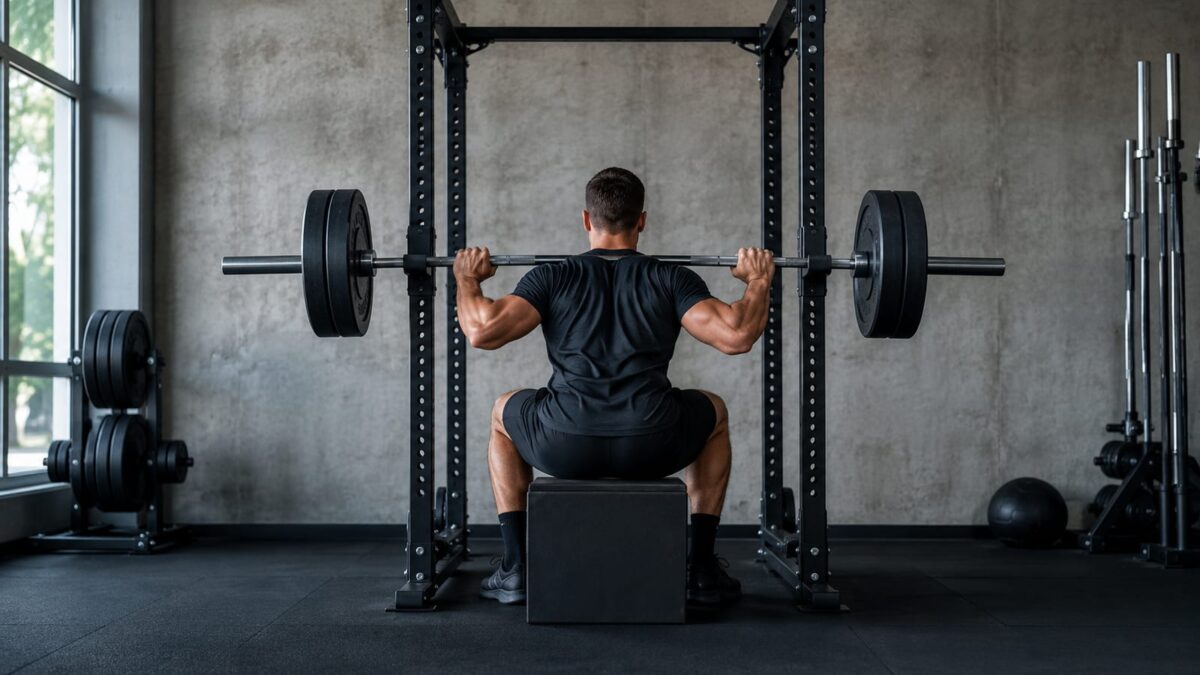
0 Box squats are useful, but they are not magic. To build strength with box squat essentials, use a stable box near parallel, touch it quietly, stay braced through the pause, and stand with intent. Add load only while every rep stays repeatable. Keep the lift if it fixes depth. Skip it if you rock, crash, or dodge a weak position.
Last updated: 2026-08-10
Box squats and when they earn a place
A box squat is a squat performed to a stable box or bench. You descend until your hips make quiet contact, pause briefly, then stand without rocking forward.
The box gives you a clear depth target. That makes the lift useful when one rep reaches parallel and the next stops several inches high.
A squat to a box can also help after a layoff. You can rebuild depth gradually while keeping each rep consistent. However, keep your legs and trunk working instead of settling your full bodyweight onto the box.
Use box squats when they solve one of these problems:
- Your squat gets shallower as the plates get heavier.
- You drop through the final part of the descent.
- You need the same depth on every rep during a training block.
- You hesitate near the bottom without a clear target.
- You want to practise bracing and driving from a brief pause.
Box squatting is still specific to box squatting. It can support your regular squat, but it cannot preserve every part of that skill forever. Return to normal squats if that lift matters to your goals.
Muscles trained by box squats
Box squats train your quadriceps, glutes, adductors, spinal erectors, hamstrings, and abdominal bracing muscles. Your stance, box height, bar position, and torso angle decide which muscles take more of the load.
Your quadriceps straighten the knees as you stand. Meanwhile, your glutes and adductors help drive the hips forward, especially from deeper positions.
The spinal erectors stop your torso from folding. Your abdominal muscles create pressure around your trunk, which keeps your torso fixed under the bar.
The hamstrings support the hip and knee, but box squats do not give them a full training job. Keep a hip hinge or leg curl in your program if hamstring growth matters.
Muscle lists do not build strength. Productive sets, repeatable technique, and gradual loading do. Make the target muscles work hard, leave clean reps in reserve, and earn the next increase.
Setting up a squat to a box
Start with the box, not the bar. If the surface moves, tips, compresses, or forces you to feel around behind you, use something else.
A box around parallel suits most lifters learning the movement. A 14 inch box reaches parallel for most people, but your leg and torso lengths still decide the actual depth. Check your position instead of treating the label as law.
Low box squats may use a 10 or 12 inch box for below-parallel work. However, a low box squat should use no lower than a 10 inch box. Close-stance low box squats can reach 3 inches below parallel, but that is specialised work, not the place to begin.
Use this setup checklist before loading the bar:
- Place the box directly behind your normal squat position.
- Set the rack hooks so you can unrack with flat feet.
- Set the safety arms just below your lowest bar position.
- Use flat, stable shoes or weightlifting shoes that suit your normal squat.
- Choose a stance that lets your knees track with your toes.
- Start with a load that lets you touch the box quietly.
Walk the empty bar out and perform a practice rep before loading it. Adjust the box until you can reach it without stretching backward or changing your stance.
If balance is the main problem, fix your stability under the bar before adding weight.
Box squat form, step by step
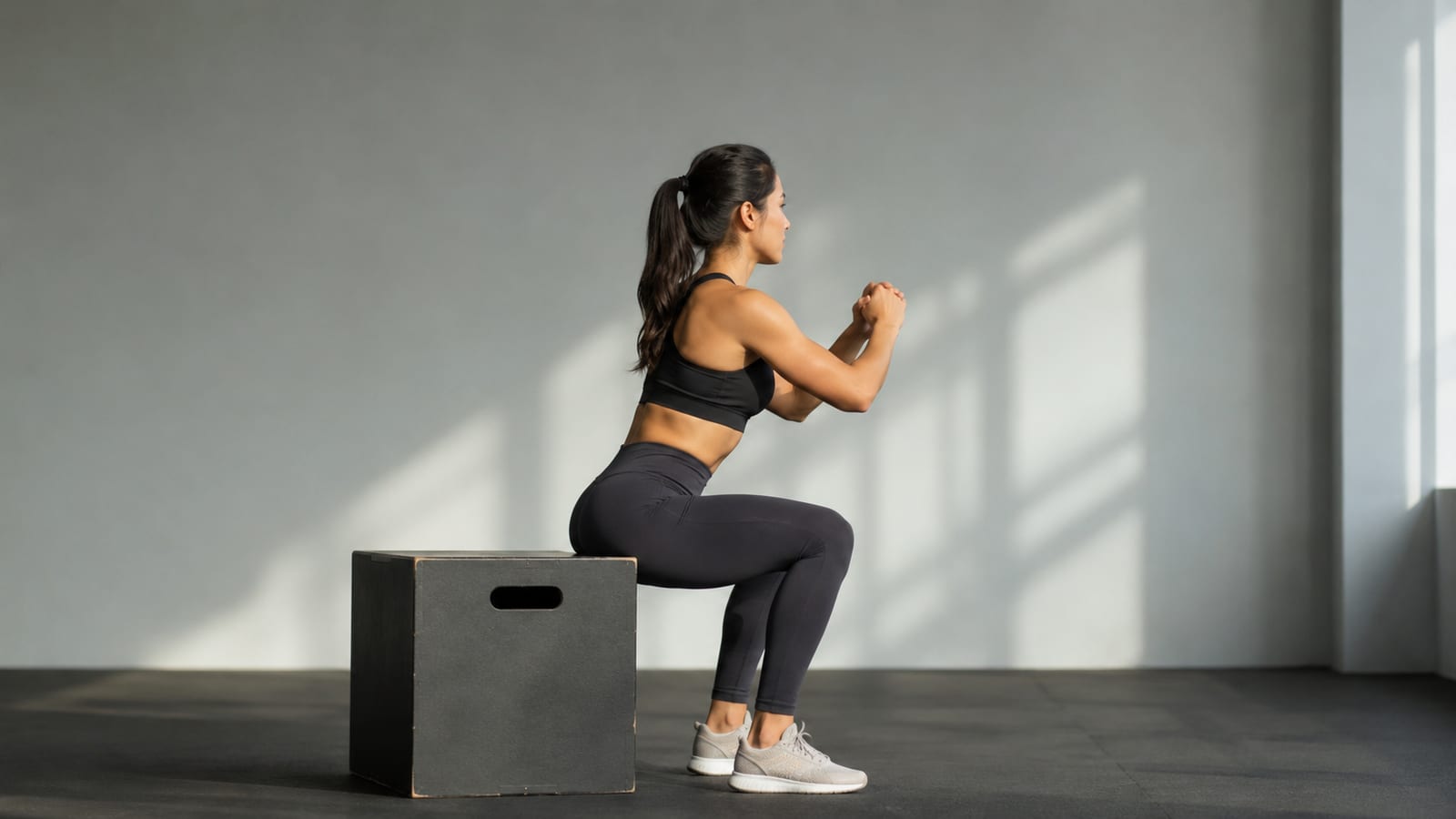
The correct box squat looks like a controlled squat with a quiet pause. Sitting heavily, leaning back, and rocking forward turns the box into a crutch.
Follow this sequence:
- Unrack with your whole body tight. Stand tall, take short steps back, and settle your feet before starting.
- Brace before you descend. Take a breath into your trunk and tighten around it. Keep that pressure as you move.
- Sit down between your hips. Let your knees and hips bend together. Stop reaching backward if your toes start lifting.
- Keep pressure through the whole foot. Your heel, big toe, and little toe should stay connected to the floor.
- Touch the box quietly. Control the final part of the descent instead of dropping onto the surface.
- Pause without going limp. Keep your trunk braced and your feet active. Hold your position without rocking backward.
- Stand with intent. Drive through the floor while your chest and hips rise together.
- Finish under control. Stabilise each rep before starting the next one.
- Rerack carefully. Walk forward until the bar touches the uprights, then lower it into the hooks.
Keep your gaze steady instead of looking down for the box. Set the box correctly and repeat the same movement on every rep.
What does good box squat form look like?
Good box squat form is quiet and repeatable. The bar follows a controlled path, your feet stay planted, and your torso does not collapse when you reach the box.
Check each position against the visible mistake:
| Position | Keep it | Fix this |
|---|---|---|
| Descent | Controlled from start to box | Dropping through the final part |
| Foot pressure | Balanced across the whole foot | Toes lifting or heels shifting |
| Knees | Tracking with the toes | Collapsing inward |
| Torso | Braced with a stable angle | Folding or overextending |
| Box contact | Quiet and deliberate | Crashing onto the surface |
| Pause | Tension maintained | Relaxing and rocking |
| Ascent | Hips and chest rise together | Hips shooting up first |
Use cues that change the rep. “Stay tight” gives you little to act on if you do not know which position failed.
Instead, try “quiet touch,” “whole foot,” or “chest and hips together.” Pick the cue that fixes the first visible problem.
A formal Back Squat Assessment uses 10 criteria and can identify 30 potentially observable functional deficits. You do not need to run that full checklist between sets. Film a useful angle, find the first position that breaks, and correct it before chasing smaller faults.
For depth problems, use a consistent standard and read this guide to finding your squat depth.
Bad habits the box can teach
The box can clean up your squat or teach you to depend on the surface. How you handle the contact decides which lesson you get.
Do not crash onto the box
Crashing means you lost control before reaching depth. It also sends force through your spine and the box instead of keeping it in the working muscles.
Lower the load and make the contact quiet. If you cannot control the final part, the set is already too heavy.
Do not relax completely
A brief pause does not mean switching off your trunk and legs. Stay braced, keep your feet active, and maintain your position.
Some specialised powerlifting methods use a more pronounced release at the hips. That takes coaching and a clear reason. Most lifters only learn to get loose under a loaded bar.
Do not rock forward
Rocking lets momentum do the work you meant to train. The rep usually starts with your shoulders pitching forward before your legs drive.
Pause without drifting backward. Then stand by pushing the floor away.
Do not use a high box to flatter the logbook
A high box may be useful during a gradual return to deeper squatting. However, adding plates while the box keeps getting taller proves very little.
Judge the lift by its purpose. If the goal is parallel strength, the box must place you near parallel.
Do not force an excessively low box
Deeper is not automatically better. A box that pulls your pelvis under, shifts your feet, or makes you collapse has missed the point.
Your joints get a vote. Raise the box until you can own the position, then lower it only if control remains.
Real benefits for natural lifters
The main benefit is repeatability. A fixed target removes some guesswork, so the reps written in your logbook describe the same lift.
Box squats can also build confidence near the bottom. You know where the descent ends, which leaves you free to brace and stand with intent.
The useful benefits are straightforward:
- The same depth target on each rep
- More control through the final part of the descent
- Practice staying braced during a pause
- A simple way to rebuild deeper squatting
- A squat variation that may feel better during a demanding block
- Loading you can measure without changing the movement each week
Still, box squats do not become safer just because a box sits behind you. Crashing, rocking, or losing your brace can load your joints and spine as badly as any careless squat.
They also provide less practice reversing a free squat at the bottom. If you compete in a normal squat or want that skill, keep some free squatting in your training over time.
Can box squats build explosive strength?
Yes, box squats can help you practise producing force after a pause. The useful part is your intent to stand fast while the bar still moves under control.
Speed intent does not require throwing your body at the bar. Your feet should stay planted, your torso should remain braced, and your hips should not rock forward to create momentum.
Use a manageable load and stop the set when speed or technique clearly drops. Slow, strained reps no longer serve a power-focused goal.
Heavy box squats can still build strength. However, mixing heavy loading, maximal speed, and loose technique in the same session is poor programming. Decide what the set is meant to train, then make every rep serve that purpose.
Westside-style box squats in a basic program
Westside-style box squatting comes from a specialised powerlifting system. It often uses a wide stance, deliberate sitting back, dynamic-effort work, accommodating resistance, and frequent changes in the main lift.
Those methods belong inside a wider conjugate training system. Copying the box, bands, and wide stance without the rest of the plan is cargo-cult programming. You copy what is visible while missing why it was there.
Most natural lifters need a simpler version:
- Keep your stance close to the one you use for normal squats.
- Set the box near the depth you want to strengthen.
- Keep your feet, legs, and trunk active during the pause.
- Progress through cleaner reps and gradual loading.
- Include enough free squatting to keep that skill familiar.
Westside methods can work for trained powerlifters with the right equipment and coaching. They are not required to benefit from box squats.
A simple strength-building box squat workout
Keep the workout simple enough to measure. Use the box squat as the main lift, then train the hips, one leg at a time, and your trunk without burying the next session under fatigue.
| Workout part | What to do | What to watch |
|---|---|---|
| General warm-up | Move until your hips, knees, and ankles feel ready | Do not turn warming up into conditioning |
| Squat warm-ups | Add load gradually while repeating your working stance and depth | Stop and adjust the box if contact changes |
| Box squat work | Perform a small number of hard, clean working sets | Leave good reps in reserve |
| Hip hinge | Use a deadlift variation, Romanian deadlift, or back extension | Keep fatigue recoverable |
| Single-leg work | Use split squats, step-ups, or lunges | Choose stable reps over load |
| Trunk work | Use carries, planks, or controlled flexion work | Brace without holding your breath carelessly |
Rest until your breathing settles and you can brace hard again. Heavy squat sets do not improve when you rush them to make the workout feel tougher.
For progression, choose a practical rep range and keep the load steady until every set reaches the top with clean technique. Then add the smallest useful amount and build back up. An extra rep with better control still counts as progress.
If the box contact gets louder or your body starts rocking, hold the weight where it is. Earn the next increase with cleaner reps.
Frequency and progression
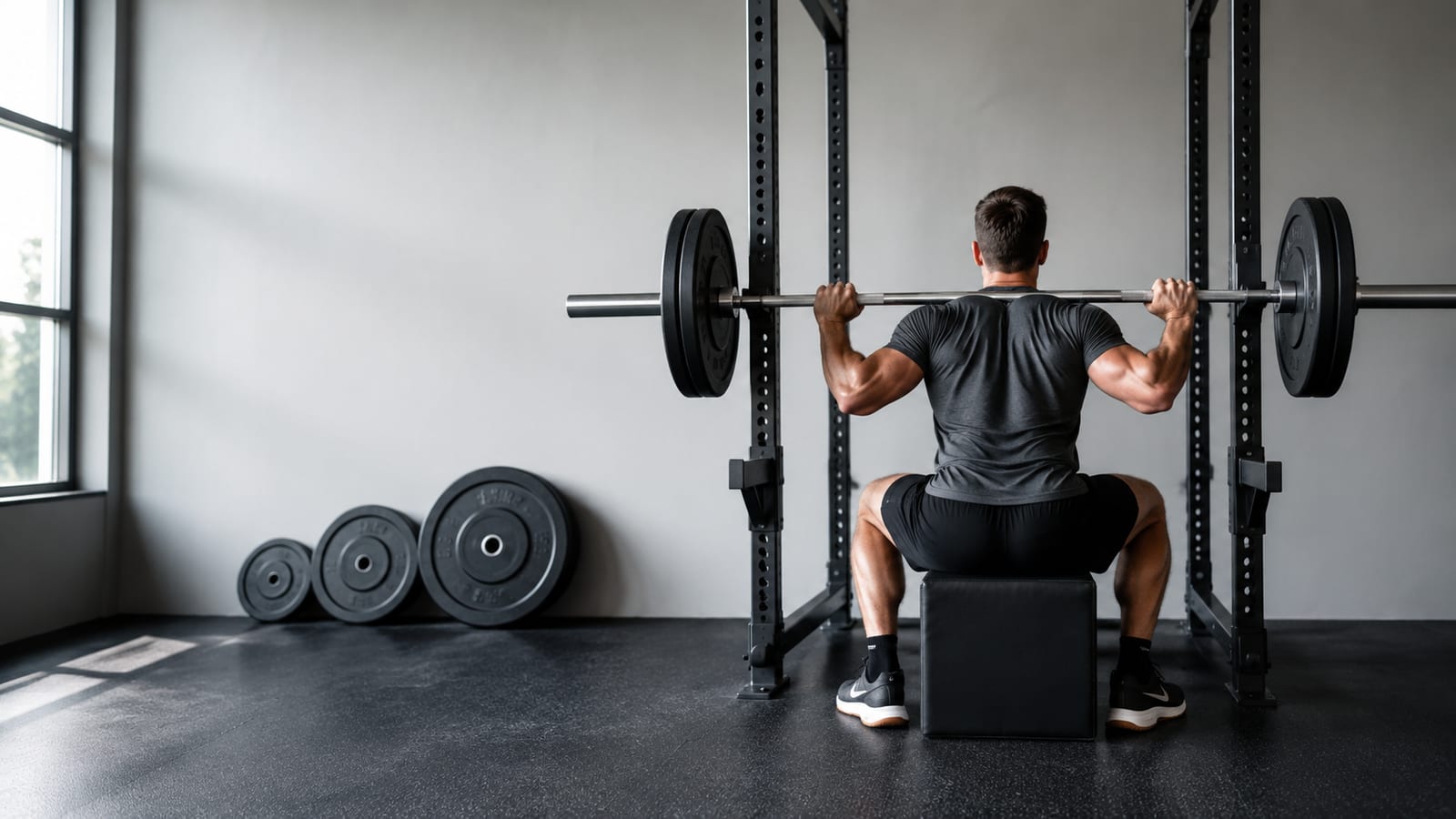
Use box squats as your main squat for a focused training block or as a variation beside regular squats. The plan has to fit your week and leave enough recovery for the rest of your lower-body training.
Progress through one clear change at a time:
- Add a clean rep with the same load.
- Add a small amount of weight after you own the rep range.
- Control the last part of the descent more closely.
- Make the pause quieter without losing tension.
- Reach the same depth with less strain.
- Lower the box only when deeper squatting serves your goal.
Keep the load, box height, stance, and pause style stable while you assess progress. If every variable changes together, the logbook cannot show what improved.
Return to free squatting when box squats stop solving the original problem. You should also switch if box squatting irritates your joints, pulls you far from your normal stance, or teaches you to wait for support at the bottom.
Judge the lift by transfer. Your free squat should feel more controlled, your depth should be easier to repeat, and your working weights should rise without uglier reps.
FAQ
Can beginners use box squats?
Yes, but the box should teach control rather than hide poor balance. Start with a bodyweight or lightly loaded squat and make every contact quiet.
Stay braced instead of sitting and resting between reps. Once the surface stops moving and each rep reaches the same depth, you can add load gradually.
Can I use a bench instead of a squat box?
Use a bench only if it is firm, stable, and the correct height. A soft pad or narrow surface makes consistent contact harder than it needs to be.
Test the bench without weight first. If it slides, compresses, or makes you reach backward, find another surface.
Should I use safety pins during box squats?
Yes, set the rack safeties slightly below the bar’s lowest position. They should catch a failed rep without striking the bar during normal movement.
Check the height with an empty bar before your working sets. Safeties give you a controlled exit, but they do not make a careless load sensible.
Are box squats good for knee pain?
They can help some lifters control depth, but they are not a treatment for knee pain. A higher box may reduce the range temporarily, yet the load and exercise still need to suit the cause of your symptoms.
Stop if the pain worsens during training or lingers afterward. Persistent pain deserves assessment from a qualified health professional.
Can you do box squats with a dumbbell?
Yes. Hold a dumbbell at your chest and squat to a stable box using the same quiet contact and controlled stand.
This version works well when a barbell setup is unavailable or balance needs more practice. However, the dumbbell will eventually limit loading as your legs get stronger.