A Smarter Way to Manage Hunger During a Cut

 0
0
 0
0 Constant hunger means your cut needs fixing, not more willpower. Conquering hunger while cutting: my top tips are to center meals on protein, use high-volume foods, keep the calorie deficit modest, and judge progress from trends. Some hunger is normal. However, hunger that ruins sleep, training, or concentration tells you the plan is taking more than you can recover from.
Last updated: 2026-08-10
How hungry should you be on a cut?
You should feel mild hunger before some meals, then satisfied after eating. That’s a normal result of consuming less energy than your body uses.
However, hunger shouldn’t follow you through the entire day. You shouldn’t be watching the clock, thinking about food during every task, or waking up hungry at night.
A useful cut includes some hunger, but it doesn’t control your day. If hunger keeps breaking your focus or sleep, change the plan.
Use these signs to judge it:
- Manageable: Hunger shows up before meals, but you can still work and train.
- Too high: Food thoughts interrupt you, even soon after eating.
- Poorly timed: You’re comfortable all day, then raid the kitchen at night.
- Recovery-related: Hunger rises as your sleep and gym performance fall.
- Habit-driven: The urge appears in a familiar setting, even without physical hunger.
The goal isn’t to remove every appetite signal. It’s to keep hunger quiet enough that you can train with intent, follow the plan, and recover.
Hunger is expected, but constant hunger isn’t
Some hunger is expected when cutting. You’re asking your body to use stored energy, so appetite may rise.
Still, constant hunger can come from an aggressive deficit, weak meal structure, poor sleep, or too many calories spent on foods that don’t fill you.
This matters because a cut has to fit your week. If every workday becomes a fight with the vending machine, the plan is simple on paper and useless in practice.
Also, don’t confuse boredom, stress, or routine with physical hunger. Physical hunger tends to build gradually and makes several foods sound appealing. A craving often arrives suddenly and asks for one specific food.
You don’t need a perfect label before eating. However, pausing long enough to identify the trigger helps you choose the right response.
Protein should anchor every main meal
Make protein the anchor of every main meal. It improves fullness, supports muscle retention, and gives your body a reason to keep lean tissue while body weight falls.
Protein also has a thermic effect of 20–30% of its energy content. In plain terms, your body uses more energy digesting and processing protein than it does with carbohydrates or fat. That benefit is useful, but it doesn’t cancel careless portions.
For female athletes during energy restriction or heavy training, 1.6 g/kg/day is the lower end of the recommended protein intake. That figure belongs to that specific group. Other lifters should set their intake around body size, training demands, food tolerance, and professional guidance where needed.
Good options include:
- Chicken, turkey, and lean cuts of meat
- Fish and seafood
- Eggs and egg whites
- Greek yogurt and cottage cheese
- Tofu, tempeh, and textured vegetable protein
- Beans, lentils, and other legumes
- Protein powder when regular food isn’t practical
Choose leaner sources more often during a cut because they leave room for fruit, vegetables, carbohydrates, and fats. Red and processed meats can fit, but they shouldn’t crowd out fish, poultry, dairy, legumes, and plant proteins.
Protein powder is a convenience, not a hunger cure. A shake digests quickly and may not satisfy you like a full meal. If liquid calories leave you hungry, use thicker yogurt, cottage cheese, eggs, fish, or lean meat instead.
Filling foods give you more room to eat
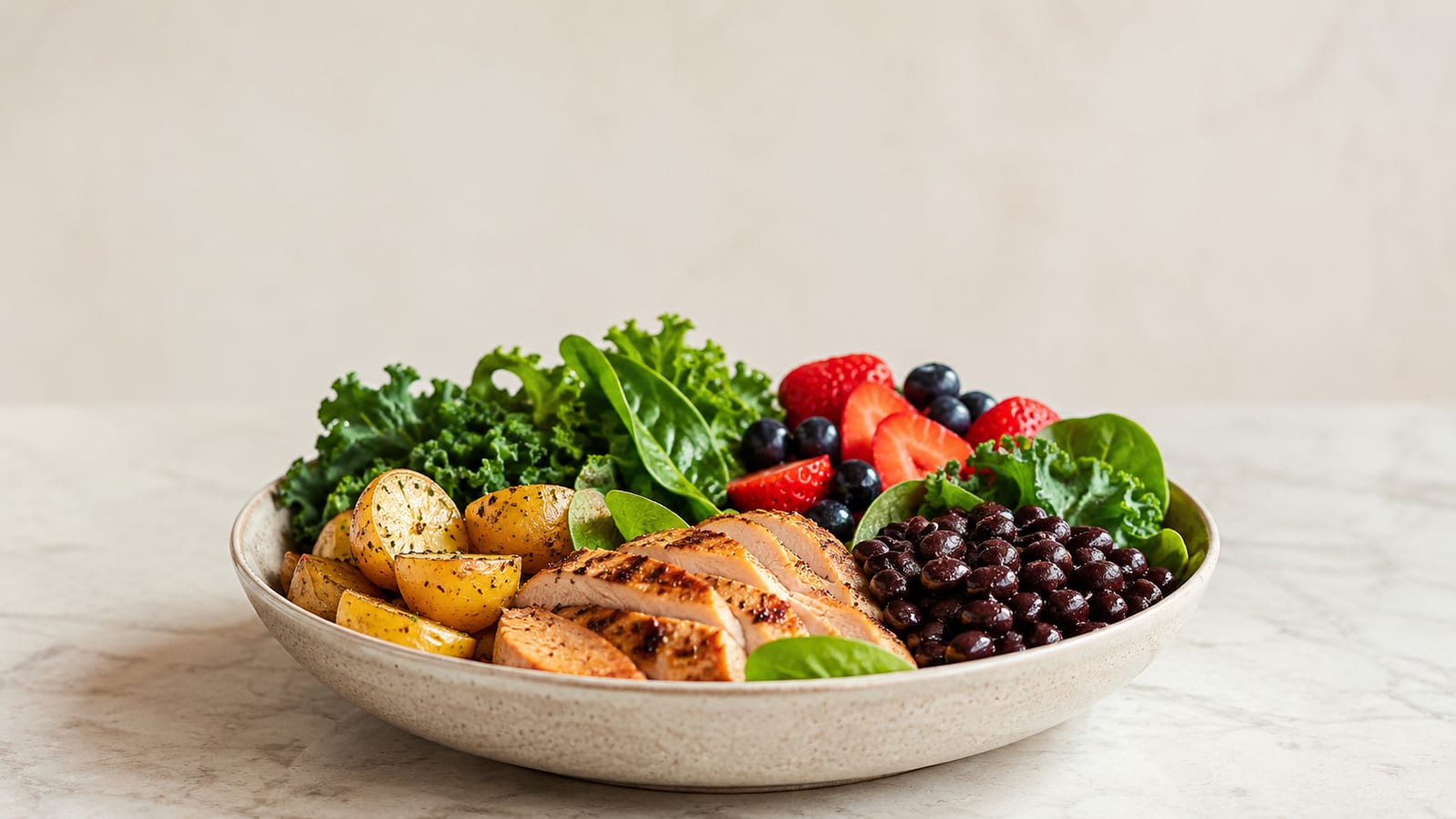
Build meals around lean protein, vegetables, fruit, potatoes, legumes, and whole grains. These foods give you more chewing, fiber, water, or meal volume for the calories.
Boiled potatoes deserve a place here. In one satiety index comparison, boiled potatoes scored 323 +/- 51% while white bread scored 100%. That doesn’t make potatoes magical. It means plain boiled potatoes can be unusually filling compared with a common reference food.
Preparation still gets a vote. A boiled potato and a pile of fries don’t offer the same calorie cost. Added oil, cheese, sauces, and butter can turn a filling base into a small, calorie-heavy meal.
Use these swaps when your usual choice leaves you hungry:
| If this leaves you hungry | Try this instead | Why it usually works better |
|---|---|---|
| Sugary cereal | Oats with Greek yogurt and fruit | More protein, fiber, and chewing |
| Pastries | Eggs with potatoes and vegetables | A larger meal with a stronger protein base |
| Chips | Air-popped popcorn, fruit, or raw vegetables | More volume for fewer calories |
| Creamy pasta | Lean protein, pasta, and a large serving of vegetables | Keeps the pasta while improving fullness |
| Fruit juice | Whole fruit | More chewing and fiber |
| A small protein shake | Greek yogurt with berries | Thicker texture and more meal volume |
Don’t ban every calorie-dense food. Nuts, oils, cheese, and dried fruit can be nutritious, but small portions carry plenty of energy. Measure them during a cut instead of pretending a free pour doesn’t count.
For a simple framework, official MyPlate guidance gives you a useful starting point for balancing protein, produce, and carbohydrate foods. Adjust the portions to fit your calorie target and training.
Build meals that hold you over
Eat regular, protein-centered meals that fit your schedule. Complicated timing rules rarely survive work, family demands, and changing training times.
Each main meal should contain:
- A clear protein source
- A high-fiber carbohydrate or produce
- Enough food volume to feel like a meal
- Some fat for taste and satisfaction
- Water or another low-calorie drink
Carbohydrate choice matters, but don’t turn it into a morality test. Oats, potatoes, beans, lentils, whole grains, fruit, and vegetables tend to digest more steadily than sweets eaten by themselves.
However, the whole meal matters more than one ingredient. Pairing carbohydrates with protein, fiber, and some fat usually keeps you satisfied longer than eating a low-fiber snack on its own.
Meal frequency is personal. Smaller meals help some people, while others stay fuller with fewer, larger meals. Keep the pattern that controls hunger without making you think about food all day.
If evenings are your weak point, save more of your food for dinner. There’s no prize for forcing a tiny evening meal after spending most of your calories before lunch.
Your top tips for controlling hunger

Use a short list you can repeat. Hunger management fails when it depends on perfect motivation or a cupboard full of special diet products.
- Put a real protein source in every main meal.
- Eat fruit or vegetables several times through the day.
- Choose filling carbohydrates such as potatoes, oats, beans, and whole grains.
- Keep liquid calories low because they’re easy to drink and forget.
- Measure oils, nut butters, dressings, and other calorie-dense additions.
- Plan food around the hours when your appetite is strongest.
- Keep tempting foods out of easy reach if portions regularly get away from you.
- Sleep enough to support appetite control and training recovery.
- Keep training productive, but don’t add punishing cardio to offset overeating.
- Adjust the plan from weekly trends, not one difficult afternoon.
Conquering hunger while cutting comes down to repeatable meals and a recoverable deficit. You don’t need endless food variety. You need a few dependable meals that fill you, fit your calories, and leave enough energy to beat the logbook.
A modest calorie deficit works better
Use a modest deficit that produces a clear downward trend without wrecking performance. Crash dieting magnifies hunger, cuts training quality, and makes the rebound more likely.
About 500 calories per day is a common rule of thumb for losing about 1 pound per week. However, when cutting about 500 calories a day from the usual diet, the expected loss may range from about ½ to 1 pound per week.
That range is a starting estimate, not a contract. Body size, activity, water retention, and tracking accuracy all affect what appears on the scale.
The National Institute of Diabetes and Digestive and Kidney Diseases Body Weight Planner can help estimate a starting intake. Then your actual weight trend, waist, training, and recovery tell you whether that estimate fits.
Don’t cut food again after one flat weigh-in. Hold the plan long enough to see a trend, then make a small change if progress has genuinely stalled.
If you’re trying to lose fat while still gaining muscle, read this guide to bulking and cutting at the same time. The process is slower, so aggressive calorie cuts work against the goal.
When hunger hits between meals
First, check whether the hunger is physical, planned, or automatic. Then use a response that fits the cause.
Try this order:
- Have water or a zero-calorie drink. Thirst and dry mouth can feel like an urge to snack.
- Wait briefly and change tasks. Habit-driven urges often fade when you leave the kitchen or finish the activity that triggered them.
- Use a planned protein snack. Greek yogurt, cottage cheese, eggs, lean meat, tofu, or a measured shake can bridge a long gap.
- Add low-calorie volume. Fruit, vegetables, broth-based soup, or air-popped popcorn can help when you need more food bulk.
- Move the next meal earlier. Meal timing should serve the plan, not force you to stare at the clock while hungry.
- Review the previous meal. A small meal with little protein or fiber often explains the problem.
Caffeine can reduce appetite for some people, but don’t use late coffee to cover an underfed day. Poor sleep makes tomorrow’s hunger harder to manage.
Also, don’t keep trimming every snack until it becomes unsatisfying. Sometimes a proper planned snack prevents a much larger unplanned meal later.
Judge the cut by trends, not one bad day
Track more than hunger and more than one weigh-in. Daily body weight can shift from water, food volume, carbohydrate intake, and digestion.
Use these checks together:
| What to track | What you want to see | What should concern you |
|---|---|---|
| Body-weight trend | A gradual decline over time | No decline across a clear trend |
| Waist measurement | Slow reduction | No change alongside flat body weight |
| Gym performance | Mostly stable loads and reps | Repeated drops across several exercises |
| Recovery | Normal readiness between sessions | Soreness and fatigue that keep building |
| Hunger | Noticeable but manageable | Persistent distraction or night waking |
| Mood and focus | Mostly steady | Rising irritability and poor concentration |
Keep training technique consistent during the cut. If range of motion shortens and every rep becomes rushed, the logbook may look stable while performance is falling.
Likewise, don’t panic when one lift stalls. Look for a broad decline across training, sleep, mood, and recovery. The plan needs changing when several signals move in the wrong direction together.
Macro ratios aren’t the first fix. If you’re considering a rigid split, read this breakdown of macros for bulking and cutting. Total calories, enough protein, and adherence matter more than forcing every day into a neat ratio.
Warning signs that require a plan change
Change the plan when hunger becomes persistent and starts harming normal function. A cut should demand discipline, but it shouldn’t consume your thoughts or dismantle your training.
Warning signs include:
- Gym performance keeps falling
- Sleep becomes broken or restless
- You think about food through most of the day
- Irritability affects work or relationships
- Recovery between sessions keeps getting worse
- You feel driven toward repeated uncontrolled eating
- You struggle to concentrate or complete normal tasks
- Menstrual function changes
- You feel dizzy, faint, or unwell
Start by adding food, reducing extra activity, or improving meal structure. Keep the change measured so you can tell what helped.
However, persistent dizziness, fainting, menstrual changes, uncontrolled eating, or severe food preoccupation need more than another diet adjustment. Speak with a doctor or registered dietitian, especially if you have a history of disordered eating.
Your joints get a vote, and so does your head. Getting leaner isn’t worth turning food and training into a daily emergency.
Keep the results after the cut

Keep the habits that made the cut manageable. Continue eating regular protein-centered meals, keep produce in the plan, and use the portion skills you practised.
Then increase calories gradually while watching the body-weight trend. You don’t need a drawn-out “reverse diet” marketed as a metabolism repair. You need enough food to restore training, recovery, and normal life without treating the end of the cut as permission to eat without limits.
Expect body weight to move as food intake, carbohydrate storage, and digestion change. Don’t mistake every early increase for immediate fat gain.
Meanwhile, keep lifting and aim to add weight or reps again. Better recovery should show up in productive sets, quality reps, and a stronger logbook.
Conquering hunger while cutting teaches you which meals, portions, and routines you can keep afterward. That’s the useful result. A temporary diet that ends in a rebound was too brittle to begin with.
FAQ
Is chewing gum useful during a cut?
Sugar-free gum can settle mouth boredom between meals. However, it makes some people feel hungrier or causes stomach discomfort. Keep it for occasional urges if it helps, and skip it if chewing keeps food on your mind.
Should you take planned breaks from a cut?
A maintenance phase can help when diet fatigue is high or life becomes unusually demanding. Eat enough to hold body weight steady, keep protein consistent, and continue training. Treat the break as controlled recovery, not an excuse to abandon every portion boundary.
Can restaurant meals fit into a cut?
Yes, but choose a meal you can estimate without playing detective. Start with lean protein, add vegetables or a plain carbohydrate, and ask for heavy sauces on the side. If the meal is hard to track, make a reasonable estimate and return to your normal plan afterward.
Are artificial sweeteners a good way to control cravings?
They can replace sugar-sweetened drinks and desserts without adding the same calories. Still, they won’t repair a weak meal structure. Keep them if they make the plan easier and your digestion handles them well.
Should you cut if you already have a difficult relationship with food?
Not without professional support. Restriction can worsen food anxiety, uncontrolled eating, and obsessive tracking. A registered dietitian or qualified clinician can help you choose a safer goal and build a structure you can follow.
Related on this blog