
How to Use Negative Reps for Strength and Muscle

 0
0
 0
0 Negative reps work best as a measured accessory to normal lifting. To maximize gains with effective negative-reps training, control the lowering phase with a load you can manage safely, progress it gradually, eat enough, and recover before repeating it. Heavy eccentric-only work can build strength and muscle, but careless loading turns a useful tool into a soreness contest.
Last updated: 2026-08-28
What negative reps are and why they work
A negative rep is the eccentric, lowering portion of a strength movement. Your muscle produces force while it lengthens, such as lowering a pull-up, barbell, dumbbell, or squat.
The lowering phase can create high mechanical tension with less energy than the lifting phase. That makes it useful for exposing your muscles to demanding work without asking them to raise the same load.
However, lower energy cost does not mean low recovery cost. Eccentric work can create substantial muscle damage and soreness, especially when the exercise is new or the load is heavy.
Use negatives to add a controlled training stimulus. Do not use them to make every workout harder for its own sake.
Eccentric contraction is the technical term for this action. The useful part is simple: your muscles resist the load while getting longer.
The phases of a strength movement
Most strength exercises contain distinct phases:
- Concentric: The muscle shortens while producing force. You press the bar up, stand from a squat, or pull your body over a bar.
- Transition: The movement changes direction. The bottom of a squat and the top of a curl both involve a brief change in force and position.
- Eccentric: The muscle lengthens while resisting the load. You lower the bar, descend into the squat, or return from the curl.
The eccentric phase deserves deliberate control because the load is still demanding your muscles. Dropping the weight removes the part of the rep you are trying to train.
A controlled lowering phase also gives you better feedback. You can feel where your position changes, where your joints lose alignment, and where the target muscle stops doing the work.
That feedback matters more than an exaggerated tempo. A slow descent is useful only if it preserves repeatable technique and keeps the target muscles loaded.
How eccentric training builds strength and muscle
Negative reps can improve several parts of strength training:
- They increase mechanical tension on the working muscles.
- They let you practice the hardest positions of an exercise.
- They expose your muscles to heavy loading without requiring a full concentric rep.
- They build tolerance to demanding resistance.
- They may support muscle growth when added to a sound training plan.
The strength gains are not limited to the lowering phase. In a controlled trial of once- versus twice-weekly eccentric training in older adults, isometric strength increased by 17–36% and eccentric strength increased by 40–50% after 12 weeks.
That trial also used a short session. Training lasted 12 minutes per session at 50% of maximum eccentric strength. Eccentric work does not need to become a long punishment session to produce a response.
Still, negatives do not replace ordinary lifting. You need to practice raising weights if you want your concentric strength to improve. You also need enough normal training to build coordination through the full movement.
Think of negative reps as a specialist tool. They can strengthen a weak portion of a lift, teach control, and add tension after your regular work. Your main program still needs presses, pulls, squats, hinges, and measurable progression.
Overload beyond concentric strength
Your muscles can often resist more weight during the eccentric phase than they can raise during the concentric phase. That creates a way to train with loads above your concentric one-repetition maximum.
One published eccentric-only resistance-training protocol used 140% of concentric one-repetition maximum. That figure belongs to the protocol it came from. It is not a starting load for general gym training.
Loads above your concentric strength require the right setup. You may need a power rack with safety pins, a machine that controls the starting position, or reliable assistance from trained spotters.
Do not load a bar far beyond what you can lift and hope a partner saves the rep. A spotter must know where to assist and must be able to control the load if your position fails.
The heavier the negative, the smaller your margin for error. Use overload only if the equipment and assistance make the starting position and escape route clear.
Negative rep exercise techniques

The best method depends on the exercise. Your goal is always the same: reach the top or starting position without wasting the rep, then lower with control.
Pull-ups
Use a box or step to reach the top position. Start with your chin over the bar, brace your trunk, and lower until your arms are straight.
Keep your shoulders controlled. Do not drop from the top or swing through the bottom.
If the descent becomes a fall, the set is over. Use an assisted pull-up machine if you cannot repeat the movement with stable shoulders.
Bench presses and other presses
Use a spotter to help move the bar into position. Lower it under control while keeping your upper back set and your wrists stacked over your forearms.
For heavy work, use safety pins set just below the bottom of your normal range. Test the setup with an empty bar first.
A machine press can be easier to manage because the path and starting position are fixed. It is often the better choice when you train alone.
Squats
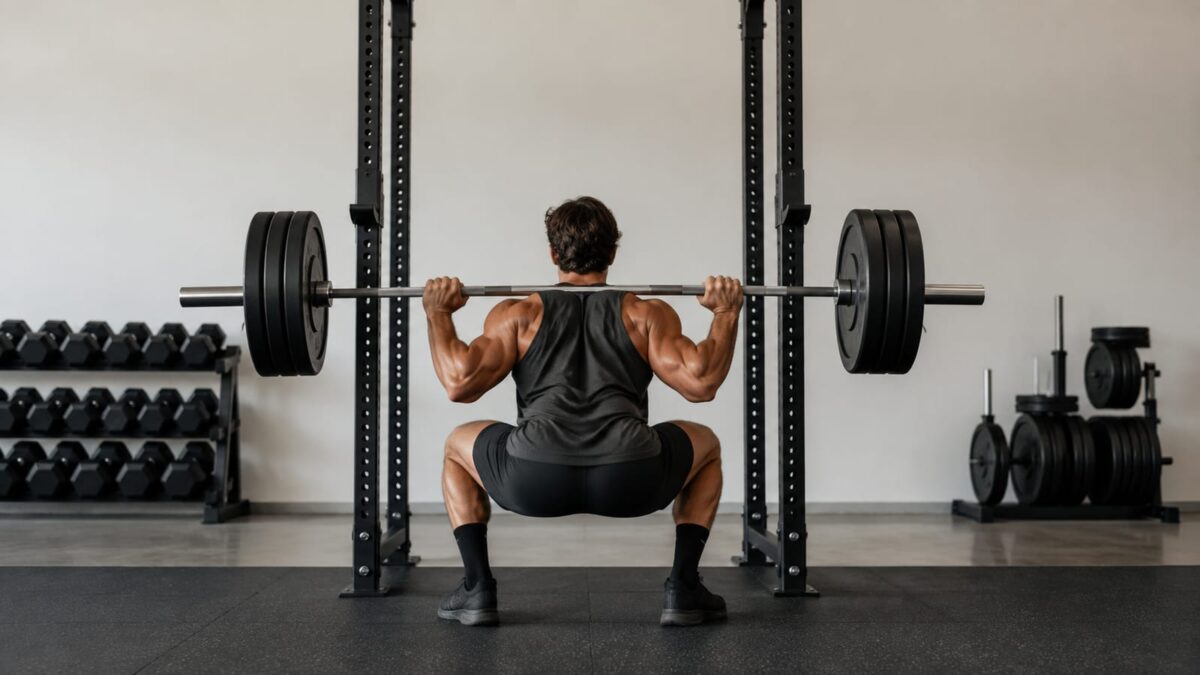
A squat is a poor place to improvise heavy negatives. You must have a rack, correctly positioned safety pins, and a way to return the bar to the pins if you cannot stand.
Use a normal load before trying eccentric emphasis. Descend with the same bracing and foot pressure you use for regular squats.
Do not use a partner to pull you out of a failed squat. Set the rack correctly and learn how to abandon the bar safely.
Rows
For a chest-supported row, use assistance to bring the handles or dumbbells into the contracted position. Lower them while keeping your chest against the pad.
A cable or machine row usually offers better control than a free-weight row for eccentric-only work. Your lower back should not become the emergency support system.
Curls
Use your free hand to help a dumbbell into the top position. Lower it with your working arm while keeping your elbow still.
Curls are a sensible place to learn negative reps because the load is easier to escape. They are also easier to take close to technical failure without the same risk as a squat or heavy press.
The best exercise lets you reach the starting position safely and repeat the lowering phase. Fancy setups do not earn extra credit.
How do you maximize gains with effective negative reps training?
Start with ordinary working sets. Add negative reps only after your normal technique and progression are stable.
For a simple progression, use this sequence:
- Choose a stable exercise with a clear starting position.
- Pick a load that lets you control every lowering phase. If you cannot, the load is wrong.
- Use the published negative-repetition range of 5–10 repetitions per set only if your setup and recovery support it.
- Record the load, repetitions, lowering control, and any help used to reach the top. Otherwise, you cannot judge progress.
- Keep the same load until every rep looks consistent.
- Add the smallest practical increase once your control is repeatable.
- Reduce the load when your descent speeds up, your joints shift, or your helper does most of the work.
Do not change the load, tempo, exercise, and total volume at the same time. If you do, the logbook cannot tell you what improved.
A useful record might say, “assisted pull-up, controlled lowering, stable shoulders, final rep slowed.” That tells you more than writing “destroyed back.”
For most lifters, a modest amount of eccentric work is enough. Add it to a few movements across the week rather than turning every exercise into an eccentric-only drill.
Increase intensity without wrecking recovery
Place negative reps after your regular compound work or use them on a separate accessory exercise. Starting with heavy negatives can reduce the quality of the lifting you need to practice.
Isolation movements and stable machines are usually easier to recover from than heavy free-weight compounds. They also make it easier to stop when technique slips.
Keep the hard eccentric work limited. One focused exercise can provide enough extra stress for a session. More work may create soreness that interferes with your next workout.
Natural lifters with limited time should favor occasional hard sets over exhaustive eccentric-only workouts. Your plan has to fit your week, and your joints get a vote.
Watch your next session. If your normal lifts lose reps, your soreness lasts into the next training day, or your technique changes, reduce the negative work before adding anything else.
For more on managing the lowering phase across ordinary sets, see this guide to time under tension. The same rule applies here: tension only helps if you can recover and repeat it.
Technique, breathing, and safety under eccentric load

Use a setup you can abandon safely. Check the rack, pins, bench, bar path, and floor before loading the exercise.
Keep these standards in place:
- Brace before the descent.
- Take a controlled breath and maintain trunk pressure through the difficult portion.
- Keep your joints aligned with the exercise.
- Use a range of motion you can own.
- Keep the load close to your intended path.
- Stop if pain changes the movement.
- Stop if the load accelerates beyond your control.
- Stop if a spotter must suddenly catch or redirect the weight.
A spotter should assist the starting position, then stay ready without pulling on the load during the descent. For presses, use a clear handoff and agree on how the bar will be returned.
Do not confuse muscle discomfort with joint pain. A burning muscle can be part of hard work. Sharp pain, instability, numbness, or a sudden loss of position means you stop.
Heavy negatives also place stress on connective tissue and passive structures. Increase the demand gradually so your muscles, tendons, and joints can adapt together.
Food and recovery determine whether negatives pay off
Eccentric training creates a recovery bill. Pay it with enough food, sufficient protein, sleep, and rest between demanding sessions.
If your body weight is falling, your normal lifts are stalling, and your sleep is poor, adding negatives is usually the wrong move. Fix the basic recovery problem first.
Protein supports the repair process, while total calories give you the energy to train and adapt. You do not need a complicated nutrition system. Eat regular meals that contain a clear protein source and enough total food to support your goal.
Keep hard eccentric work away from sessions that already create heavy soreness in the same muscles. A hard negative-focused leg session can interfere with squats, hinges, sport, or physical work.
Use your performance as the test. If you recover and come back stronger, the dose may fit. If the next workout suffers, the dose is too high.
Where professional athletes use eccentric training
Athletes use eccentric training for strength development, tendon conditioning, braking ability, and return-to-play work. These goals can matter in sprinting, jumping, cutting, throwing, and contact sports.
The setting changes the decision. A professional athlete may have a strength coach, medical support, testing equipment, and a schedule built around recovery.
You probably have work, family duties, and a normal gym. Copying the most aggressive athlete protocol ignores the support that made the protocol possible.
A basic lifter can borrow the principle without copying the entire system. Control the lowering phase, strengthen weak positions, and use stable exercises when the load is high.
Return-to-play training deserves extra caution. If you are rebuilding after an injury, follow the plan from your qualified clinician or coach. A negative rep is not a substitute for an assessment.
Common mistakes that make negative reps ineffective
Using excessive loading
A heavier load is useful only if you can control it. If the weight drops quickly, your muscles are no longer doing the planned work.
Reduce the load until your position stays stable. Earn the next increase through quality reps.
Chasing soreness
Soreness is not a score. It can show that the work was unfamiliar, but it does not prove that you built more muscle.
Judge the method by performance, recovery, and progress in the logbook. If soreness blocks your normal training, the method is costing too much.
Dropping through the eccentric phase
A fast descent may look intense, but it removes control. Use a steady lowering phase that you can repeat from the first rep to the last.
Choosing unstable exercises
Heavy eccentric work on a technically demanding free-weight movement leaves little room for correction. Start with machines, supported rows, cables, or isolation exercises if setup is a concern.
Using negatives too often
Eccentric stress can linger longer than the session itself. Repeating hard negatives before you recover turns useful overload into accumulated fatigue.
Letting the spotter lift the rep
If your partner is doing most of the work to reach the top, you are recording assistance, not strength. Keep the assistance consistent and as small as possible.
Replacing normal progressive training
You still need to lift weights through the full range. Add weight or reps when your regular sets earn it, then use negatives to address a specific need.
For a broader look at how strength and size can differ, read why strength and muscle size do not always match. Negative reps can improve strength without producing the visual change you expect from every session.
A practical negative-reps template for natural lifters

Use this template after your standard training is already consistent:
- Pick one stable exercise that matches your goal.
- Warm up with normal repetitions and confirm the setup.
- Use assistance to reach the starting position.
- Perform a small number of controlled eccentric repetitions.
- Stop when your lowering speed or technique changes.
- Record the load, assistance, and rep quality.
- Leave enough recovery before training that movement normally again.
- Repeat the same setup until the logbook shows better control.
- Add a small load increase only after the current work is repeatable.
- Remove the negative work if it harms your main lifts.
Beginners should start with bodyweight or machine variations and learn the movement first. Intermediate lifters can add assisted negatives after regular work. Advanced lifters may use heavier overload, but only with suitable equipment and reliable assistance.
A practical week might include negative pull-ups after back training and controlled curls after arm work. You can also use a machine press or supported row when you want eccentric emphasis without turning the session into a rescue operation.
Keep the rest of your program simple. Train the main patterns, eat enough, sleep well, and beat the logbook over time.
The right role for negative reps
Negative reps are useful when they solve a clear training problem. They can help you control a difficult position, tolerate heavier loading, and add productive tension without adding endless exercises.
They are a poor choice when you use them to punish yourself, chase soreness, or avoid improving ordinary reps. The lowering phase matters, but it still belongs inside a complete strength program.
Maximize gains with effective negative reps training by treating eccentric work as a measured progression. Use a safe setup, control every descent, and change the plan only when your performance and recovery give you a reason.
FAQ
Can negative reps build muscle without lifting the weight back up?
They can contribute to muscle growth because the eccentric phase creates high tension. Still, a complete program should include concentric lifting so you develop strength through the full movement.
Are negative reps useful for beginners?
Beginners should first learn stable, repeatable technique with normal repetitions. Once the movement is familiar, light assisted negatives can teach control without forcing advanced loading.
Should you use negative reps before or after regular sets?
Use them after regular sets in most cases. Your normal lifting needs your best coordination, while negative work can add focused stress afterward.
Why do negative reps cause so much soreness?
The eccentric phase can create high force while the muscle lengthens. New exercises, heavy loads, and too much volume increase the chance of soreness that disrupts later training.
Can negative reps fix a failed lift?
They may strengthen the portion of the movement where you struggle, but they cannot fix every cause of failure. Check your technique, exercise selection, strength balance, recovery, and regular progression before adding more eccentric work.
Related on this blog