Add Bands or Chains Without Losing Barbell Skill

 0
0
 0
0 Use accommodating resistance as a small addition to proven barbell training, not a replacement for it. The right way to incorporate accommodating resistance is to add light bands or chains to one stable lift, keep your normal range of motion, and record the setup. Progress only when the reps stay fast, controlled, and repeatable. If the tool changes your technique or recovery, remove it.
Last updated: 2026-08-10
What is accommodating resistance, and why use it?
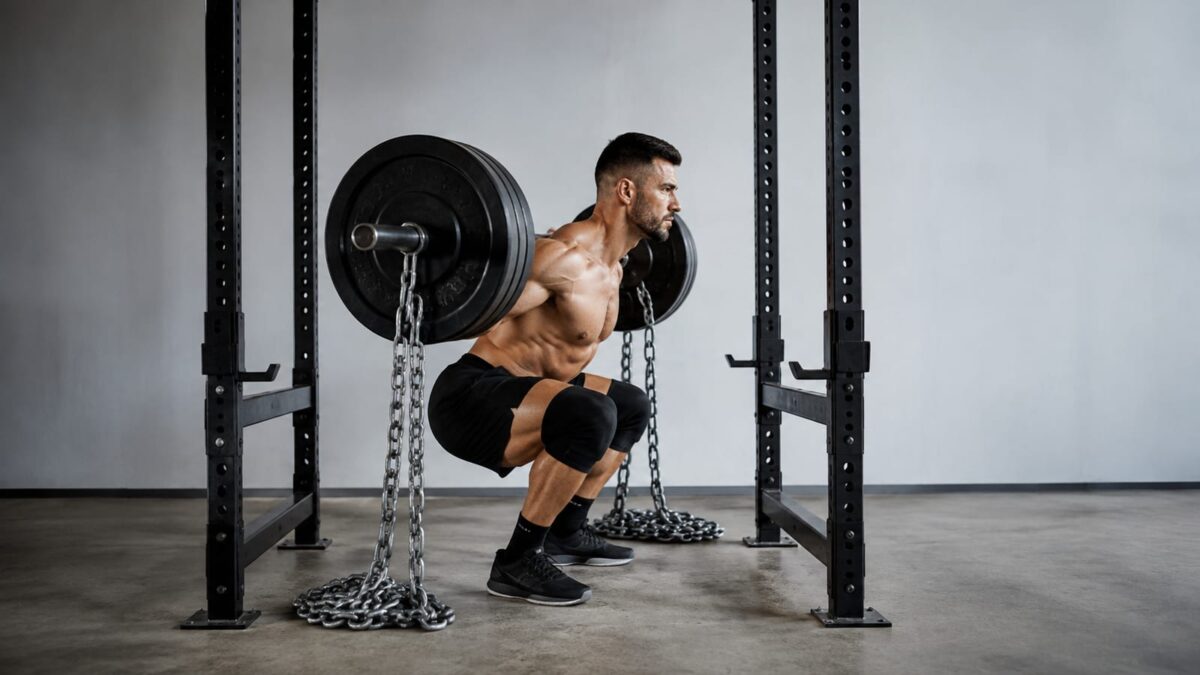
Accommodating resistance changes the load during a repetition. Bands stretch and add tension as the bar rises. Chains become heavier as more links leave the floor.
That rising load can match an ascending strength curve. In plain terms, many lifts feel hardest near the bottom and easier near lockout. Bands and chains add more resistance where your mechanical advantage usually improves.
The main benefit is better loading through stronger positions. It isn’t novelty, and it doesn’t make a poor program more advanced. You still need productive sets, sound technique, enough food, and a logbook.
Bands and chains also don’t create true isokinetic exercise, where movement speed stays fixed by a machine. They only change resistance through the range. Marketing often blurs that difference because “machine-like resistance” sounds better than “an elastic band tied to a rack.”
Use the tool when it gives you a clear training effect. Skip it when the main benefit is making your setup look complicated.
The best lifts for accommodating resistance
Stable compound lifts are the best place to start. Squats, bench presses, overhead presses, and deadlifts give you a repeatable bar path and an obvious lockout position.
Each lift has a different reason for using bands or chains:
- Squat: Adds resistance as you stand and your mechanical advantage improves.
- Bench press: Makes you keep pressing through the middle and top.
- Overhead press: Loads the stronger finish without making the start equally heavy.
- Deadlift: Keeps the floor relatively manageable while loading the lockout.
- Jump squat: Gives experienced lifters a loaded movement that becomes harder as they extend.
Choose a lift you already perform well. Accommodating resistance exposes loose bracing, poor balance, and drifting bar paths. It doesn’t repair them.
Meanwhile, keep straight-weight work in the program. Your normal squat, press, and deadlift technique still matters. A banded variation shouldn’t become the only version you can perform with confidence.
Avoid adding bands to unstable exercises or lifts with an unclear path. If the movement already changes every set, adding variable tension only gives you another problem to track.
How should you incorporate accommodating resistance?
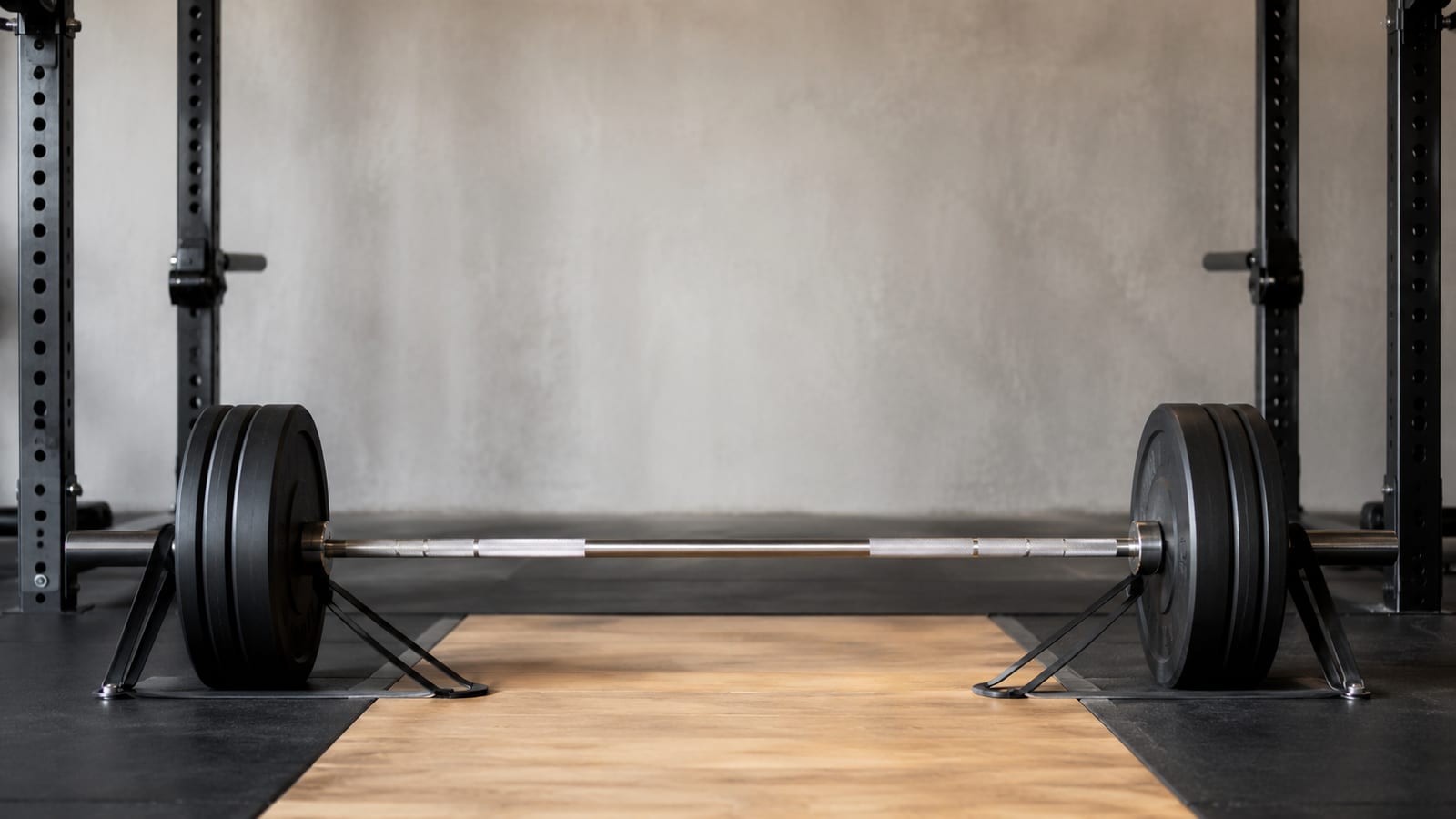
Use the following process. It keeps the setup measurable and stops bands or chains from taking over the program.
- Choose one familiar lift. Start with a squat, press, or deadlift you can repeat without coaching between every set.
- Pick one tool. Learn bands or chains first. Mixing both makes the load harder to audit.
- Secure the attachment. Use fixed rack pegs, a stable platform, or another anchor that cannot slide or tip.
- Match both sides. Band length, chain position, and attachment height must be even.
- Test the empty bar. Perform the full range and check whether the tool pulls you forward, backward, or sideways.
- Add modest straight weight. The combined load should still allow clean reps with visible speed.
- Use controlled lowering. Bands pull the bar down. Don’t mistake a fast, uncontrolled descent for useful power work.
- Record the full setup. Log the bar weight, band or chain used, anchor position, exercise, reps, and rep quality.
- Change one variable. Add weight, reps, or tool contribution. Don’t increase all three together.
- Retest straight weight. Keep enough normal lifting in the plan to confirm the variation is helping the actual lift.
Use normal rest periods for demanding compound work. Don’t rush because the bar weight looks light. Top-end tension and extra stability demands still create fatigue.
Keep the tempo natural unless tempo is the planned training goal. Lower with control, maintain your positions, and lift with intent. The bar should move faster because you produced more force, not because you shortened the range.
This method should remain simple on paper. If you need a long explanation to reproduce last week’s setup, you can’t measure progression well enough to trust it.
Bands and chains compared
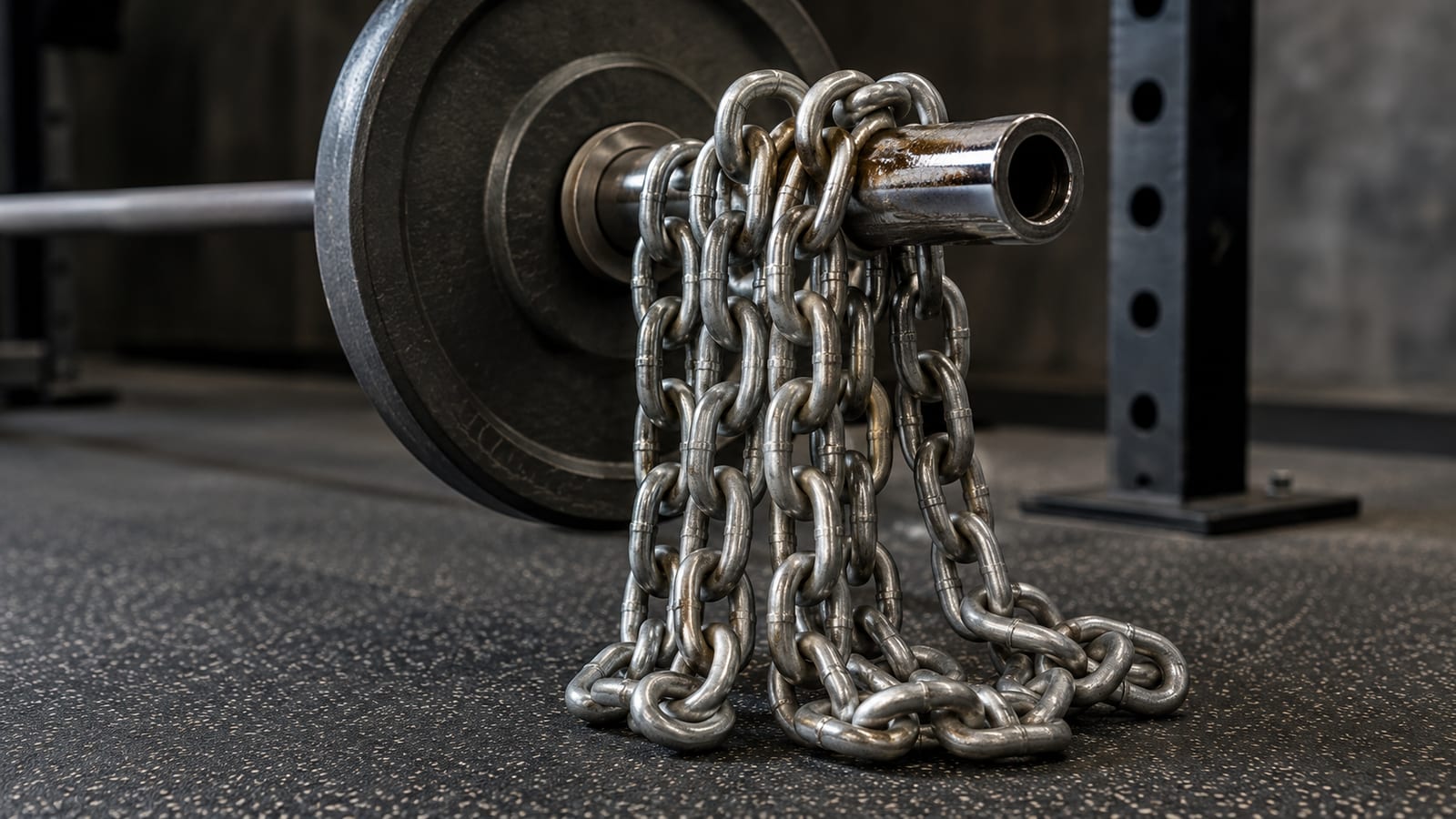
Bands create elastic tension. Chains add physical weight as links leave the floor. That difference changes the setup, feel, and recovery cost.
| Feature | Bands | Chains |
|---|---|---|
| Resistance change | Tension rises as the band stretches | Load rises as links leave the floor |
| Lowering phase | Pulls the bar down harder | Feels closer to normal straight weight |
| Stability | Can pull the bar off its normal path | Usually feels steadier |
| Setup accuracy | Sensitive to anchor height and band length | Easier to see and repeat |
| Best fit | Speed work and strong top-end acceleration | Strength work and controlled overload |
| Main failure point | Uneven tension or excessive downward pull | Poor chain height or limited load change |
Choose chains if you want the more forgiving introduction. They feel closer to plates and make the resistance change easier to see.
Choose bands when you specifically want elastic tension and can secure the anchors. However, bands demand tighter setup. A small change in anchor position can change the entire repetition.
Reverse bands work differently. They hang from above and assist the bottom of the lift, with less help near the top. This can expose you to heavier straight weight, but it also makes it easy to load beyond what you can control without assistance.
Most natural lifters don’t need all three options. Pick the one that solves the problem in front of you.
Choosing the right resistance
Start lighter than your enthusiasm suggests. The band or chain should add a noticeable challenge near the top without turning the bottom into a different exercise.
Judge the setup at both ends of the movement:
- At the bottom: You should maintain your normal position and control.
- Through the middle: The bar shouldn’t stall because tension rises too sharply.
- At the top: You should finish hard without twisting, bouncing, or changing your lockout.
- During lowering: You should control the tool rather than being pulled out of position.
Treat tool contribution as part of the total load. Don’t load your usual working weight and then attach bands as an afterthought. That turns planned training into an accidental overload session.
A scale can help you measure band tension at the relevant bar heights. However, repeatability matters more than chasing a perfect reading. Use the same band, anchor, bar position, and measuring method each time.
For chains, record how many links remain supported at the bottom and how much chain leaves the floor. If the entire chain hangs from the bar through most of the rep, you’re mostly lifting extra straight weight.
Leave clean reps in reserve while learning the setup. Earn the next increase by keeping bar path, depth, touch point, and lockout consistent.
Why bands and chains fail
Accommodating resistance fails when the setup creates more noise than useful overload. The usual problem isn’t the tool. It’s poor control over the variables.
Watch for these common failures:
- Loose anchors: The rack or attachment moves under tension.
- Uneven sides: One band is shorter, or one chain leaves the floor earlier.
- Too much top-end load: The rep slows sharply or ends with a forced lockout.
- Changed technique: Squat depth rises, bench touch point shifts, or the deadlift becomes a lean-back contest.
- Inconsistent setup: Anchor height or chain position changes each session.
- Joint irritation: The tension curve bothers your elbows, shoulders, hips, or knees.
- Recovery problems: Straight-weight performance drops and soreness lingers.
- Poor exercise choice: An unstable variation becomes even harder to control.
Bands can also create an aggressive lowering phase. If you lose position on the way down, reduce tension before blaming your bracing.
Chains fail when too little chain moves through the repetition. In that case, the resistance barely changes. You’ve spent extra time setting up ordinary added weight.
Partial movements don’t automatically fix these problems. A shortened range may overload a lockout, but it also removes practice from the positions you skipped. Use partials for a defined weakness, not to display a heavier bar.
Your joints get a vote. Remove the tool if pain rises even while performance looks good on paper.
Beginner progression with resistance tools
Beginners should earn repeatable straight-weight technique first. You need a consistent start position, full range, stable bar path, and controlled lowering before adding a changing load.
Use this progression:
- Learn the base lift. Repeat the same variation until your technique stays recognizable across sessions.
- Build a logbook baseline. Record load, reps, effort, and any form problems.
- Practice the setup without meaningful load. Learn how the bands or chains attach and how they affect balance.
- Add light tool resistance. Keep the straight weight modest and stop with clean reps left.
- Repeat the same setup. Don’t change band strength, anchor height, exercise, and rep target together.
- Compare performance. Check whether normal barbell work stays stable or improves.
- Progress gradually. Add weight or reps only after the setup becomes routine.
A coach or experienced training partner helps with the first setup. This matters most for banded squats and presses, where a poor anchor can pull the bar away from its expected path.
Beginners don’t need accommodating resistance to grow or get stronger. A basic program with progressive overload will do most of the work. Add complexity only when you can explain what it’s meant to improve.
Can accommodating resistance improve rate of force development?
Bands and chains can help train rate of force development, which means producing force quickly. They work best when paired with submaximal loads, strong intent, and reps that stay fast.
The useful part is sustained acceleration. As the load rises, you must keep applying force rather than coasting into lockout.
However, adding a band doesn’t automatically create power training. A slow grind with elastic tension is still a slow grind. If bar speed falls badly, reduce the total load or stop the set.
You can judge speed with a velocity tracker or by strict video review. If you use a device, establish a baseline and apply the same setup each session. This guide to velocity-based training explains how bar-speed data can guide load decisions.
Still, simpler explosive work may fit your week better. Jumps, throws, and fast straight-weight lifts require less setup. Keep accommodating resistance only if it produces quality reps you can repeat and measure.
Chain jump complexes
Chain jump complexes are for experienced lifters who already jump and squat well. The goal is potentiation, where a heavy movement may briefly improve force output in the explosive movement that follows.
Pair a controlled chain squat with an unloaded or lightly loaded jump. Rest until you feel ready to move fast, then perform a small amount of crisp jump work. Full recovery matters more than squeezing the pairing into a short clock.
Use these rules:
- Keep the squat technically clean and shy of a grind.
- Use chains that load the top without changing your normal squat pattern.
- Perform the jump while you’re fresh enough to leave the ground with intent.
- Stop if jump height, landing position, or speed declines.
- Rest fully before repeating the pairing.
- Keep the total jump volume low.
Don’t turn the complex into conditioning. Heavy breathing and slow landings tell you the power work is finished.
The comparison must also be honest. Track how the jumps look after chain squats and compare them with jumps performed fresh. If the complex doesn’t improve output, remove it.
Advanced eccentric band benching
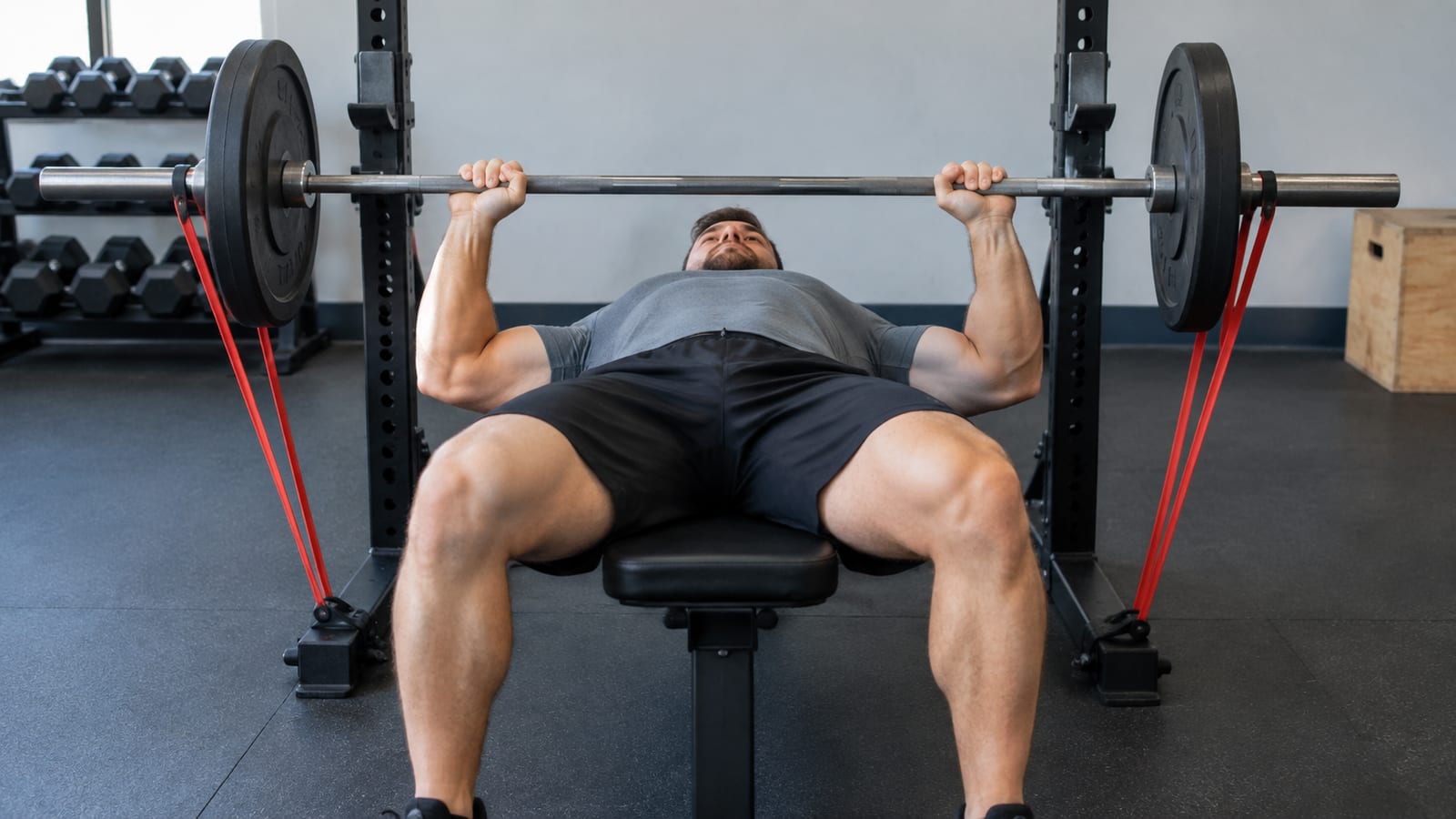
Most lifters should skip heavy eccentric band benching. It carries a high technical and recovery cost, while standard bench work provides a clearer path to progress.
Eccentric band benching uses strong band tension to increase the downward pull during the lowering phase. The lifter must control that force, maintain the touch point, and reverse the bar without losing shoulder position.
This method requires stable equipment, reliable spotters, safeties, and proven bench technique. It also creates more fatigue than the plate weight suggests. That makes it a poor choice during stressful weeks or when shoulders and elbows already feel irritated.
If you use it, keep the exposure brief and supervised. Start with a load you can control throughout the descent. Stop the set when the bar drops faster than planned, the touch point shifts, or the press becomes uneven.
Heavy eccentric work isn’t a badge of advanced training. It’s a narrow tool for a prepared lifter with a clear reason to use it.
How do you know whether accommodating resistance is working?
Track enough detail to separate progress from a good day. “The bands felt strong” tells you nothing useful next month.
Record these points:
- Straight weight on the bar
- Band or chain used
- Anchor height or chain position
- Reps completed
- Reps left in reserve
- Bar speed or visible rep quality
- Depth, touch point, and lockout
- Joint comfort during and after training
- Soreness before the next session
- Performance on the straight-weight version
Progress when the same setup produces better reps, more load, or cleaner speed without hurting recovery. Maintain it when performance is stable and the variation still serves the current goal.
Remove it when technique becomes less repeatable, joints feel worse, or normal lifting declines. Also remove it if setup changes make comparisons unreliable.
The logbook gets the final vote. If the method doesn’t help you beat a relevant baseline, it’s extra equipment rather than better training.
A simple weekly plan
Use accommodating resistance on the first main lift in two sessions. Keep another session focused on straight weight so you don’t lose normal barbell practice.
| Session | Main lift | Secondary work | Progression |
|---|---|---|---|
| A | Banded squat | Straight-weight press, row, hinge, smaller work | Add quality reps before load |
| B | Straight-weight bench press | Leg press, pull, hamstring work, arms | Progress normally |
| C | Chain deadlift | Straight-weight press, row, single-leg work | Add load only when lockouts stay clean |
Keep the variable-resistance work moderate. Perform several crisp sets rather than chasing a grinding top set. Then complete the rest of the session with normal exercises and recoverable effort.
You can also alternate the tool by training block. For example, use banded squats for a block while deadlifts stay straight weight. In the next block, return squats to normal and introduce chains on the deadlift.
Don’t rotate the setup every workout. Repetition gives you data, while constant novelty gives you stories.
If you already use a rotating strength system, this guide to conjugate training shows where exercise variations can fit. Still, the plan has to fit your week. Enough food, sleep, and repeatable technique will do more than another clever attachment.
FAQ
Can I use accommodating resistance with dumbbells?
Yes, but the setup is harder to standardize. Bands attached to dumbbells can pull your hands inward, outward, or backward depending on the anchor. Use light tension and choose movements where a failed rep won’t trap you.
Should I wear out resistance bands before replacing them?
No. Replace bands when you see cracks, thin spots, fraying, or changes in elasticity. Store them away from sharp edges, heat, and direct sunlight, then inspect them before loading a bar.
Can I attach bands to a machine?
You can if the machine has a secure attachment point and the band doesn’t cross moving parts. Test the full path with no added plates first. Stop if the band changes the machine’s alignment or can slip toward you.
Are accommodating resistance exercises suitable for a home gym?
They can be, but the rack and anchors must stay fixed under tension. A lightweight rack that shifts is not good enough for banded squats or presses. Chains are often easier to manage because they don’t pull against the rack base.