
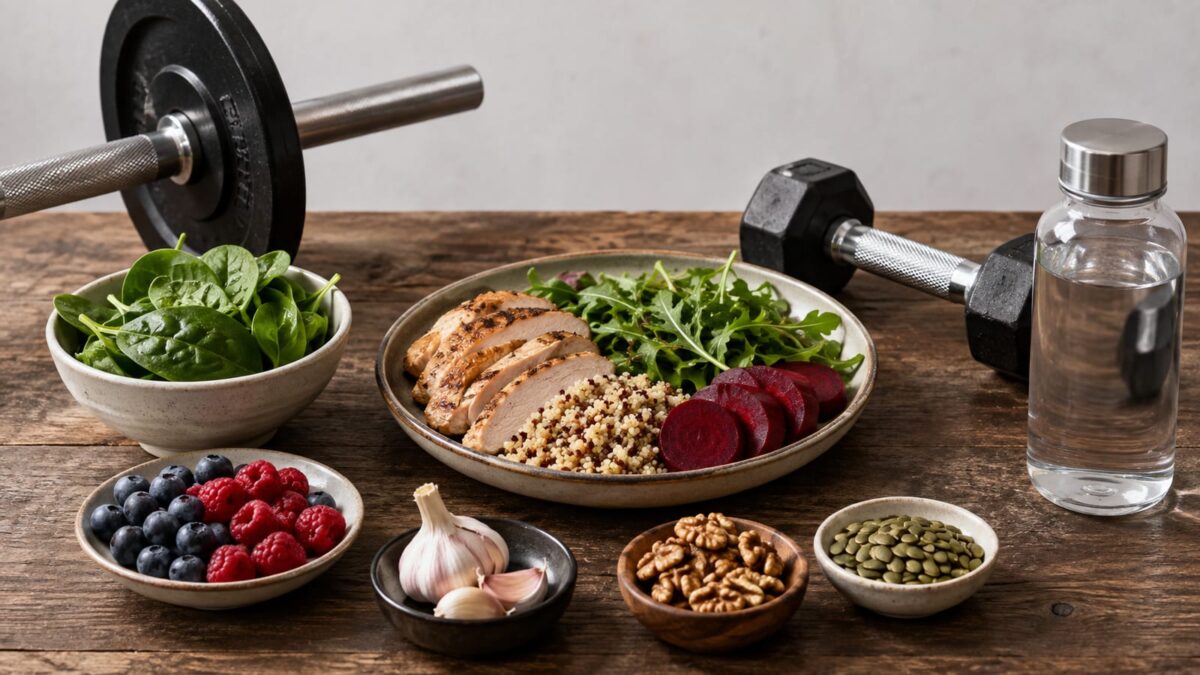
Build Nitric Oxide With Beetroot and Leafy Greens

 0
0
 0
0 Start with beetroot and nitrate-rich greens. The natural nitric oxide-boosting foods you should include are beetroot, arugula, spinach, other leafy greens, citrus, pomegranate, watermelon, garlic, high-cocoa dark chocolate, nuts, and seeds. Beets and greens do most of the work. The rest can help, but don't turn your shopping list into an expensive hunt for a bigger workout pump.
Last updated: 2026-08-07
What natural nitric oxide-boosting foods should you include?
Start at the top of this list. Beetroot and leafy greens provide dietary nitrates, which your body can turn into nitric oxide. Meanwhile, the other foods supply citrulline, arginine, vitamin C, polyphenols, or sulfur compounds. These nutrients support nitric oxide production or slow its breakdown.
| Rank | Food | Clear verdict | Easy way to use it |
|---|---|---|---|
| 1 | Beetroot | Keep it as the main high-nitrate staple | Roast it, drink unsweetened beet juice, or use a powder with a stated nitrate content |
| 2 | Arugula | The easiest no-cook upgrade | Add a large handful to sandwiches, eggs, bowls, and salads |
| 3 | Spinach and other leafy greens | Make them daily defaults | Rotate spinach, lettuce, kale, and chard |
| 4 | Pomegranate | Useful polyphenol support | Eat the arils or choose unsweetened juice |
| 5 | Citrus fruit | Cheap and easy support | Eat oranges or grapefruit, or add lemon and lime to meals |
| 6 | Watermelon | A useful citrulline source | Eat it as fruit, especially when it is in season |
| 7 | Garlic | Good food with a plausible supporting effect | Cook with it regularly instead of expecting a dramatic response |
| 8 | Dark chocolate, nuts, and seeds | Helpful extras, not the foundation | Keep portions sensible and fit them into your calorie needs |
Foods lower on the list still have value. The ranking tells you where to spend your effort first. If your basket contains specialty chocolate and pomegranate juice but no greens, put the arugula back in before you reach the checkout.
Nitric oxide nutrition in plain language
Nitric oxide is a signalling molecule, which means it carries messages between cells. It helps blood vessels relax. As a result, it can support blood flow, blood pressure control, and oxygen delivery during exercise.
Dietary nitrate from vegetables is converted into nitrite, partly by bacteria in your mouth. Your body can then turn that nitrite into nitric oxide. Beetroot, arugula, spinach, lettuce, celery, and other greens matter because they feed this pathway directly.
Citrulline and arginine work differently. Citrulline can raise the amount of arginine available to your body. Meanwhile, arginine is used to make nitric oxide with help from enzymes, which are proteins that drive chemical reactions.
Watermelon supplies citrulline, while nuts and seeds provide arginine. However, a few watermelon slices or pumpkin seeds do not work like a measured nitrate source.
Vitamin C and polyphenols do not turn an orange or pomegranate into a direct nitrate source. Instead, they may help protect nitric oxide from breaking down too quickly. Marketing often drops every helpful ingredient into the same bucket, but the foods do different jobs.
The evidence suggests possible support, not automatic strength, endurance, or muscle gain.
Beetroot and leafy greens come first
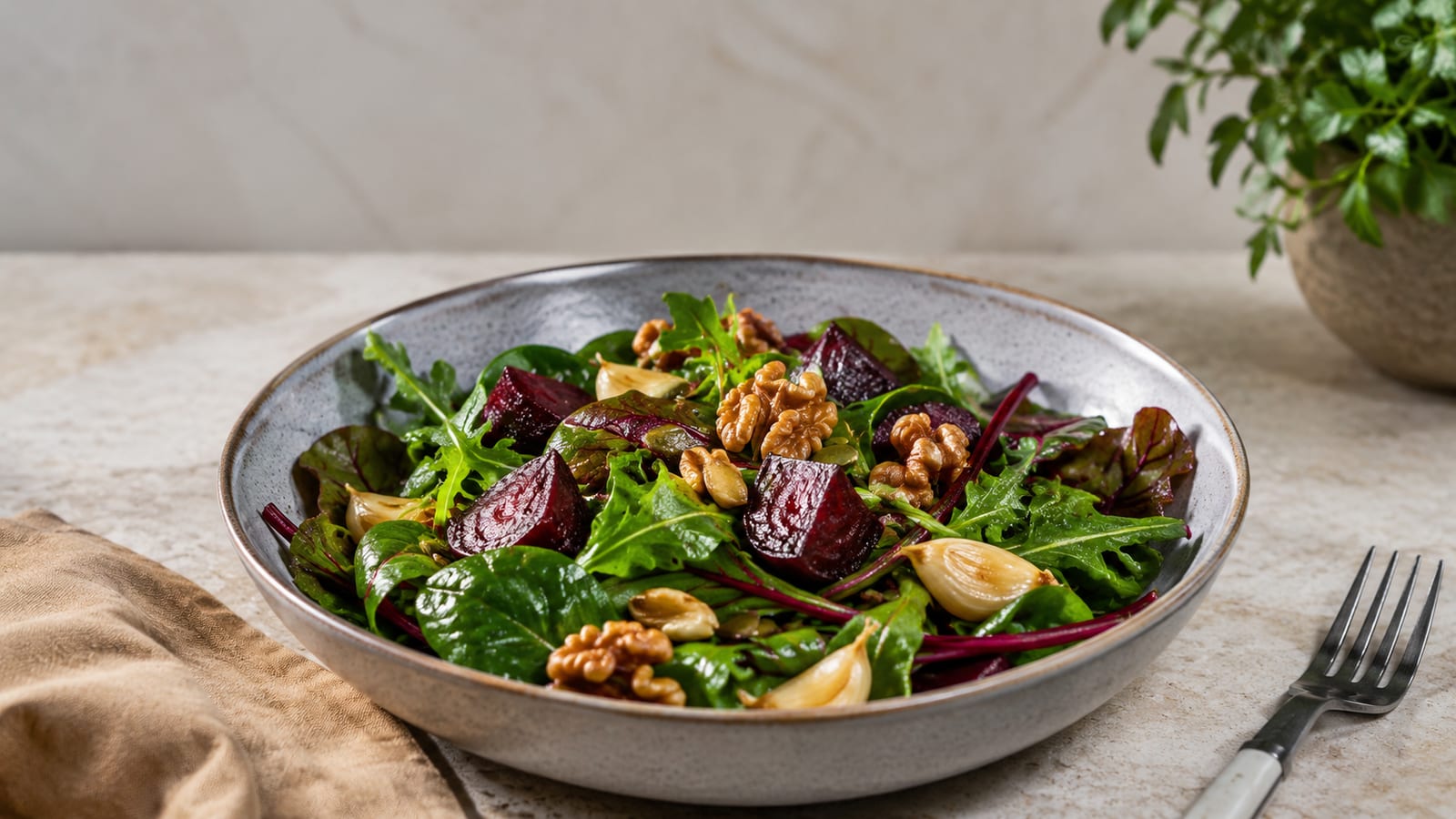
Beetroot and greens are the repeatable foundation because they provide meaningful dietary nitrate without forcing you to redesign your diet. Raw beetroot averages 495 mg of nitrate per 100 g. However, nitrate content changes with growing conditions, storage, and preparation, so that figure is a guide rather than a guarantee.
Spinach averages 740 mg per 100 g fresh weight. Arugula averages 480 mg per 100 grams, and about 50 grams can provide 200 mg or more of dietary nitrates. In practice, arugula is hard to beat because you can open the bag and add it to food.
Use these foods in normal meals:
- Put arugula into eggs, sandwiches, rice bowls, or pasta.
- Roast beetroot on the same tray as potatoes and other vegetables.
- Stir spinach into curries, omelets, soups, or mince dishes.
- Rotate lettuce and kale when the same salad starts becoming a chore.
- Blend beetroot into a smoothie only if your stomach handles it well.
Nitrate-rich vegetables are not interchangeable with processed meats containing added nitrate or nitrite. A bowl of spinach gives you fibre, vitamin C, potassium, and plant compounds. Processed meat brings a different nutrient profile and cooking context.
The World Health Organization acceptable daily intake for nitrate is 0–3.7 mg/kg body weight per day. That is a long-term safety benchmark, not a performance target. If a medical professional has given you a nitrate restriction, follow that advice.
Using beetroot for blood pressure and training
Use beetroot regularly enough to judge it, then keep your expectations in check. Beet juice, roasted beets, and beet powder can all fit. However, powders vary, so a label that only lists powder weight tells you less than one that states nitrate content.
Research on blood pressure is promising but not uniform. A 2017 meta-analysis of regular beet juice consumption reported a mean systolic blood pressure reduction of 3.55 mm Hg. Systolic pressure is the top number in a blood pressure reading.
That change can matter, but beet juice does not replace prescribed treatment. Keep taking medication as directed and discuss any low readings or symptoms with your clinician.
For training, use beetroot before demanding sessions or include it earlier that day. Test it before a normal workout, not before a competition or personal-record attempt. Some lifters feel better blood flow or endurance, while others notice little.
Beetroot may turn urine or stool pink or red. That harmless change can look alarming if you do not expect it. However, unexplained or persistent discoloration still deserves medical attention rather than an automatic beetroot excuse.
Speak with a clinician before making concentrated beet juice a routine if you use blood-pressure medication or already run low. The same caution applies if you have been told to limit oxalate-rich foods. Your joints get a vote in training, and your medical history gets a vote in nutrition.
Which fruits help protect or support nitric oxide?
Citrus, pomegranate, and watermelon earn a place, but they do different jobs. They support the plan rather than replacing nitrate-rich vegetables.
Citrus fruit provides vitamin C and flavonoids that may help preserve nitric oxide availability. Oranges and grapefruit work as snacks, while lemon and lime make greens easier to eat regularly. If you take medication, check whether grapefruit interacts with it.
Pomegranate provides polyphenols that may support blood vessel function and limit nitric oxide breakdown. Whole arils give you fibre and take longer to eat. Unsweetened juice is convenient, but sugar-heavy juice blends make calories easy to drink without noticing.
Watermelon supplies citrulline, which can support the arginine pathway used to produce nitric oxide. Keep it as fruit. A supplement label does not make watermelon more useful than beets or greens.
Buy these foods when they taste good and fit your budget. A seasonal produce guide for muscle-building nutrition can help you rotate fruit without forcing expensive choices all year.
Garlic, dark chocolate, nuts, and seeds
Garlic earns its place because it makes plain food better. Its sulfur compounds may also support processes related to nitric oxide. Add fresh or cooked garlic to sauces, roasted vegetables, meat, beans, and rice.
High-cocoa dark chocolate provides flavanols that may support blood vessel function. Keep the serving small and choose chocolate where cocoa, not sugar, is doing the talking. It is a useful extra, not a reason to let dessert erase your calorie target.
Nuts and seeds provide arginine, useful fats, and minerals. Their bigger value is practical: they make oats, yogurt, salads, and snacks easier to sustain. However, they are calorie-dense and unlikely to produce an obvious pre-workout effect.
Use walnuts, almonds, pumpkin seeds, chia seeds, or flaxseeds according to taste. Buying every bag on the shelf will not make the pathway work better. Pick the ones you can eat regularly while keeping total calories under control.
Antioxidants and nitric oxide availability
Oxidative stress means cell damage caused by unstable molecules. It can break down nitric oxide before your body uses it. Vitamin C, flavonoids, and other polyphenols may help limit that loss.
As a result, an orange, a bowl of berries, pomegranate arils, cocoa, herbs, and vegetables can support nitric oxide availability. They can help even when they are not rich nitrate sources.
Food variety is the right approach. Large antioxidant supplement doses are not a more serious version of eating fruit and vegetables. They may also interfere with some training adaptations, while whole foods bring fibre and other nutrients.
Build meals with several plant foods across the week. Rotate colours, flavours, and preparation methods. The same approach also gives you more options among anti-inflammatory foods for athletes without turning lunch into a chemistry project.
A simple routine for a busy lifter
Make beetroot or leafy greens part of two dependable meal patterns. Then add fruit, garlic, nuts, seeds, or dark chocolate where they already fit. The plan has to fit your week.
Try these combinations:
- Eggs, potatoes, spinach, and citrus fruit
- Chicken, rice, roasted beetroot, and arugula
- Yogurt, pomegranate arils, and walnuts
- Pasta with garlic, meat, and a large arugula salad
- Oats with seeds, fruit, and high-cocoa dark chocolate
- A pre-training meal with lean protein, carbohydrate, and roasted beets
- Beet juice alongside a familiar meal before a demanding session
- Watermelon with yogurt or another protein source in warm weather
Keep protein and carbohydrate in the meal. Protein supports repair and muscle growth. Meanwhile, carbohydrate helps you train with intent and repeat productive sets.
Hydration matters as well. Better blood flow does little for a session built on poor fluid intake, inadequate food, and short sleep. If recovery is the weak point, start with these foods for muscle recovery and soreness instead of adding another powder.
The natural nitric oxide-boosting foods you should include are ordinary foods that work inside a complete diet. Build the meal first. Then judge beet juice or another concentrated option by performance, digestion, cost, and whether you will keep using it.
What will nitric oxide foods not fix?
Nitric oxide foods cannot fix a training plan with no progression. They will not make poor technique safer or turn half-effort sets into quality reps. If you want more muscle, you still need to add weight or reps and earn the next increase.
They also cannot replace enough protein, carbohydrate, calories, sleep, and hydration. A stronger pump may make a session feel better, but it does not prove the workout produced more growth. Beat the logbook with repeatable technique rather than judging progress by how tight your sleeves feel.
These foods cannot treat high blood pressure, chest pain, poor circulation, or another medical condition on their own. Use food to support appropriate care, not avoid it. If symptoms are new or worsening, speak with a qualified clinician.
For most natural lifters, the right order is simple: train well, recover, eat enough, and make beets and greens regular foods. Then add the supporting choices you enjoy. Small increases add up, but only when the basics stay in place.
FAQ
Does cooking remove nitrate from vegetables?
Boiling is the method to watch because nitrate can move into the cooking water. Pour that water down the sink, and some nitrate goes with it. Roast, steam, or sauté the vegetables instead, or keep the liquid when making soup.
Can antiseptic mouthwash affect dietary nitrate conversion?
Yes. Strong antiseptic mouthwash can reduce the oral bacteria that convert nitrate into nitrite. However, dental care comes first, so do not stop prescribed treatment for a better workout pump. Ask your dentist about frequent use if you are concerned.
Is beet powder as useful as beet juice?
It can be, but the label has to show what you are getting. Powder weight alone does not tell you the nitrate content. Keep it only if the product states enough useful information and performs well on digestion, training response, and cost.
Can you combine nitrate-rich foods with creatine?
Yes. They work through different pathways and can fit into the same nutrition plan. Creatine supports repeated high-effort work over time, while nitrate-rich foods may help blood flow and exercise efficiency. There is no prize for making the plan more complicated, so keep each one only if it serves a clear purpose.