How Pilates Builds Muscle, and Where It Falls Short

 0
0
 0
0 Pilates can build some muscle and make you stronger, especially if you’re new to resistance training. However, will Pilates build muscle to the same degree as weight training? Usually not. If you’re a time-limited natural lifter, progressive resistance training, enough food, sound technique, and recoverable effort make a better foundation. Use Pilates for control, endurance, mobility, and core strength.
Last updated: 2026-08-26
Will Pilates build muscle?
Yes, Pilates can build muscle, but its muscle-building ceiling is limited for most people. The exercises challenge your muscles with body weight, springs, bands, mechanical advantage, and long periods of tension. That can improve strength, muscular endurance, coordination, and control.
The problem is progression. Muscle growth depends on giving a muscle a hard enough stimulus, then gradually asking it to do more. Traditional resistance training makes that simple. You can add weight or reps, record the result, and repeat the process.
Pilates can provide the stimulus. It doesn’t always make the next increase easy to measure.
A beginner may gain noticeable muscle from Pilates because almost any challenging resistance can work at first. Later, the same movements may improve control without adding much muscle mass. That’s the point where many people mistake better endurance for continued growth.
Pilates can build some muscle. It’s less efficient than weight training for substantial muscle mass.
Does Pilates build muscle, or does it mainly build endurance?
Pilates develops several useful adaptations:
- Local muscular endurance
- Trunk stability
- Joint control
- Balance and coordination
- Strength through certain ranges of motion
- Some muscle growth, especially in beginners
Muscular endurance means you can repeat a movement or hold a position longer before your muscles fatigue. Hypertrophy means an increase in muscle size. They overlap, but they aren’t the same result.
A set of controlled leg lifts may leave your hip muscles burning. That shows the muscles are working. It doesn’t prove the exercise provides enough progressive tension for substantial growth over many months.
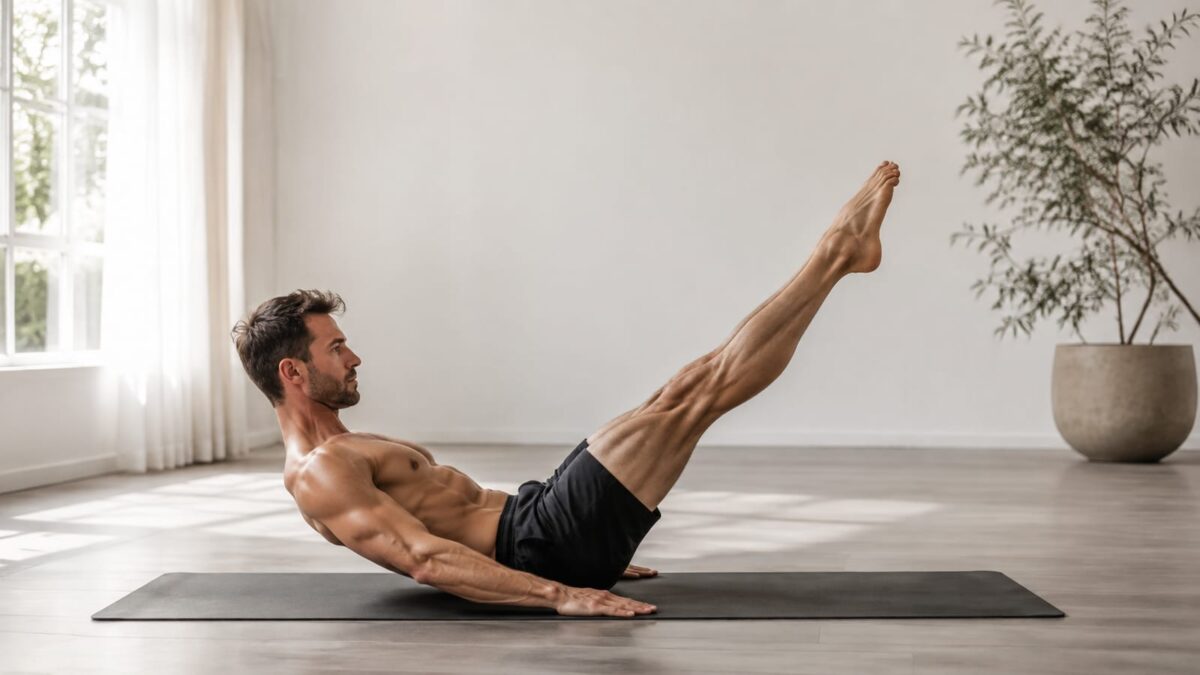
The same applies to core work. Pilates can make your abdominals work harder and improve how you brace. It may also build some abdominal muscle. However, endless pulses aren’t a replacement for progressively loaded exercises if your main goal is thicker, stronger muscle.
The useful test is simple: can you make the exercise harder in a trackable way while keeping repeatable technique? If not, you’re probably training endurance more than building new muscle.
Can Pilates build muscle if you’re new to resistance training?
Yes. Beginners often gain strength and some muscle from Pilates because the exercises provide a new challenge. Your nervous system learns to coordinate the movement, and your muscles adapt to the work.
You may notice better performance in planks, bridges, side leg work, push-up variations, and reformer exercises. Some early strength gains come from improved coordination rather than larger muscles. That still matters. Better control gives you a stronger base for future training.
Results usually slow when the exercises stop becoming difficult. If you can perform more repetitions, hold positions longer, or use a harder variation, you can keep progressing for a while. Eventually, body-weight movements may become too easy for the target muscle.
Do this first:
- Choose a few demanding Pilates movements for your main muscle groups.
- Record repetitions, hold times, spring settings, or resistance.
- Keep the same technique from session to session.
- Add a harder variation or more resistance when the current version becomes easy.
- Stop adding difficulty if your hips, back, shoulders, or neck start taking over.
You’re not proving toughness. You’re building a baseline you can beat.
Can you build muscle with Pilates without progressive overload?
Not reliably. A muscle needs a reason to adapt, and that reason must remain challenging as you get stronger.
Progressive overload means gradually increasing the training demand. With Pilates, that can mean:
- Using a stronger resistance band
- Adding ankle weights or dumbbells
- Choosing a harder exercise variation
- Increasing the range of motion
- Slowing the lowering phase
- Holding a difficult position longer
- Performing more controlled repetitions
- Reducing assistance from the other limb
- Using a heavier reformer spring when appropriate
You don’t need to change everything at once. Change one variable and record what happened. If you add resistance while your technique falls apart, you didn’t create better training. You created a different movement.
Controlled repetitions matter because momentum can hide weak muscles. A leg lift that swings through the range may feel harder, but the target muscle may not be doing more useful work.
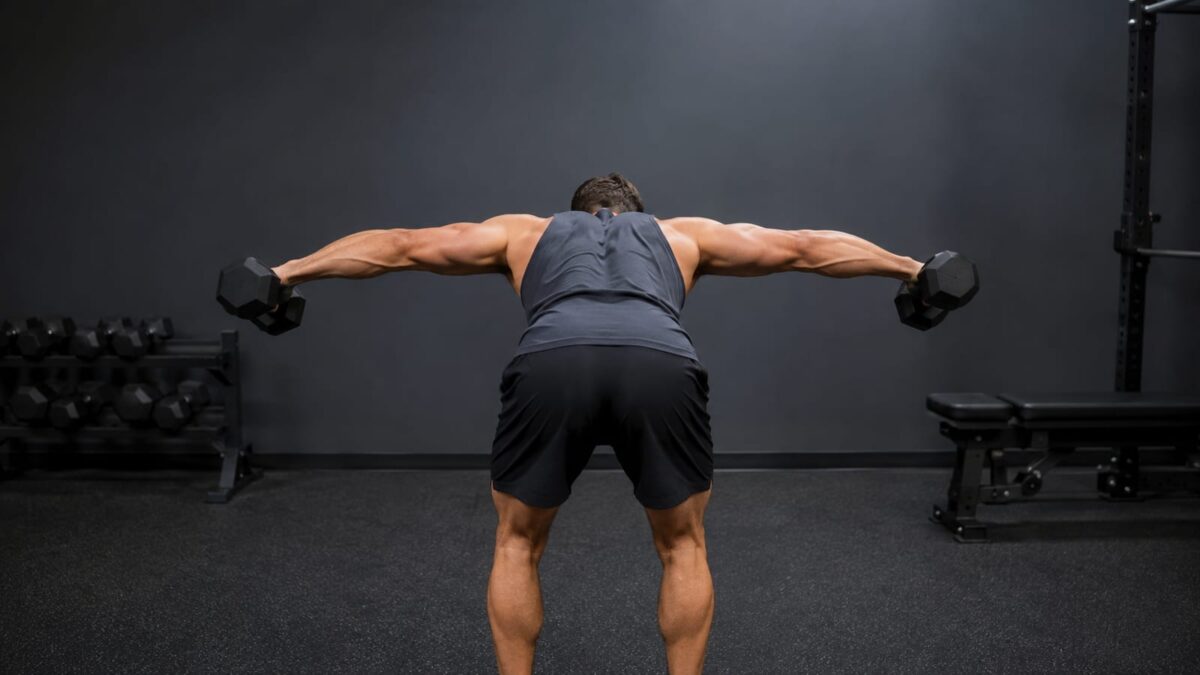
Progression also has to reach the right muscles. Making a core exercise harder won’t build your chest if your chest receives little direct tension. Each muscle needs enough challenging work of its own.
Can Pilates build muscle mass as efficiently as weight training?
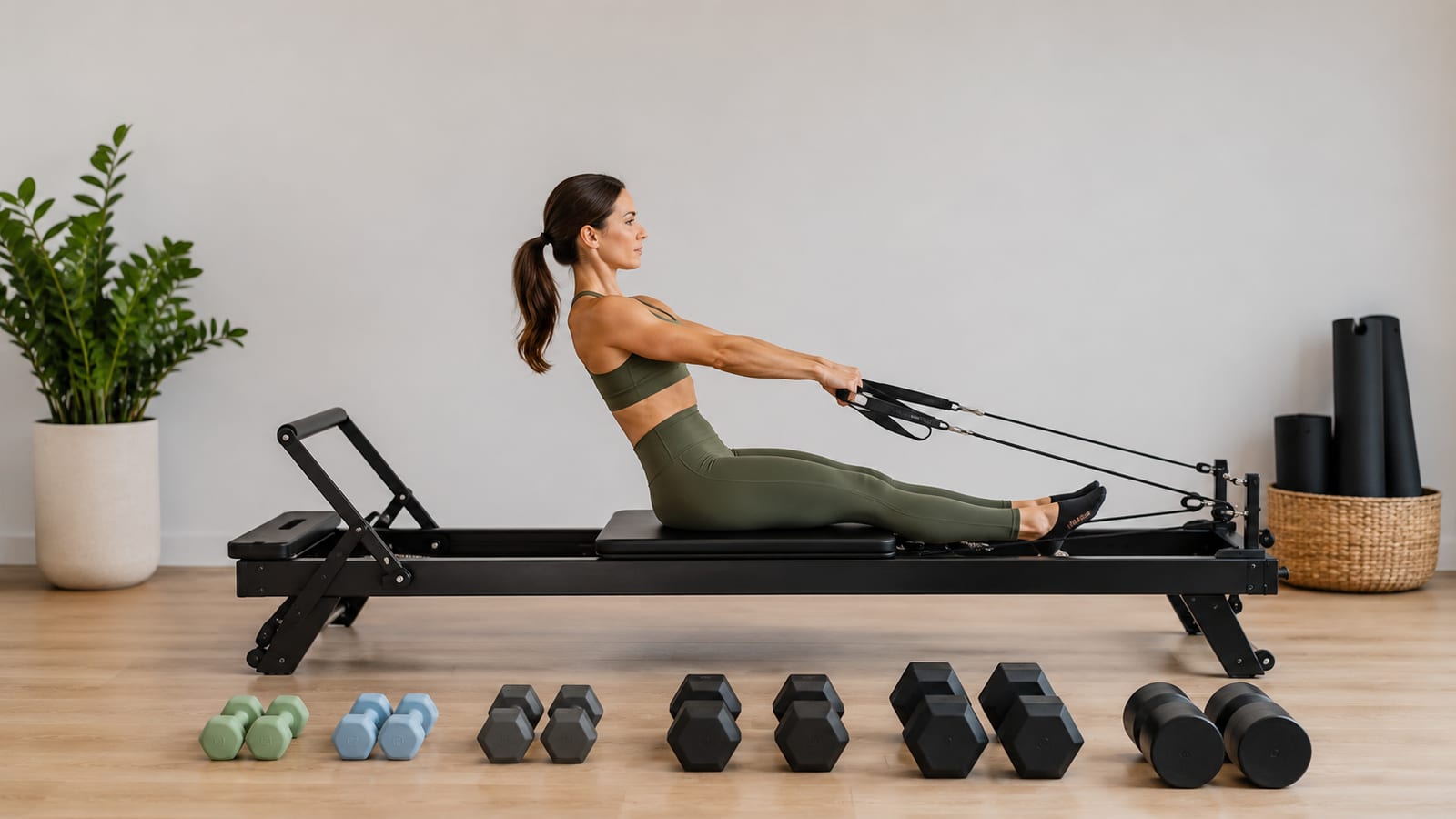
No. Weight training is usually more efficient for building muscle mass because it makes loading, volume, and progression easier to measure.
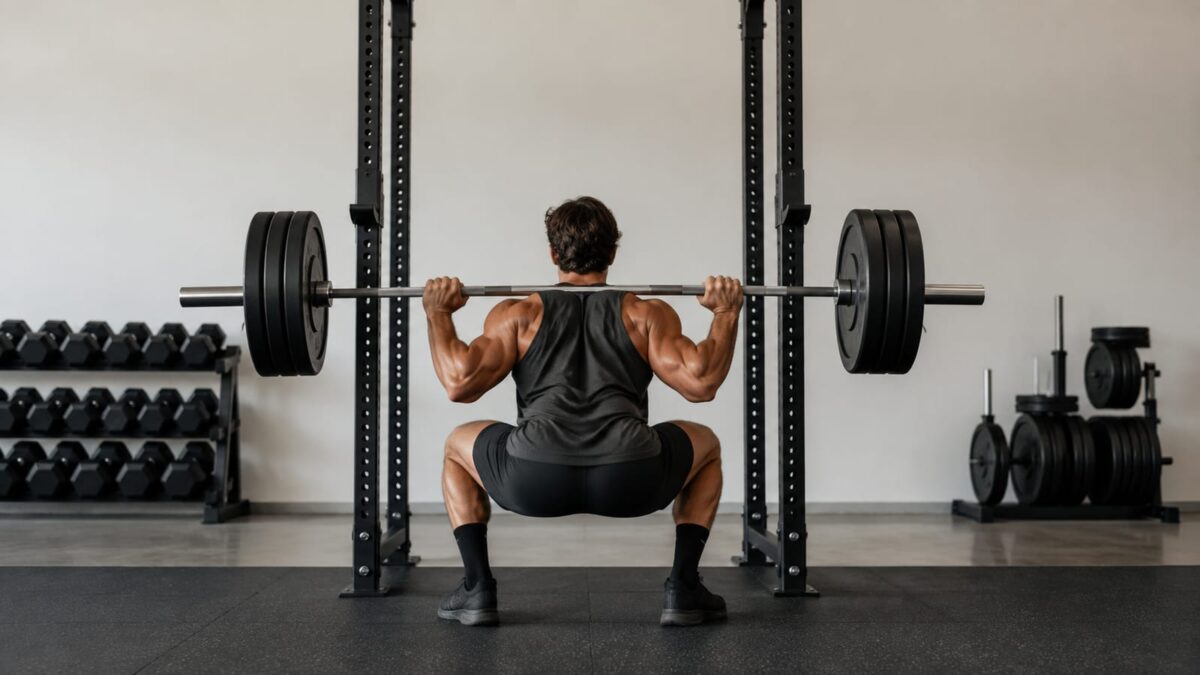
A squat, row, press, or Romanian deadlift can be loaded with small increases. You can also perform stable sets in a broad range of repetitions without balance or coordination becoming the main limitation.
Pilates often asks several muscles to work together. That’s useful for control and movement quality. However, the muscle you want to grow may stop because your balance, grip, breathing, or position fails first.
| Goal | Pilates | Conventional resistance training |
|---|---|---|
| Core control | Strong choice | Also effective |
| Local muscular endurance | Strong choice | Effective when programmed |
| Mobility and body control | Strong choice | Depends on exercise selection |
| Measurable loading | Possible, but less consistent | Straightforward |
| Substantial muscle gain | Limited for most people | Better foundation |
| Beginner strength gains | Often useful | Usually easier to progress |
| Training close to muscular failure | Possible in some movements | Easier to apply safely |
That doesn’t make Pilates a poor form of exercise. It makes it a poor substitute for a complete muscle-building plan if size is the main target.
What is the best Pilates to build muscle?
The best option depends on how much resistance you can apply and how clearly you can progress it. None of these formats earns a blanket “best” label.
Mat Pilates
Mat Pilates uses body weight and floor-based movements. It’s convenient, inexpensive, and useful for learning bracing, hip control, spinal movement, and basic strength.
It can challenge your abdominals, glutes, hip muscles, shoulders, and chest. However, lower-body and back progression can become difficult once basic movements stop being demanding.
Keep mat Pilates if you need a simple routine you can repeat anywhere. Add bands, weights, or harder variations when the exercises no longer provide productive sets.
Reformer Pilates
Reformer Pilates uses a moving carriage, springs, straps, and foot or hand positions. The equipment can provide more resistance and support than mat work.
That makes some exercises easier to scale. It can also improve control through a longer range of motion. Still, a reformer class is not automatically a muscle-building session. Light springs, high repetitions, and frequent exercise changes may create fatigue without enough progressive tension.
Choose reformer Pilates if you enjoy the format and can track meaningful increases in resistance or exercise difficulty. Don’t assume an expensive class is harder than a basic resistance workout.
Weighted Pilates
Weighted Pilates adds dumbbells, ankle weights, kettlebells, or resistance bands to familiar movements. This can improve the challenge for the shoulders, arms, glutes, and legs.
The added load has to serve the movement. Small weights held during arm pulses may improve shoulder endurance, but they may not provide the same growth stimulus as progressively loaded presses or rows.
Weighted Pilates is worth keeping if the resistance makes the target muscle work hard while your technique stays controlled. If the added weight only makes you wobble, shorten the range, or strain your neck, remove it.
For a broader comparison, see this guide to Pilates and calisthenics.
Is Pilates for muscle building enough for a natural lifter with limited time?
Usually, no. A natural lifter with limited time should make repeatable resistance training the main plan and use Pilates as an optional complement.
Start with a few basic patterns:
- A squat or leg press
- A hip hinge
- A horizontal press
- A row or pulldown
- A direct shoulder, arm, or calf movement
- A short core exercise
Perform focused working sets, keep most sets close to but short of technical failure, and record your repetitions and resistance. Add weight or reps when the same clean work becomes easier.
Then use Pilates on a separate day or after a lighter lifting session. It can help you practice trunk control, hip movement, breathing, and positions that your lifting routine may not cover.
The best bodyweight exercises for muscle gain can also help if you train at home. However, body weight still needs progression. A movement doesn’t build muscle forever just because it once felt difficult.
The plan has to fit your week. Three dependable lifting sessions plus one short Pilates session will beat a complex schedule you keep missing.
Does Pilates make you stronger in a practical sense?
Yes, Pilates can make you stronger in a practical sense. It’s especially good at improving local muscular endurance, balance, stability, coordination, and control.
You may hold a position longer, maintain better posture, control your pelvis, or move through daily tasks with less strain. Those are real improvements. They just aren’t the same as increasing your maximum squat, deadlift, press, or row.
Pilates tends to develop strength in supported positions and controlled ranges. It also teaches you to keep several parts of your body organized while one part moves.
That type of strength can support lifting, running, sport, and daily movement. Still, if you want maximal strength, practice lifting heavier loads with consistent technique. Your joints get a vote, so use stable exercises and stop before form breaks down.
A controlled trial involving older women compared Pilates, resistance training, and a control group. After 12 weeks, Pilates did not produce a statistically significant between-group difference in isokinetic strength compared with resistance training. That result doesn’t mean Pilates does nothing. It means you shouldn’t claim it matches conventional resistance training for every strength outcome.
How should you train your Pilates muscle groups for growth?
Train each target muscle with an exercise that actually limits that muscle. Then provide enough resistance, use controlled repetitions, and allow recovery before demanding the same tissues again.
| Muscle group | Pilates can train with | Where it may fall short |
|---|---|---|
| Core | Planks, roll-downs, dead-bug patterns, teasers | Heavy trunk loading is harder to measure |
| Glutes | Bridges, leg presses, hip extension, side leg work | High-level loading may be limited |
| Hips | Side-lying abduction, circles, resisted external rotation | Small muscles may fatigue before larger ones |
| Shoulders | Planks, arm work, push-up variations, bands | Arm pulses often favor endurance |
| Chest | Push-ups, presses, reformer work | Progression can be difficult without added load |
| Back | Pulling straps, rows, extensions, bands | Back loading is usually easier with rows and pulldowns |
| Legs | Squats, lunges, footwork, split-stance work | Balance or breathing may limit the set first |
Most working sets should end with clean repetitions still available. In plain terms, stop when you could complete another few good reps without changing your position or using momentum.
You can push harder on stable movements such as bridges, leg presses, rows, and band work. Be more careful with exercises that load the spine, challenge balance, or place your neck in a poor position.
Recovery still matters. Hard sessions for the same muscle need enough time, food, and sleep before you repeat them. More Pilates classes are not automatically better if your performance keeps dropping.
Can weighted Pilates improve its muscle-building results?
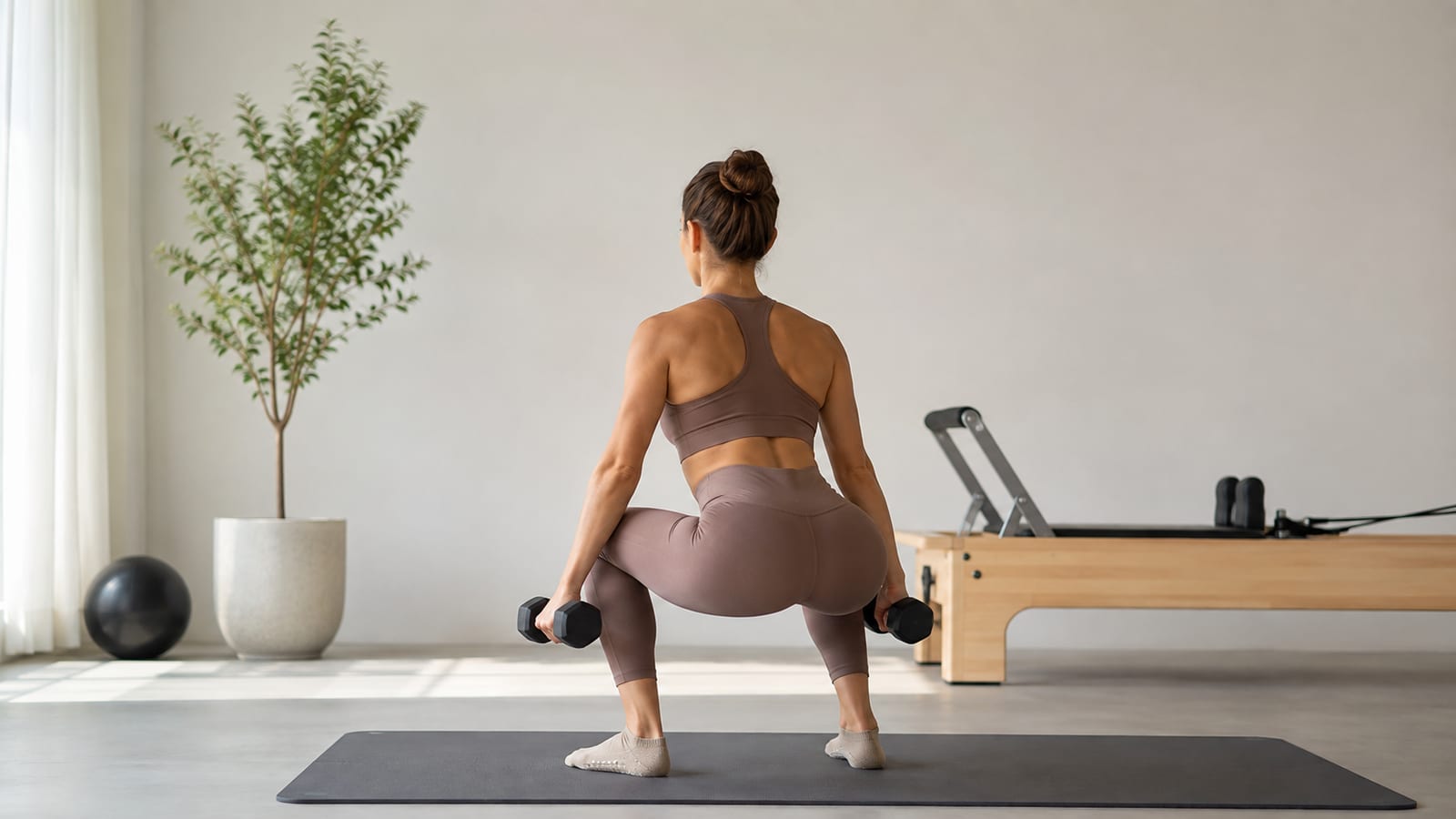
Yes, added resistance can improve Pilates’ muscle-building potential. Dumbbells, ankle weights, bands, and heavier reformer springs all give you more ways to increase the training demand.
The resistance only helps if it creates enough tension in the target muscle. A heavier spring that makes you lose pelvic control is not a useful upgrade. Neither is an ankle weight that turns a clean leg raise into a swinging movement.
Use a simple progression:
- Pick a stable exercise and a repeatable setup.
- Record the resistance and repetitions.
- Keep the range of motion consistent.
- Add repetitions while your technique remains clean.
- Increase resistance when the current workload becomes manageable.
- Return to the lower end of your repetition range and build again.
This is the same basic logic used in other resistance training. The equipment changes. The adaptation process doesn’t.
Weighted Pilates may work well for glutes, shoulders, arms, and core endurance. For substantial leg, chest, and back growth, conventional resistance exercises usually offer more load and clearer progression.
What does the evidence say about Pilates and muscle in postmenopausal women?
Research in postmenopausal women supports useful improvements in some strength and physical function measures. It does not support promising large increases in muscle mass from Pilates alone.
A systematic review and meta-analysis examined Pilates’ effect on muscle strength in older adults compared with control groups. It reported a standardized mean difference of 1.18, with a 95% confidence interval from -0.71 to 3.08.
That wide interval means the result should be read with care. The finding does not justify saying Pilates reliably produces large muscle gains for every older adult.
The controlled trial of older women mentioned above found no statistically significant between-group difference in isokinetic strength between Pilates and resistance training. That comparison concerns a specific strength measure, not every possible change in function or body composition.
For adults, the U.S. Physical Activity Guidelines recommend muscle-strengthening activity on at least 2 days each week. Pilates may count as strengthening when it challenges the muscles sufficiently. However, the exercise still needs enough resistance and progression to match your goal.
For postmenopausal women, Pilates can be a sensible way to improve control, balance, confidence, and muscular endurance. If building as much muscle as practical is the goal, add progressive resistance training.
How can you combine Pilates and resistance training without wasting recovery?
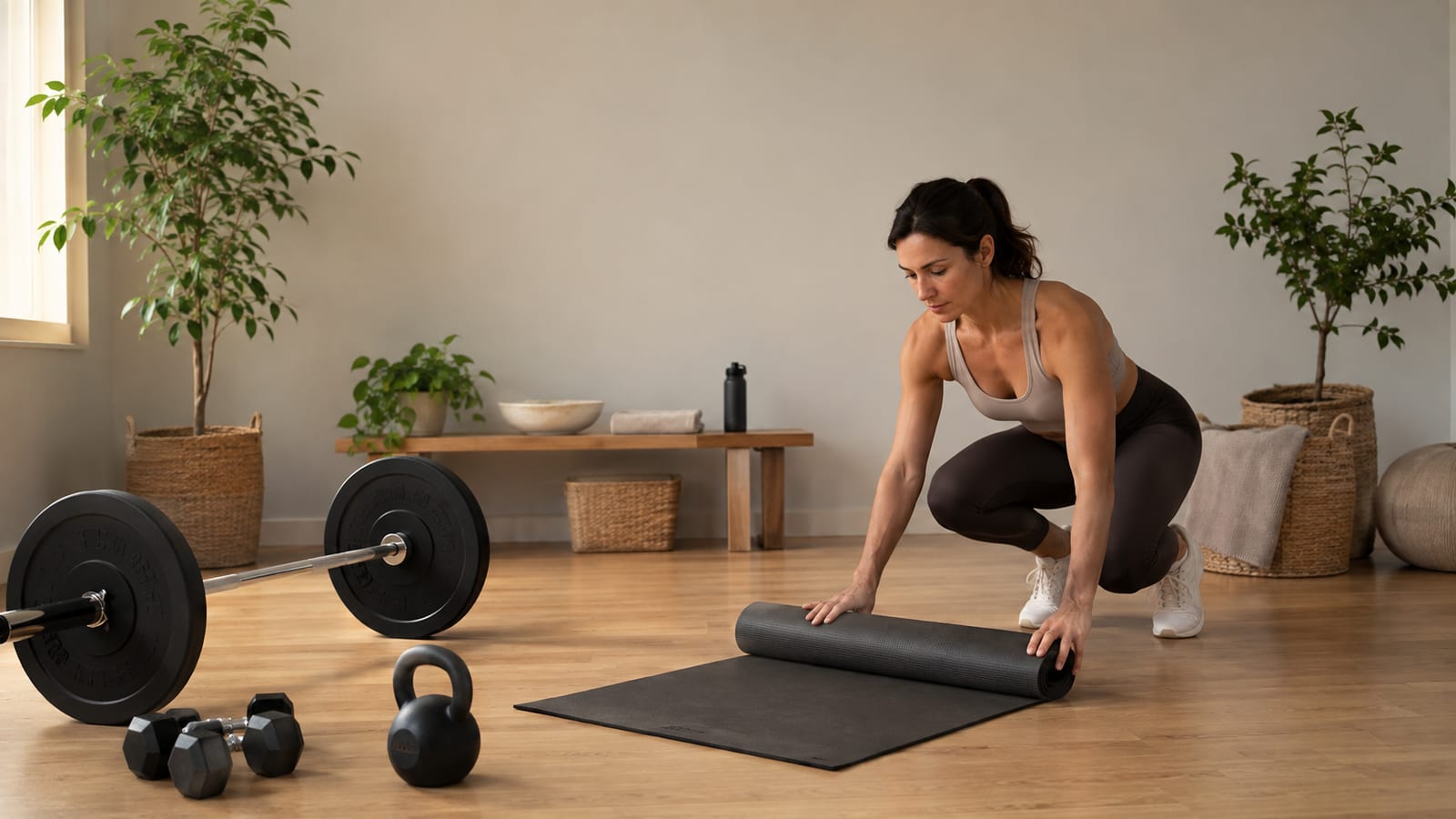
Put progressive lifting first in the week and use Pilates to support it. You don’t need to turn every session into a hard workout.
A simple schedule could look like this:
| Day | Training |
|---|---|
| Monday | Full-body resistance training |
| Tuesday | Pilates at an easy or moderate effort |
| Wednesday | Rest or light activity |
| Thursday | Full-body resistance training |
| Friday | Rest |
| Saturday | Full-body resistance training or Pilates |
| Sunday | Rest |
If Pilates leaves your legs or shoulders exhausted, don’t place it before the lifting session that needs those muscles. Move it later, reduce the effort, or shorten the class.
Keep demanding compound lifts away from unnecessary fatigue. A hard Pilates leg session before squats may reduce your repetitions and make technique less repeatable. That is recovery spent without a clear return.
You can also use short Pilates blocks after lifting. Focus on breathing, trunk control, mobility, and low-fatigue work. Pilates should help you recover and move better, not compete with the sessions responsible for most of your muscle gain.
What should you eat and measure if your goal is muscle building with Pilates?
Eat enough total food to support training and recovery. Include sufficient protein across your meals, and don’t treat Pilates as a reason to underfeed yourself.
Sleep affects performance, coordination, and your ability to recover from hard work. If your training feels worse each week, check food and sleep before adding another class.
Track simple markers:
- Repetitions completed
- Resistance used
- Exercise variation
- Range of motion
- Hold duration
- Technique quality
- Body measurements
- Body weight trend
- Performance in your main resistance exercises
Body weight alone cannot tell you whether you gained muscle. Measurements and performance give you more useful context. If your repetitions and resistance never improve, your muscles have little reason to keep adapting.
For core work, also track control. Can you keep your ribs, pelvis, and spine in position as the exercise gets harder? If not, reduce the difficulty and earn the next increase.
Pilates can support muscle building when it becomes progressively harder. It cannot replace adequate food, recovery, and measurable resistance.
Who should use Pilates for muscle building?
Pilates is a good choice if you want low-impact training, better body control, improved balance, or a structured way to train your core and hips. It also suits beginners who need to build movement tolerance before lifting heavier loads.
It can be useful during a return from injury when a qualified professional has cleared the exercises. However, low impact does not mean risk-free. A painful position is still a poor position, even if the class calls it advanced.
Pilates is a weaker choice as your only plan if you want substantial muscle mass, higher maximal strength, or the fastest measurable progression. In that case, start with resistance training and add Pilates where it improves your movement or helps you stay consistent.
You don’t need to choose the most complicated plan. Choose the method you can progress, recover from, and repeat.
FAQ
Can Pilates build muscle in your legs?
Yes, Pilates can build some leg muscle, especially if you’re a beginner or use challenging footwork, squats, lunges, bridges, and resistance tools. Once those exercises stop becoming difficult, add progressive resistance training for clearer lower-body growth.
How long does it take to see muscle from Pilates?
There is no useful universal deadline. Beginners may notice better control and strength before visible muscle changes. Track exercise performance and body measurements over time instead of judging progress from a few classes.
Is reformer Pilates better than mat Pilates for muscle?
Reformer Pilates usually offers more ways to adjust resistance and support difficult positions. That can help progression. Still, a reformer class only builds more muscle if the resistance is challenging, controlled, and increased over time.
Should you do Pilates before or after weight training?
Do weight training first if muscle and strength are your main goals. Pilates can follow a lifting session or sit on a separate day, provided it doesn’t reduce your performance on the next demanding workout.
Can Pilates replace strength training?
Pilates can replace strength training for some beginners, older adults, or people focused on control and general function. It’s usually not enough by itself for substantial muscle mass or maximal strength. Add progressive resistance work when those goals matter.
Related on this blog