Why Strength and Muscle Size Do Not Match

 0
0
 0
0 Strength does not automatically equal size. Bigger muscles usually raise your strength potential, but skill, nervous-system efficiency, body proportions, genetics, and lift practice can make one lifter much stronger than another of similar size. Train both with basic lifts, measurable progression, enough food, and recovery.
Last updated: 2026-08-26
Strength and size are closely related, but neither gives you a perfect reading of the other. Build muscle to increase your force-producing capacity, then practice the lifts you want to improve. The plan has to fit your week, or the theory stays in the notebook.
Does strength equal size?
No. Strength and muscle size overlap, but they aren’t the same adaptation.
A larger muscle generally has more potential to produce force. Still, the weight you lift also depends on how well you perform a specific task. A skilled powerlifter can move more weight than a bigger lifter who rarely practices that lift.
The reverse can happen too. You can add muscle through moderate- or high-repetition training without seeing a matching increase in your one-repetition maximum. Your muscles may grow, while your technique, coordination, or confidence under heavy load lags behind.
That’s why the question “does strength equal size?” needs a useful answer rather than a slogan:
- Strength can increase without much visible muscle growth.
- Muscle can grow without a matching increase in a practiced lift.
- Bigger muscles usually improve your long-term strength potential.
- Tested strength also reflects skill, body proportions, technique, and fatigue.
Use both size and performance to judge progress. Don’t use one number to explain your whole body.
Muscle size and strength measure different things
Muscle hypertrophy means an increase in a muscle’s cross-sectional size. In plain terms, the muscle becomes thicker. Training, food, recovery, and your individual response all affect how much growth you earn.
Strength means your ability to produce force in a specific task. A deadlift, dumbbell curl, and vertical jump all test strength differently. Being good at one doesn’t make you equally good at the others.
Your tested lift is also a skill. You need to brace, position your joints, control the weight, and apply force in the right order. Those details can improve before your muscles look different.
This is why muscle size and strength should be tracked separately:
| What you track | What it tells you |
|---|---|
| Body weight | Whether your overall mass is changing |
| Arm, chest, thigh, or waist measurements | Whether body size is changing in specific areas |
| Progress photos | How your shape is changing |
| Repeated lift performance | Whether you’re producing more force |
| Technique and range of motion | Whether the performance gain is useful |
| Hard weekly sets | Whether the muscle is receiving enough work |
A stronger lift with shorter range of motion is not the same result as a stronger lift with repeatable technique. Make every set serve a purpose.
Why can a stronger lifter be smaller than a bigger lifter?
A stronger lifter may be better at the task. That advantage can come from practice, coordination, technique, and favorable mechanics rather than larger muscles alone.
Exercise skill matters most in lifts you perform often. A lifter who practices heavy squats can learn to brace harder, maintain position, and use the strongest part of the movement. Another lifter may have bigger legs but less practice under a heavy bar.
Technique also changes where the load goes. In a bench press, grip width, arch, touch point, and bar path can alter the demand on your chest, shoulders, and triceps. In a deadlift, start position and hip height can make the same weight feel like a different lift.
Your body proportions matter too. Longer arms may help a deadlift but make a bench press harder. Shorter femurs may make squatting feel more natural, while longer femurs can demand more forward torso lean.
These differences don’t make the stronger lifter a fraud. They show that a lift measures performance in one task, not total muscle size.
If you want a fair comparison, use the same exercise, range of motion, setup, and rep standard. Otherwise, you’re comparing different tests.
Neural skill raises strength before size shows
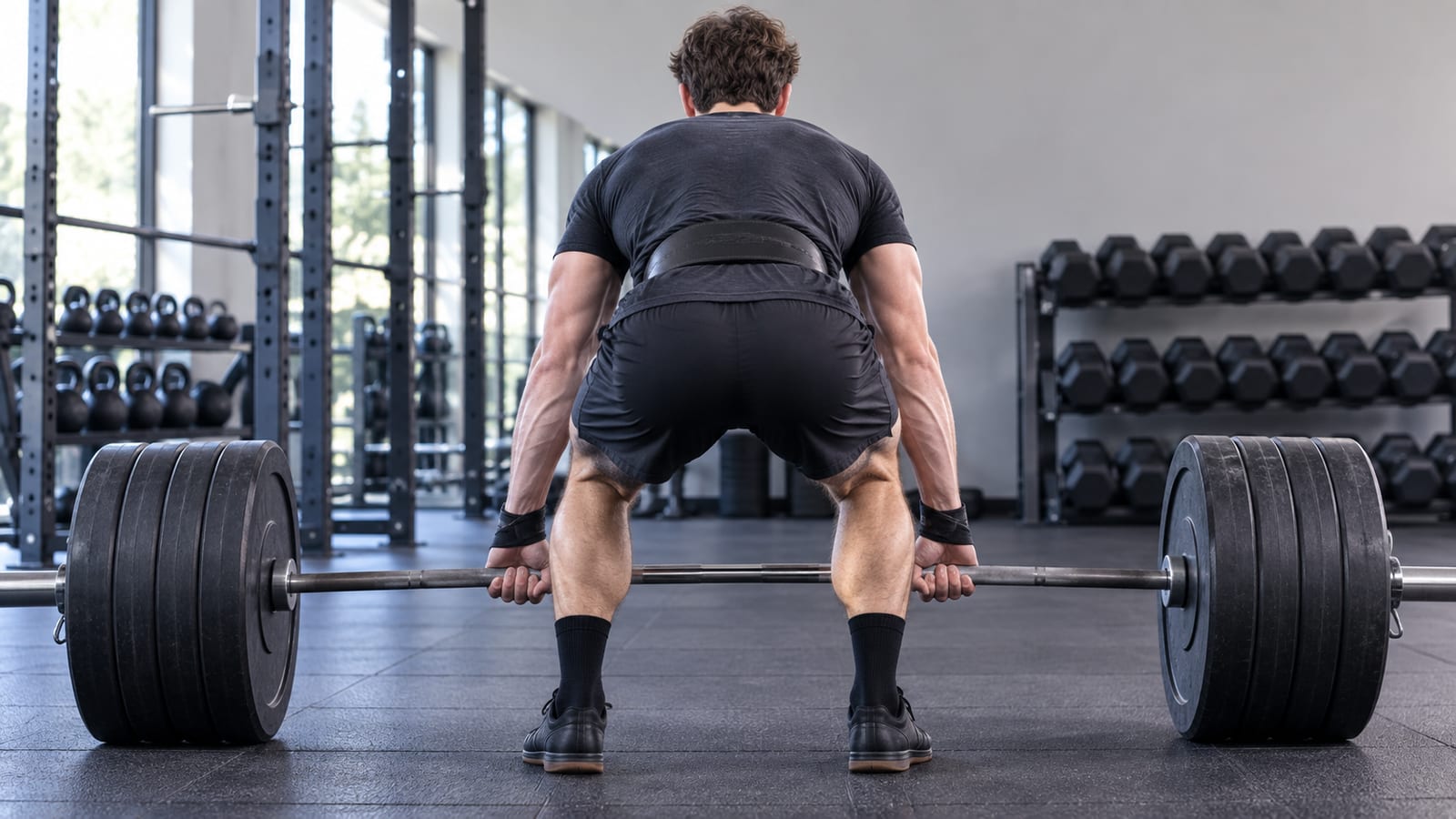
Early strength gains often come from your nervous system learning to use the muscle you already have.
Your brain sends signals through motor units. A motor unit is one motor nerve and the muscle fibers it controls. As you train, you can improve several parts of this process:
- Recruit more motor units for a demanding task.
- Fire those motor units more quickly.
- Coordinate muscle groups more effectively.
- Reduce unnecessary resistance from opposing muscles.
- Improve timing, bracing, balance, and force direction.
For training, the useful point is simple: your body becomes better at producing force in the movement you repeat.
A review of resistance-training research found that neural adaptations make a major contribution to strength gains during the early weeks of training. In one comparison, 80% one-repetition-maximum training produced greater neural drive and better muscle-activation efficiency than 30% one-repetition-maximum training after six weeks.
That same comparison found greater strength gains from 80% training despite equivalent hypertrophy. The muscles didn’t grow more, but the lifters improved their ability to use them for that task.
This is why beginners can add weight quickly without looking dramatically different. They’re learning the lift, not breaking the laws of muscle growth. Keep the technique repeatable while the nervous system earns the next increase.
Bigger muscle raises strength potential
A larger muscle usually has more force-producing capacity. More contractile tissue gives you a bigger base to train and use.
However, potential is not the same as tested performance. A larger muscle that lacks coordination, favorable mechanics, or practice may perform worse in a specific lift than a smaller but more skilled muscle.
Think of muscle size as part of the engine. Strength also depends on how well the engine connects to the task. Your technique, bracing, joint positions, tendon structure, and nervous system all affect the result.
Heavy training has a stronger effect on one-repetition-maximum strength than low-load training. A meta-analysis found similar muscle hypertrophy from low-load and high-load resistance training when sets were taken to or near failure.
The same body of research found greater one-repetition-maximum strength gains from high-load training. Another meta-analysis reported a high-load strength advantage over low-load training with a standardized mean difference of 0.60 to 0.63, with P values from 0.001 to 0.003.
The practical decision is clear:
- Use heavier loads for regular practice with strength-specific lifts.
- Use moderate and higher reps for muscle-building work.
- Keep technique consistent across both.
- Don’t confuse a heavy single with proof that every muscle is well developed.
A stronger lift can confirm improved performance. It cannot tell you exactly how much muscle you gained.
Fiber type changes response, not the rules
Yes, muscle fibers influence how you respond, but fiber type is not destiny.
Some fibers produce high force and contract quickly. They also fatigue faster. Other fibers resist fatigue better and support repeated efforts over longer sets. Most muscles contain a mix, and the distribution differs between people and muscle groups.
This affects your training experience. You may be naturally good at low-rep work but struggle with long sets. Another lifter may handle repeated moderate-rep sets well but feel awkward with heavy singles.
Fiber type can also influence hypertrophy tendencies and exercise performance. Still, you can grow and strengthen different fibers through a range of resistance-training loads. Don’t use genetics as an excuse to stop progressing.
A systematic review of resistance training performed to failure examined low-load training above 15 repetitions, moderate-load training from 9 to 15 repetitions, and high-load training at 8 repetitions or fewer. Strength improved across all three load ranges, with greater improvement from moderate and high loads than from low loads.
For most muscle-building work, use a rep range that lets the target muscle work hard without wrecking your technique. Heavy sets suit stable compound lifts. Moderate and higher reps often work better for smaller exercises.
You don’t need to identify your fiber makeup before training. Use your logbook and recovery to find the ranges you can repeat and improve.
Genetics and proportions set constraints
Genetics affect your muscle-building potential, muscle shape, fiber distribution, recovery, and response to training. Body proportions also change how much work a lift demands.
Tendon insertions influence the visible shape of a muscle. Limb lengths change mechanical advantage and range of motion. Two lifters can train with the same effort and develop different-looking arms, chests, or legs.
That difference doesn’t make the program useless. It means you should judge your plan against your own starting point.
Genetics also affect how quickly you add muscle. Some people respond to modest training volume. Others need more productive sets before a stubborn muscle starts moving. Still, adding work blindly is a poor response to slow progress.
Check the basics first:
- Are you adding weight or reps over time?
- Are your reps using the same range of motion?
- Are you eating enough to support growth?
- Are you sleeping well enough to recover?
- Are you training close enough to failure?
- Are your joints tolerating the exercise?
Your proportions may explain why a lift is hard. They don’t remove your need for good reps.
Strength and size can split in either direction
Strength can rise without much new muscle. Hypertrophy can also outpace performance in a specific lift. The difference usually comes down to practice, exercise choice, load, and skill.
Getting stronger without gaining much muscle
Strength can rise mainly through practice and neural adaptation, especially for beginners and lifters using specific low-rep training.
A beginner may add weight quickly because every session improves coordination. A more experienced lifter can also improve a heavy squat or bench press by refining setup, timing, bracing, and confidence.
High-load training is especially useful for improving one-repetition-maximum performance. It gives you practice producing force against heavy resistance. Low-load training can build muscle, but it gives you less practice with the exact demands of a heavy attempt.
Strength can also improve through better technique:
- A stronger brace keeps force from leaking.
- A better bar path reduces wasted effort.
- A stable setup lets you use more of your available force.
- Better timing helps several muscles work together.
- Repeated exposure reduces hesitation under load.
These improvements may not change your measurements much. That doesn’t make them fake. They’re useful adaptations for the lift you’re practicing.
However, strength gains will eventually slow if you never build more tissue, especially after the beginner phase. Keep practicing heavy work, but use enough total training to support muscle growth.
Building muscle without getting much stronger
Hypertrophy can outpace performance in a specific lift.
You may build muscle with stable exercises that don’t resemble your strength test. Leg extensions can grow your quads without improving your back squat as much as squatting would. Dumbbell presses can build your chest while giving you limited practice with a barbell bench press.
Moderate and high-repetition sets can also create strong growth signals without teaching you to produce maximal force. A meta-analysis found similar hypertrophy from low-load and high-load training when sets were performed to or near failure. High-load work still produced greater one-repetition-maximum strength gains.
Training effort matters, but failure is not a requirement. A meta-analysis found no significant hypertrophy difference between training to failure and training without failure. The reported effect size was 0.22, with a 95% confidence interval from -0.11 to 0.55.
Stop most sets with clean reps still available. You’ll build muscle while keeping enough recovery for the next session. Save failure for occasional, safer isolation work rather than turning every squat into a technical collapse.
Training volume must stay recoverable
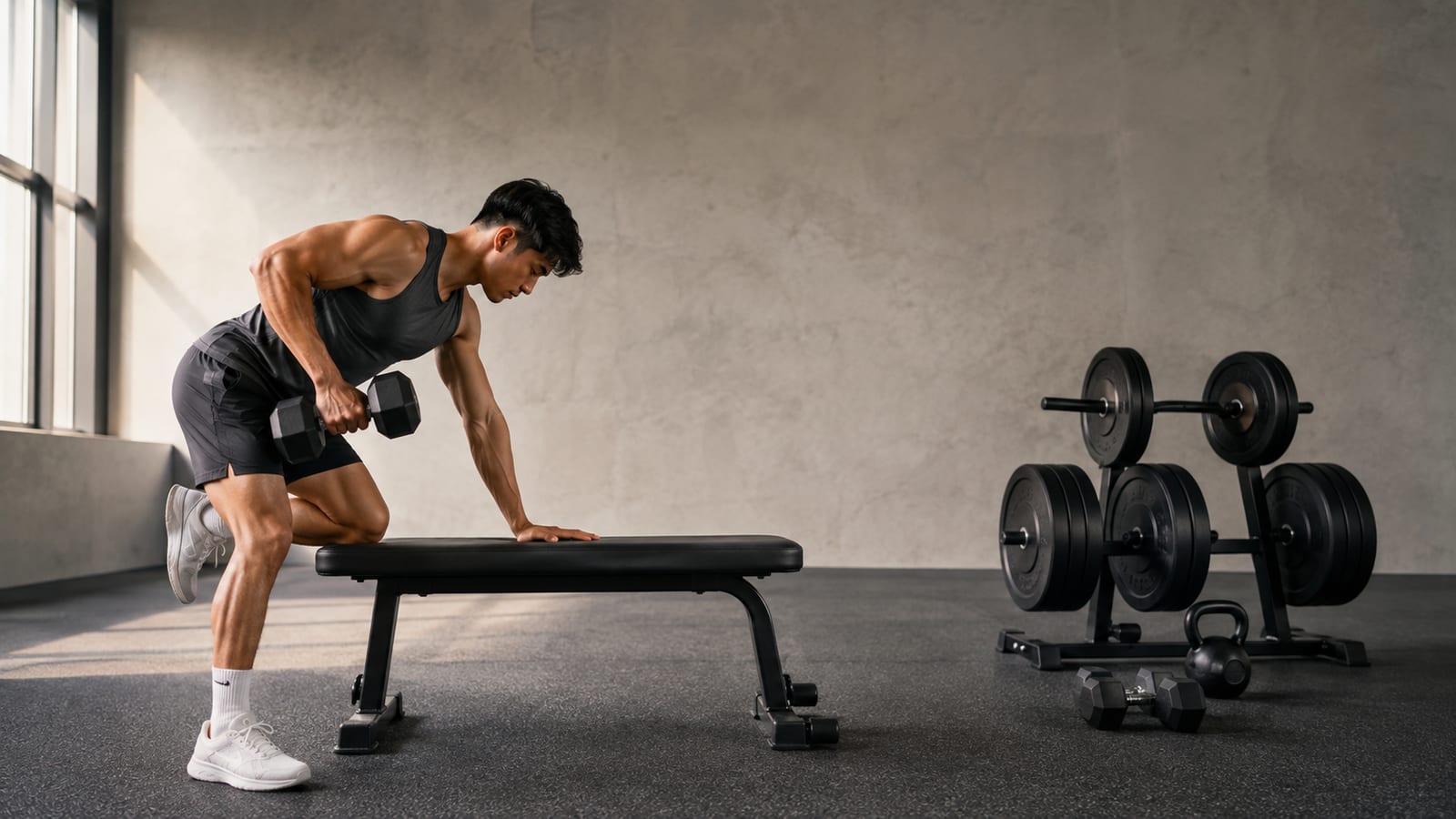
Start with a modest number of challenging weekly sets for each muscle. Then add work only when performance and measurements have stalled, your food is adequate, your sleep is reasonable, and your technique is stable.
Resistance-training volume has a graded dose-response relationship with muscle hypertrophy. A systematic review found that each additional weekly set was associated with an effect-size increase of 0.023 and a 0.37% increase in percentage gain.
That does not mean you should add sets forever. The same review found a difference of 0.241 in effect size between higher and lower weekly volumes, equal to a 3.9% difference in percentage gain. More work can help, but the benefit has to be weighed against fatigue, time, and your ability to recover.
Use this progression:
- Start with a manageable amount of weekly work.
- Keep most sets hard enough to count.
- Add weight or reps while technique stays consistent.
- Hold the volume steady while progress continues.
- Add a small amount of work after a real stall.
- Reduce work if performance, sleep, or joint comfort keeps falling.
The highest number of sets you can survive is not your target. It’s the number you can recover from and improve with that matters.
A time-limited plan for both goals
Use a basics-first plan with heavy practice, moderate-rep muscle work, and enough recovery to repeat it. You don’t need separate identities for strength days and size days.
A practical week can include three full-body sessions or four upper-lower sessions. Choose the split your calendar can keep. If you regularly miss the fourth day, use three full-body sessions instead.
Build each workout around:
- A squat or leg press.
- A hip hinge, such as a deadlift variation.
- A press.
- A row or pulldown.
- One or two stable accessory exercises.
Use high-load sets at 8 repetitions or fewer for selected compound lifts when strength matters. Use moderate-load sets from 9 to 15 repetitions for much of your muscle-building work. Higher-repetition sets can also build muscle when they finish close enough to failure, but they can become unpleasant and technically sloppy on demanding compounds.
For progression, choose a rep range and keep the load until you reach the top with clean technique. Then add the smallest practical increase and work back up. This rep range for strength approach keeps your progress measurable.
Support the training with enough protein, enough calories to match your goal, and regular sleep. Supplements can’t rescue a plan that underfeeds you or keeps you awake.
A natural lifter with limited time should also avoid exercises that create more trouble than stimulus. Choose stable movements your joints tolerate. Your joints get a vote, and the plan has to fit your week.
Track size and performance separately
Track several forms of progress because strength and size can move at different speeds.
Record your body weight under similar conditions. Also take circumference measurements or progress photos at regular intervals. Photos won’t replace measurements, but they can show changes that the scale misses.
Log your exercises, loads, reps, range of motion, and technique notes. If the same lift improves with the same standards, your performance is moving forward. If your muscles grow but one lift stays flat, that may reflect limited practice rather than failed hypertrophy.
Track recovery too:
- Sleep quality.
- Appetite and body weight trend.
- Joint comfort.
- Motivation to train.
- Repeated performance across sessions.
- Whether soreness interferes with the next workout.
Novelty is not progress. Punishment is not proof of effort. Beat the logbook with good reps, recover, and come back stronger.
A simple decision guide
| If this happens | Do this next |
|---|---|
| Your lifts improve and measurements rise | Keep the plan steady |
| Your lifts improve but measurements do not | Check food and direct muscle volume |
| Measurements rise but a target lift does not | Practice that lift and review technique |
| Both stall for several weeks | Check sleep, calories, effort, and exercise setup |
| Performance drops across several sessions | Reduce fatigue before adding more work |
| Joints hurt during a movement | Change the variation or range of motion |
That is the useful answer to unlocking muscle secrets. Strength and size support each other, but they require different evidence.
What is the best way to combine strength and hypertrophy?
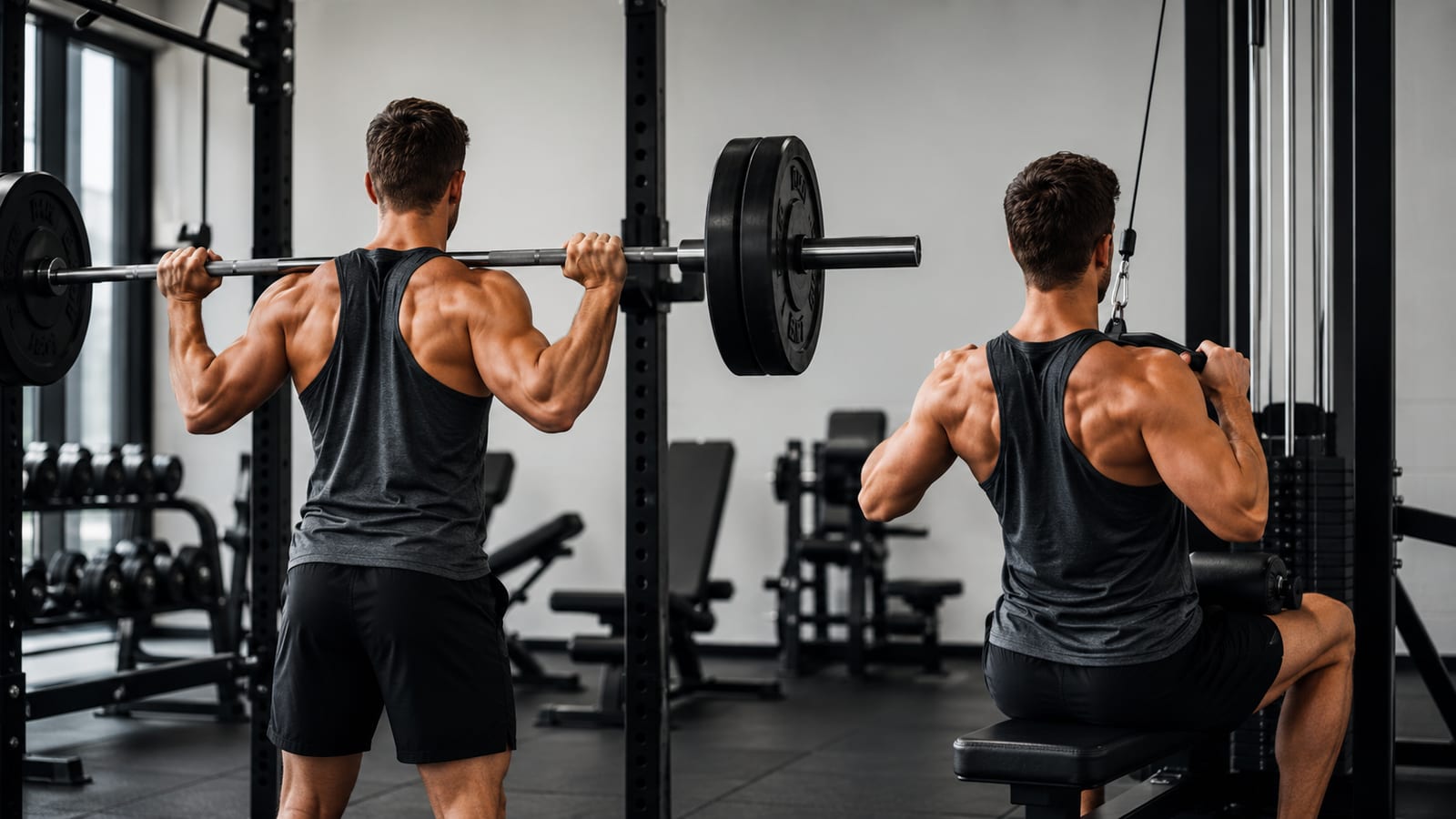
Train the lifts you want to strengthen with enough heavy practice, then use stable exercises and moderate reps to build the muscles behind them.
Don’t make every exercise a max-strength test. Heavy compounds demand more coordination and recovery. Accessories let you train a target muscle hard with less technical cost.
A balanced session might place a squat, press, or hinge first. Follow it with rows, pulldowns, leg work, curls, raises, or extensions. Keep the early lifts focused on performance and the later work focused on quality reps.
You can also use the best rep range for muscle growth when choosing accessory work. The right range is the one that lets the target muscle work hard, keeps technique repeatable, and gives you a clear way to progress.
If size is your main goal, don’t let heavy singles consume the workout. If strength is your main goal, don’t remove all higher-repetition work. Build the muscle, practice the skill, and give both enough time to show up.
FAQ
Can body weight make you stronger without adding muscle?
Yes. A heavier body can improve mechanical advantage, bracing, and stability in some lifts. That change may improve performance even if the added weight is not all muscle.
Does a pump prove that a muscle will grow?
No. A pump shows increased blood flow and fluid in the working area. It can occur during useful training, but it doesn’t measure long-term hypertrophy.
Should you test your one-repetition maximum often?
No. Test heavy strength sparingly, especially if your normal training already shows steady progress. Repeated near-max attempts create fatigue and technical risk without replacing regular productive sets.
Is soreness a reliable sign of muscle growth?
No. Soreness often reflects a new exercise, unfamiliar range of motion, or a sudden increase in work. A muscle can grow with little soreness, and severe soreness can interfere with your next session.
What should you change first if strength and size both stall?
Check your logbook, food, sleep, technique, and exercise consistency before changing the program. If those are in order, add a small amount of weekly work or adjust an exercise that no longer feels stable.
Related on this blog