Why Weight Training Won’t Automatically Make You Bulky

 0
0
 0
0 The bulky fear is overblown. Lifting weights doesn’t make most women bulky. That outcome takes sustained progressive training, enough food, plenty of time, and the genetics to build a larger physique. For a time-limited natural lifter, basic strength training is far more likely to improve strength, muscle shape, posture, health, and definition.
Last updated: 2026-08-12
The right approach is simple: lift consistently, use good technique, eat enough to recover, and track your progress. If your body starts changing in a direction you don’t want, adjust the training or food. You’re not locked into one outcome.
Why lifting gets blamed for bulk
The association comes from confusing visible muscularity with the act of lifting itself. People see a highly muscular woman in fitness marketing, then assume ordinary strength training creates that look automatically.
It doesn’t.
Highly muscular physiques usually reflect years of focused training, high weekly volume, deliberate nutrition, and unusual consistency. Some athletes also use performance-enhancing drugs. That isn’t the same setup as sensible gym sessions each week.
Fitness marketing adds another problem. Photos show people at their leanest, often with careful lighting, muscle fullness, a pump, and a pose. That image sells a product, but it doesn’t show the slow work behind the result.
A muscle pump can also make you look temporarily fuller after training. More blood and fluid move into the working muscle. The effect fades, so don’t treat one post-workout mirror check as evidence that you’ve suddenly added permanent bulk.
Strength can change your appearance without adding much size. Better posture, improved muscle control, and lower body fat can make your shoulders, arms, legs, or back look more defined. The scale may barely move.
If you want a clearer explanation of how strength and size differ, read this guide to whether strength equals size. The useful point is simple: a stronger lift doesn’t automatically mean a larger body.
Noticeable muscle takes time
Noticeable muscle takes consistent training over months and years. A few hard workouts won’t do it. Early changes usually come from better coordination, improved technique, and your nervous system learning to use the muscle you already have.
That early strength gain can be quick. Your muscles don’t need to grow dramatically for your squat, press, row, or deadlift to improve. You become better at the movement, brace more effectively, and recruit more muscle fibers.
Later, continued growth requires a repeatable training stimulus. You need to perform productive sets, add weight or reps over time, eat enough protein, and recover between sessions. Missed workouts, poor sleep, random exercises, and constant program changes all slow the process.
Use this test before worrying about unwanted size:
- You’ve trained consistently for months.
- You’ve added weight or reps in a planned way.
- You’ve eaten enough to support growth.
- You’ve recovered well enough to repeat hard sessions.
- Your measurements have changed in a direction you dislike.
If most of those statements don’t fit, you probably haven’t created the conditions for rapid muscle gain. You’ve created a normal beginner training phase.
Also, you can stop or change direction. Reduce training volume, eat around maintenance, or shift your goal toward strength and muscle retention. The plan has to fit your week and your preferred outcome.
Does lifting make women bulky?
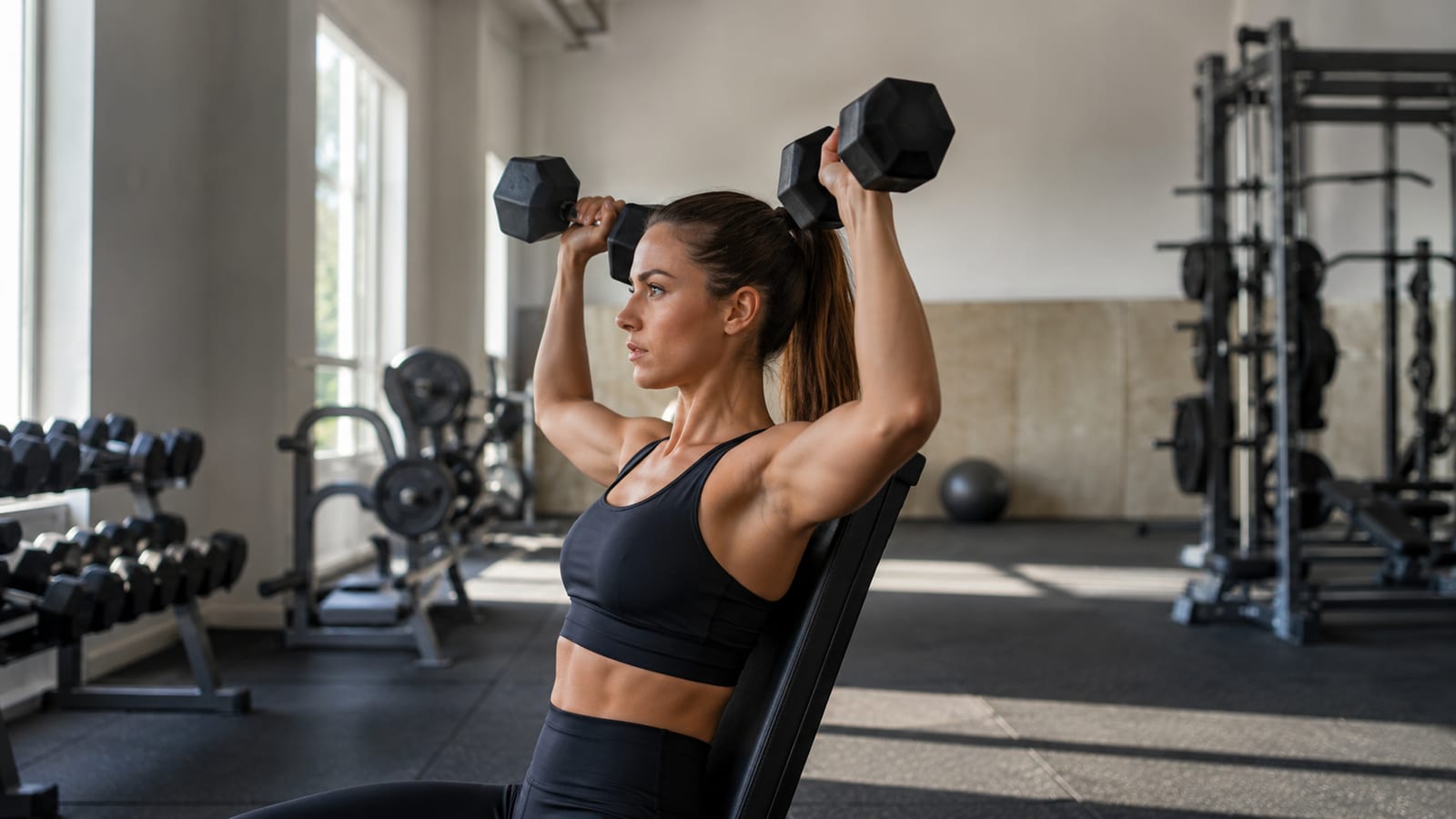
No. Lifting alone doesn’t make most women bulky, and the research doesn’t support the idea that women automatically grow less attractive or oversized from resistance training.
A comparison of males’ and females’ relative muscle growth after the same resistance training found no significant difference in hypertrophy. The effect size was 0.07 ± 0.06, with P = 0.31. In plain terms, the result didn’t show a meaningful difference in relative muscle growth between the sexes under that training comparison.
That finding doesn’t mean every woman and every man gains muscle at the same speed. Genetics, training age, exercise selection, food, recovery, and starting muscle mass still matter.
It means the basic process works in both sexes. Resistance training gives your muscles a reason to adapt. Your total result depends on how much training you do and how you support it.
Most women won’t accidentally build a bodybuilder physique. They’re more likely to become stronger, hold more muscle, and look more athletic. If size begins increasing faster than you want, change one variable and watch what happens.
Testosterone and rapid muscle gain
Women generally have lower testosterone than men. That makes rapid, extreme muscle gain less likely, especially without years of focused work and a nutrition plan aimed at adding mass.
However, lower testosterone doesn’t make strength training pointless. Women can build meaningful muscle and substantial strength. The body still responds to tension, repeated practice, adequate food, and recovery.
Don’t turn hormones into an excuse to avoid challenging weights. You don’t need a male hormone profile to benefit from resistance training. You need a load that makes the final reps demanding while keeping your technique repeatable.
Hormones are one part of the result. They don’t erase the value of progressive training, and they don’t act like an on-off switch for bulk.
A calorie surplus changes the result
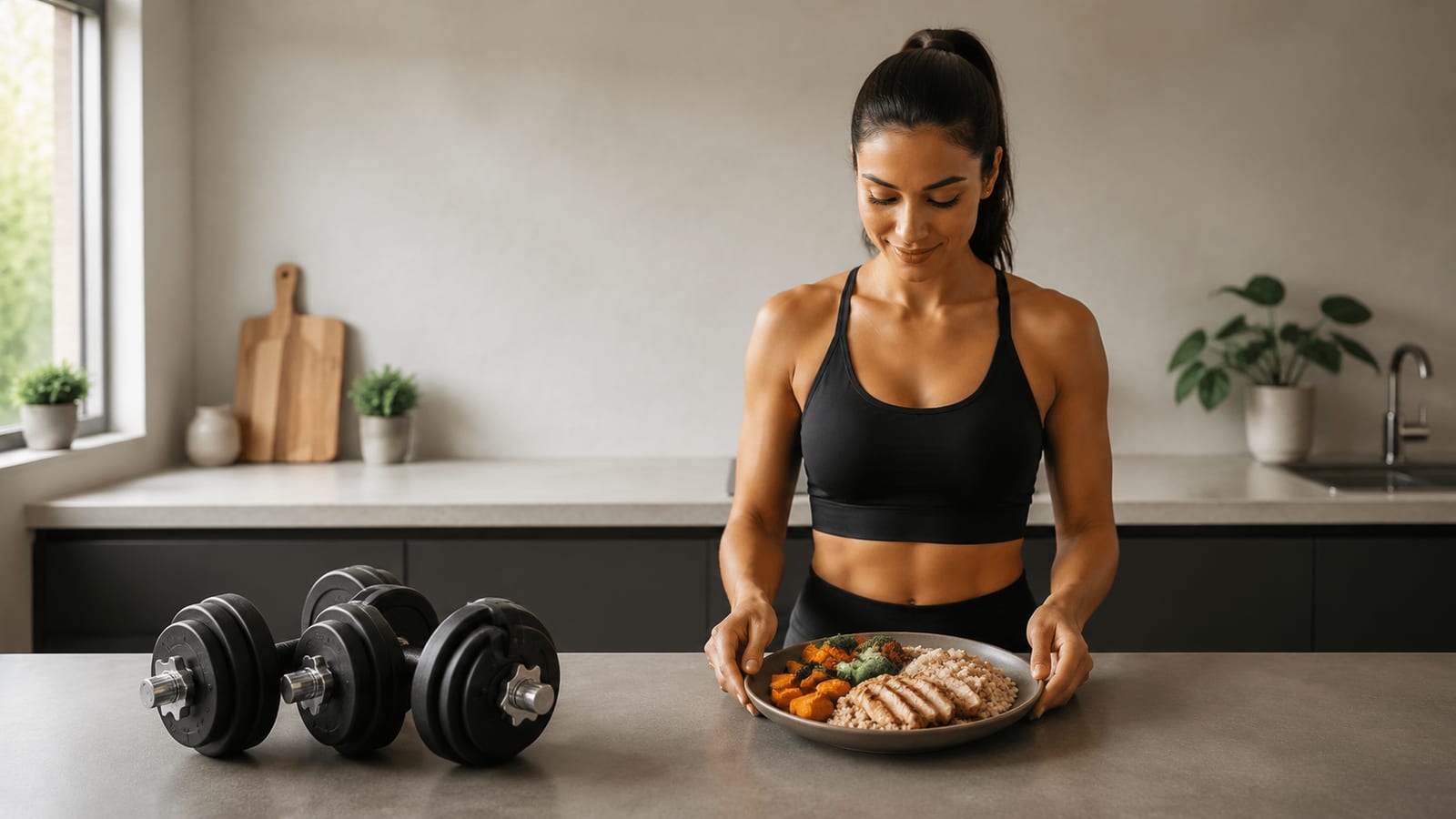
A sustained calorie surplus supports faster and more significant muscle gain. It also makes weight gain more likely, which may include both muscle and fat.
That doesn’t mean one larger meal changes your physique. Body size changes from a repeated pattern of eating more energy than you use. If you want more muscle, a surplus can help. If you want strength and definition with less size gain, maintenance calories or a modest deficit may fit better.
Match your food to the outcome. Eating for maximum growth while hoping your size stays fixed is a poor plan:
| Goal | Food approach | Training priority |
|---|---|---|
| Build more muscle | Sustained calorie surplus | Progressive resistance training |
| Improve definition | Maintenance calories or a modest deficit | Lift to build or preserve muscle |
| Lose fat while keeping strength | Modest calorie deficit | Keep lifting and protect performance |
| Maintain your current size | Eat around maintenance | Repeatable training and recovery |
Protein supports muscle growth for adults who exercise. The International Society of Sports Nutrition recommends 1.4–2.0 g protein/kg body weight/day for this purpose.
Spread protein across your normal meals instead of forcing one giant serving. Then judge the plan by your training performance, recovery, body measurements, and how your clothes fit.
If food is your main concern, use this practical guide on how to eat for muscle gain without getting fat. Don’t confuse eating enough to recover with deliberately chasing maximum size.
Bodybuilder physiques require specialized training
A highly muscular physique requires more than ordinary recreational lifting.
Bodybuilders train specific muscles with high attention to exercise choice, weekly workload, effort, recovery, and nutrition. They repeat that process for years. Their training is designed to add size in selected areas. General strength and fitness aren’t the main target.
They also manage food with more precision. A person trying to gain as much muscle as possible will make different choices from someone who wants two short full-body sessions and stable body weight.
That distinction matters because many people copy a bodybuilder’s exercise list without copying the years of work behind the result. Then they worry after a few weeks that one set of curls or squats will create the same physique.
Drop the copycat thinking. You don’t need to train like a bodybuilder unless you want a bodybuilder’s goal. Start with basic movements, a manageable schedule, and enough work to improve.
Strength and bulk are different outcomes
Strength and size overlap, but they aren’t the same outcome.
Strength depends on several factors:
- The muscle mass available to produce force
- Nervous system coordination during the lift
- Repeatable technique under load
- Your influence in that movement
- Confidence when the weight feels demanding
- Skill built through repeated practice
You can add weight to a lift because you improved your bracing, balance, bar path, or timing. Your muscles may also grow, but size isn’t the only reason performance improves.
Training choices also change the result. Heavy practice on stable compound lifts can improve strength without creating the same muscle-building stimulus as high-volume, targeted work. Eating at maintenance instead of a surplus also reduces the conditions for faster size gain.
Still, don’t treat strength and muscle as unrelated. They support each other. More muscle can help you produce force, and better strength lets you train with heavier useful loads.
The practical standard is your goal. If you want strength, track the load and quality of your reps. If you want more size, track muscle measurements, body weight, and training volume. If you want definition, track body composition and how your clothes fit.
Lifting can create more definition
Lifting can build or preserve muscle while you reduce body fat. That combination can make your body look firmer and more defined.
“Lean muscle” is mostly a marketing phrase. Muscle is lean tissue already. A defined appearance comes from having enough muscle to show, less fat covering it, favorable genetics, and realistic expectations.
You can also gain strength while losing fat, especially if you’re new to training or returning after time away. However, a large calorie deficit can make recovery and muscle growth harder. Your performance may fall if you push food too low.
Don’t let the scale make the whole decision. Check:
- Your working weights or reps are improving.
- Your technique looks the same from the first rep to the last.
- Your clothes fit closer to your preferred shape.
- Your waist, hips, arms, or thighs are moving as expected.
- You recover before the next hard session.
- Daily tasks feel easier because you’re stronger.
Genetics affect where you store fat, where you add muscle, and how visible your results become. You can control the process, but you can’t choose every visual detail.
For home training, keep the same standard. This guide to building lean muscle at home without overcomplicating it covers the basics without turning your living room into a failed fitness laboratory.
Heavy weights can be safe and useful
Appropriately challenging weights are safe and useful when you control the movement, increase loads gradually, and leave enough recovery time. Light weights aren’t automatically safer, and heavy weights aren’t automatically dangerous.
Your joints get a vote. Choose a load you can move through a controlled range of motion without twisting, bouncing, or losing position. If your technique changes sharply, the set is over.
You don’t need to test your maximum strength. Most of your work should be hard enough to count while leaving some clean reps in reserve. That gives you a strong training effect without making every session a recovery problem.
Resistance training can improve strength, bone health, confidence, and daily function. Regular exposure to challenging work drives those benefits. Chasing exhaustion only adds fatigue.
Healthy adults should perform muscle-strengthening activities for all major muscle groups on two or more days per week. That’s a useful minimum, not a command to train every day.
Start with movements you can repeat and measure:
- A squat or leg press for the thighs and glutes
- A hip hinge for the hamstrings and glutes
- A horizontal press for the chest, shoulders, and triceps
- A row or pulldown for the back and arms
- One simple shoulder, arm, or core exercise
Then keep the exercises long enough to learn them. A new movement every session feels productive, but it makes progress harder to measure.
A simple lifting approach for limited time
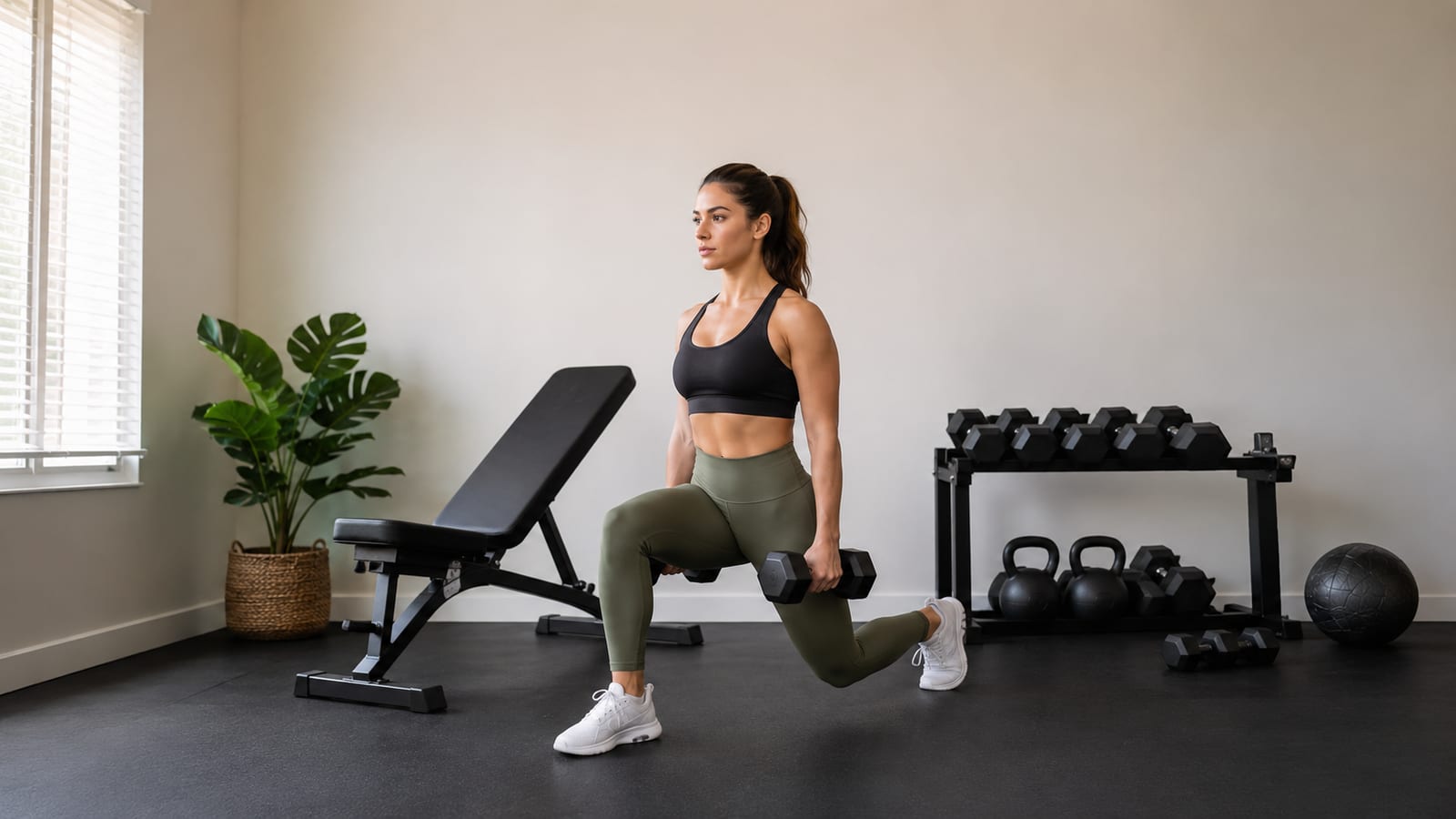
Use two or three full-body sessions each week. Build each workout around a squat or leg press, a hip hinge, a press, a pull, and one smaller movement.
Start with a manageable amount of work. Perform two working sets per exercise, use a moderate rep range, and stop with one to three good reps left. Add reps before weight when that makes the next increase easier to control.
Your plan should look simple on paper and demanding in practice. You don’t need ten exercises, advanced circuits, or punishment workouts. You need enough productive sets to improve and enough recovery to come back stronger.
A basic session should cover these jobs:
- Train your thighs and glutes with a squat or leg press.
- Use a Romanian deadlift or another hip hinge.
- Press with dumbbells or a machine.
- Train your back with a row or pulldown.
- Finish with a curl, triceps extension, lateral raise, or core movement.
Keep a logbook. Record the exercise, load, reps, and any note about technique. When you reach the top of your chosen rep range with clean reps, add the smallest practical amount.
Change the plan only when the current plan stops serving you. If performance stalls, check sleep, food, effort, and technique before adding more exercises. More work won’t fix a weak recovery base.
Beginners can also use this guide to understanding newbie muscle gains before changing their routine every week. Early progress is supposed to feel uneven. Stay long enough to see what the program can do.
What should you change if you start gaining more size than you want?
First, confirm that the change is real. A temporary pump, water shifts, or improved posture can look different without representing lasting muscle gain.
Next, review your food and training. A sustained calorie surplus and high training volume are more likely to drive noticeable size than a few basic lifting sessions. Reduce the surplus first if you’ve been eating to gain.
You can also reduce direct work for the muscle you don’t want to emphasize. Keep enough training to maintain strength and muscle, but stop adding volume there. Shift attention toward the movements and body areas that match your goal.
Don’t make three changes at once. If you cut food, remove exercises, and change your schedule together, you won’t know what worked.
Give the adjustment time to show a pattern. Then keep it, reverse it, or make another small change based on your measurements and performance.
Who should avoid a muscle-building focus?
You should avoid an aggressive muscle-gain approach if you don’t want your body weight or muscle size to increase. You can still lift for strength, health, bone support, and daily function while eating around maintenance.
You may also need a more careful plan if you have an injury, a medical condition, a history of disordered eating, or a difficult relationship with body measurements. In those cases, work with a qualified health professional who understands your situation.
Don’t use strength training to punish your body or earn food. That mindset turns a useful tool into another source of stress.
Choose the minimum effective dose you can repeat. Progress should improve your life, not consume it.
FAQ
Can women get bulky from lifting light weights?
Yes, light weights can build muscle when the sets become genuinely hard and you perform enough total work. However, the dumbbell label doesn’t decide your physique. Your weekly training, food intake, genetics, and time do.
Should women avoid training their arms or shoulders?
No. Skipping arms and shoulders can leave clear strength gaps without giving you precise control over your shape. Train every major muscle group, then reduce direct sets if one area grows beyond your preference.
Will lifting make my weight go up?
It can, especially if you eat in a sustained calorie surplus or gain muscle while keeping body fat stable. However, don’t use one scale reading as a verdict. Your weight may stay similar while your shape and strength improve.
Can I lift during weight loss?
Yes. Keep lifting during weight loss because it helps preserve muscle and gives you a clear performance target. The calorie deficit still needs to leave enough energy for useful sessions and recovery.
How do I know if my program is building useful muscle?
Look for better technique, gradual increases in reps or load, and recovery that stays manageable. If performance falls for weeks, pushing harder is the wrong first move. Check food, sleep, exercise selection, and training volume.