Why a Dedicated Pectoralis Minor Workout Falls Short

 0
0
 0
0 Skip the standalone pectoralis minor workout. Your chest grows from presses and push-ups you can load week after week, not from hunting a small muscle buried under the pec major. Train scapular control with a push-up plus, keep your pressing technique honest, and you have already covered what a dedicated pec minor routine was supposed to do. The rest is marketing.
Last updated: 2026-08-07
Do you need a pectoralis minor workout?
No. Not as its own session, anyway. The pec minor is small, sits deep under a much bigger muscle, and shows nothing in a mirror. Building a workout around it trades your best growth time for a muscle nobody will ever see.
What you actually want is the thing people think pec minor training gives them: shoulders that sit well, presses that feel smooth, no pinching at the front of the joint. That comes from good reps on big lifts, enough pulling, and a small dose of scapular control work.
I would rather see you add five pounds to your dumbbell press than perfect a drill for a muscle you cannot feel. Do this first: get your pressing strong and repeatable. Then add the accessory work below as seasoning, not as the meal.
What this muscle actually does
The pectoralis minor originates from the anterior aspect of ribs 3 to 5 and their costal cartilages, and inserts on the coracoid process of the scapula. That is the short bony hook just below the outer edge of your collarbone. Running from your ribs up to that hook, it pulls the shoulder blade forward and down.
Anatomists describe it as stabilising the scapula by drawing it anteroinferiorly against the thoracic wall. In plain words, it holds the blade snug to your ribcage while your arm works. It also helps with breathing when you are gasping between heavy sets.
A few details that matter less than the internet suggests: it lies deep to the larger pectoralis major, the medial pectoral nerve supplies it, and its blood comes from the pectoral branch of the thoracoacromial artery. That nerve branches off the medial cord of the brachial plexus at C8 and T1.
So why the fuss? That hook sits right where a cranky shoulder hurts. Load it aggressively and you irritate the neighbourhood, not just the muscle.
Which exercises are actually worth doing
Most so-called pectoralis minor exercises are chest or scapular movements with a better sales pitch. You cannot isolate this muscle in a gym. You can train the movements it participates in, and that is enough.
Everything below earns its place by one standard: clean reps, no pinching, and a number you can beat next week.
| Movement | Verdict | Why |
|---|---|---|
| Push-up plus | Keep it | Best low-cost scapular control drill, easy to do pain-free |
| Dumbbell bench press | Keep it | Stable, simple to progress, builds the chest you can see |
| Rows and pulldowns | Keep it | Balances the pressing so your blades are not dragged forward all week |
| Cable press with a controlled reach | Optional | Fine if cables are free, nothing special otherwise |
| Deep or weighted dips | Depends | Useful chest work, but scale the depth if the front of the shoulder complains |
| Loaded shoulder depression, "scapular dips" for reps | Skip it | High shoulder irritation, low return |
If a drill makes your shoulder click or burn at the front, it has failed its audition.
For the pressing side, dumbbell press versus barbell bench press covers the tradeoff in more detail. Both work. Pick the one your shoulders like and load it.
The push-up plus is the one drill worth learning
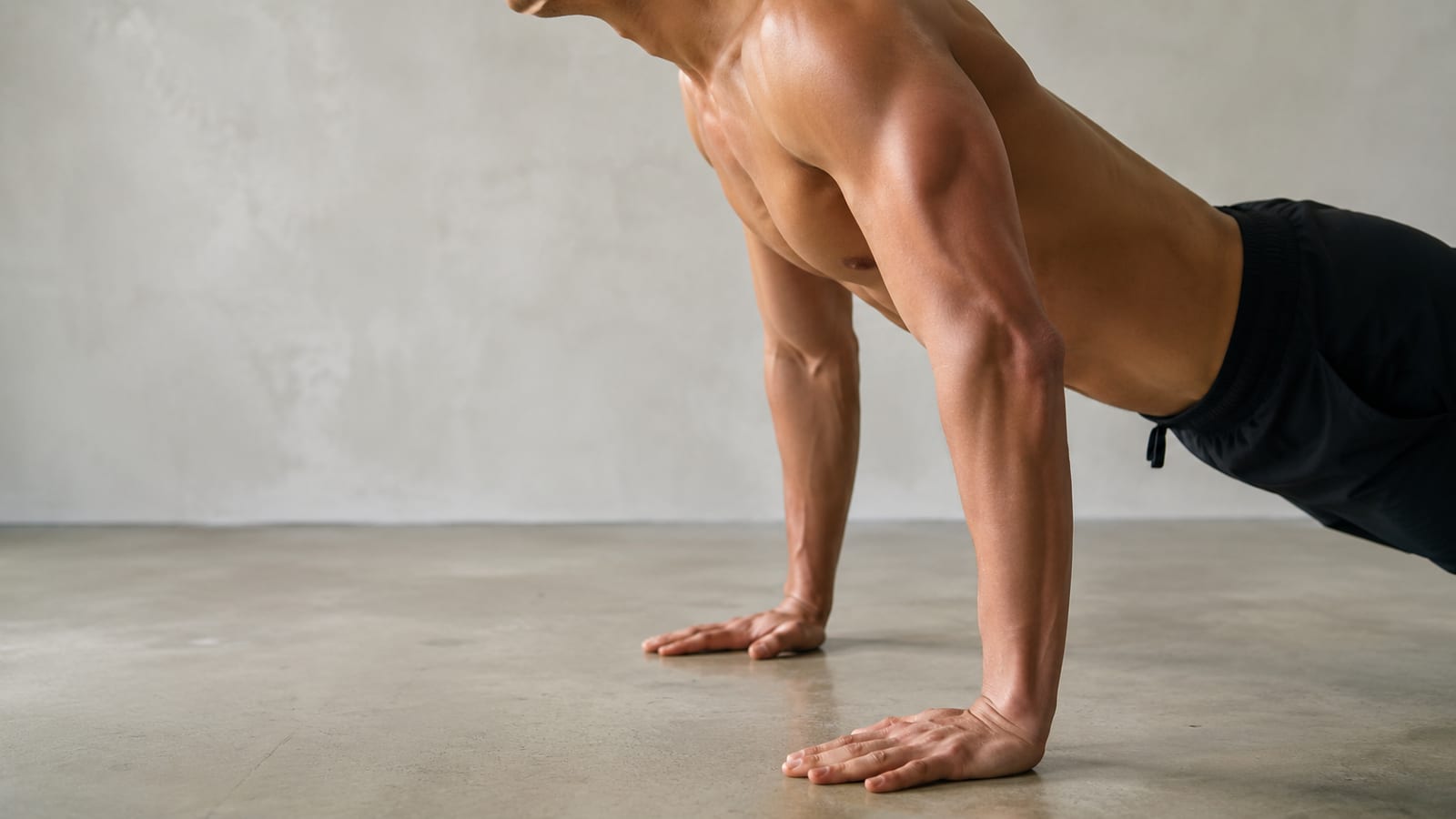
Set up in a normal push-up position, or on your knees if that is steadier. Lower and press as usual. At the top, elbows already locked, push the floor away a little further so your upper back rounds slightly. That last inch is the "plus."
Two rules keep it useful. Keep the elbows straight during the reach, or you are just doing a shallow push-up. And do not shrug toward your ears. The blade should slide around your ribcage, not travel up your neck.
Be clear about what this trains. The reach comes mostly from the serratus anterior, the muscle that fans along the side of your ribs, with the pec minor along for the ride. Anyone selling it as isolation is overstating the case.
Start with 2 sets of 8 to 12 slow reps, twice a week. Hold the top for a beat. When the reach stops feeling like work, raise your feet slightly rather than piling on reps.
What to avoid, and when
Loaded shoulder depression is the main offender. That is hanging from a bar or parallel bars and pulling yourself up by dropping the shoulder blades, often with weight added. It stacks a lot of force onto the front of the joint for very little payoff.
Forced deep dips come second. Dips build chest and triceps well, and what a dips workout actually trains is worth reading before you write them off. Still, driving your shoulders far below your elbows because a video told you to is how front-shoulder pain starts.
Aggressive protraction drills round out the list. Rounding hard under load, or letting your ribs flare while you reach, turns a control exercise into a strain. Your joints get a vote here, and they vote early.
The stopping rule is simple. Sharp pinching at the front of the shoulder, pain that lingers the next day, or a rep you finish only by wriggling all mean the set is over.
How this fits a real chest routine
Keep the scapular work small and late. It is a warm-up or a finisher, never the centrepiece. Here is a two-day upper body layout that fits most weeks:
Day A
- Dumbbell bench press, 3 sets of 6 to 10
- Row, 3 sets of 8 to 12
- Incline dumbbell press or dips, 2 sets of 8 to 12
- Push-up plus, 2 sets of 8 to 12
Day B
- Overhead or incline press, 3 sets of 6 to 10
- Pulldown or chin-up, 3 sets of 6 to 12
- Push-ups to a hard but clean finish, 2 sets
- Push-up plus, 1 to 2 sets
Leave 1 to 3 good reps in reserve on the pressing. Take the scapular work nowhere near failure, because grinding it just makes you shrug. Beat the logbook on the presses and let the small stuff stay small.
Hand position changes how the load lands, so where to put your hands during push-ups is worth sorting out before you add reps.
Can you train this at home?
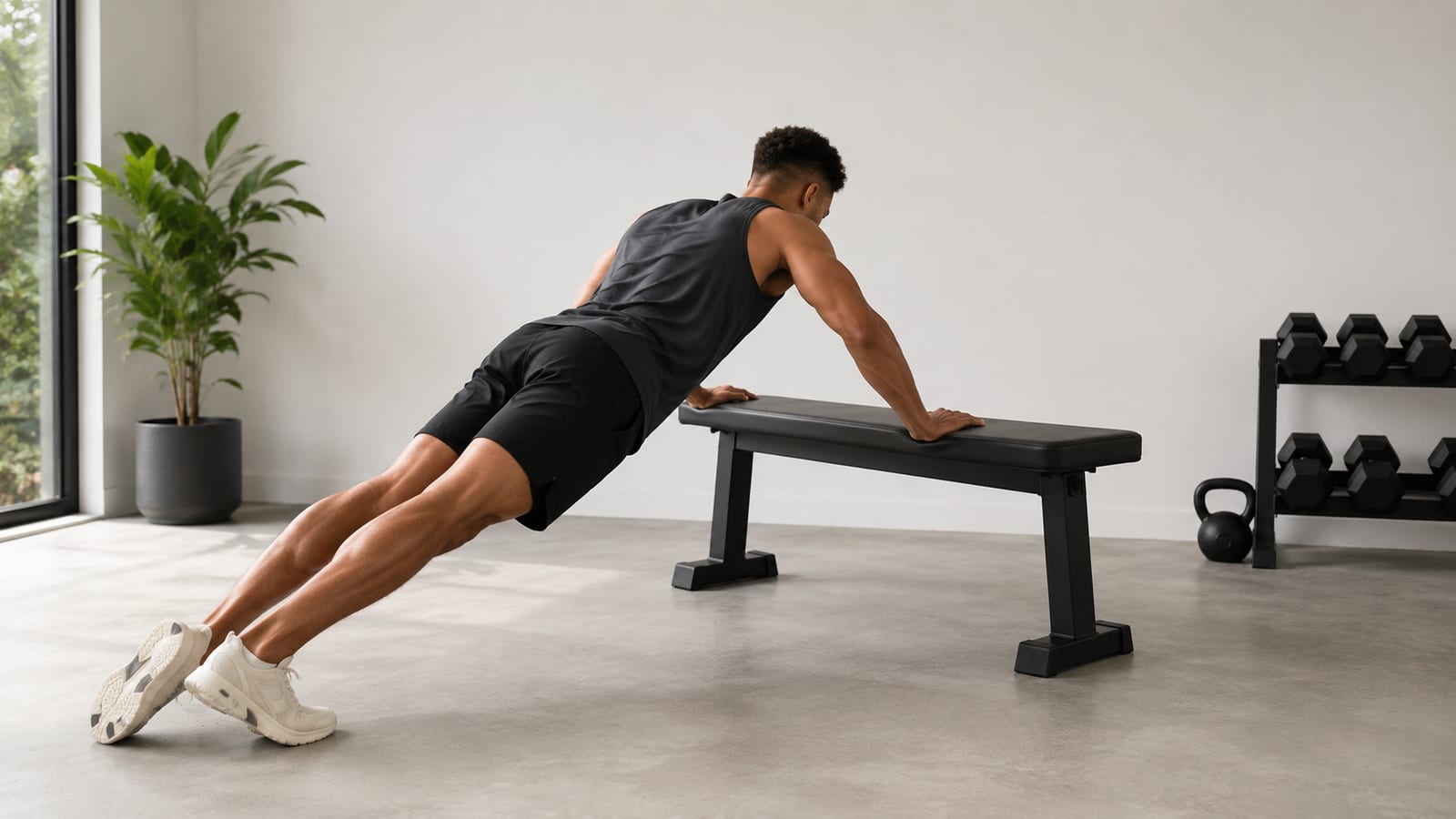
Yes, and the home version loses almost nothing. If you searched pectoralis minor oefeningen and landed here, the Dutch phrasing gets the same answer: no equipment isolates this muscle, so train the patterns instead.
Your home toolkit:
- Push-ups, hands elevated on a counter or stairs when floor reps get ugly
- Push-up plus from the floor, or from an incline if your wrists complain
- A backpack full of books, which is the cheapest load increase you will ever buy
- Band presses and band pull-aparts, so the pulling side keeps up with the pushing
- A doorway pec stretch, held gently, after a long desk day
Progress by lowering the surface, adding reps, slowing the tempo, or adding weight to the pack. All four count. Do not expect visible change in the pec minor itself, because the muscle covering it hides everything.
The safest option when your shoulders feel tight
Start with a pain-free reach. Lie on your back, knees bent, and press one arm toward the ceiling so the shoulder blade lifts off the floor. Lower slowly. Ten easy reps per side, no forcing, no breath holding.
Next, fix the ribs. If your lower ribs flare as you reach, exhale fully first and let them settle. A blade cannot glide over a ribcage jammed into extension.
Then add gentle mobility. A doorway stretch with the elbow around shoulder height, held for easy breaths, is plenty. Cranking harder lengthens nothing faster, and it often leaves the joint angrier than it started.
One line I will not soften: numbness, tingling into the hand, weakness, or pain that wakes you up is not a stretching problem. See a physio or a doctor. Nerves and vessels run right past this area, and guessing is a bad plan.
Progression without turning shoulder work into punishment
Add reps before you add weight. Once the top of your rep range feels clean on every set, add the smallest increase available and work back up. That applies to presses. For scapular drills, better control at the same reps is the progression.
Change one thing at a time. Load, reps, range of motion, and frequency all move the needle, and moving them together tells you nothing.
Cover the boring inputs too. Enough food, enough sleep, and two hard-but-not-heroic upper body sessions a week will beat any clever accessory scheme. Progress is small increases repeated for months.
The condition for changing the plan: three weeks with no added reps or weight on your main press, with sleep and food already in order. Then adjust. Not before.
If you like the anatomy rabbit hole, the small muscle under the collarbone gets its own treatment in this guide to training the subclavius.
FAQ
Does a tight pec minor cause rounded shoulders?
It gets blamed far more than it deserves. Posture follows habit, fatigue, and hours spent in one position, not one short muscle. Strengthen your mid-back, get up from the desk more often, and stop treating the way you sit as an injury.
Can you stretch the pec minor permanently longer?
Not in the way most people mean. Stretching mostly changes how much range you tolerate, and the effect fades once you stop. Use it for short-term comfort before pressing, then earn the lasting change with strength work in the range you want.
Should I massage or foam roll the area?
Lightly, if you feel better afterwards. Digging a lacrosse ball into the front of your shoulder is a poor trade, because that region is crowded with structures you do not want to compress. Gentle pressure on the meaty part of the chest is the limit.
How many times a week should I do scapular control work?
Two or three short doses, tacked onto the end of upper body days. This work responds to frequency and quality rather than piles of sets. Once the movement shows up automatically in your presses, once a week holds the benefit.
Do bodybuilders train this muscle directly?
No, and they are not missing a trick. There is no visible payoff and no reliable way to load it alone. They build the chest that shows, keep their shoulders healthy enough to press hard for years, and spend the rest of their energy where the audience can see it.
Related: The Best Machines for Building a Bigger Chest