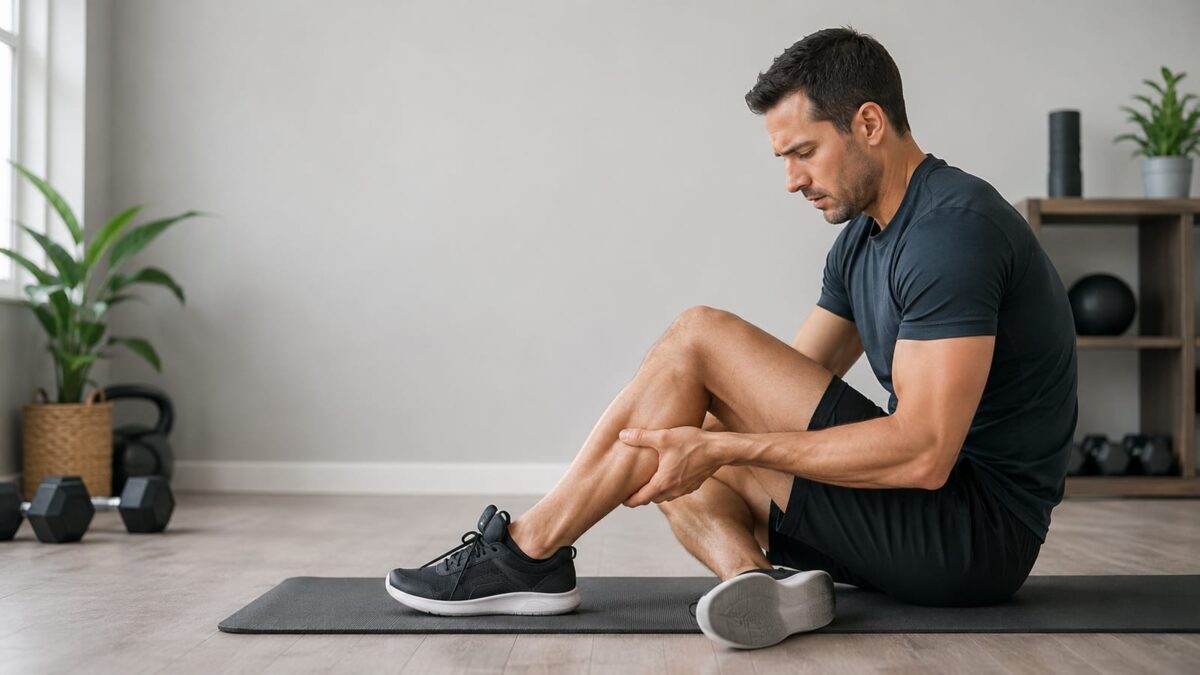
How Gentle Massage Can Ease Delayed Muscle Soreness

 0
0
 0
0 Keep massage in its lane. For easing post-workout pain, massaging sore muscles can reduce how sore and stiff you feel, but it won’t rebuild tissue faster or restore strength on command. Use brief, gentle self-massage when it helps you move more comfortably. Food, sleep, sensible training, and time still do the real recovery work.
Last updated: 2026-08-07
Does massaging sore muscles ease post-workout pain?
Massage can take the edge off delayed-onset muscle soreness, also called DOMS. You may feel less tender, move more freely, and find the next warm-up easier.
However, feeling better doesn’t prove that the muscle has fully recovered. Research tends to show a modest benefit for perceived soreness, with less convincing effects on strength, power, or actual tissue repair.
That makes massage useful, but optional. Keep it if it improves comfort without leaving you more tender. Skip it if you dislike it or start treating it as a repair tool.
Why do muscles get sore after a hard workout?
DOMS often follows training that is new, harder than usual, or poorly matched to your current tolerance. Exercises that load a muscle while it lengthens can be especially demanding. Lowering into a squat and controlling the descent of a curl are common examples.
The old lactic acid explanation doesn’t hold up. The burning sensation during a hard set fades far sooner than delayed soreness appears.
Instead, DOMS involves stress within the worked muscle and a local inflammatory response. Calling it nothing more than “tiny tears” makes a complicated process sound cleaner than it is.
Soreness also doesn’t prove that a workout was productive. You can grow with little soreness, and you can get painfully sore from work that was far beyond your recoverable dose. Beat the logbook with quality reps, not by chasing pain.
For more detail, see these common muscle soreness myths.
When does DOMS start, and how long should it last?
DOMS usually develops after the workout rather than during it. It often becomes more noticeable over the following days, then gradually settles as your body adapts and recovers.
The exact pattern depends on the exercise, your training history, and how much work you did. A new movement may leave you sore even when the load seemed modest. Meanwhile, a familiar hard session may cause little discomfort.
Normal DOMS should trend in the right direction. Movement may feel stiff at first, but it should become easier as you warm up and as the days pass.
Pain that keeps worsening, stays sharply focused, or limits normal use deserves more caution. Don’t use the calendar alone to decide that it’s harmless.
When is the best time to massage after exercise?
Massage when soreness or tightness bothers you. You don’t need to start rubbing every trained muscle as soon as the final set ends.
An immediate post-workout massage isn’t mandatory. In fact, pressing hard into a freshly exhausted muscle may only add irritation. Eat, drink, cool down, and get on with your day.
Later, use gentle massage if the area feels stiff. You can also massage before your next workout, provided the pressure stays comfortable and the muscle feels better afterward.
Timing matters less than the response. If massage improves movement without increasing tenderness, keep it. If the area feels bruised or weaker afterward, back off.
How hard and how long should you massage sore muscles?
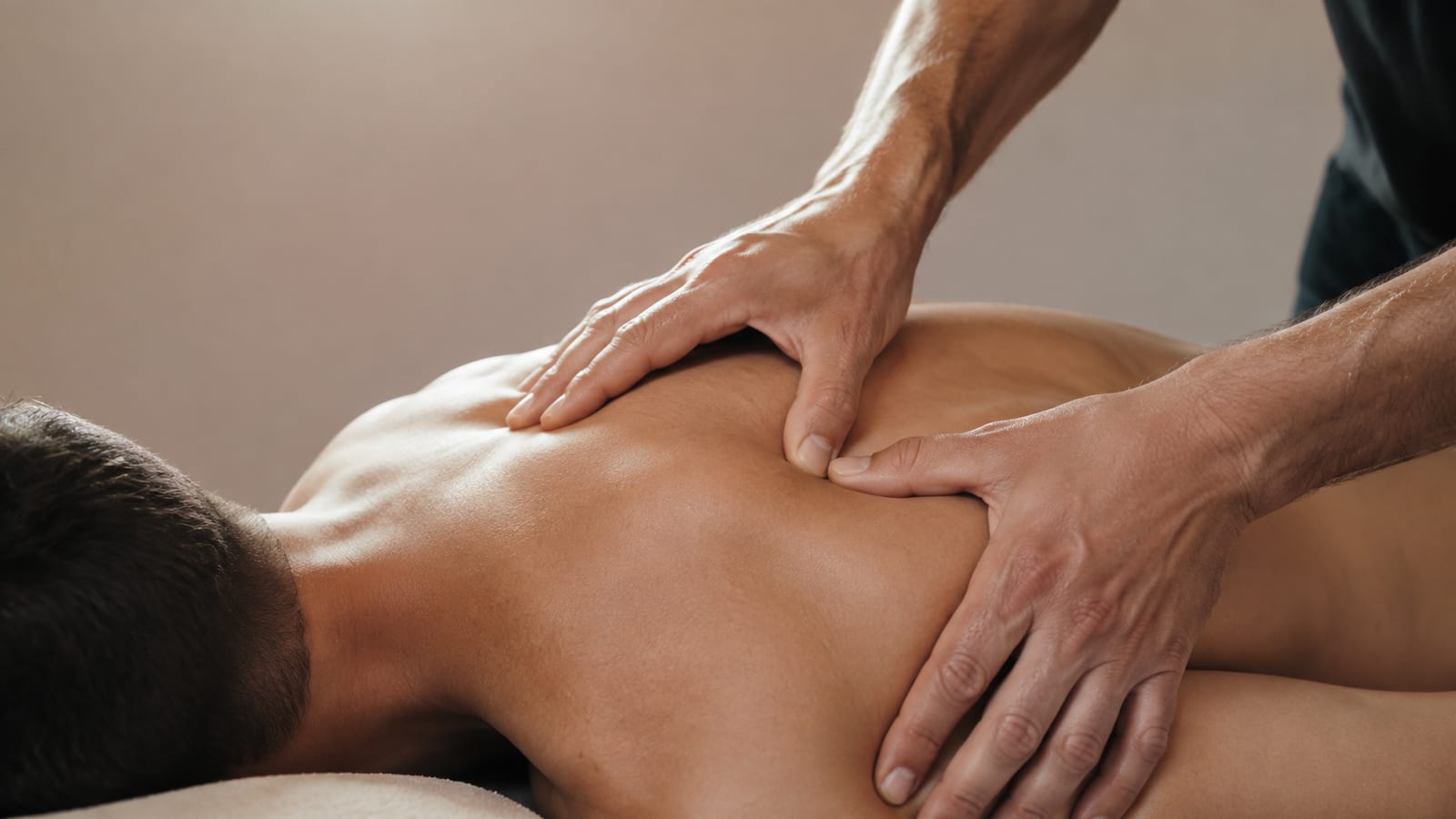
Use light-to-moderate pressure and keep the session brief. Easing post-workout pain by massaging sore muscles should feel calming, not like another hard set.
Follow this simple process:
- Start with broad, slow passes over the sore area.
- Increase pressure only until the muscle feels comfortably worked.
- Pause on a tender spot without grinding into it.
- Keep breathing normally and let the muscle relax.
- Stop when movement feels easier or the area begins to feel sensitive.
- Check the muscle later before deciding whether the pressure was useful.
Your joints get a vote, and so does your skin. Avoid pressing over bones, the front or side of the neck, swollen joints, bruises, cuts, or areas with altered sensation.
A foam roller or massage ball can make self-massage easier. However, the tool doesn’t need to hurt to work. This guide to the benefits of foam rolling covers the same practical standard: controlled pressure beats painful digging.
Can massage reduce swelling after a workout?
Massage may change how tight or puffy a worked area feels. However, normal post-training fullness isn’t the same as swelling from an injury.
Mild tenderness across a whole trained muscle is common after unfamiliar work. Sudden or major swelling, especially around one spot or joint, needs a different response.
Don’t attack an inflamed area with deep pressure. Aggressive massage can increase pain and may make bruising worse. Stop training the area and get medical advice if swelling is pronounced, worsening, or paired with lost function.
Massage is a poor tool for anything you suspect is an acute injury. Comfort work belongs on ordinary soreness, not on tissue that may be damaged.
Does massage restore muscle function or make you stronger sooner?
Massage may help you feel looser, which can improve ordinary movement. That still doesn’t mean your strength, power, and coordination have fully returned.
A sore leg may feel better after massage but still produce less force in a hard squat. Likewise, a tender shoulder may move more freely while remaining poorly prepared for heavy pressing.
Use performance as the test. During your warm-up, check your range of motion, control, speed, and comfort. If familiar loads feel unusually slow or unstable, massage hasn’t cleared you for hard training.
No recovery method gives you permission to ignore poor reps. Wait until you can train with intent and use repeatable technique.
Should you train sore muscles or take a rest day?
Mild soreness doesn’t always require rest. However, severe soreness can change your technique and turn productive sets into compensation.
Use this decision table before training:
| What you notice | Best decision |
|---|---|
| Mild, broad soreness that improves during the warm-up | Train as planned or make a small adjustment |
| Moderate soreness with reduced range of motion | Reduce the load, shorten the session, or train another area |
| Soreness that changes your technique | Stop loading that movement |
| Sharp, focal, or worsening pain | Skip the exercise and assess the problem |
| Clear weakness, instability, or major swelling | Stop training the area and seek medical advice |
The planned session matters too. Light technique work asks less from sore muscles than heavy squats, hard sprints, or demanding jumps.
Warm up and judge the reps in front of you. If you can’t produce good reps before more weight, change the plan.
How can gentle movement help sore muscles recover?

Easy movement often reduces stiffness because it gets the muscle contracting without adding much stress. Walking, relaxed cycling, and simple mobility work are good options.
Keep the effort low. You should finish feeling warmer and less stiff, not drained.
Before training, start with easy versions of the movement you plan to use. For example, perform an unloaded squat before adding weight, or use a light row before harder pulling.
Mobility work should also match the problem. Don’t force a sore muscle into its deepest stretch because the position looks productive. These mobility exercise options can help, but use the drills that improve your movement rather than collecting more exercises.
Active recovery works when it stays easy. Turning it into another conditioning session defeats the point.
What should you eat and drink after a hard session?
Eat enough across the day to support your training. Massage can change comfort, but it can’t replace the energy and raw materials your body needs.
Protein supports muscle repair. Carbohydrate helps replace the fuel used during demanding training, especially when another session is coming soon.
A normal meal with protein, carbohydrate, and food you digest well is enough for most lifters. You don’t need an elaborate recovery stack because your legs feel sore.
Drink according to thirst and replace the fluid lost through training. If you finished a hot, sweaty session, you may also need salty food or a drink that contains electrolytes.
The standard is plain: eat enough, get protein regularly, include carbohydrate around hard work, and keep normal hydration habits. Do this first before shopping for recovery aids.
How do you tell normal DOMS from a muscle injury?
DOMS usually feels broad, dull, and tied to muscles you trained. It tends to appear after the session, may affect both sides, and often improves once you start moving.
An injury is more likely when pain is sudden, sharp, or focused in one small area. You may also notice bruising, major swelling, clear weakness, instability, or loss of normal function.
Stop and seek medical advice if you have:
- Sharp or worsening pain
- Major or rapidly increasing swelling
- Significant bruising
- Numbness or tingling
- Clear weakness or loss of control
- Trouble using the limb normally
- Severe muscle pain with dark urine or feeling unwell
Don’t massage through those signs. Review the MedlinePlus guidance on sprains and strains and arrange medical care when symptoms are severe or don’t improve.
How can you prevent extreme soreness from derailing training?
Build new training gradually. The fastest way to ruin your week is to copy the full volume of a program your body hasn’t earned yet.
Start new exercises with fewer productive sets and leave reps in reserve. Then add weight or reps as your technique and recovery allow.
Control the lowering phase, but don’t exaggerate it just to create more soreness. Likewise, don’t add several new exercises, more load, and more sets at once. The logbook can’t tell you what worked when every variable changed.
A short warm-up helps you prepare for the session, but it won’t cancel reckless programming. Cooldowns may help you settle after training, yet they won’t rescue work that exceeded your recovery.
The plan has to fit your week. Use the minimum effective dose, earn the next increase, and come back strong enough to train with intent.
FAQ
Is massage oil necessary for sore muscles?
No. Oil or lotion only reduces friction between your hands and skin. Use a small amount if dry rubbing feels uncomfortable, but avoid products that irritate your skin.
Is a massage gun better than using your hands?
Not automatically. A massage gun can cover large muscles with less effort, while your hands give you better control around tender areas. Use the option that lets you keep pressure comfortable and precise.
Should you use heat before massaging a sore muscle?
Gentle warmth may make a stiff muscle feel easier to move. However, avoid heat on an area that is badly swollen, newly injured, or already hot and inflamed. If symptoms suggest an injury, skip the home treatment and get proper advice.
Can a professional sports massage prevent future injuries?
A massage may help you relax and notice tight or sensitive areas, but it can’t guarantee injury prevention. Sound technique, sensible workload, enough recovery, and gradual progression carry far more weight.
Can you massage the same sore muscle every day?
You can use gentle massage again if the area responds well. Stop or reduce the pressure if tenderness increases, bruising appears, or normal movement becomes harder. More massage isn’t better once the tissue starts objecting.
Meta description: Learn how to massage sore muscles after training, choose safe pressure, manage DOMS, and spot pain or swelling that needs medical care.
Related: Sauna After Exercise: What It Helps and What It Can’t
Related: A Calm Cold Shower Routine for Muscle Recovery
Related: Muscle Recovery: When You’re Ready to Train Again