What Foam Rolling Actually Does for Recovery

 0
0
 0
0 Foam rolling is a useful, low-cost recovery basic, but the top benefits of foam rolling are modest and temporary. It can improve range of motion, ease perceived soreness, and help you move better without meaningfully hurting performance. Use it as a short supplement to warm-ups, food, sleep, and sensible training, not as a painful cure for every tight muscle.
Last updated: 2026-08-12
What are the top benefits of foam rolling?
The strongest practical benefits are short-term mobility and lower perceived soreness. You may feel less stiff, move through a fuller range, and approach training with better readiness.
Foam rolling can also increase local blood flow for a short period. One study measured an almost 74% relative increase in arterial blood flow in the lateral thigh immediately after foam rolling. The increase was still 53% relative after 30 minutes.
That finding doesn't prove faster healing. More blood flow sounds impressive, but recovery depends on more than circulation. Food, sleep, training load, and time still do the heavy lifting.
Use foam rolling if it helps you perform your warm-up with better movement. Skip it if you only use it to chase pain or avoid fixing a poor training plan.
The top benefits of foam rolling are:
- Temporary improvement in range of motion
- Lower perceived muscle soreness
- A short-term increase in local blood flow
- Better movement readiness before training
- A simple way to check how an area feels before you load it
Foam rolling doesn't permanently lengthen a muscle, remove all exercise-related damage, or guarantee better performance. Those claims sell a simple tool as a complete recovery system. It isn't one.
How does foam rolling reduce muscle soreness?
Foam rolling may reduce soreness by changing how your nervous system responds to pressure and movement. The pressure gives your brain a different sensation to process, which can make the sore area feel less threatening.
It may also help you move the area more comfortably. That matters because gentle movement often feels better than guarding a sore muscle all day.
However, rolling doesn't erase the small amount of muscle damage caused by unfamiliar or demanding exercise. It doesn't flush out harmful waste, break up scar tissue on command, or repair a strained muscle.
Delayed onset muscle soreness, often called DOMS, usually appears after training and fades as the tissue recovers. You can read more about the difference between normal soreness and warning signs in this guide to muscle soreness myths.
Use the roller to reduce discomfort enough to move normally. Don't use temporary relief as permission to train an injured area hard again.
Can foam rolling improve flexibility and range of motion?
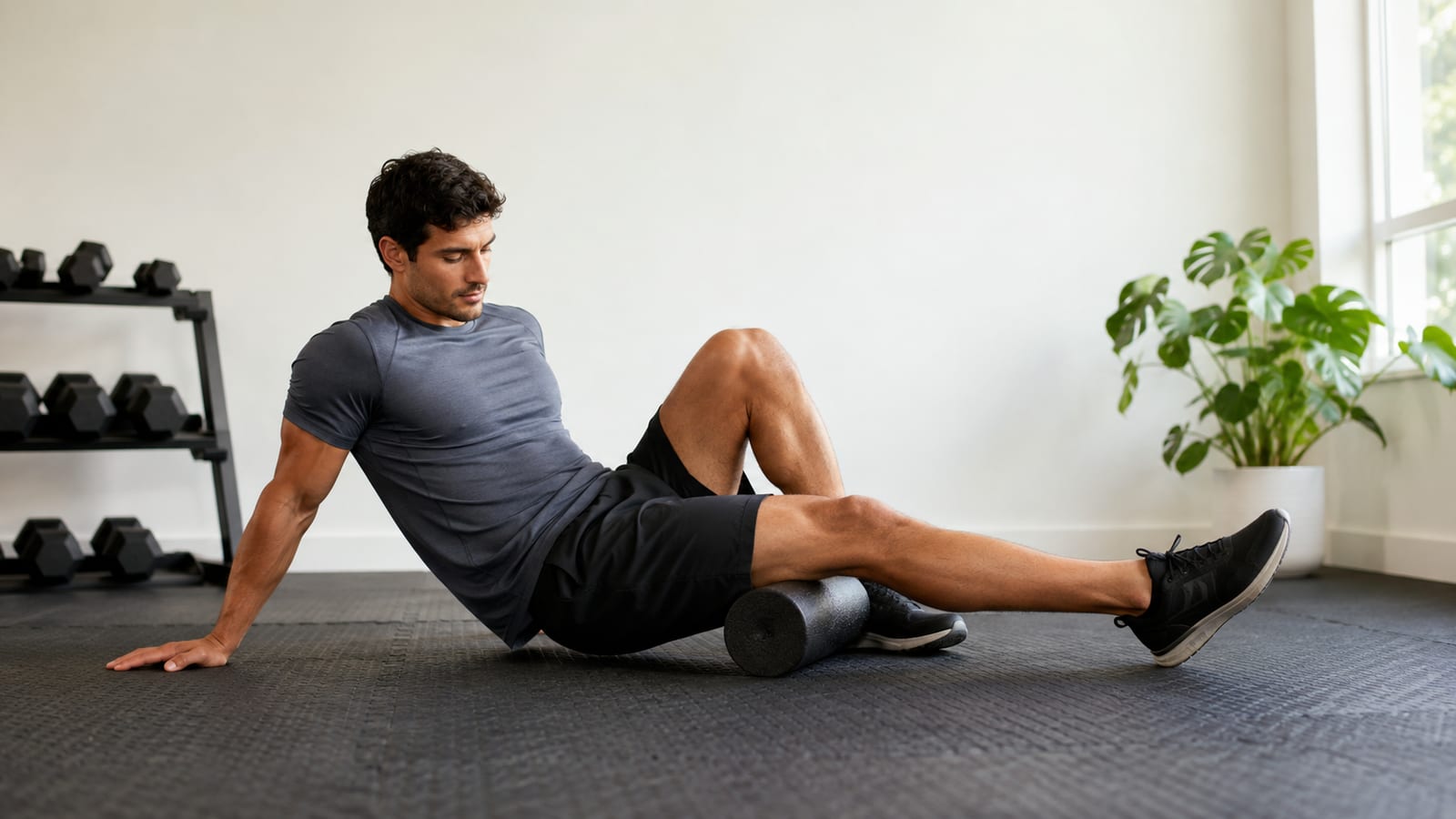
Yes, foam rolling can temporarily improve range of motion. The change may happen because pressure alters pain sensitivity and lets you tolerate more movement, not because the roller permanently stretches the muscle.
That distinction changes how you use it. If your ankle, hip, or shoulder moves better after rolling, use that new range during controlled exercises. Otherwise, the change may disappear once you start your day.
Try this sequence:
- Roll the target muscle slowly.
- Check the movement that felt limited.
- Perform controlled repetitions through the improved range.
- Keep the exercise light enough to maintain good technique.
- Recheck the area before loading it heavily.
For example, roll your calves, then perform slow ankle movements or bodyweight squats. Roll your quads, then use controlled lunges. The movement teaches your body to use the range. The roller only gives you a short opening.
Foam rolling works best as part of a larger mobility plan. If you need more movement preparation, use mobility exercises for CrossFit as a guide, then keep the drills that improve your actual training positions.
Does foam rolling improve training performance?
Foam rolling may help performance when stiffness limits your starting position or movement quality. It can also help you feel ready without taking much energy.
A study comparing a dynamic warm-up alone with foam rolling plus a dynamic warm-up measured a vertical jump of 68 cm after the dynamic warm-up and 73 cm after the combined preparation. That result supports foam rolling as a possible addition to a warm-up, not as proof that rolling alone is the best preparation.
The sensible approach is brief and comfortable. Roll a restricted area, then perform movement-specific preparation. Don't spend a long session grinding every muscle before heavy squats or deadlifts.
Painful rolling can leave the area irritated or make you feel flat before training. Your warm-up should prepare you to lift, not become a separate workout that steals from the main one.
Test the result in the next workout:
- Can you reach the required position more easily?
- Do your first working sets feel smoother?
- Does your technique stay consistent?
- Did the rolling make you feel ready, or only tender?
Keep it if movement and performance improve. Skip it if the only noticeable result is soreness from the roller.
When should you foam roll around a warm-up?
Use foam rolling before a warm-up when a specific area feels restricted. Then follow it with a general warm-up and movement-specific preparation.
Foam rolling doesn't raise your whole-body temperature enough to replace general preparation. It also doesn't rehearse the positions, speed, balance, and coordination your workout requires.
A useful order is:
- Perform easy whole-body movement to start warming up.
- Roll one or two areas that limit your movement.
- Perform dynamic movements through the available range.
- Complete lighter practice sets of your first exercise.
- Start working sets once your technique feels repeatable.
You can also roll after training or later in the day if soreness is the main issue. Timing matters less than the result. The best time is the one that helps you move and recover without making the routine harder to repeat.
Don't roll every muscle by habit. If your hips move well and your calves feel fine, move on. Your warm-up should answer a training need, not satisfy a ritual.
What are the best lower-body foam rolling techniques?
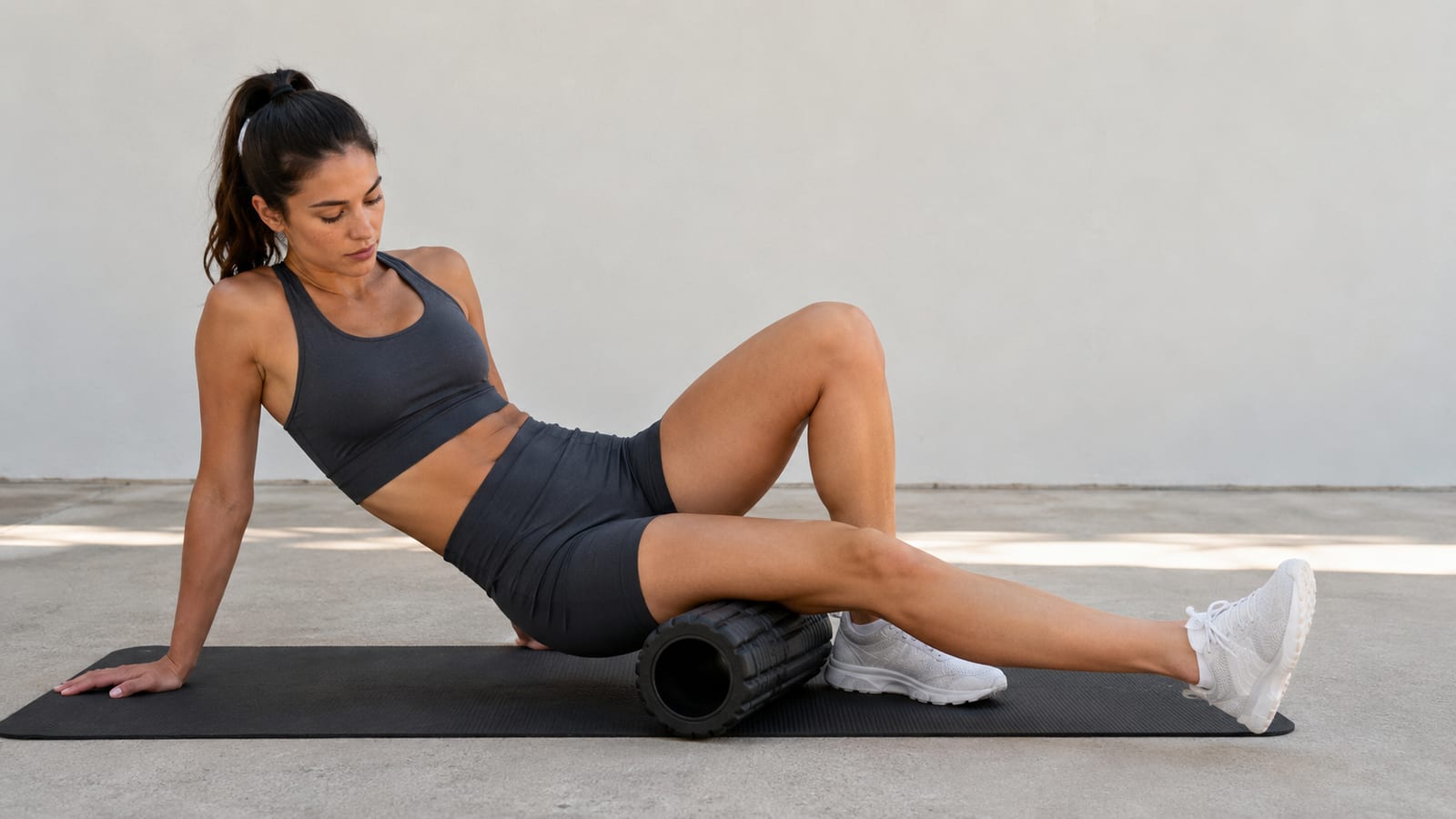
Lower-body foam rolling works best with stable positioning, slow passes, and moderate pressure. Move over the muscle rather than dragging across joints, bones, or sensitive structures.
Calves
Sit on the floor with the roller under one calf. Support your weight with your hands and the other foot.
Roll from just above the ankle toward the upper calf. Turn the leg slightly inward and outward to cover the muscle without pressing directly into the knee or ankle.
If one spot feels tender, pause there and breathe. Don't force your full body weight onto it. A tender muscle needs useful pressure, not a public trial.
Hamstrings
Place the roller under the back of your thigh while seated. Support yourself with your hands and keep the other foot on the floor.
Roll from above the knee toward the glute. Keep the knee slightly bent if a straight leg feels too aggressive.
Avoid rolling directly behind the knee. If the sensation becomes sharp, electric, or numb, stop and change position.
Quadriceps
Lie face down with the roller under the front of your thigh. Support your upper body on your forearms.
Roll from above the knee toward the hip. Turn your toes slightly inward or outward to change which part of the quadriceps receives pressure.
Don't roll over the kneecap or directly into the front of the hip. Stay on the muscle and use a smaller range if the area feels bruised or overly sensitive.
Glutes
Sit on the roller with one ankle crossed over the opposite knee. Shift toward the glute on the crossed-leg side.
Use your hands and planted foot to control the pressure. Turn your body slightly to reach different parts of the glute.
Keep the movement slow. If you feel a sharp nerve-like sensation traveling down the leg, stop. That isn't a productive muscle spot.
Outer hip area
Use care around the outer hip. The iliotibial band, or IT band, is a thick strip of connective tissue running along the outside of the thigh. Rolling directly over it often creates a lot of pain without giving you a better result.
Instead, target the nearby muscles of the outer hip and upper thigh. Use a side-lying position with some weight supported by your arms and the opposite leg.
Avoid pressing directly into the bony side of the hip, the knee, or any painful swollen area. If you need help finding the target, this guide to controlled abduction for the TFL explains how the tensor fasciae latae works.
How long and how often should you foam roll?
Keep each muscle group to a short, controlled session. NASM guidance recommends approximately 90 to 120 seconds per muscle group, or approximately 2 minutes total per muscle group.
That total can include about 60 seconds holding pressure and approximately 30 seconds of active movements per muscle group. NASM also recommends holding a tender spot for 30 to 90 seconds rather than rushing over it.
These figures are a ceiling for focused work, not a demand to roll every muscle every day. Start with the area that limits your movement or bothers you most.
A simple routine looks like this:
- Choose one to three target muscle groups.
- Make a few slow passes over each area.
- Pause on a tolerable tender spot.
- Add controlled movement after the pressure.
- Recheck the movement that felt limited.
Use foam rolling before training when it improves movement. Use it after training or on a rest day when it reduces soreness. If you feel worse afterward, reduce the pressure, shorten the session, or remove rolling from that part of your recovery.
Frequency should follow the result. You don't earn extra recovery by turning a short tool into a daily punishment session.
How can you foam roll without making recovery worse?
Moderate pressure is enough. You should feel pressure and perhaps discomfort, but you shouldn't brace, hold your breath, or grind through sharp pain.
Follow these technique rules:
- Move slowly enough to notice changes in sensation.
- Breathe normally throughout the pass.
- Keep some body weight supported with your hands or feet.
- Stay on muscle tissue rather than joints or bones.
- Stop if you feel numbness, tingling, or an electric sensation.
- Stop if the area becomes sharply painful.
- Don't keep pressing into a spot that bruises or feels worse later.
A hard roller isn't automatically a better roller. A softer roller may help you control pressure when you're sore or new to the practice. A firmer roller may suit you later, but only if you can stay relaxed and move well.
Your joints get a vote. So do your nerves and your next workout. If the roller makes the area more irritated, the method has failed for that session.
What should you do besides foam rolling to recover?
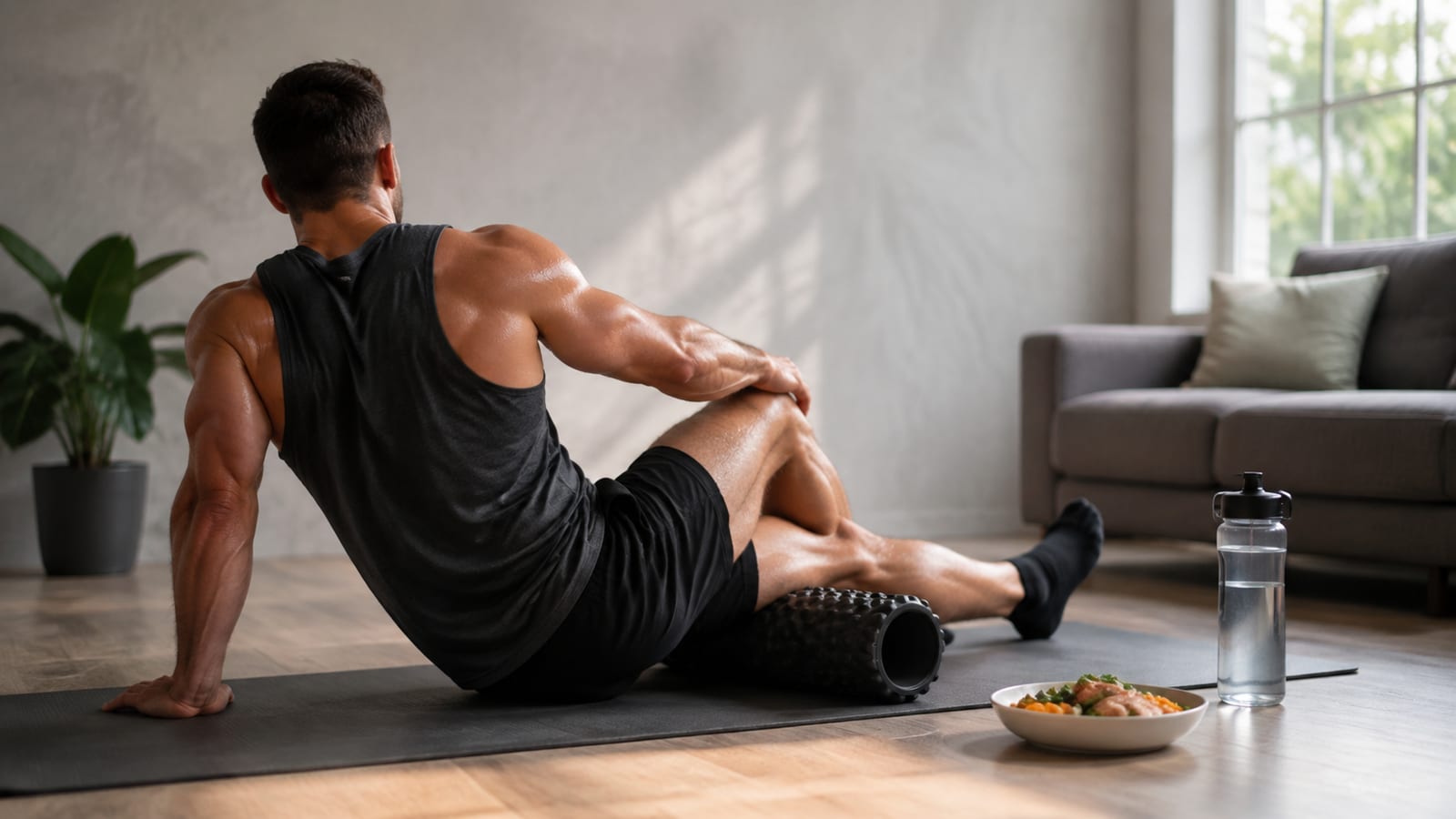
Foam rolling belongs near the bottom of your recovery priorities. It can make a sore area feel better, but it can't compensate for too much training and too little recovery.
Build the rest of your plan around:
- Enough total food to support your training
- Adequate protein across the day
- Regular hydration
- Consistent sleep
- Gradual increases in weight or reps
- Productive sets instead of endless extra work
- Training effort you can recover from
- Rest days that your schedule can actually protect
If your program leaves you sore for every session, rolling isn't the first fix. Reduce unnecessary work, improve technique, or leave more reps in reserve.
Massage can be another way to manage perceived soreness. This article on gentle massage after a workout covers that option without pretending any hands-on method repairs poor programming.
The top benefits of foam rolling show up when the basics are already in place. Use the roller to support a sound plan, then return to training with intent.
Who should avoid foam rolling or seek professional advice?
Don't roll over an acute injury, unexplained swelling, an open wound, or an area that feels hot and unusually tender. Pressure can irritate a problem you haven't identified.
Seek professional advice before rolling if you have a circulation disorder, a history of blood clots, fragile bones, or a condition that affects sensation. You may not feel damaging pressure clearly, or pressure may be unsafe for your condition.
Stop and get the problem assessed if you notice:
- Persistent pain that doesn't improve
- Numbness or tingling
- Weakness
- Sudden loss of movement
- Severe swelling or bruising
- Pain that travels along a limb
- Symptoms that worsen with each session
Normal post-training soreness should gradually settle. It shouldn't become sharper, more localized, or more limiting because you keep pressing on it.
If you're unsure whether the issue is soreness or injury, use a body scan before training with this five-minute body scan. When warning signs are present, a clinician's assessment beats another round on the roller. The National Institute of Arthritis and Musculoskeletal and Skin Diseases also provides guidance on sports injuries and when they need medical attention.
Is foam rolling worth adding to your recovery plan?
Yes, if it gives you a clear and repeatable benefit. Use it to improve a stiff movement, lower soreness enough to move normally, or prepare a target area before training.
No, if you use it to chase bruising, ignore injury symptoms, or avoid fixing excessive training volume. The tool is cheap and useful, but it isn't special enough to override recovery fundamentals.
Start with one lower-body area before your next workout. Roll briefly, perform your warm-up, and compare your movement and first working sets with your usual preparation. Keep the method only if it helps you train better or recover more comfortably.
FAQ
Can foam rolling replace stretching?
No. Foam rolling may temporarily improve range of motion, but it doesn't replace strength work, controlled movement, or a stretching plan when those are needed. Use the improved range during warm-up drills and exercises so your body practices using it.
Should you foam roll a muscle that is extremely sore?
Use light pressure or skip it if the muscle is extremely sore. Strong discomfort can make you tense up and may leave the area more irritated. Gentle movement, food, sleep, and reduced training stress are better first choices.
Is a vibrating foam roller better than a standard roller?
Not automatically. Vibration may change how pressure feels, but a standard roller already provides the main useful inputs: pressure and controlled movement. Choose the tool that lets you relax, control the load, and repeat the routine.
Can foam rolling prevent injuries?
No recovery tool can promise injury prevention. Foam rolling may help you move more comfortably, but injury risk also depends on training load, technique, strength, sleep, and how quickly you add work.
Should you foam roll before or after lifting?
Use it before lifting when a specific restriction affects your warm-up or starting position. Use it afterward when it helps soreness, but don't let either session replace a proper warm-up, lighter practice sets, or a recoverable training plan.