
A Simple Total Gym Plan for Steady Progress

 0
0
 0
0 Build your total gym workouts around five movements – a squat, a press, a pull, a hip hinge and a trunk exercise – then repeat them two to four times a week and write down what you did. That beats a rotating menu of classes, gimmick circuits, and random moves pulled off a wall chart. The machine is a resistance tool. The program is what makes it work, and the program should be boring, repeatable, and slightly harder than last week.
Last updated: 2026-08-07
What makes total gym workouts effective?
Resistance you can measure and repeat. On a glideboard machine, the incline setting decides how much of your own bodyweight you push or pull. So the incline is your weight stack. If you never write the setting down, you're guessing every session.
Four things decide whether you grow: technique you can repeat, sets that finish hard but not ruinous, load that creeps up over months, and enough food and sleep to absorb it. Stop most working sets with 1 to 3 reps in reserve. That means you could still do one to three clean reps before your form falls apart.
The Total Gym GTS is rated for a 500 lb maximum load capacity, so the frame is not your limiting factor. Your incline, your effort, and your consistency are. As a result, the honest question isn't "which class today?" It's "did I beat the logbook?"
The seven movements worth your time
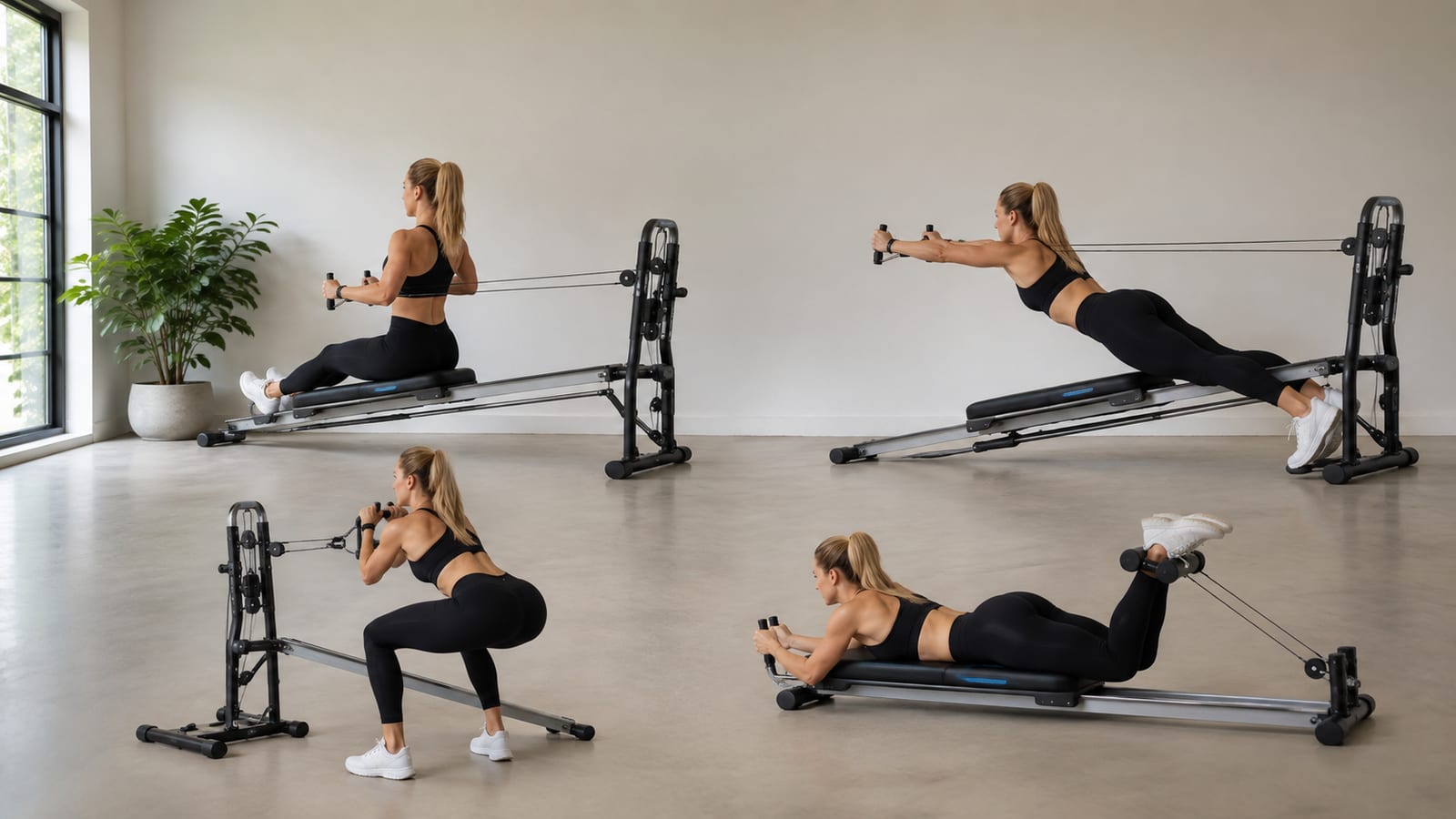
Skip the exercise-chart tour. Most listed exercises are small variations, and chasing all of them is how people stay busy without getting stronger. Build every session from this short list instead.
| Pattern | Do this | Watch for |
|---|---|---|
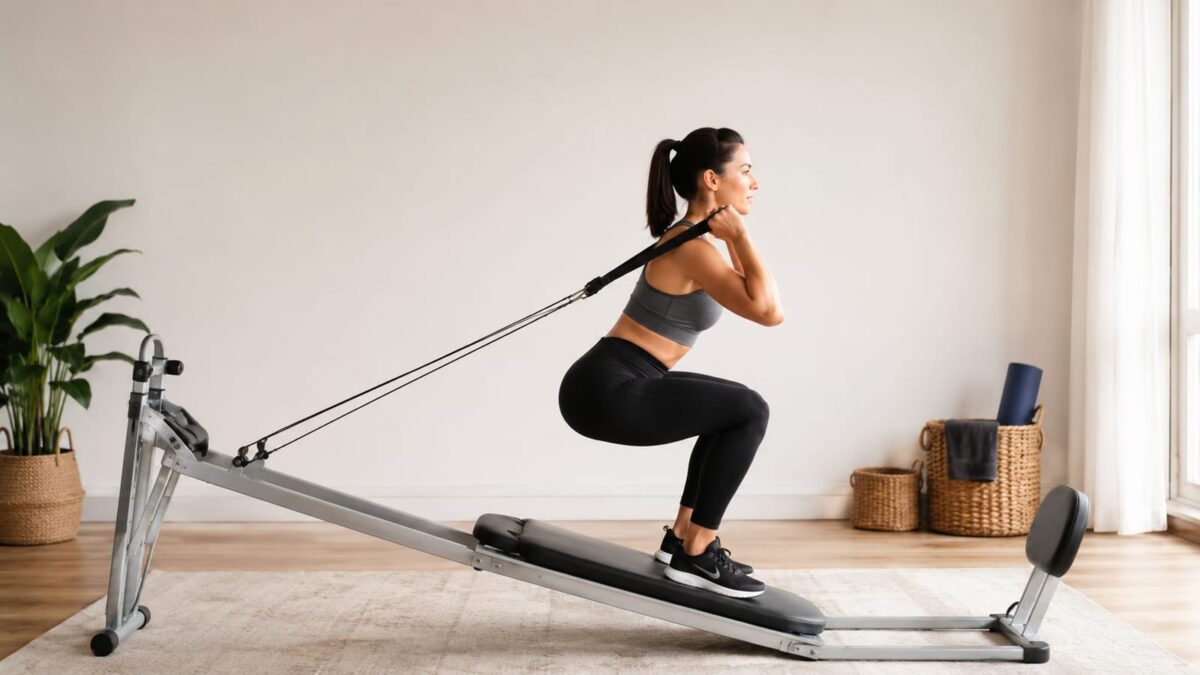
| Squat | Squat off the platform, both legs | Full foot contact, knees tracking over toes |
| Horizontal press | Chest press with the cables | Elbows around 45 degrees, no shoulder shrug |
| Row | Seated row | Pull to the ribs, stop the shoulders rolling forward |
| Vertical pull | Pull-up or pulldown on the glideboard | Ribs down, no yanking with the lower back |
| Hip hinge | Hip extension or single-leg squat variation | Hips move first, spine stays neutral |
| Overhead press | Incline shoulder press | Press without arching the low back |
| Trunk | Crunch on the glideboard | Slow return, no neck pulling |
Two priorities beat everything else in setup. First, set the incline so the last two reps are the hard ones, not the first two. Second, control the return. The lowering half is where most of the tension lives, and rushing it turns a strength exercise into a bounce.
A 30-minute full-body routine you can actually repeat
Here's the session I'd give almost anyone starting out with limited time. Run it in order. Rest about two minutes after the demanding lifts and about a minute after the small stuff.
- Squat – 3 sets of 8 to 12
- Chest press – 3 sets of 8 to 12
- Seated row – 3 sets of 8 to 12
- Hip extension – 2 sets of 10 to 15
- Shoulder press – 2 sets of 10 to 15
- Glideboard crunch – 2 sets of 12 to 15
That's six movements and about 15 working sets. Most people finish inside half an hour once they stop wandering between exercises. If you want the same logic applied off the machine, this minimal-equipment strength routine uses the same structure with almost no gear.
How should beginners start without wrecking the first month?
Do this first: pick a low incline and prove your reps look identical from the first to the last. For the first three or four weeks, run 2 working sets per exercise instead of 3. Keep every set at 2 to 3 reps in reserve, and stop the session with something left.
Three checkpoints tell you the setting is right. You can hit the top of the rep range with clean technique. Your speed doesn't collapse on the final reps. You're not sore enough to skip the next session. Meanwhile, spend a few minutes on a real warm-up; these dynamic warm-up movements do more for a cold shoulder than static stretching does.
Beginners lose progress two ways: adding load before the reps are repeatable, and quitting because week one felt like punishment. Neither is toughness. Good reps before more weight, every time.
Weekly schedules for two, three or four training days
Pick the schedule your calendar can keep, not the one that looks most serious.
| Days | Layout | Best for |
|---|---|---|
| 2 | Tuesday and Saturday, full body | Busy weeks, returning after a layoff |
| 3 | Monday, Wednesday, Friday, full body | Most people, most of the time |
| 4 | Upper Monday/Thursday, lower Tuesday/Friday | Anyone who can protect four days |
Three full-body sessions is the sweet spot for a natural lifter at home. Each muscle gets trained three times a week with a recovery day between sessions. Four days only pays off if you actually show up four times. Missing one day removes a quarter of your week.
Put rest days between hard sessions rather than stacking them at the weekend. If your joints ache going into a session, that's a vote. Drop a set or lower the incline rather than skipping the day entirely.
Progression: beat the logbook, not your ego
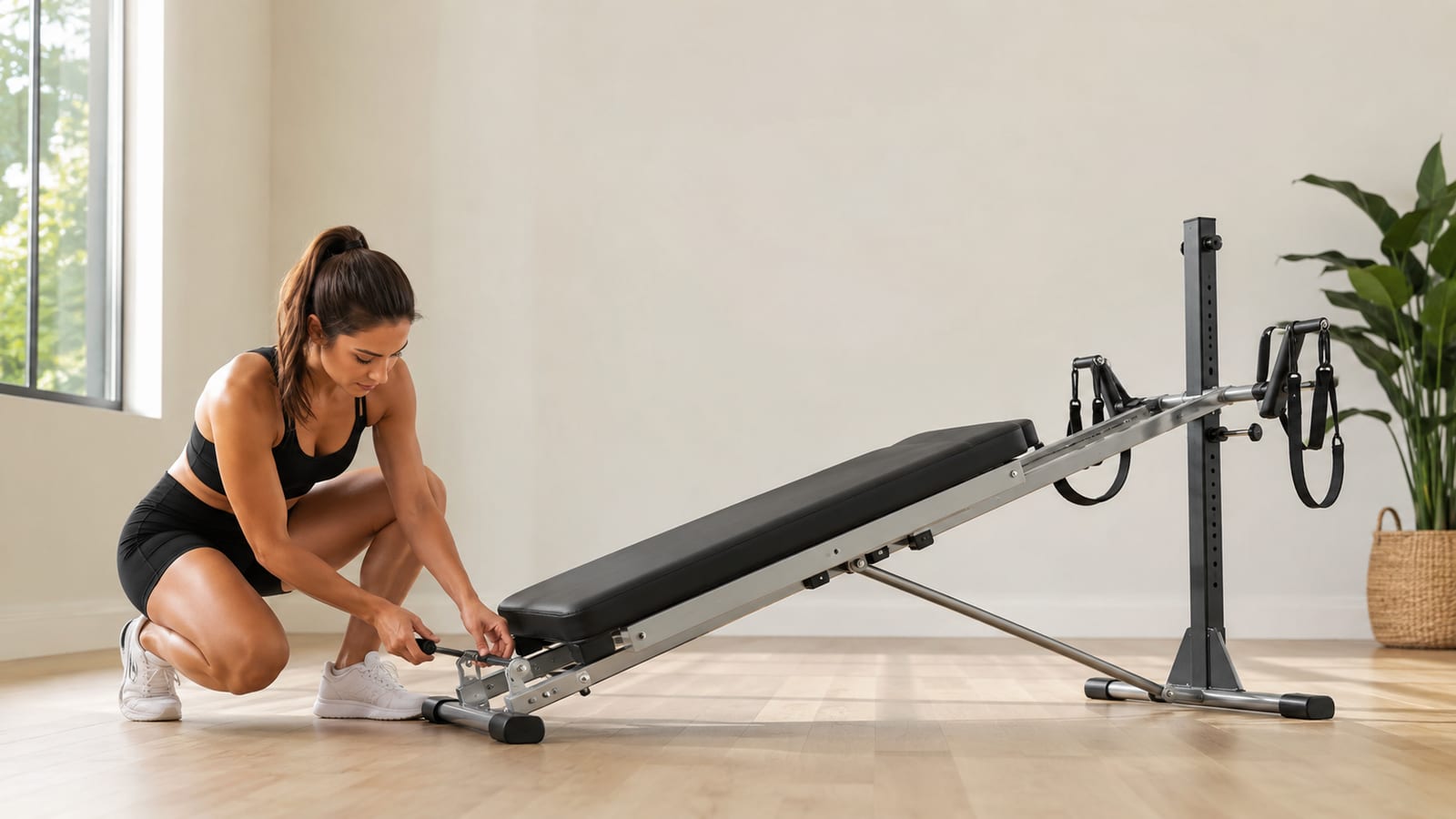
Double progression is the whole method. Keep the incline the same until you can complete every set at the top of the rep range with 1 to 2 reps in reserve. Then raise the incline one notch and work back up from the bottom of the range.
Log three things per exercise: incline setting, reps, and how hard the last set felt. Without that, you're repeating workouts, not progressing them. Progressive overload is simple on paper and demanding in practice, because the honest version moves slowly.
Change one variable at a time. An extra rep counts. A cleaner rep counts. Better control on the way down counts. When performance flattens for two or three weeks and your sleep and food are already handled, take a lighter week before you take a longer break.
Templates for strength, muscle gain and conditioning
Same movements, different dials. Don't rebuild the routine every time your goal shifts.
| Goal | Reps | Sets per exercise | Rest |
|---|---|---|---|
| Strength | 5 to 8 | 3 to 4 on the main lifts | 2 to 3 minutes |
| Muscle gain | 8 to 15 | 2 to 3 | About 2 minutes |
| Conditioning | 12 to 20 | 2 to 3, paired | 45 to 60 seconds |
Strength work needs longer rest and a slightly heavier incline, so the session runs longer with fewer exercises. Muscle gain lives in the middle range and tolerates more total sets. Conditioning shortens rest and pairs a push with a pull. The reps still have to look the same at the end of the set.
Adding cardio without stealing your leg training
Keep conditioning off your lower-body days, or put it after the lifting. The glideboard supports low-impact intervals well, and that's genuinely useful for anyone with cranky knees. Still, hard intervals the day before squats will cost you reps.
Two options work for most home setups. Steady, easy work on non-lifting days that leaves you able to hold a conversation. Or short intervals after a strength session, kept brief enough that the next workout doesn't suffer. If your squat numbers drop for two weeks running, the conditioning is too much or the food is too little.
Mistakes that quietly stall progress
- Exercise variety instead of progression. Twelve exercises you can't compare week to week teach you nothing.
- Skipping rows, pulldowns and hinges. Presses and crunches are easier to feel, so people overdo them and end up round-shouldered.
- Rushing the lowering phase. Momentum moves the board. It doesn't build the muscle.
- Guessing the incline. Record the same setting every session, or you're not progressing anything.
- Training to exhaustion. Failure on the last set of a curl is fine occasionally. Failure on everything just buys you a worse next workout.
- Under-eating. You cannot recover from work you didn't feed.
Modifying for older lifters, sore joints or a return from rehab
Reduce range of motion before you reduce effort. A half-depth squat done well with a moderate incline builds more than a deep one you can't control. Because a lower incline means less of your bodyweight, the machine scales down gracefully for stiff mornings and post-surgical caution.
Three sensible adjustments: stay further from failure, add a set rather than a notch of incline, and warm up longer than feels necessary. If you're returning from an injury or surgery, get your ranges and restrictions from your physical therapist or physician first. A blog post cannot clear you to load a repaired joint.
Joint pain that lingers more than a day after training is information. Change the setting, the range, or the exercise, and keep training around it.
How much do you need to eat and sleep to see results?
Enough protein at every meal, enough total food to support recovery, and sleep you don't have to apologize for. Natural lifters who under-eat spend months training hard for nothing and blame the machine.
Anchor each meal with a palm-sized portion of protein, drink water through the day, and keep bodyweight roughly steady or drifting up slowly if you're chasing muscle. Progress shows up as more reps at the same setting long before it shows up in the mirror. If you also train away from the machine, this home workout plan for muscle gain follows the same eating logic.
FAQ
Can you build real muscle on a Total Gym without free weights?
Yes, up to a point. Muscle responds to hard sets near failure and to load that increases over time, and an incline machine delivers both for a long while. The ceiling arrives when the top setting stops challenging your legs, since lower-body strength usually outpaces what bodyweight-percentage resistance can offer.
What do I do when the highest incline feels easy?
Slow the lowering phase, use one leg or one arm at a time, and add a set. Single-leg squats and single-arm presses roughly double the demand without any new equipment. If a lift still feels light after those changes, that exercise has outgrown the machine and belongs elsewhere in your week.
Is the Total Gym worth keeping if I already own dumbbells?
Keep it if joint-friendly loading matters to you, or if the pulldown and row options fill a gap in your setup. Skip it if you have a bench, a rack, and enough plates already, because free weights progress in smaller, more precise steps.
Should I train abs at the end of every session?
Two or three short trunk sets per week are plenty alongside squats, hinges and presses, which already tax your midsection. More crunches won't reveal anything a calorie deficit hasn't. Add reps or slow the tempo before you add another ab exercise.
How soon should I expect noticeable changes?
Expect strength and rep improvements within a few weeks and visible changes over several months of consistent training. Small increases add up faster than most people believe, provided you actually train two to four times weekly. If nothing has moved in a month, check your logbook before you change your program.