A Calm Cold Shower Routine for Muscle Recovery

 0
0
 0
0 Use cold showers as a brief soreness tool, not the base of your recovery plan. Start warm, lower the temperature gradually, breathe slowly, and finish with 30 seconds of cold water. Build toward 60 seconds only when you can stay calm. If muscle growth is your priority, don’t make immediate cold exposure a ritual after every lifting session. Sleep, food, hydration, and recoverable training matter far more.
Last updated: 2026-08-24
Cold showers and muscle recovery
Cold water may reduce how sore you feel after hard exercise. It can also leave you more alert. However, feeling fresher doesn’t mean your muscles repaired faster or grew more.
Most recovery research looks at cold water immersion, where much of the body sits underwater. A cold shower exposes less tissue and gives you less control over temperature. So don’t treat shower claims as if they came from ice-bath research.
A Cochrane review published in 2012 examined 17 small trials with 366 participants. It found some evidence that cold water immersion reduced muscle soreness after exercise. However, the studies varied, and the evidence didn’t prove that cold water improves every part of recovery.
Cold can help you manage discomfort. It cannot replace the work that lets you recover and come back stronger.
Timing after training
If muscle growth is the goal, take the cold shower later or separate it from lifting. Repeated cold water immersion immediately after resistance training may weaken some of the signals involved in muscle adaptation. A brief shower is less intense than full immersion, but making it an automatic post-lifting habit offers little upside.
There are exceptions. If you train or compete again soon, reducing soreness may matter more than squeezing out every possible adaptation. Cold water can also make sense after exercise in hot conditions when cooling down is the immediate job.
Use this timing rule:
- Training for muscle growth: Shower normally after lifting. Use cold later if you still want it.
- Managing soreness before another event: A brief cold finish may be useful.
- Cooling down after heat exposure: Use comfortably cold water and stop once you feel settled.
- Training near bedtime: Skip cold if it leaves you alert and restless.
Don’t chase a recovery method that works against your main goal. Your shower should fit the training plan, not run it.
Temperature and duration
Start with 30 seconds of cold water. Once you can breathe normally and avoid tensing every muscle, build toward 60 seconds. That is enough to judge whether the habit helps without turning the shower into an endurance contest.
If you can measure the water temperature, remember that around 15°C is a sensible upper target for cold water immersion, not a recovery shower. However, household shower controls are rarely precise. Use the coldest setting you can tolerate without gasping, shaking hard, or losing normal sensation.
Cold water immersion research often defines cold water as 15°C or lower. Research protocols may keep people immersed for 11 to 15 minutes, while athletic ice baths commonly use water between 10°C and 15°C for 10 to 15 minutes. Those figures belong to immersion, not showers.
You don’t need to copy an ice-bath protocol while standing under a showerhead. More discomfort doesn’t prove more recovery.
How to take cold showers for muscle recovery?
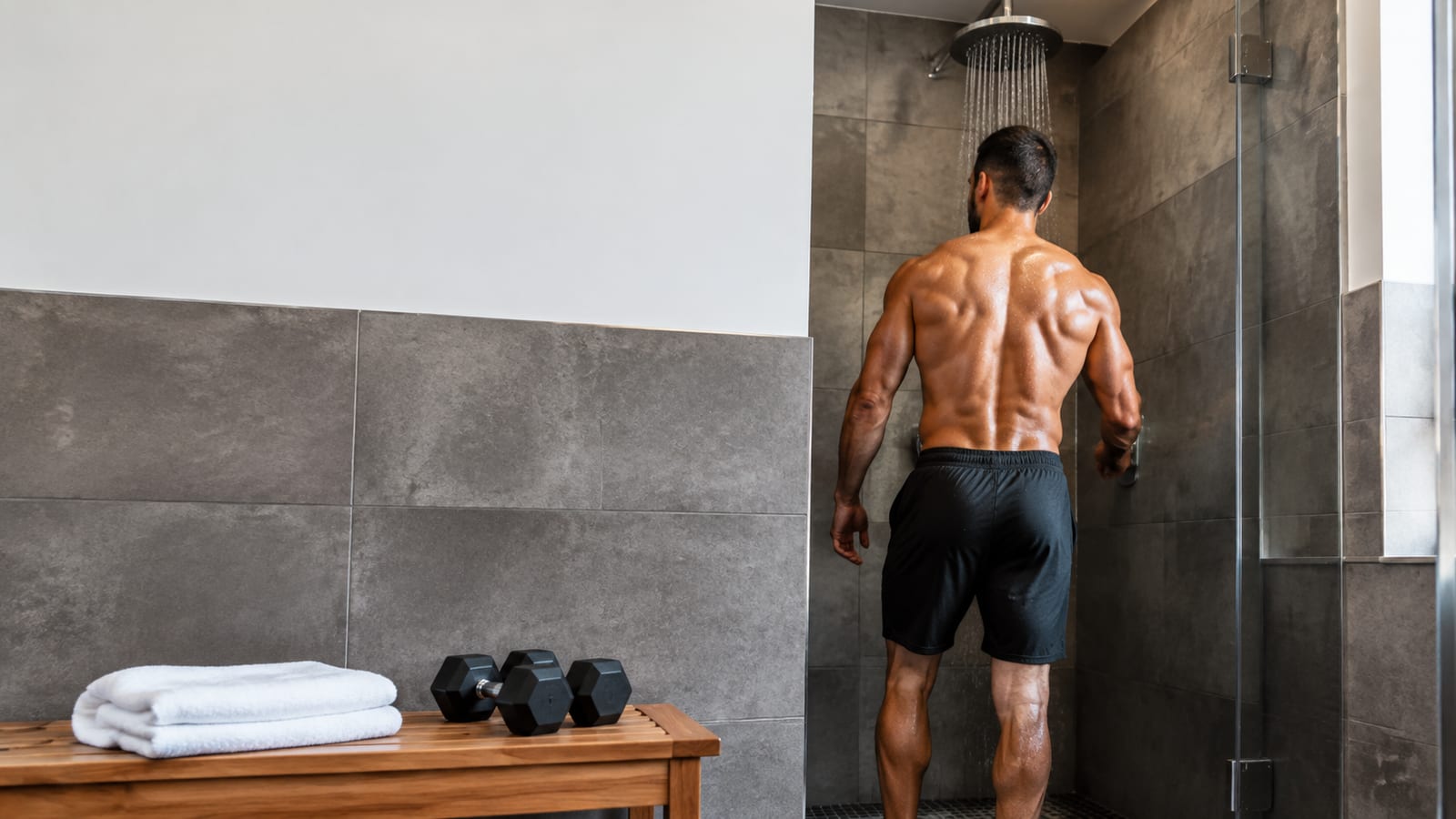
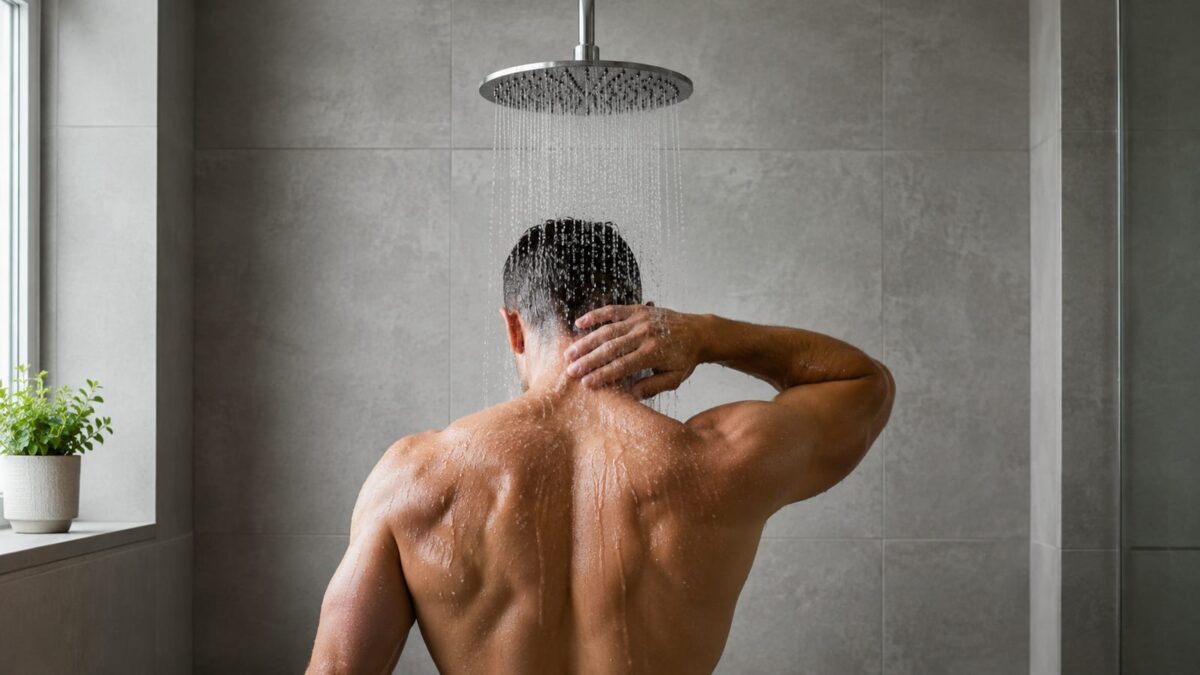
Use a gradual finish rather than stepping straight into the coldest setting. The goal is controlled exposure you can repeat, not panic followed by a heroic exit.
Finish your normal shower first.
Wash in comfortable water. This keeps the cold portion focused and brief.Lower the temperature gradually.
Move from warm to cool before going colder. Sudden exposure often causes gasping and unnecessary muscle tension.Slow your breathing.
Breathe in without forcing a huge breath. Then use a longer, controlled exhale. If you cannot regain control, the water is too cold.Start with your limbs.
Let the water hit your feet, legs, hands, and arms first. Then move it across your back and torso.Stay for 30 seconds.
Keep your shoulders down and your jaw loose. Clenching through the whole shower defeats the point.Build toward 60 seconds.
Earn the increase by staying calm at the shorter exposure. Stop adding time once the shower gives you the effect you want.
Learning how to take cold showers is mostly learning not to overdo them. Keep the exposure controlled, then get dressed and continue with your day.
Making a cold shower less miserable
Don’t begin with an ice-cold blast to the chest or face. That usually triggers a hard gasp and makes the whole practice feel worse than it needs to.
Instead, use these checks:
- Keep your hands open rather than making fists.
- Drop your shoulders away from your ears.
- Exhale slowly as the temperature falls.
- Move under the water instead of letting one area go numb.
- End the shower if shivering becomes hard to control.
- Add colder water before adding more time.
Music, shouting, and forced breathing may make the routine feel dramatic. They don’t make it more useful. Calm exposure is easier to repeat and gives you a clearer test of whether the shower helps.
Should you choose a cold or hot shower after exercise?
Choose cold for short-term cooling, alertness, or soreness relief. Choose warm or hot water when relaxation and stiffness are the bigger problems.
| Your situation | Better choice | Why |
|---|---|---|
| You feel overheated after exercise | Cool or cold | It helps lower the immediate heat load |
| You want to relax before bed | Warm | Cold may leave you more alert |
| You feel generally stiff | Warm | Heat often feels better for easy movement and relaxation |
| You have another event soon | Brief cold | Reduced soreness may help you feel more prepared |
| You lifted for muscle growth | Warm or neutral | It avoids making immediate cold exposure a routine |
| Your skin feels dry or irritated | Lukewarm | Hot water and long showers can worsen dryness |
A hot shower doesn’t repair damaged muscle tissue on command. It may help you relax and move more comfortably. If you want deeper heat after training, this guide to using a sauna after exercise explains what heat can and cannot do.
Pick the temperature that solves the problem you actually have.
Contrast showers are optional
Contrast showers alternate warm and cold water. They may feel good, but there is no strong reason to treat them as a superior recovery method.
If you enjoy contrast, keep it simple. Move between comfortably warm and cold water, then finish at the temperature that matches your goal. Finish cool for alertness or cooling. Finish warm for relaxation.
You don’t need complicated timing, repeated cycles, or the coldest tap setting. The extra switching can make the routine harder to follow without producing a clear extra benefit.
Keep contrast showers if they leave you feeling better. Skip them if they become another recovery chore.
Circulation claims don’t prove better recovery
Cold water temporarily narrows blood vessels near the skin. As you warm again, those vessels reopen and blood flow changes. That is a normal response to temperature, not proof of a lasting circulation upgrade.
Claims about “flushing out” exercise waste oversell the process. Your heart, blood vessels, lungs, liver, and kidneys already handle transport and waste removal. A shower doesn’t need a made-up cleansing job.
Cold water can change how your body directs blood for a short period. However, that doesn’t show that regular showers improve long-term circulation or build muscle faster.
Judge the shower by a practical result. If soreness feels easier to manage and your next session stays productive, keep it available. If nothing changes, skip it.
Pros and cons for lifters
Cold showers are cheap, available, and easy to test. Their limits are just as clear.
Useful benefits
- They may reduce perceived soreness after a hard session.
- They can help you cool down after exercise in heat.
- They often increase short-term alertness.
- They require less setup than cold water immersion.
- A brief finish can fit around a normal shower and a busy week.
Real limitations
- Shower research is thinner than immersion research.
- Reduced soreness doesn’t prove faster tissue repair.
- Repeated immediate cold exposure may be a poor tradeoff after muscle-building work.
- Cold water can feel unpleasant or cause excessive shivering.
- Long showers and harsh cleansers may irritate dry skin.
- Certain medical conditions make sudden cold exposure a bad idea.
Soreness is also a poor scorecard for training quality. Read these common muscle soreness myths before using discomfort to judge whether a workout counted.
Protecting dry skin
Keep the full shower brief and avoid using harsh cleanser across your entire body. Cold water is usually less drying than very hot water, but long exposure and aggressive washing can still disturb the skin barrier.
Use a gentle, fragrance-free cleanser where you need it. Then pat your skin dry instead of rubbing hard. Apply a plain moisturizer while the skin is still slightly damp.
If your skin becomes cracked, itchy, or inflamed, stop the cold routine until it settles. A recovery habit that damages your skin has failed a basic test.
When to avoid cold showers
Skip sudden cold exposure if you have uncontrolled heart or blood pressure problems unless your clinician has cleared it. Cold water can cause a sharp stress response, including changes in breathing, heart rate, and blood vessel tension.
Raynaud’s symptoms are another clear warning. Cold can trigger painful color changes, numbness, or tingling in the fingers and toes. The National Institute of Arthritis and Musculoskeletal and Skin Diseases guidance on Raynaud’s phenomenon explains the condition and its triggers.
Avoid cold showers when you’re already chilled, feverish, dizzy, or seriously unwell. Stop immediately if you develop chest pain, severe breathlessness, confusion, faintness, or numbness that doesn’t clear.
Your joints get a vote, and so does the rest of your body. Recovery should reduce the cost of training, not add another problem.
Morning or after training?
Morning is the better default if you use cold water for alertness. It keeps the habit away from lifting and avoids the concern around frequent immediate exposure after resistance training.
After training, choose based on the session and your next task. Use cool water if you’re overheated. Use warm water if you want to relax. Save colder exposure for later if building muscle is the priority.
Cold near bedtime is a poor choice if it wakes you up. However, some people settle quickly after rewarming. Test the response against your sleep rather than following a fixed ritual.
Once you understand how to take cold showers safely, timing comes down to one question: does the habit support your training and sleep, or interfere with them?
Recovery habits that matter more than shower temperature
Train with intent, then recover from work that was hard enough to count. No shower temperature can rescue a program packed with more work than you can handle.
Put these habits first:
- Progress your training. Add weight or reps while keeping repeatable technique.
- Eat enough. Chronic under-eating makes recovery and muscle growth harder.
- Get regular protein. Spread protein-rich meals through the day.
- Drink enough fluid. Replace what you lose through sweat.
- Protect sleep. Poor sleep affects performance, appetite, and your ability to recover.
- Control weekly effort. Leave reps in reserve on most working sets instead of turning every session into a test.
- Use active recovery when useful. Easy movement, gentle massage, and light mobility can help you feel less stiff.
For practical meal choices, use this guide to foods that support muscle recovery. Then check your logbook. If performance is improving and soreness isn’t disrupting your week, your recovery plan is doing its job.
Cold showers are optional. Good training, enough food, and sleep are not.
FAQ
Can you take a cold shower on a rest day?
Yes. A rest-day shower sits away from the lifting session, so it avoids the main timing concern. Use it for alertness or comfort, but don’t mistake a cold finish for actual rest, food, or sleep.
Should you take a cold shower before working out?
A brief cool shower may help if you feel overheated or sluggish. However, getting too cold can leave you stiff and uncomfortable. Warm up fully before loading a squat, press, pull, or hinge.
Can a cold shower replace a post-workout cooldown?
No. A shower won’t bring your breathing and effort down in stages. Walk easily until you feel settled, then shower at the temperature that fits your goal.
Why does a cold shower give me a headache?
Sudden cold on the face or scalp can trigger pain in some people. Keep the stream off your head, begin with your arms and legs, and lower the temperature in steps. Stop if the headache is severe or keeps returning.
Can cold showers help after endurance training?
They may help you feel less sore or overheated when another session is close. Still, fluids, carbohydrates, food, and sleep do most of the recovery work. Use the shower as a small addition after a demanding run or ride, not as the part that carries the plan.