Why Workouts Cannot Target Fat Loss in One Area

 0
0
 0
0 You can’t choose where fat comes off. The spot reduction myth is why you can’t lose fat from one area by training that area harder. Ab exercises can strengthen your trunk, and arm work can build your arms, but your body decides which fat stores to use through overall energy balance, genetics, hormones, and blood flow. Use local training to build or preserve muscle. Use a manageable calorie deficit to reduce body fat everywhere.
Last updated: 2026-08-10
Why can’t you lose fat from one area?
Training a muscle doesn’t give your body an order to remove the fat sitting above it. A set of crunches creates work in your abdominal muscles. It doesn’t direct nearby fat cells to empty first.
Fat loss happens when your body needs more energy than food provides over time. It draws from stored energy across the body, with the exact pattern shaped by your genetics, hormones, and current fat distribution.
You may feel a strong burn in your abs, arms, or thighs. That burn shows local muscle fatigue and chemical stress. It does not prove that nearby fat is being removed.
The common mistake is treating muscle fatigue as fat loss. Marketing likes that confusion because a burning workout is easy to sell. Your body doesn’t follow the exercise label. It follows its energy demands.
Use this standard instead:
- Train the muscle to make it stronger or larger.
- Create a manageable calorie deficit to lose body fat.
- Keep resistance training in place so the weight loss doesn’t come mainly from muscle.
- Track whole-body trends instead of judging one stubborn area.
- Give slower regions time before changing a plan that is working.
The spot reduction myth survives because local training feels local. The result of fat loss does not have to follow that same map.
How body fat is stored
Body fat is stored in adipose tissue. Inside fat cells, the body stores energy mainly as triglycerides, which are made from fatty acids attached to glycerol.
Fat cells can grow larger as they store more energy. During fat loss, they usually shrink as stored triglycerides leave the cell. The cells don’t simply vanish because you completed a hard ab circuit.
This explains why a previously lean area can regain fat after weight gain. The storage cells remain available. If your energy intake stays above your needs, they can fill again.
You also can’t choose which fat cells shrink first. Some regions respond earlier, while others hold their size longer. That order is personal, and it often frustrates people who are doing everything correctly.
A smaller waist, arm, or thigh comes from reducing the size of fat stores in that area over time. You don’t need a special exercise to tell those cells what to do. You need a plan that lowers total stored energy while preserving the muscle underneath.
What are triglycerides, and how does the body use them for energy?
Triglycerides are the body’s main form of stored fat. They act as an energy reserve inside fat cells.
When your body needs more energy, triglycerides can be broken down into fatty acids and glycerol. The fatty acids enter the bloodstream and travel to tissues that can use them. Cells then oxidize those fatty acids to help meet energy demands.
That process is useful, but it doesn’t guarantee visible fat loss. Fatty acids can be released and then stored again if total energy use and intake do not create a lasting deficit.
This is where many explanations go wrong. They describe fat leaving a cell and quietly treat that as the same thing as losing body fat. It isn’t. For lasting fat loss, the body must use more stored energy than it replaces.
Exercise increases energy demand. Food supplies energy. Your body manages the difference across the whole system, not just in the muscle you trained.
Subcutaneous fat and visceral fat
Subcutaneous fat sits under your skin. It’s the fat you can pinch around your waist, hips, arms, or thighs.
Visceral fat sits deeper in the abdomen around internal organs. You can’t measure it accurately by pinching your stomach. Higher levels of visceral fat are linked with greater health risks, including problems with blood sugar regulation and cardiovascular health.
These two types of fat don’t behave in exactly the same way. Their location, blood flow, and response to hormonal signals differ.
Visceral fat often responds earlier to overall fat loss than stubborn subcutaneous stores. That can improve health before the mirror shows the change you want in your lower stomach or hips.
Still, you can’t turn that pattern into a guarantee. Your body may reduce some internal fat while holding more subcutaneous fat in a familiar trouble area. Keep measuring the right outcomes instead of assuming slow visual change means nothing is happening.
How lipolysis mobilizes stored fat
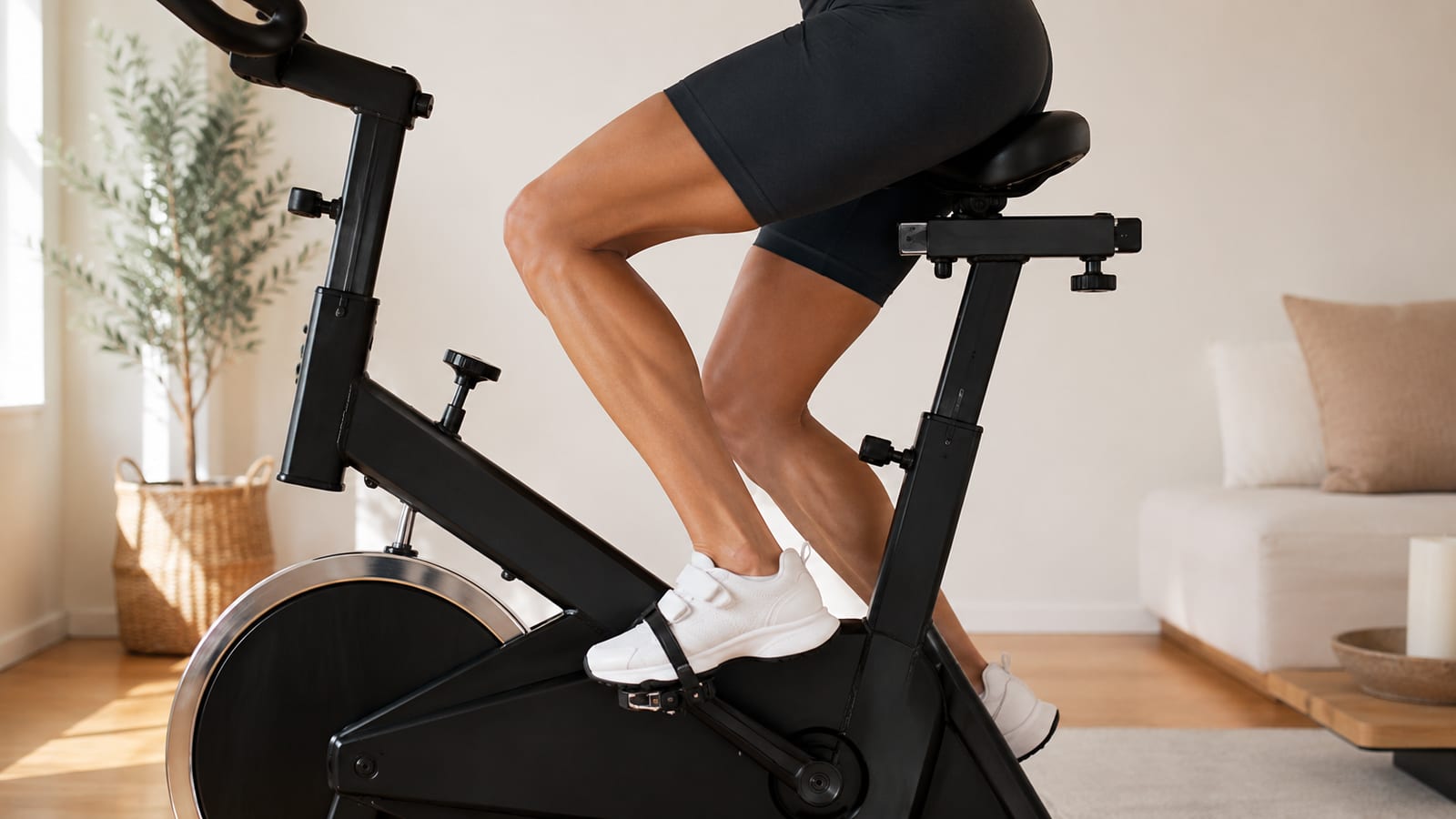
Lipolysis is the process of breaking stored triglycerides into fatty acids and glycerol. Hormonal signals can increase or reduce this process, depending on your energy needs and the body’s current state.
Exercise can increase blood flow and energy demand in active muscles. That can affect the release of fatty acids near those muscles. However, local release is only one step.
The released fatty acids still need to reach tissues that can use them. If your total energy balance doesn’t support a lasting deficit, some of that energy can return to storage.
This is the part spot-reduction claims leave out. A local increase in lipolysis does not equal a smaller waist, thigh, or upper arm. The body can release fat from one area and still show little visible change there.
Judge the complete process:
- Stored triglycerides break down.
- Fatty acids enter circulation.
- Working tissues use some of that fuel.
- Overall energy balance decides whether total fat stores fall.
- Genetics influence where the visible change appears first.
Your next step is simple. Judge a plan by long-term body composition and performance, not by how hot one muscle feels during training.
Does fat loss happen throughout the body or only where you train?
A sustained calorie deficit produces systemic fat loss. That means your body reduces stored fat across multiple regions rather than taking it only from the muscles you trained.
Resistance training has a different main job. It helps build muscle, improve strength, and preserve lean mass while you lose weight. The trained area may look better because the muscle becomes larger or more defined, but the fat above it still follows your overall loss pattern.
For example, train your chest to improve pressing strength and build your chest muscles. Do not expect bench presses to remove chest fat before your body is ready to use that store.
The same rule applies to leg extensions, rows, shoulder raises, and curls. Each exercise has a local training effect. Fat loss remains a whole-body result.
Keep targeted training, but give it the right job. The distinction is plain:
| Training choice | What it can improve | What it cannot promise |
|---|---|---|
| Ab exercises | Trunk strength and abdominal muscle | Specific belly-fat loss |
| Arm exercises | Arm strength and muscle size | Local fat removal |
| Leg training | Leg muscle, strength, and work capacity | Fat loss only from the thighs |
| Cardio using one muscle group | Fitness and energy use | Selective fat loss beside that muscle |
| Full-body resistance training | Strength and muscle retention | Control over the order of fat loss |
Use local work to shape the muscle. Use nutrition and total activity to lower the fat covering it.
Why some body parts lean out first
Genetics influence where you store fat and how those stores respond during weight loss. They also affect fat-cell size, regional blood flow, and the order in which areas tend to change.
Some people notice changes in their face, shoulders, or arms first. Others lose from their waist before their hips change. Neither pattern proves that one workout is better.
Stubborn areas often stay stubborn because they started with more stored fat or respond more slowly to the signals that release it. That can happen even with consistent training and accurate nutrition.
The mirror also creates bad feedback. Daily changes in water, digestion, lighting, and muscle fullness can hide gradual fat loss. A single morning tells you almost nothing about the order your body is using.
Keep the plan steady long enough to see a trend. If your body weight, waist measurement, photos, and gym performance all move in the right direction, a slow-changing area hasn’t earned a new program yet.
How hormones affect fat distribution
Hormones help regulate appetite, blood sugar, fat storage, and fuel release. Sex hormones can influence regional fat patterns. Insulin affects how the body handles nutrients and suppresses fat release in certain conditions. Cortisol and other stress-related signals can also influence appetite, recovery, and fat distribution.
That matters, but hormones aren’t a shortcut around energy balance. A social media claim that blames one hormone for every stubborn area is usually selling a simple answer to a complicated problem.
Hormonal conditions and medications can affect body weight and fat distribution. If you have major unexplained changes, missed periods, severe fatigue, or other symptoms, speak with a qualified clinician. More ab work is not a treatment plan.
For most natural lifters, these basics still do the work:
- Eat enough protein to support muscle and keep meals filling.
- Keep calories low enough for fat loss without wrecking your training.
- Lift with technique you can repeat and measure.
- Stay active outside the gym instead of relying on one hard session.
- Recover well enough to train with intent next time.
Hormones influence the route. They don’t remove the need to create a consistent energy deficit.
Can ab exercises, leg workouts, or targeted cardio reduce nearby fat?

No exercise can guarantee fat loss from the area beside the working muscle. Ab exercises can build the abdominal wall. Leg workouts can improve leg muscle and fitness. Targeted cardio can increase energy use and challenge the muscles involved.
None of those effects gives you control over the nearby fat store.
The research has tested this claim in several ways. In 1983, Katch et al. examined localized sit-up training. The study did not establish that training the abdominal muscles removes fat specifically from the stomach.
A six-week Vispute et al. abdominal training intervention also tested whether direct abdominal exercise changed abdominal fat. The result did not support the promise that ab training alone creates local belly-fat loss.
The 2013 Ramírez-Campillo et al. study examined regional fat changes after a 12-week one-leg press trial. Local leg training did not provide a reliable basis for promising fat loss only from the trained leg.
An older 1971 Gwinup et al. study compared arm fat in tennis players. It also failed to turn repeated use of one limb into a dependable spot-reduction method.
The lesson is not that local exercise does nothing. It does something specific. It builds or trains the muscle, while overall fat loss depends on the full plan.
The simplest way to lose overall body fat
Use a manageable calorie deficit, adequate protein, progressive resistance training, regular activity, and recoverable effort. That approach is simple on paper and demanding in practice, which is why it works better than a rotating list of targeted challenges.
Start with food you can repeat. Build meals around protein, produce, filling carbohydrates, and fats you enjoy. You don’t need to ban entire food groups, but you do need enough control over portions to create a consistent deficit.
Train the whole body with exercises you can perform safely and progress. Squats or leg presses, hip hinges, presses, pulls, and a few isolation movements cover the basics. Keep productive sets hard enough to count, but leave enough reps in reserve that your technique stays repeatable.
Add activity that fits your week. Walking, cycling, sports, and short cardio sessions can all support the energy gap. Don’t use cardio to punish yourself for eating. The plan has to survive normal work, family, stress, and tired days.
If you want more detail on keeping muscle while changing body composition, use this guide to bulk and cut at the same time. If training claims keep pulling you toward complicated fixes, read debunking common bodybuilding myths.
Make the plan pass these checks:
- You can follow the food approach on an ordinary weekday.
- You can train without your joints complaining after every session.
- Your exercises are stable enough to track reps and loads.
- You can recover well enough to perform again.
- Your weight trend moves over time instead of bouncing without direction.
If the plan fails those checks, simplify before adding more work. More exercises won’t repair a plan you can’t repeat.
Measuring progress when stubborn areas change slowly

Use several measures because each one catches a different part of the process. Body weight trends show the broad direction. Waist measurements show a useful regional change. Photos show visual changes that numbers may miss. Training performance shows whether you’re preserving strength and muscle.
Take measurements under similar conditions. Use the same general time of day, clothing, lighting, and posture. A single reading can shift because of water, food, digestion, and training soreness.
Don’t judge your whole plan by one stubborn area. If your waist changes slowly while your lifts hold steady and your wider measurements improve, that is still progress.
Also, don’t rush to cut food further after a few unchanged days. Look for a sustained trend first. If progress has stalled for long enough and your tracking is honest, make one small adjustment to food or activity.
Your body doesn’t owe every region the same timeline. Keep earning the next improvement and let the logbook, measurements, and trend line guide the decision.
What to do instead of chasing spot reduction
Train the area you want to improve, but stop asking that exercise to remove the fat above it. Choose movements for strength, muscle, fitness, and joint comfort. Then create the overall conditions that allow fat stores to shrink.
The spot reduction myth is persuasive because it promises control over the most frustrating part of fat loss. You don’t get that control. You get something more useful: a repeatable process that works across your whole body.
Run the plan in this order:
- Set a calorie deficit you can manage without losing control of training.
- Eat enough protein and choose mostly filling foods.
- Lift consistently, then add weight or reps when your technique earns it.
- Add regular activity that doesn’t leave you too tired to recover.
- Track trends instead of reacting to each day’s appearance.
- Stay with the plan while slower areas catch up.
You can’t choose the first place fat leaves. You can choose whether your training and nutrition are steady enough for the change to continue.
FAQ
Can you lose belly fat without doing ab exercises?
Yes. Your body can reduce abdominal fat without a single direct ab set. Train your trunk for strength and control, but use the calorie deficit to drive the loss of stored fat.
Why does my stomach look bigger after training?
Training can temporarily change muscle fullness, water retention, soreness, and digestive pressure. So don’t judge your waist in the hours after a session. Compare measurements taken under similar conditions over a longer trend.
Does sweating more mean you’re burning more belly fat?
No. Sweat cools your body; it doesn’t show which fat cells are shrinking. A hot workout may lower scale weight through fluid loss, but drinking replaces that weight without changing stored belly fat.
Can a calorie deficit make you lose muscle?
Yes, especially if you cut food too hard while letting resistance training and protein slide. Keep lifting, eat enough protein, and use a deficit you can recover from rather than treating exhaustion as proof the plan works.
How long should you wait before changing a fat-loss plan?
Wait for a clear stall in both measurements and the body-weight trend. A few flat days don’t qualify. First check your food intake, activity, sleep, and training quality, then change one part of the plan.
Related on this blog